Kirjojen hintavertailu. Mukana 11 342 296 kirjaa ja 12 kauppaa.

Kirjahaku

Etsi kirjoja tekijän nimen, kirjan nimen tai ISBN:n perusteella.

1000 tulosta hakusanalla Richard J. Walter

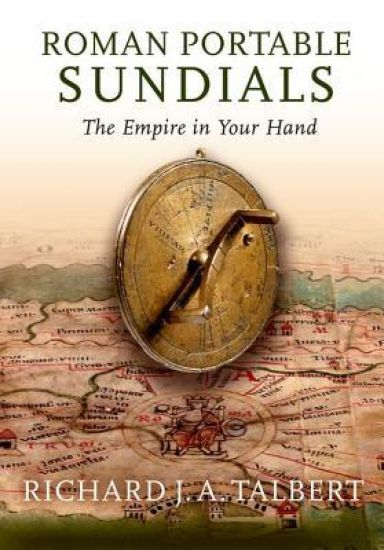
Roman Portable Sundials

Roman Portable Sundials

Richard J.A. Talbert

Oxford University Press Inc
2017
sidottu
In an unscientific era when maps were rarities, how did ancient Romans envisage their far flung empire? This was done by various means for certain, including with the aid of an ingenious type of portable sundial that has barely attracted notice. As the Romans understood before the first century BCE, to track the passage of the sun across the sky hour-by-hour one needed to know one's latitude and the time of year, and that, furthermore, sundials did not have to be fixed objects. These portable instruments, crafted in bronze, were adjustable for the changes of latitude to be expected on long journeys--say, for instance, from Britain to Spain, or from Alexandria to Rome, or even on a Mediterranean tour. For convenient reference, these sundials incorporated lists of twenty to thirty names of cities or regions, each with its specific latitude. One of the insights of Roman Portable Sundials is that the choice of locations offers unique clues to the mental world-map and self-identity of individuals able to visualize Rome's vast empire latitudinally. The sixteen such sundials known to date share common features but designers also vied to create enhancements. Comparison with modern calculations shows that often the latitudes listed are incorrect, in which case the sundial may not perform at its best. But then the nature of Romans' time-consciousness (or lack of it) must be taken into consideration. Richard Talbert suspects that owners might prize these sundials not so much for practical use but rather as prestige objects attesting to scientific awareness as well as imperial mastery of time and space. In retrospect, they may be seen as Roman precursors to comparable Islamic and European instruments from the Middle Ages onwards, and even to today's luxury watches which display eye-catching proof of their purchasers' wealth, sophistication, and cosmopolitanism. Richly enhanced with detailed photographs, line drawings, maps, a gazetteer, and a table of latitudes and locations, Roman Portable Sundials brings these overlooked gadgets out of the shadows at last to reveal their hitherto untapped layers of meaning.
Eric Hobsbawm: A Life in History

Eric Hobsbawm: A Life in History

Richard J. Evans

Oxford University Press
2019
sidottu
Eric Hobsbawm's works have had a nearly incalculable effect across generations of readers and students, influencing more than the practice of history but also the perception of it. Born in Alexandria, Egypt, of second-generation British parents, Hobsbawm was orphaned at age fourteen in 1931. Living with an uncle in Berlin, he experienced the full force of world economic depression, and in the charged reaction to it in Germany was forced to choose between Nazism and Communism, which was no choice at all. Hobsbawm's lifelong allegiance to Communism inspired his pioneering work in social history, particularly the trilogy for which he is most famous--The Age of Revolution, The Age of Capital, and The Age of Empire--covering what he termed "the long nineteenth century" in Europe. Selling in the millions of copies, these held sway among generations of readers, some of whom went on to have prominent careers in politics and business. In this comprehensive biography of Hobsbawm, acclaimed historian Richard Evans (author of The Third Reich Trilogy, among other works) offers both a living portrait and vital insight into one of the most influential intellectual figures of the twentieth century. Using exclusive and unrestricted access to the unpublished material, Evans places Hobsbawm's writings within their historical and political context. Hobsbawm's Marxism made him a controversial figure but also, uniquely and universally, someone who commanded respect even among those who did not share-or who even outright rejected-his political beliefs. Eric Hobsbawm: A Life in History gives us one of the 20th century's most colorful and intellectually compelling figures. It is an intellectual life of the century itself.
Third Reich in History and Memory

Third Reich in History and Memory

Richard J. Evans

Oxford University Press
2017
nidottu
In the seventy years since the demise of the Third Reich, there has been a significant transformation in the ways in which the modern world understands Nazism. In this brilliant and eye-opening collection, Richard J. Evans, the acclaimed author of the Third Reich trilogy, offers a critical commentary on that transformation, exploring how major changes in perspective have informed research and writing on the Third Reich in recent years.Drawing on his most notable writings from the last two decades, Evans reveals the shifting perspectives on Nazism's rise to political power, its economic intricacies, and its subterranean extension into postwar Germany. Evans considers how the Third Reich is increasingly viewed in a broader international context, as part of the age of imperialism; discusses the growing emphasis on the larger economic and cultural circumstances of the era; and emphasizes the development of research into Nazi society, particularly in the understanding of Nazi Germany as a political system based on popular approval and consent. Exploring the complex relationship between memory and history, Evans also points out the places where the growing need to confront the misdeeds of Nazism and expose the complicity of those who participated has led to crude and sweeping condemnation, when instead historians should be making careful distinctions.Written with Evans' sharp-eyed insight and characteristically compelling style, these essays offer a summation of the collective cultural memory of Nazism in the present, and suggest the degree to which memory must be subjected to the close scrutiny of history.
Bridging the Gap between the Abundance of American Higher Education Talent and the Immense Foreign Demand for It
The gap between the abundance of American higher education talent and the immense foreign demand for it is the great chasm in global education. It is a gulf of lost opportunities. It is also a space of great economic potential. This book describes the great chasm, examines factors underlying it, and suggests ways to bridge the gap to realize this potential. The abundance of talent stems from the slackening growth of the U.S. higher education sector in the New Millennium. Contributing to the slowdown are flat enrollments, adverse demographic trends, U.S. visa restrictions, and intensifying competition. The immense foreign demand has been fueled by the secular expansion of the global economy. It has been shaped by the pressing need in emerging markets to develop an educated workforce. The great chasm creates an opportunity for American academic institutions to extend their global reach. Bridging the gap, however, is not an easy feat for most U.S. colleges and universities. It is complicated by an institutional culture that is averse to commercialization, an organizational structure that is operationally slow, and a governance system that often leads to indecision, conflict, and paralysis. Bridging the gap requires fundamental changes in the culture, organization, and governance of traditional U.S. academic institutions. These changes will pave the way for international expansion, which could enhance the financial well-being of these institutions, the social-well-being of less developed nations, and the critical role that America plays globally in knowledge creation, the dissemination of ideas, and the pursuit of the truth.
Language Myths and the History of English

Language Myths and the History of English

Richard J. Watts

Oxford University Press Inc
2011
sidottu
Language Myths and the History of English aims to deconstruct the myths that are traditionally reproduced as factual accounts of the historical development of English. Using concepts and interpretive sensibilities developed in the field of sociolinguistics over the past 40 years, Richard J. Watts unearths these myths and exposes their ideological roots. His goal is not to construct an alternative discourse, but to offer alternative readings of the historical data. Watts raises the question of what we mean by a linguistic ideology, and whether any discourse--a hegemonic discourse, an alternative discourse, or even a deconstructive discourse--can ever be free of it. The book argues that a naturalized discourse is always built on a foundation of myths, which are all too easily taken as true accounts.
Language Myths and the History of English

Language Myths and the History of English

Richard J. Watts

Oxford University Press Inc
2011
nidottu
Language Myths and the History of English aims to deconstruct the myths that are traditionally reproduced as factual accounts of the historical development of English. Using concepts and interpretive sensibilities developed in the field of sociolinguistics over the past 40 years, Richard J. Watts unearths these myths and exposes their ideological roots. His goal is not to construct an alternative discourse, but to offer alternative readings of the historical data. Watts raises the question of what we mean by a linguistic ideology, and whether any discourse--a hegemonic discourse, an alternative discourse, or even a deconstructive discourse--can ever be free of it. The book argues that a naturalized discourse is always built on a foundation of myths, which are all too easily taken as true accounts.
Intimate Violence and Abuse in Families

Intimate Violence and Abuse in Families

Richard J. Gelles

Oxford University Press Inc
2016
nidottu
This Fourth Edition of Intimate Violence and Abuse in Families updates a best-selling core text in the field of intimate violence and child maltreatment. New features include: a "Global Perspectives" call-out box for each of the chapters that explore an aspect of research, policy, and practice globally or in another nation; and a separate chapter that examines forms of intimate partner violence other than male-to-female. Bidirectional intimate partner violence and female-to-male violence remain contentious topics in the field of intimate partner violence and rarely receive extensive coverage in books or texts; Chapter 7 includes a new examination of brain and behavior research and theory as it can be applied to intimate partner violence. Further, Chapter 8 adds a much-expanded examination of the most important federal policies pertaining to child welfare and child maltreatment. The inclusion of all forms of relationship and intimate violence continues to be a distinctive feature of the book, which is a must-have for both undergraduate and graduate students studying social work, family studies, criminology, nursing, sociology, and/or psychology.
Roman Portable Sundials

Roman Portable Sundials

Richard J.A. Talbert

Oxford University Press Inc
2020
nidottu
In an unscientific era when maps were rarities, how did ancient Romans envisage their far flung empire? This was done by various means for certain, including with the aid of an ingenious type of portable sundial that has barely attracted notice. As the Romans understood before the first century BCE, to track the passage of the sun across the sky hour-by-hour one needed to know one's latitude and the time of year, and that, furthermore, sundials did not have to be fixed objects. These portable instruments, crafted in bronze, were adjustable for the changes of latitude to be expected on long journeys--say, for instance, from Britain to Spain, or from Alexandria to Rome, or even on a Mediterranean tour. For convenient reference, these sundials incorporated lists of twenty to thirty names of cities or regions, each with its specific latitude. One of the insights of Roman Portable Sundials is that the choice of locations offers unique clues to the mental world-map and self-identity of individuals able to visualize Rome's vast empire latitudinally. The sixteen such sundials known to date share common features but designers also vied to create enhancements. Comparison with modern calculations shows that often the latitudes listed are incorrect, in which case the sundial may not perform at its best. But then the nature of Romans' time-consciousness (or lack of it) must be taken into consideration. Richard Talbert suspects that owners might prize these sundials not so much for practical use but rather as prestige objects attesting to scientific awareness as well as imperial mastery of time and space. In retrospect, they may be seen as Roman precursors to comparable Islamic and European instruments from the Middle Ages onwards, and even to today's luxury watches which display eye-catching proof of their purchasers' wealth, sophistication, and cosmopolitanism. Richly enhanced with detailed photographs, line drawings, maps, a gazetteer, and a table of latitudes and locations, Roman Portable Sundials brings these overlooked gadgets out of the shadows at last to reveal their hitherto untapped layers of meaning.
World and Hour in Roman Minds

World and Hour in Roman Minds

Richard J. A. Talbert

OXFORD UNIVERSITY PRESS INC
2023
sidottu
World and Hour in Roman Minds: Exploratory Essays seeks to penetrate Romans' consciousness of space and time, aspects of antiquity currently attracting intense interest. Historian Richard Talbert presents here a cohesive selection of nineteen essays, published over the course of thirty years, all but one previously appearing in widely scattered publications. Now reinforced by an Introduction and textually and visually updated, these essays document the progress of pioneering efforts to glimpse the worldviews of Romans up and down the social scale--even Julius Caesar and Claudius--and to reassess the communicative role of Roman mapping along with its strengths and limitations. Talbert interprets the Antonine Itinerary and Artemidorus and Peutinger maps afresh, visualizing the latter with a wider perspective than in previous scholarship and probing the challenges of its design, production and copying. He also casts doubt, however, on the idea that Romans conceptualized their long-distance roads as an interconnected system, as did certain comparable premodern states across the Americas and Asia. The most recent essays share findings that emerge with a shift of focus from space to time, specifically Romans' daily timekeeping by hours--another neglected dimension of their social mentalité. Talbert suggests that Romans' tracking of time should be regarded as uncannily similar to that of the Japanese before Westernization. Throughout, the essays are unified by the methods applied. The value of broader, often comparative, approaches is demonstrated, as well as the creative potential of untapped testimony and digital technology--altogether an invaluable platform to stimulate further inquiry.
The Rise and Fall of Animal Experimentation

The Rise and Fall of Animal Experimentation

Richard J. Miller

OXFORD UNIVERSITY PRESS INC
2023
sidottu
Every year, hundreds of millions of animals are used in the service of biomedical research, despite the risk of extreme cruelty to these animal subjects. The expansion of the pharmaceutical industry and university research funding rapidly normalized its practice. What exactly are these experiments supposed to achieve from the scientific point of view and how effective are they? Working scientists answer these questions by saying that their research is absolutely necessary if we are to develop new therapies for human diseases. But is this really the case? Written by a scientist with over 40 years of laboratory experience, The Rise and Fall of Animal Experimentation critically examines this assumption and asks whether it is true that animal-based research achieves its aims and, if so, how often this occurs and if there are alternatives to performing animal-based science. The book takes readers through the history of animal experimentation: its early beginnings in antiquity, how it advanced in the seventeenth century during the Scientific Revolution until the present day, and explores the diverse scientific, theological, and philosophical influences that formed the basis for these ideas about animal-based science. Referencing developments in various fields including stem cell biology, genetic sequencing, and live imaging, the book describes the scientific advancements that bring the value of animal experimentation into question and encourages biomedical research to consider more anthropocentric paradigms that reflect the entire spectrum of human diversity.
The Hitler Conspiracies: The Protocols - The Stab in the Back - The Reichstag Fire - Rudolf Hess - The Escape from the Bunker
The idea that historical events, catastrophes in particular, didn't happen on their own but were driven by the hidden machinations of malign influences has deep roots. The appeal is clear: we can ascribe these events not to human shortsightedness or frailty, or to the contingencies of fate and circumstance, but to unseen forces. Conspiracy theories and paranoia go hand in hand. Something, or someone, is trying to control our lives and to regain that control we need to expose the truth. Conspiracy theories have lately proliferated, powered by the Internet and social media, as well as by the declining influence of the traditional gatekeepers of facts and information. In his new book, Richard J. Evans, one of the world's leading historians of the Third Reich, explores this new golden age of conspiracy theories and what underlies it. To do that, he focuses on five of the most enduring conspiracies theories of the Nazi period, including those that fueled Hitler's rise in the first place. Hence he reexamines the notorious anti-Semitic forgery The Protocols of the Elders of Zion; the "stab-in-the-back" myth about the of the role of Jews in Germany's loss in World War One; and the 1933 burning of the Reichstag, which the Nazis used to solidify their grip on power. Evans also delves into the multiple rumors regarding the ill-fated and mysterious 1941 flight to England by Rudolf Hess, Deputy Leader of the Nazi Party, and his death in Spandau prison in 1987. Lastly, he turns to the recurrent rumor that Hitler somehow managed to escape from Berlin in 1945 and live out his days in Argentina. The Hitler Conspiracies is a book about fantasies and fictions, fabrications and falsifications. A distinguished work of history by one of the world's most distinguished historians, it offers equally a hard look at our own troubled times, a "post-truth" era in which "alternative facts" have gained new standing.
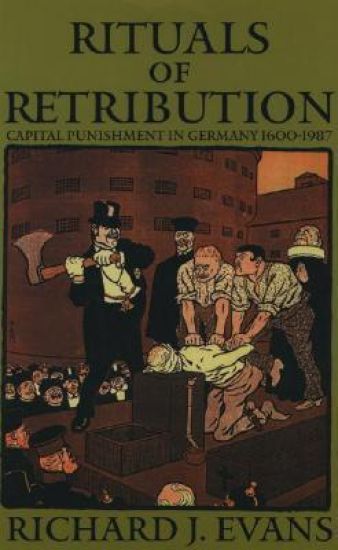
Rituals of Retribution

Rituals of Retribution

Richard J. Evans

Oxford University Press
1996
sidottu
COPYWRITER - Modern History section for 1996 cat The state has no greater power over its own citizens than that of killing them. This book examines the use of that supreme sanction in Germany, from the seventeenth century to the present. Richard Evans analyses the system of `traditional' capital punishments set out in German law, and the ritual practices and cultural readings associated with them by the time of the early modern period. He shows how this system was challenged by Enlightenment theories of punishment and broke down under the impact of secularization and social change in the first half of the nineteenth century. The abolition of the death penalty became a classic liberal case which triumphed, if only momentarily, in the 1948 Revolution. In Germany far more than anywhere else in Europe, capital punishment was identified with anti-liberal, authoritarian concepts of sovereignty. Its definitive reinstatement by Bismarck in the 1880s marked not only the defeat of liberalism but also coincided with the emergence of new, Social Darwinist attitudes towards criminality which gradually changed the terms of debate. The triumph of these attitudes under the Nazis laid the foundations for the massive expansion of capital punishment which took place during Hitler's `Third Reich'. After the Second World War, the death penalty was abolished, largely as a result of a chance combination of circumstances, but continued to be used in the Stalinist system of justice in East Germany until its forced abandonment as a result of international pressure exerted in the regime in the 1970s and 1980s. This remarkable and disturbing book casts new light on the history of German attitudes to law, deviance, cruelty, suffering and death, illuminating many aspects of Germany's modern political development. Using sources ranging from folksongs and ballads to the newly released government papers from the former German Democratic Republic, Richard Evans scrutinizes the ideologies behind capital punishment and comments on interpretations of the history of punishment offered by writers such as Foucault and Elias. He has made a formidable contribution not only to scholarship on German history but also to the social theory of punishement, and to the current debate on the death penalty.
Social Psychology

Social Psychology

Richard J. Crisp

Oxford University Press
2015
nidottu
Social psychology is about the people who populate our everyday lives, and how they affect our 'personal universe', defining who we are, and shaping our behaviour, beliefs, attitudes, and ideology. In an age where we've mapped the human genome and explored much of the physical world, the study of people's behaviour is one of the most exciting frontiers of scientific endeavor. In this Very Short Introduction Richard Crisp tells the story of social psychology, its history, concepts and major theories. Discussing the classic studies that have defined the discipline, Crisp introduces social psychology's key thinkers, and shows how their personal histories spurred them to understand what connects people to people, and the societies in which we live. Taking us from the first ideas of the discipline to its most cutting edge developments, Crisp demonstrates how social psychology remains profoundly relevant to everyday life. From attitudes to attraction, prejudice to persuasion, health to happiness - social psychology provides insights that can change the world, and help us tackle the defining problems of the 21st century. ABOUT THE SERIES: The Very Short Introductions series from Oxford University Press contains hundreds of titles in almost every subject area. These pocket-sized books are the perfect way to get ahead in a new subject quickly. Our expert authors combine facts, analysis, perspective, new ideas, and enthusiasm to make interesting and challenging topics highly readable.
Making Mathematical Culture

Making Mathematical Culture

Richard J. Oosterhoff

Oxford University Press
2018
sidottu
In 1503, for the first time, a student in Paris was able to spend his entire university career studying only the printed textbooks of his teacher, thanks to the works of the humanist and university reformer Jacques Lefèvre d'Étaples (c. 1455-1536). As printed books became central to the intellectual habits of following generations, Lefèvre turned especially to mathematics as a way to renovate the medieval university. Making Mathematical Culture argues this was a pivatol moment in the cultural history of Europe and explores how the rise of the printed book contributed to the growing profile of mathematics in the region. Using student manuscripts and annotated books, Making Mathematical Culture offers a new account of printed textbooks, as jointly made by masters and students, and how such collaborative practices informed approaches to mathematics.
Life's rewards

Life's rewards

Richard J. Beninger

Oxford University Press
2018
sidottu
Since its discovery in the 1960s, a vast and wide-ranging body of research has accumulated about the dopaminergic system. Life's Rewards: Linking Dopamine, Incentive Learning, Schizophrenia, and the Mind offers a broad synthesis of our current understanding of this chemical, addressing, amongst others, its intricate relationship with learning and memory, psychopathology, social co-operation, and drug abuse. Aimed at students and researchers in neuroscience and psychology, Life's Rewards: Linking Dopamine, Incentive Learning, Schizophrenia, and the Mind is essential reading for anyone interested in the relationship between dopamine and reward-related incentive learning.
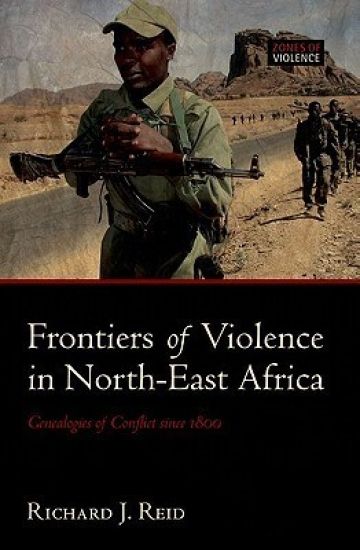
Frontiers of Violence in North-East Africa

Frontiers of Violence in North-East Africa

Richard J. Reid

Oxford University Press
2011
sidottu
Northeast Africa has one of the richest histories in the world, and yet also one of the most violent. Richard Reid offers an historical analysis of violent conflict in northeast Africa through the nineteenth and twentieth centuries, incorporating the Ethiopian and Eritrean highlands and their escarpment and lowland peripheries, stretching between the modern Eritrean Red Sea coast and the southern and eastern borderlands of present day Ethiopia. Sudanese and Somali frontiers are also examined insofar as they can be related to ethnic, political, and religious conflict, and the violent state- and empire-building processes which have defined the region since c.1800. Reid argues that this modern warfare is not solely the product of modern political 'failure', but rather has its roots in a network of frontier zones which are both violent and creative. Such borderlands have given rise to markedly militarised political cultures which are rooted in the violence of the nineteenth century, and which in recent decades are manifest in authoritarian systems of government. Reid thus traces the history of Amhara and Tigrayan imperialisms to the nationalist and ethnic revolutions which represented the march of volatile borderlands on the hegemonic centre. He suggests a new interpretation of Ethiopian and Eritrean history, arguing that the key to understanding the region's turbulent present lies in an appreciation of the role of the armed, and politically fertile, frontier in its deeper past.
Contextualizing Cassian

Contextualizing Cassian

Richard J. Goodrich

Oxford University Press
2007
sidottu
Richard J. Goodrich examines the attempt by the fifth-century ascetic writer John Cassian to influence and shape the development of Western monasticism. Goodrich's close analysis of Cassian's earliest work (The Institutes) focuses on his interaction with the values and preconceptions of a traditional Roman elite, as well as his engagement with contemporary writers. By placing The Institutes in context, Goodrich demonstrates just how revolutionary this foundational work was for its time and milieu.
Democratic Peacebuilding

Democratic Peacebuilding

Richard J. Ponzio

Oxford University Press
2011
sidottu
In a growing number of instances after the cold war, the United Nations and other international actors have sought to rebuild or establish new political institutions in states or territories recovering from violent conflict. From Afghanistan, Iraq and the western Balkans to less prominent wars in Africa, Asia, the Caribbean, Central America and the South Pacific, the international community's response involves extensive intrusions into the domestic affairs of sovereign states. Extending beyond the narrow mandates of traditional peacekeeping and humanitarian relief operations, these interventions aspire to reconstitute local power within a democratic framework. This book examines the evolution of international peacebuilding during this tumultuous period, identifying the factors that limit the progress of international actors to institutionalize democratic authority and the rule of law in war-shattered societies. Based on extensive field research, it gives particular attention to Afghanistan's Bonn Agreement process (2001-2005) and Post-Bonn period (2006-2009), in which the country's multiple, competing forms of authority (e.g., religious leaders, tribal elders, militia commanders, and technocrats) challenged efforts to create "modern" forms of political authority rooted in democratic norms and the rule of law. Despite the significant risks involved, this volume argues that the institutionalization of democratic legal authority can create the conditions and framework necessary to mediate competing domestic interests and to address the root causes of a conflict peacefully. At the same time, one overlooked problem of international peacebuilding stems from the divergent conceptions, between international officials and the local population, of authority and its sources of legitimacy. By helping a conflict-affected society reconcile the inherent tensions between competing forms of authority and, over time, deepen democracy-rather than lower the metrics for progress and conditions for exit, international peacebuilders can contribute to improved conditions for governance and a reduction in intra-state political violence. This examination of the peacebuilding-democratization nexus in war-torn societies aims to generate new insights for scholars, policy-makers, and practitioners in both the study and practice of politics and international relations.
Cut from Whole Cloth

Cut from Whole Cloth

Richard J. Franke

University of Chicago Press
2005
sidottu
Accomplished businessman, Richard J. Franke offers in "Cut from Whole Cloth" an intimate account of the American immigrant experience, recounting the moving story of his grandparents' struggle to build a new life in turn-of-the-century America. Franke draws on extensive primary sources to create an engrossing narrative of his Catholic grandfather and Lutheran grandmother as they flee religious intolerance and economic adversity in Germany and immigrate to America in 1884. They settle in Springfield, Illinois, where they start a family and business and live out the American dream - with its attendant perils and promises - as their business evolves from a tailor's shop to a modern, thriving dry cleaner. Their story is one of strife, frustration, and success. Franke chronicles how they struggle to raise a family in a foreign culture with radically different values, as the old world morals that fuel their prosperity give rise to ancient family tensions that haunt each new generation. By turns charming, wrenching, and poetic, "Cut from Whole Cloth" is an intensely personal yet timeless tale that will appeal to nearly every descendant of immigrants.
The Making of Environmental Law

The Making of Environmental Law

Richard J. Lazarus

University of Chicago Press
2006
nidottu
The unprecedented expansion in environmental regulation over the past thirty years—at all levels of government—signifies a transformation of our nation's laws that is both palpable and encouraging. Environmental laws now affect almost everything we do, from the cars we drive and the places we live to the air we breathe and the water we drink. But while enormous strides have been made since the 1970s, gaps in the coverage, implementation, and enforcement of the existing laws still leave much work to be done.In The Making of Environmental Law, Richard J. Lazarus offers a new interpretation of the past three decades of this area of the law, examining the legal, political, cultural, and scientific factors that have shaped—and sometimes hindered—the creation of pollution controls and natural resource management laws. He argues that in the future, environmental law must forge a more nuanced understanding of the uncertainties and trade-offs, as well as the better-organized political opposition that currently dominates the federal government. Lazarus is especially well equipped to tell this story, given his active involvement in many of the most significant moments in the history of environmental law as a litigator for the Justice Department's Environment and Natural Resources Division, an assistant to the Solicitor General, and a member of advisory boards of the U.S. Environmental Protection Agency, the World Wildlife Fund, and the Environmental Defense Fund.Ranging widely in his analysis, Lazarus not only explains why modern environmental law emerged when it did and how it has evolved, but also points to the ambiguities in our current situation. As the field of environmental law "grays" with middle age, Lazarus's discussions of its history, the lessons learned from past legal reforms, and the challenges facing future lawmakers are both timely and invigorating.