
Kirjahaku
Etsi kirjoja tekijän nimen, kirjan nimen tai ISBN:n perusteella.
1000 tulosta hakusanalla Richard Berrong
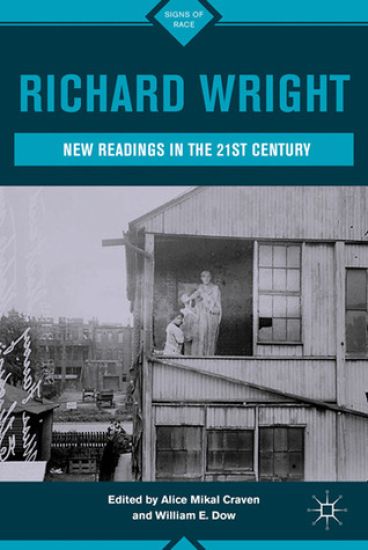
Richard Wright
Palgrave Macmillan
2011
sidottu
This wide-ranging collection of essays contains unexplored themes and theoretical orientations centering on racism and spatial dimensions; the transnational and political Wright; Wright and masculinity, Wright and the American 1950s and 1960s; and some of the first analyses of Wright's recently published A Father ' s Law (2008).

From the Royal Shakespeare Company – a definitive, fresh new look at Shakespeare’s most compelling villain. With an expert introduction by Sir Jonathan Bate, this unique edition presents a historical overview of Richard III in performance, takes a detailed look at specific productions, and recommends film versions. Included in this edition are interviews with an actor, a director and a designer – Simon Russell Beale, Bill Alexander and Tom Piper – providing an illuminating insight into the extraordinary variety of interpretations that are possible. This edition also includes an essay on Shakespeare’s career and Elizabethan theatre, and enables the reader to understand the play as it was originally intended – as living theatre to be enjoyed and performed. Ideal for students, theatre-goers, actors and general readers, the RSC Shakespeare editions offer a fresh, accessible and contemporary approach to reading and rediscovering Shakespeare’s works for the twenty-first century.
From the Royal Shakespeare Company – a modern, definitive edition of Shakespeare's tragic history of a ruler losing his grip on power. With an expert introduction by Sir Jonathan Bate, this unique edition presents a historical overview of Richard II in performance, takes a detailed look at specific productions, and recommends film versions. Included in this edition are interviews with two leading directors and an acclaimed actress/director – Michael Boyd, Claus Peymann and Fiona Shaw – providing an illuminating insight into the extraordinary variety of interpretations that are possible. This edition also includes an essay on Shakespeare’s career and Elizabethan theatre, and enables the reader to understand the play as it was originally intended – as living theatre to be enjoyed and performed. Ideal for students, theatre-goers, actors and general readers, the RSC Shakespeare editions offer a fresh, accessible and contemporary approach to reading and rediscovering Shakespeare’s works for the twenty-first century.
This Handbook provides an introductory guide to Richard II offering a scene-by-scene theatrically aware commentary, contextual documents, a brief history of the text and first performances, case studies of three or four key performances and productions, a survey of film and TV adaptations, a wide sampling of critical opinion and further reading.

This Handbook provides an introductory guide to Richard II offering a scene-by-scene theatrically aware commentary, contextual documents, a brief history of the text and first performances, case studies of three or four key performances and productions, a survey of film and TV adaptations, a wide sampling of critical opinion and further reading.
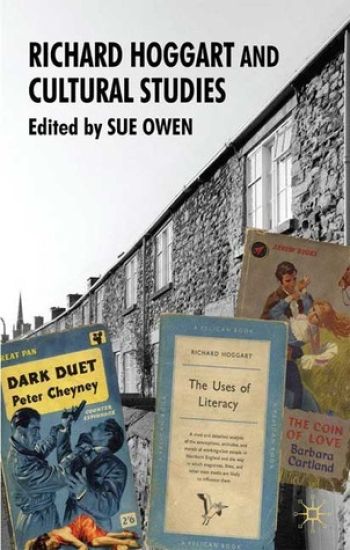
Richard Hoggart and Cultural Studies
Palgrave Macmillan
2008
sidottu
In this new collection of essays, a range of established and emerging cultural critics re-evaluate Richard Hoggart's contribution to the history of ideas and to the discipline of Cultural Studies. They examine Hoggart's legacy, identifying his widespread influence, tracing continuities and complexities, and affirming his importance.
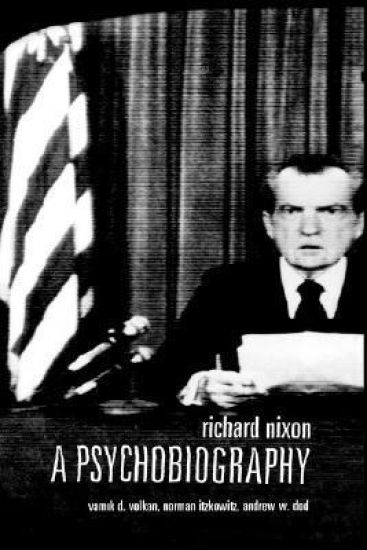
Despite an abundance of literature on Richard Nixon, the man behind the most spectacular crash-and-burn career of modern political history has remained an enigma. What lay behind his obsessive hunger for power and control, his paranoid attacks against enemies real and perceived, his refusal to accept defeat? Why did a man who had achieved so much feel so unfulfilled even at the height of his power? And what drove the president responsible for such triumphs as the opening of relations with China to the depths of the most devastating political scandal in American history? Richard Nixon: A Psychobiography is the first thoroughgoing psychological portrait of the 37th president, drawing upon telling interviews with Nixon intimates, published and archived materials, while employing a rigorous psychoanalytic methodology. Tracing the development of Nixon's complex psyche, the authors provide new insight not only into his unconscious motivations but also into the way they influenced his political actions, whether shrewd or disastrous. The authors explore Nixon's difficult upbringing-his mean-spirited, abusive father and often-absent mother; episodic physical trauma and mental deprivation; the tragic deaths of his two brothers; his rejection by the first woman he hoped to marry; and the long pursuit of his eventual wife, Pat. Nixon emerges as a narcissistic man with an extraordinary sense of purpose, yet one who suffered from inner conflicts and self-destructive tendencies. His desire to heal difficult political conflicts and his need to punish himself continually were attempts to reconcile the crippling contradiction between a grandiose self image and an impoverished private sense of worth. Projecting his own devalued self image onto others, attempting to control and destroy them, Nixon surrendered to the excessive suspiciousness that would eventually lead to his downfall. Here are the three faces of Nixon's complex psyche-the grandiose persona, which manifested itself in bold policy moves like "The New Federalism" and the China initiative; the peacemaker, whose desire to heal internal conflicts can be seen in the policies of detente and the "Southern" desegregation strategy; and the paranoid degraded self, which struck out against those who had humiliated him and was responsible for the bombing of Cambodia and the Watergate break-in. This probing analysis makes intelligible the moments in Nixon's presidency that have provoked much speculation but few answers, from his attempt to talk to Vietnam war protesters during a pre-dawn visit to the Lincoln Memorial to his keeping of the White House tapes. A more nuanced, more humanized Nixon emerges in a book that also provides compelling evidence that the politics of a nation is subject to the unconscious needs, fears, and fantasies of its leaders.

Despite an abundance of literature on Richard Nixon, the man behind the most spectacular crash-and-burn career of modern political history has remained an enigma. What lay behind his obsessive hunger for power and control, his paranoid attacks against enemies real and perceived, his refusal to accept defeat? Why did a man who had achieved so much feel so unfulfilled even at the height of his power? And what drove the president responsible for such triumphs as the opening of relations with China to the depths of the most devastating political scandal in American history? Richard Nixon: A Psychobiography is the first thoroughgoing psychological portrait of the 37th president, drawing upon telling interviews with Nixon intimates, published and archived materials, while employing a rigorous psychoanalytic methodology. Tracing the development of Nixon's complex psyche, the authors provide new insight not only into his unconscious motivations but also into the way they influenced his political actions, whether shrewd or disastrous. The authors explore Nixon's difficult upbringing-his mean-spirited, abusive father and often-absent mother; episodic physical trauma and mental deprivation; the tragic deaths of his two brothers; his rejection by the first woman he hoped to marry; and the long pursuit of his eventual wife, Pat. Nixon emerges as a narcissistic man with an extraordinary sense of purpose, yet one who suffered from inner conflicts and self-destructive tendencies. His desire to heal difficult political conflicts and his need to punish himself continually were attempts to reconcile the crippling contradiction between a grandiose self image and an impoverished private sense of worth. Projecting his own devalued self image onto others, attempting to control and destroy them, Nixon surrendered to the excessive suspiciousness that would eventually lead to his downfall. Here are the three faces of Nixon's complex psyche-the grandiose persona, which manifested itself in bold policy moves like "The New Federalism" and the China initiative; the peacemaker, whose desire to heal internal conflicts can be seen in the policies of detente and the "Southern" desegregation strategy; and the paranoid degraded self, which struck out against those who had humiliated him and was responsible for the bombing of Cambodia and the Watergate break-in. This probing analysis makes intelligible the moments in Nixon's presidency that have provoked much speculation but few answers, from his attempt to talk to Vietnam war protesters during a pre-dawn visit to the Lincoln Memorial to his keeping of the White House tapes. A more nuanced, more humanized Nixon emerges in a book that also provides compelling evidence that the politics of a nation is subject to the unconscious needs, fears, and fantasies of its leaders.

Peter K. Jakob prSsentiert in dieser Dokumentation das Leben und Werk von Richard Adolf Zutt als KYnstler, Metall- und Keramik-Kunsthandwerker und als Lehrer fYr SchYler, Studenten, Laien und Arbeitslose. 1887 in Basel geboren, als Autodidakt in MYnchen und Florenz so erfolgreich, dass er als Professor an die Kunstgewerbeschule in Budapest berufen wurde. WShrend des Ersten Weltkrieges beteiligte er seine SchYler und Studentinnen u.a. an der Produktion von Medaillen zugunsten von WohltStigkeitsorganisationen. In den 1920er-Jahren wirkte er an der Neuen Schule in Hellerau (zusammen mit A. S. Neill) und leitete die Ostdeutschen WerkstStten in Neisse In Paris stellte er ein Projekt fYr ein riesiges Weltfriedenskreuz vor. Ab 1930 leitete er WerkstStten fYr Sltere Arbeitslose, und entwickelte die Aluminiumlegierung Razutal, die auch fYr das Luftschiff Zeppelin II verwendet worden sei. Bei der RYckreise von Ceylon in die Schweiz 1938 erlitt er einen plstzlichen Tod auf einem deutschen Schiff im Suezkanal.
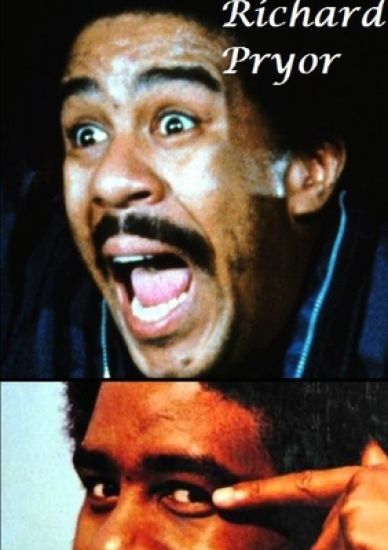
Richard Franklin Lennox Thomas Pryor, born on December 1st, 1940, Peoria, Illinois, U.S. was a stand-up comedian, actor, and writer, who reached a wide audience with his trenchant observations and storytelling style, being widely regarded as one of the greatest, most influential stand-up comedians of all time. His body of work includes the concert movies and recordings: Richard Pryor: Live & Smokin' (1971), That Nigger's Crazy (1974), ...Is It Something I Said? (1975), Bicentennial Nigger (1976), Richard Pryor: Live in Concert (1979), Richard Pryor: Live on the Sunset Strip (1982), and Richard Pryor: Here and Now (1983).

22 August 1485. Henry Tudor lay dead. The Battle of Bosworth was over and King Richard III rode into Leicester in triumph with the cheers of the people ringing in his ears. Elated at his victory and relieved that the Lancastrian threat to his throne was no more, he could now concentrate on ruling a country at peace.Though he still mourned his beloved wife who had died earlier that year, Richard realised that he must next make a suitable marriage to provide an heir to ensure the succession. After his return to Westminster, he discovered the truth of what had befallen his two nephews, the so-called Princes in the Tower, clearing him of any involvement.This is the story of what could have happened if Richard had been victorious at Bosworth. There would have been no tyrannical Tudors and no dissolution of the monasteries. Instead, England would have enjoyed years of peace and prosperity with enlightened laws that benefited the ordinary people in the reign of Good King Richard, loved by all who knew him.

As either observer or participant, radio deejay and political activist Richard E. Stamz witnessed every significant period in the history of blues and jazz in the last century. From performing first-hand as a minstrel in the 1920s to broadcasting Negro League baseball games in a converted 1934 Chrysler to breaking into Chicago radio and activist politics and hosting his own television variety show, the remarkable story of his life also is a window into milestones of African American history throughout the twentieth century.Dominating the airwaves with his radio show "Open the Door, Richard" on WGES in Chicago, Stamz cultivated friendships with countless music legends, including Willie Dixon, Sonny Boy Williamson, Little Walter, Howlin' Wolf, Memphis Slim, and Leonard Chess. The pioneering Chicago broadcaster and activist known as "The Crown Prince of Soul" died in 2007 at the age of 101, but not before he related the details of his life and career to college professor Patrick A. Roberts. Give 'Em Soul, Richard! surrounds Stamz's memories of race records, juke joints, and political action in Chicago's Englewood neighborhood with insights on the larger historical trends that were unfolding around him in radio and American history. Narrated by Stamz, this entertaining and insightful chronicle includes commentary by Roberts as well as reflections on the unlikely friendship and collaboration between a black radio legend and a white academic that resulted in one of the few existing first-hand accounts of Chicago's post-war radio scene.

Richard Linklater's filmmaking choices seem to defy basic patterns of authorship. From his debut with the inventive independent narrative Slacker, the Austin-based director's divergent films have included the sci-fi noir A Scanner Darkly, the socially conscious Fast Food Nation, the kid-friendly The School of Rock, the teen ensemble Dazed and Confused, and the twin romances Before Sunrise and Before Sunset. Yet throughout his varied career spanning two decades, Linklater has maintained a sense of integrity while working within a broad range of budgets, genres, and subject matters. Identifying a critical commonality among so much variation, David T. Johnson analyzes Linklater's preoccupation with the concept of time in many of his films, focusing on its many forms and aspects: the subjective experience of time and the often explicit, self-aware ways that characters discuss that experience; time and memory, and the ways that characters negotiate memory in the present; the moments of adolescence and early adulthood as crucial moments in time; the relationship between time and narrative in film; and how cinema, itself, may be becoming antiquated. While Linklater's focus on temporality often involves a celebration of the present that is not divorced from the past and future, Johnson argues that this attendance to the present also includes an ongoing critique of modern American culture. Crucially filling a gap in critical studies of this American director, the volume concludes with an interview with Linklater discussing his career.

As a historian, theologian, and mentor, Richard Lyman Bushman greatly influenced the shaping of how those inside and outside the Church perceived Latter-day Saint history. J.B. Haws's examination of Bushman's life and thought tells the story of a scholar with a foot in both the LDS faith and secular society, and his efforts to bridge their two very different worldviews. Bushman integrated his acquired fluency and comfort inside academia with his native understanding of the Church of Jesus Christ of Latter-day Saints. In his work, he translated, interpreted, and explained the LDS faith to the wider world. His professional status strengthened his arguments for an honest, transparent, and responsible approach to Church history. His devoted religious practice convinced his co-religionists of his sincerity. To his academic colleagues, Bushman advocated for a religious perspective in scholarship, while widespread respect for his work opened the door to his ideas. Perceptive and illuminating, Richard Lyman Bushman explores the far-reaching contributions of an important LDS historian, theologian, and teacher.
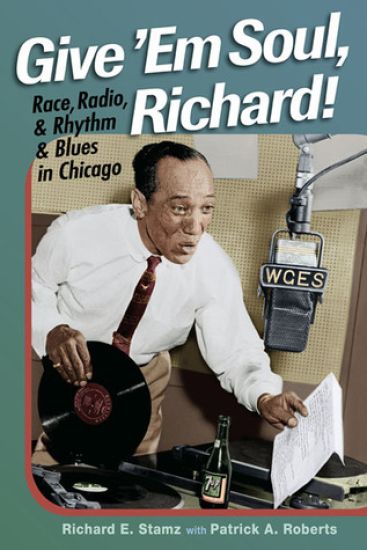
As either observer or participant, radio deejay and political activist Richard E. Stamz witnessed every significant period in the history of blues and jazz in the last century. From performing first-hand as a minstrel in the 1920s to broadcasting Negro League baseball games in a converted 1934 Chrysler to breaking into Chicago radio and activist politics and hosting his own television variety show, the remarkable story of his life also is a window into milestones of African American history throughout the twentieth century.Dominating the airwaves with his radio show "Open the Door, Richard" on WGES in Chicago, Stamz cultivated friendships with countless music legends, including Willie Dixon, Sonny Boy Williamson, Little Walter, Howlin' Wolf, Memphis Slim, and Leonard Chess. The pioneering Chicago broadcaster and activist known as "The Crown Prince of Soul" died in 2007 at the age of 101, but not before he related the details of his life and career to college professor Patrick A. Roberts. Give 'Em Soul, Richard! surrounds Stamz's memories of race records, juke joints, and political action in Chicago's Englewood neighborhood with insights on the larger historical trends that were unfolding around him in radio and American history. Narrated by Stamz, this entertaining and insightful chronicle includes commentary by Roberts as well as reflections on the unlikely friendship and collaboration between a black radio legend and a white academic that resulted in one of the few existing first-hand accounts of Chicago's post-war radio scene.

Richard Linklater's filmmaking choices seem to defy basic patterns of authorship. From his debut with the inventive independent narrative Slacker, the Austin-based director's divergent films have included the sci-fi noir A Scanner Darkly, the socially conscious Fast Food Nation, the kid-friendly The School of Rock, the teen ensemble Dazed and Confused, and the twin romances Before Sunrise and Before Sunset. Yet throughout his varied career spanning two decades, Linklater has maintained a sense of integrity while working within a broad range of budgets, genres, and subject matters. Identifying a critical commonality among so much variation, David T. Johnson analyzes Linklater's preoccupation with the concept of time in many of his films, focusing on its many forms and aspects: the subjective experience of time and the often explicit, self-aware ways that characters discuss that experience; time and memory, and the ways that characters negotiate memory in the present; the moments of adolescence and early adulthood as crucial moments in time; the relationship between time and narrative in film; and how cinema, itself, may be becoming antiquated. While Linklater's focus on temporality often involves a celebration of the present that is not divorced from the past and future, Johnson argues that this attendance to the present also includes an ongoing critique of modern American culture. Crucially filling a gap in critical studies of this American director, the volume concludes with an interview with Linklater discussing his career.

As a historian, theologian, and mentor, Richard Lyman Bushman greatly influenced the shaping of how those inside and outside the Church perceived Latter-day Saint history. J.B. Haws's examination of Bushman's life and thought tells the story of a scholar with a foot in both the LDS faith and secular society, and his efforts to bridge their two very different worldviews. Bushman integrated his acquired fluency and comfort inside academia with his native understanding of the Church of Jesus Christ of Latter-day Saints. In his work, he translated, interpreted, and explained the LDS faith to the wider world. His professional status strengthened his arguments for an honest, transparent, and responsible approach to Church history. His devoted religious practice convinced his co-religionists of his sincerity. To his academic colleagues, Bushman advocated for a religious perspective in scholarship, while widespread respect for his work opened the door to his ideas. Perceptive and illuminating, Richard Lyman Bushman explores the far-reaching contributions of an important LDS historian, theologian, and teacher.

Two-time chairman of the Senate Foreign Relations Committee, Richard G. Lugar has been one of the most widely respected foreign policy experts in Congress for over three decades. In this illuminating profile, John T. Shaw examines Lugar's approach to lawmaking and diplomacy for what it reveals about the workings of the Senate and changes in that institution. Drawing on interviews with Lugar and other leading figures in foreign policy, Shaw chronicles Lugar's historic work on nuclear proliferation, arms control, energy, and global food issues, highlighting the senator's ability to influence American foreign policy in consequential ways. The book presents Lugar's career as an example of the role Congress can play in the shaping of foreign policy in an era of a strong executive branch. It demonstrates the importance of statesmanship in contemporary American political life while acknowledging the limitations of this approach to governance.
In the early 1900s, so-called race filmmakers set out to produce black-oriented pictures to counteract the racist caricatures that had dominated cinema from its inception. Richard E. Norman, a southern-born white filmmaker, was one such pioneer. From humble beginnings as a roving "home talent" filmmaker, recreating photoplays that starred local citizens, Norman would go on to produce high-quality feature-length race pictures. Together with his better-known contemporaries Oscar Micheaux and Noble and George Johnson, Richard E. Norman helped to define early race filmmaking. Making use of unique archival resources, including Norman's personal and professional correspondence, detailed distribution records, and newly discovered original shooting scripts, this book offers a vibrant portrait of race in early cinema.