Kirjojen hintavertailu. Mukana 11 342 296 kirjaa ja 12 kauppaa.

Kirjahaku

Etsi kirjoja tekijän nimen, kirjan nimen tai ISBN:n perusteella.

1000 tulosta hakusanalla Richard J. Perry

The Sacred Remains

The Sacred Remains

Richard J. Parmentier

University of Chicago Press
1987
sidottu
Based on two years of fieldwork in Belau, an Austronesian culture in western Micronesia, The Sacred Remains is an outstanding example of the new approach to ethnographic writing that challenges Western views of the history of non-Western societies. Richard J. Parmentier employs semiotic methods to analyze both linguistic and nonlinguistic signs representing Belauan history, showing that these signs also organize social and political structures. He identifies four pervasive semiotic patterns that appear rhetorically in myths, chants, and historical narratives and graphically in the arrangement of certain classes of stones, including village boundary markers, burial platforms, exchange valuables, and monoliths found at abandoned sites in the islands. While not neglecting historical evidence from Western sources, Parmentier contends that the history of Belau cannot be understood without taking into full account indigenous categories of space, time, and transformation and without recognizing the importance of Belauan social actions that construct, interpret, and transmit historical knowledge. Supporting his analysis of Belauan history with concrete ethnographic demonstration, Parmentier presents a work of central importance for Austronesianists, anthropologists, and historians.
The Making of Environmental Law

The Making of Environmental Law

Richard J. Lazarus

THE UNIVERSITY OF CHICAGO PRESS
2023
nidottu
An updated and passionate second edition of a foundational book. How did environmental law first emerge in the United States? Why has it evolved in the ways that it has? And what are the unique challenges inherent to environmental lawmaking in general and in the United States in particular? Since its first edition, The Making of Environmental Law has been foundational to our understanding of these questions. For the second edition, Richard J. Lazarus returns to his landmark book and takes stock of developments over the last two decades. Drawing on many years of experience on the frontlines of legal and policy battles, Lazarus provides a theoretical overview of the challenges that environmental protection poses for lawmaking, related to both the distinctive features of US lawmaking institutions and the spatial and temporal dimensions of ecological change. The book explains why environmental law emerged in the manner and form that it did in the 1970s and traces how it developed over sequent decades through key laws and controversies. New chapters, composing more than half of the second edition, examine a host of recent developments. These include how Congress dropped out of environmental lawmaking in the early twenty-first century; the shifting role of the judiciary; long-overdue efforts to provide environmental justice to disadvantaged communities; and the destabilization of environmental law that has resulted from the election of Presidents with dramatically clashing environmental policies. As the nation’s partisan divide has grown deeper and the challenge of climate change has dramatically raised the perceived stakes for opposing interests, environmental law is facing its greatest challenges yet. This book is essential reading for understanding where we have been and what challenges and opportunities lie ahead.
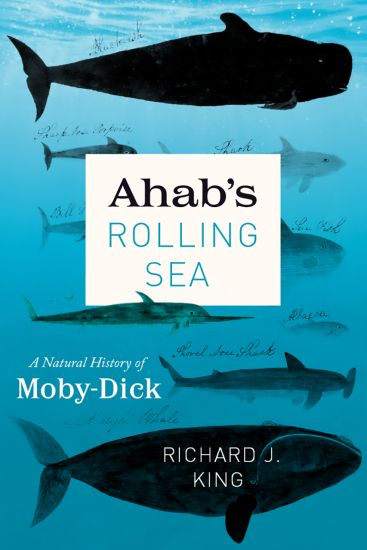
Ahab's Rolling Sea

Ahab's Rolling Sea

Richard J King

University of Chicago Press
2021
pokkari
Although Herman Melville's Moby-Dick is beloved as one of the most profound and enduring works of American fiction, we rarely consider it a work of nature writing—or even a novel of the sea. Yet Pulitzer Prize–winning author Annie Dillard avers Moby-Dick is the "best book ever written about nature," and nearly the entirety of the story is set on the waves, with scarcely a whiff of land. In fact, Ishmael's sea yarn is in conversation with the nature writing of Emerson and Thoreau, and Melville himself did much more than live for a year in a cabin beside a pond. He set sail: to the far remote Pacific Ocean, spending more than three years at sea before writing his masterpiece in 1851. A revelation for Moby-Dick devotees and neophytes alike, Ahab's Rolling Sea is a chronological journey through the natural history of Melville's novel. From white whales to whale intelligence, giant squids, barnacles, albatross, and sharks, Richard J. King examines what Melville knew from his own experiences and the sources available to a reader in the mid-1800s, exploring how and why Melville might have twisted what was known to serve his fiction. King then climbs to the crow's nest, setting Melville in the context of the American perception of the ocean in 1851—at the very start of the Industrial Revolution and just before the publication of On the Origin of Species. King compares Ahab's and Ishmael's worldviews to how we see the ocean today: an expanse still immortal and sublime, but also in crisis. And although the concept of stewardship of the sea would have been entirely foreign, if not absurd, to Melville, King argues that Melville's narrator Ishmael reveals his own tendencies toward what we would now call environmentalism. Featuring a coffer of illustrations and an array of interviews with contemporary scientists, fishers, and whale watch operators, Ahab's Rolling Sea offers new insight not only into a cherished masterwork and its author but also into our evolving relationship with the briny deep—from whale hunters to climate refugees.
Ocean Bestiary

Ocean Bestiary

Richard J. King

THE UNIVERSITY OF CHICAGO PRESS
2023
sidottu
A delightful A-to-Z menagerie of the sea—whimsically illustrated, authoritative, and thought-provoking. For millennia, we have taken to the waves. And yet, for humans, the ocean remains our planet’s most inaccessible region, the place about which we know the least. From A to Z, abalone to zooplankton, and through both text and original illustrations, Ocean Bestiary is a celebration of our ongoing quest to know the sea and its creatures. Focusing on individual species or groups of animals, Richard J. King embarks upon a global tour of ocean wildlife, including beluga whales, flying fish, green turtles, mako sharks, noddies, right whales, sea cows (as well as sea lions, sea otters, and sea pickles), skipjack tuna, swordfish, tropicbirds, walrus, and yellow-bellied sea snakes. But more than this, King connects the natural history of ocean animals to the experiences of people out at sea and along the world’s coastlines. From firsthand accounts passed down by the earliest Polynesian navigators to observations from Wampanoag clamshell artists, African-American whalemen, Korean female divers (or haenyeo), and today’s pilots of deep-sea submersibles—and even to imaginary sea expeditions launched through poems, novels, and paintings—Ocean Bestiary weaves together a diverse array of human voices underrepresented in environmental history to tell the larger story of our relationship with the sea. Sometimes funny, sometimes alarming, but always compelling, King’s vignettes reveal both how our perceptions of the sea have changed for the better and how far we still have to go on our voyage.
The Making of Environmental Law

The Making of Environmental Law

Richard J. Lazarus

THE UNIVERSITY OF CHICAGO PRESS
2023
sidottu
An updated and passionate second edition of a foundational book. How did environmental law first emerge in the United States? Why has it evolved in the ways that it has? And what are the unique challenges inherent to environmental lawmaking in general and in the United States in particular? Since its first edition, The Making of Environmental Law has been foundational to our understanding of these questions. For the second edition, Richard J. Lazarus returns to his landmark book and takes stock of developments over the last two decades. Drawing on many years of experience on the frontlines of legal and policy battles, Lazarus provides a theoretical overview of the challenges that environmental protection poses for lawmaking, related to both the distinctive features of US lawmaking institutions and the spatial and temporal dimensions of ecological change. The book explains why environmental law emerged in the manner and form that it did in the 1970s and traces how it developed over sequent decades through key laws and controversies. New chapters, composing more than half of the second edition, examine a host of recent developments. These include how Congress dropped out of environmental lawmaking in the early twenty-first century; the shifting role of the judiciary; long-overdue efforts to provide environmental justice to disadvantaged communities; and the destabilization of environmental law that has resulted from the election of Presidents with dramatically clashing environmental policies. As the nation’s partisan divide has grown deeper and the challenge of climate change has dramatically raised the perceived stakes for opposing interests, environmental law is facing its greatest challenges yet. This book is essential reading for understanding where we have been and what challenges and opportunities lie ahead.
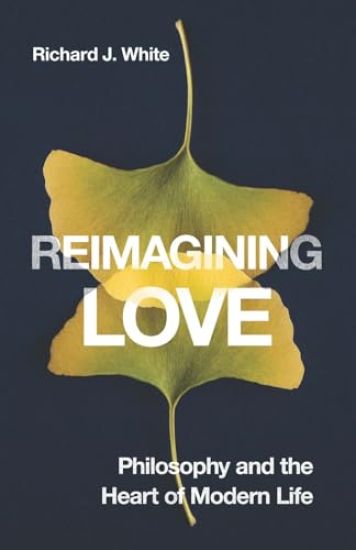
Reimagining Love

Reimagining Love

Richard J. White

MCGILL-QUEEN'S UNIVERSITY PRESS
2026
nidottu
An emotion or an action, a kind of madness or a state of well-being, a measurable brain activity or a spiritual phenomenon: What is the truth about love? Richard White explores this elusive concept as a profound path of self-overcoming – a turning away from narcissism, fear, and isolation toward greater openness, receptivity, and compassion. Reimagining Love unfolds in four movements, through the fear of love as expressed in Stoicism and the modern achievement-oriented self; the awakening of love described by Plato, J.W. von Goethe, Rainer Maria Rilke, and others; the work of love and the cultivation of its virtues; and love as active compassion, a way of engaging with the world attentively, courageously, and non-possessively. White unites theory and practice, arguing that personal love can open outward into universal compassion, echoing the Buddhist ideal of karu?a – the selfless embrace of another’s suffering. Central to this vision is love’s spiritual dimension. It is not religious as such, but a source of meaning grounded in our sense of connection to something greater: nature, truth, justice, or the sacred itself. Written with clarity and quiet authority, Reimagining Love offers a meditation on the ethical and existential significance of love for denizens of a disenchanted world.
Adapting Graham Greene

Adapting Graham Greene

Richard J. Hand; Andrew Purssell

Red Globe Press
2014
sidottu
A highly original and engaging study of the novels and adaptations of Graham Greene, one of the most prolific writers of the 20th century. Far-reaching but focused, the text offers an accessible introduction to adaptation studies and examines the industries in which Greene functioned as author, screenwriter, film critic and cultural figure.
Adapting Graham Greene

Adapting Graham Greene

Richard J. Hand; Andrew Purssell

Red Globe Press
2014
nidottu
Graham Greene was one of the most versatile writers of the 20th century, and he remains a figure of particular interest to those concerned with the relationship between literature and cinema. As well as being a skilled screenwriter in his own right, most famously with The Third Man, Greene's fiction has proved to be a perennially popular source for adaptation, appealing to the broadest range of filmmakers imaginable. In this engaging and accessibly written study, Richard J. Hand and Andrew Purssell introduce adaptation studies and its relation to Greene's works. They present new and incisive readings of key texts, including the various screen versions of Brighton Rock, The End of the Affair and The Quiet American, among others, and offer a critical examination of the industries in which Greene functioned as author, screenwriter, film critic and cultural figure. By closely exploring the various critical aspects of Greene and adaptation, and by encouraging readers to engage with the topics discussed through the inclusion of innovative exercises, Adapting Graham Greene makes a significant contribution to Graham Greene Studies and Adaptation Studies, as well as to Film and Literary Studies more generally.
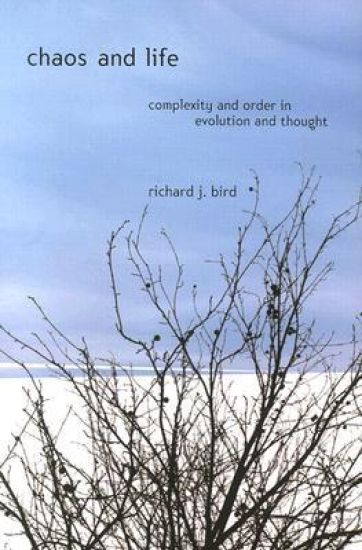
Chaos and Life

Chaos and Life

Richard J. Bird

Columbia University Press
2003
sidottu
Why, in a scientific age, do people routinely turn to astrologers, mediums, cultists, and every kind of irrational practitioner rather than to science to meet their spiritual needs? The answer, according to Richard J. Bird, is that science, especially biology, has embraced a view of life that renders meaningless the coincidences, serendipities, and other seemingly significant occurrences that fill people's everyday existence. Evolutionary biology rests on the assumption that although events are fundamentally random, some are selected because they are better adapted than others to the surrounding world. This book proposes an alternative view of evolving complexity. Bird argues that randomness means not disorder but infinite order. Complexity arises not from many random events of natural selection (although these are not unimportant) but from the "playing out" of chaotic systems-which are best described mathematically. When we properly understand the complex interplay of chaos and life, Bird contends, we will see that many events that appear random are actually the outcome of order.
Hitler's People

Hitler's People

Richard J. Evans

PENGUIN BOOKS LTD
2024
sidottu
THE SUNDAY TIMES TOP TEN BESTSELLER‘Elegantly written and powerfully argued … it ranks among the best works on this terrible period’ Sunday TimesA biographical study of Hitler's inner circle offers a new way to understand the horrors of the Nazi regimeWhy did so many Germans take part in the crimes of Nazi Germany? How did they come to support Hitler and follow him almost to the very end? For too long, the Nazis have been presented as little more than psychopaths or criminals. In his major new work, renowned historian Richard J. Evans makes use of a mass of recently unearthed new evidence to strip away the veneer of myth and legend from the faces of the Third Reich and present a more realistic view of Nazi perpetrators as human beings who were disturbingly like us.Evans offers rounded, fresh and often startling new portraits of the men and women who created and served Nazi Germany, beginning with Hitler himself and going on to encompass leading figures like Göring, Goebbels and Himmler, enforcers of Hitler’s orders such as Eichmann and Heydrich, propagandists like Leni Riefenstahl, low-level perpetrators such as the notorious Irma Grese and unknown sympathizers and fellow-travellers who helped the regime in myriad ways.Hitler’s People is a chilling, brilliantly written work which allows the reader to understand the texture and values of the Third Reich and just how far individuals will go when so many normal moral constraints have disappeared.
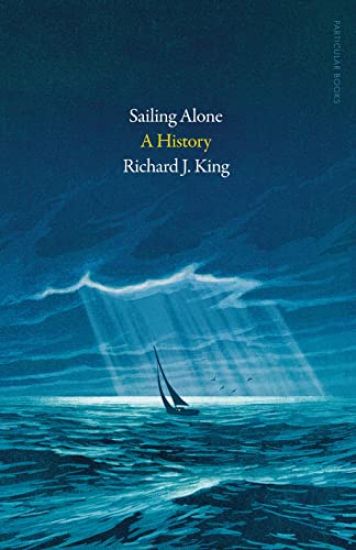
Sailing Alone

Sailing Alone

Richard J. King

PENGUIN BOOKS LTD
2023
sidottu
'An exceptional book. Sailing Alone belongs on the very small shelf of the true classics of the sea' Peter Nichols, author of Sea Change and A Voyage for Madmen'Colourful and inventive' The TimesSailing on a boat by yourself out at sea and out of sight of land can be exhilarating or terrifying, compelling or tedious - sometimes it can be all of these things just in one morning. It is an adventure at odds with our normal, sociable lives, carried out floating on a medium wholly inimical to our existence. But the deep ocean is also a remarkable place on which to think.Richard King's enormously engaging and curious new book is about the debt we owe to solo sailors: women and men, young and old, who have set out alone. Spending weeks and months alone, slowly, quietly and close to the ocean surface is to create the world's largest laboratory: an endlessly changing, capricious and startling place in which to observe oneself, the weather, the stars and myriad sea creatures, from the tiniest to the most massive and threatening.This is a book for anyone who is fascinated by sailing, solitude and the vast seas that cover so much of our planet.
Nietzsche and the Problem of Sovereignty

Nietzsche and the Problem of Sovereignty

Richard J. White

University of Illinois Press
1997
nidottu
From The Birth of Tragedy on, Nietzsche worked to comprehend the nature of the individual. Richard White shows how Nietzsche was inspired and guided by the question of personal "sovereignty" and how through his writings he sought to provoke the very sovereignty he described. White argues that Nietzsche is a philosopher our contemporary age must therefore come to understand if we are ever to secure a genuinely meaningful direction for the future. Profoundly relevant to our era, Nietzsche's philosophy addresses a version of individuality that allows us to move beyond the self-dispossession of mass society and the alternative of selfish individualism--to fully understand how one becomes what one is. A volume in the International Nietzsche Studies series, edited by Richard Schacht
Illinois

Illinois

Richard J. Jensen

University of Illinois Press
2001
nidottu
The epic struggle between traditional, agrarian society and modern industrial capitalism was played out on the national stage as the War between the States. The same struggle between traditional and modern values split Illinois between "Egypt"--the southern region populated by yeoman farmers who came to Illinois from Kentucky, Virginia, Missouri, and other southern states--and the Yankee-dominated, urban north. Richard J. Jensen treats Illinois as a microcosm of the nation, arguing that its history exhibits basic conflicts that had much to do with shaping American society in general. Northern reformers in Illinois were intent on remaking the state in their image: middle-class, egalitarian, urban, and progressive. These values clashed with the patriarchal supremacy and intense loyalty to kin and ken by which the people of southern Illinois, and the South, organized their lives. When the Civil War broke out, sympathy for the Confederacy ran high in southern Illinois. Although the region officially supported the Union, guerrilla bands terrorized Unionists, and in Charleston a full-scale riot against Federal troops erupted in 1864. The Union victory decisively shifted both the nation and Illinois toward faster modernization. Violence became more bureaucratized, and localism eroded with the onslaught of chain franchises, consolidated schools, and homogenized suburbs. Jensen extends his discussion to the emergence of newer, postmodern conflicts that continue to occupy the people of Illinois. Without neglecting the high-profile individuals and events that put the Prairie State on the map, Jensen offers an innovative, wide-angle view that expands our perspective on Illinois history.
Golf and the American Country Club

Golf and the American Country Club

Richard J. Moss

University of Illinois Press
2007
nidottu
Often seen as anti-egalitarian and elitist, the country club has provoked strong responses since its initial appearance in the late 1800s. Golf, another elitist identifier, was commonly dismissed as a pseudo-sport or even unmanly. Where and how had the country club and the game of golf taken root in the United States? How had the manicured order of the golf course become a cultural site that elicited both strong loyalties and harsh criticism? Richard J. Moss's cultural history explores the establishment of the country club as an American social institution and its inextricable connection to the ancient, imported game of golf. Moss traces the evolution of country clubs from informal groups of golf-playing friends to “country estates” in the suburbs and, eventually, into public and private daily fee courses, corporate country clubs, and gated golfing communities. As he shows, the development of these institutions reveals profound shifts in social dynamics, core American values, and attitudes toward health and sport.
Signs and Society

Signs and Society

Richard J. Parmentier

Indiana University Press
2016
sidottu
Brilliantly articulating the potent intersections of semiotic and linguistic anthropology, Signs and Society demonstrates how a keen appreciation of signs helps us better understand human agency, meaning, and creativity. Inspired by the foundational contributions of C. S. Peirce and Ferdinand de Saussure, and drawing upon key insights from neighboring scholarly fields, noted anthropologist Richard J. Parmentier develops an array of innovative conceptual tools for ethnographic, historical, and literary research. His concepts of "transactional value," "metapragmatic interpretant," and "circle of semiosis," for example, illuminate the foundations and effects of such diverse cultural forms and practices as economic exchanges on the Pacific island of Palau, Pindar's Victory Odes in ancient Greece, and material representations of transcendence in ancient Egypt and medieval Christianity. Other studies complicate the separation of emic and etic analytical models for such cultural domains as religion, economic value, and semiotic ideology. Provocative and absorbing, these fifteen pioneering essays blaze a trail into anthropology's future while remaining firmly rooted in its celebrated past.
Signs and Society

Signs and Society

Richard J. Parmentier

Indiana University Press
2016
pokkari
Brilliantly articulating the potent intersections of semiotic and linguistic anthropology, Signs and Society demonstrates how a keen appreciation of signs helps us better understand human agency, meaning, and creativity. Inspired by the foundational contributions of C. S. Peirce and Ferdinand de Saussure, and drawing upon key insights from neighboring scholarly fields, noted anthropologist Richard J. Parmentier develops an array of innovative conceptual tools for ethnographic, historical, and literary research. His concepts of "transactional value," "metapragmatic interpretant," and "circle of semiosis," for example, illuminate the foundations and effects of such diverse cultural forms and practices as economic exchanges on the Pacific island of Palau, Pindar's Victory Odes in ancient Greece, and material representations of transcendence in ancient Egypt and medieval Christianity. Other studies complicate the separation of emic and etic analytical models for such cultural domains as religion, economic value, and semiotic ideology. Provocative and absorbing, these fifteen pioneering essays blaze a trail into anthropology's future while remaining firmly rooted in its celebrated past.
Signs in Society

Signs in Society

Richard J. Parmentier

Indiana University Press
1994
sidottu
Richard Parmentier takes up Ferdinand de Saussure's challenge to study the "life of signs in society" by using semiotic tools proposed by Charles Sanders Peirce. He studies how semiotic theory can illuminate highly complex social and cultural practices.
Work and Faith in the Kentucky Coal Fields

Work and Faith in the Kentucky Coal Fields

Richard J. Callahan

Indiana University Press
2008
sidottu
Exploring themes of work and labor in everyday life, Richard J. Callahan, Jr., offers a history of how coal miners and their families lived their religion in eastern Kentucky's coal fields during the early 20th century. Callahan follows coal miners and their families from subsistence farming to industrial coal mining as they draw upon religious idioms to negotiate changing patterns of life and work. He traces innovation and continuity in religious expression that emerged from the specific experiences of coal mining, including the spaces and social structures of coal towns, the working bodies of miners, the anxieties of their families, and the struggle toward organized labor. Building on oral histories, folklore, folksongs, and vernacular forms of spirituality, this rich and engaging narrative recovers a social history of ordinary working people through religion.