Kirjojen hintavertailu. Mukana 11 244 527 kirjaa ja 12 kauppaa.

Kirjahaku

Etsi kirjoja tekijän nimen, kirjan nimen tai ISBN:n perusteella.

1000 tulosta hakusanalla Robert Cornforth

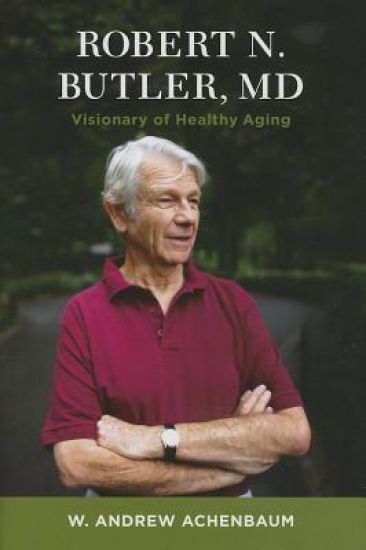
Robert N. Butler, MD

Robert N. Butler, MD

W. Andrew Achenbaum

Columbia University Press
2013
sidottu
Robert Neil Butler (1927-2010) was a scholar, psychiatrist, and Pulitzer Prize-winning author who revolutionized the way the world thinks about aging and the elderly. One of the first psychiatrists to engage with older men and women outside of institutional settings, Butler coined the term "ageism" to draw attention to discrimination against older adults and spent a lifetime working to improve their status, medical treatment, and care. Early in his career, Butler seized on the positive features of late-life development-aspects he documented in his pathbreaking research on "healthy aging" at the National Institutes of Health and in private practice. He set the nation's age-based health care agenda and research priorities as founding director of the National Institute on Aging and by creating the first interprofessional, interdisciplinary department of geriatrics at New York City's Mount Sinai Hospital. In the final two decades of his career, Butler created a global alliance of scientists, educators, practitioners, politicians, journalists, and advocates through the International Longevity Center. A scholar who knew Butler personally and professionally, W. Andrew Achenbaum follows this pioneer's significant contributions to the concept of healthy aging and the notion that aging is not synonymous with physical and mental decline. Emphasizing the progressive aspects of Butler's approach and insight, Achenbaum affirms the ongoing relevance of his work to gerontology, geriatrics, medicine, social work, and related fields.
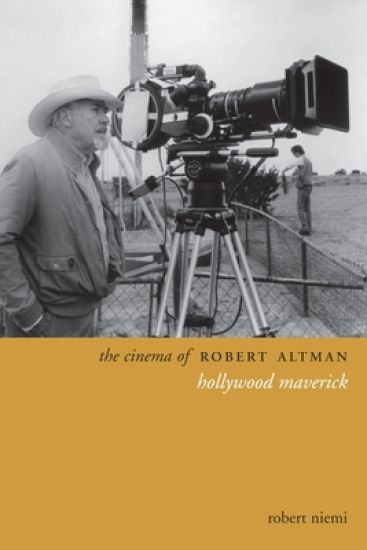
The Cinema of Robert Altman

The Cinema of Robert Altman

Robert Niemi

Wallflower Press
2016
sidottu
In a controversial and tumultuous filmmaking career that spanned nearly fifty years, Robert Altman mocked, subverted, or otherwise refashioned Hollywood narrative and genre conventions. Altman's idiosyncratic vision and propensity for formal experimentation resulted in an uneven body of work: some rank failures and intriguing near-misses, as well as a number of great films that are among the most influential works of New American Cinema. While Altman always professed to have nothing authoritative to say about the state of contemporary society, this volume surveys all of his major films in their sociohistorical context to reposition the director as a trenchant satirist and social critic of postmodern America, depicted as a lonely wasteland of fraudulent spectacle, exploitative social relations, and unfulfilled solitaries in search of elusive community.
The Cinema of Robert Altman

The Cinema of Robert Altman

Robert Niemi

Wallflower Press
2016
pokkari
In a controversial and tumultuous filmmaking career that spanned nearly fifty years, Robert Altman mocked, subverted, or otherwise refashioned Hollywood narrative and genre conventions. Altman's idiosyncratic vision and propensity for formal experimentation resulted in an uneven body of work: some rank failures and intriguing near-misses, as well as a number of great films that are among the most influential works of New American Cinema. While Altman always professed to have nothing authoritative to say about the state of contemporary society, this volume surveys all of his major films in their sociohistorical context to reposition the director as a trenchant satirist and social critic of postmodern America, depicted as a lonely wasteland of fraudulent spectacle, exploitative social relations, and unfulfilled solitaries in search of elusive community.
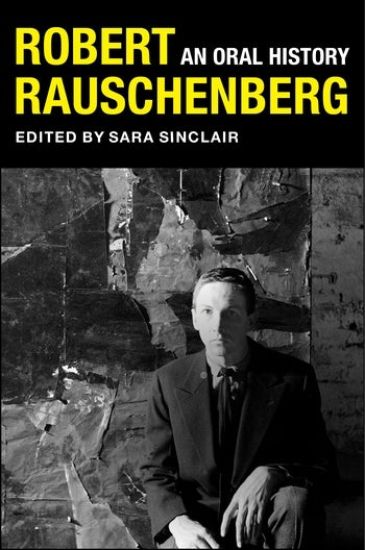
Robert Rauschenberg

Robert Rauschenberg

Columbia University Press
2019
sidottu
Robert Rauschenberg (1925–2008) was a breaker of boundaries and a consummate collaborator. He used silk-screen prints to reflect on American promise and failure, melded sculpture and painting in works called combines, and collaborated with engineers and scientists to challenge our thinking about art. Through collaborations with John Cage, Merce Cunningham, and others, Rauschenberg bridged the music, dance, and visual-art worlds, inventing a new art for the last half of the twentieth century.Robert Rauschenberg is a work of collaborative oral biography that tells the story of one of the twentieth century’s great artists through a series of interviews with key figures in his life—family, friends, former lovers, professional associates, studio assistants, and collaborators. The oral historian Sara Sinclair artfully puts the narrators’ reminiscences in conversation, with a focus on the relationship between Rauschenberg’s intense social life and his art. The book opens with a prologue by Rauschenberg’s sister and then shifts to New York City’s 1950s and ’60s art scene, populated by the luminaries of abstract expressionism. It follows Rauschenberg’s eventual move to Florida’s Captiva Island and his trips across the globe, illuminating his inner life and its effect on his and others’ art.The narrators share their views on Rauschenberg’s work, explore the curatorial thinking behind exhibitions of his art, and reflect on the impact of the influx of money into the contemporary art market. Included are artists famous in their own right, such as Laurie Anderson and Brice Marden, as well as art-world insiders and lesser-known figures who were part of Rauschenberg’s inner circle. Beyond considering Rauschenberg as an artist, this book reveals him as a man embedded in a series of art worlds over the course of a long and rich life, demonstrating the complex interaction of business and personal, public and private in the creation of great art.
Robert Rauschenberg

Robert Rauschenberg

Columbia University Press
2021
pokkari
Robert Rauschenberg (1925–2008) was a breaker of boundaries and a consummate collaborator. He used silk-screen prints to reflect on American promise and failure, melded sculpture and painting in works called combines, and collaborated with engineers and scientists to challenge our thinking about art. Through collaborations with John Cage, Merce Cunningham, and others, Rauschenberg bridged the music, dance, and visual-art worlds, inventing a new art for the last half of the twentieth century.Robert Rauschenberg is a work of collaborative oral biography that tells the story of one of the twentieth century’s great artists through a series of interviews with key figures in his life—family, friends, former lovers, professional associates, studio assistants, and collaborators. The oral historian Sara Sinclair artfully puts the narrators’ reminiscences in conversation, with a focus on the relationship between Rauschenberg’s intense social life and his art. The book opens with a prologue by Rauschenberg’s sister and then shifts to New York City’s 1950s and ’60s art scene, populated by the luminaries of abstract expressionism. It follows Rauschenberg’s eventual move to Florida’s Captiva Island and his trips across the globe, illuminating his inner life and its effect on his and others’ art.The narrators share their views on Rauschenberg’s work, explore the curatorial thinking behind exhibitions of his art, and reflect on the impact of the influx of money into the contemporary art market. Included are artists famous in their own right, such as Laurie Anderson and Brice Marden, as well as art-world insiders and lesser-known figures who were part of Rauschenberg’s inner circle. Beyond considering Rauschenberg as an artist, this book reveals him as a man embedded in a series of art worlds over the course of a long and rich life, demonstrating the complex interaction of business and personal, public and private in the creation of great art.
Robert Winston Science Squad Explains

Robert Winston Science Squad Explains

Robert Winston; Steve Setford; Trent Kirkpatrick

DK Children
2020
sidottu
Have you ever wondered what makes electricity? Or what's inside an atom? Or how high the Moon really is? Or what light is made of and why you need it? The Science Squad provides all the answers in this colourful, fact-packed and informative book, explaining more than 100 key STEAM concepts in a clear way that will appeal to children aged five and above. This is the perfect visual introduction to the key concepts children need to know about all things STEAM. Each topic is explained using illustrated characters that represent science, technology, engineering, art, and maths. The second book in the Science Squad series, Science Squad Explains is an essential read for young STEAM fans.
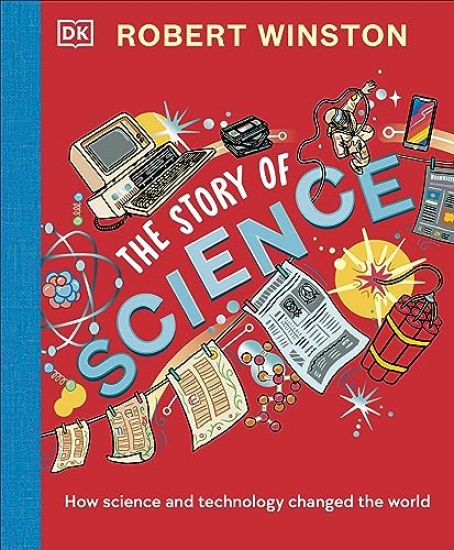
Robert Winston: The Story of Science

Robert Winston: The Story of Science

Robert Winston

DORLING KINDERSLEY LTD
2023
sidottu
Let Professor Robert Winston take you on a scientific journey through human history in this fact-packed science book.Delve into the stories of history's most influential scientific experiments, inventions and life-changing discoveries that have impacted our understanding and changed the world in this science book for kids aged 7-9.Robert Winston's Story of Science will teach children about the incredible world of science through fascinating facts, innovative inventions, and daring discoveries. Learn how random accidents have led to some of the greatest findings our world has ever seen, and how anybody who dares to dream can be successful.This fascinating science book for children offers:- Expertly written and accessible text by Robert Winston for children of the appropriate age to understand and enjoy even trickier concepts.- An exploration of each invention's past, present, and future development that is explored for a thorough and modern look at the role of science, technology and design in our everyday lives.- The answers to some of the most fascinating queries on the history of our world; piquing children's curiosities and sparking interest.From the creation of dynamite and the world's first printer, to magical medicine and the discovery of soap; science really is the pioneering study that has the power to change everything! This book of amazing scientific concepts and discoveries covers a wide range of topics to inspire the next generation of young minds.
Robert Johnson, Mythmaking, and Contemporary American Culture

Robert Johnson, Mythmaking, and Contemporary American Culture

Patricia R. Schroeder

University of Illinois Press
2004
sidottu
Mississippi bluesman Robert Johnson died young and left behind just twenty-nine recorded songs. But the legacy, legends, and lore surrounding him loom large in American music history. Merging literary analysis with cultural criticism and biographical study, Patricia R. Schroeder explores Johnson's ongoing role as a cultural icon. Schroeder's detailed analysis engages key images and myths about the blues musician (such as the Faustian crossroads exchange of his soul for guitar virtuosity). Navigating the many competing interpretations that swirl around him, Schroeder reveals the cultural purposes served by the stories and the storytellers. The result is a fascinating examination of the relationships among Johnson's life, its subsequent portrayals, and the forces that drove the representations.Offering penetrating insights into both Johnson and the society that perpetuates him, Robert Johnson, Mythmaking, and Contemporary American Culture is essential reading for blues fans and cultural critics interested in a foundational musical figure.
Robert Ashley

Robert Ashley

Kyle Gann

University of Illinois Press
2012
sidottu
This book explores the life and works of the pioneering opera composer Robert Ashley, one of the leading American composers of the post-Cage generation. Ashley's innovations began in the 1960s when he, along with Alvin Lucier, Gordon Mumma, and David Behrman, formed the Sonic Arts Union, a group that turned conceptualism toward electronics. He was also instrumental in the influential ONCE Group, a theatrical ensemble that toured extensively in the 1960s.During his tenure as its director, the ONCE Festival in Ann Arbor presented most of the decade's pioneers of the performing arts. Particularly known for his development of television operas beginning with Perfect Lives, Ashley spun a long series of similar text/music works, sometimes termed "performance novels." These massive pieces have been compared with Wagner's Ring Cycle for the vastness of their vision, though the materials are completely different, often incorporating noise backgrounds, vernacular music, and highly structured, even serialized, musical structures. Drawing on extensive research into Ashley's early years in Ann Arbor and interviews with Ashley and his collaborators, Kyle Gann chronicles the life and work of this musical innovator and provides an overview of the avant-garde milieu of the 1960s and 1970s to which he was so central. Gann examines all nine of Ashley's major operas to date in detail, along with many minor works, revealing the fanatical structures that underlie Ashley's music as well as private references hidden in his opera librettos.
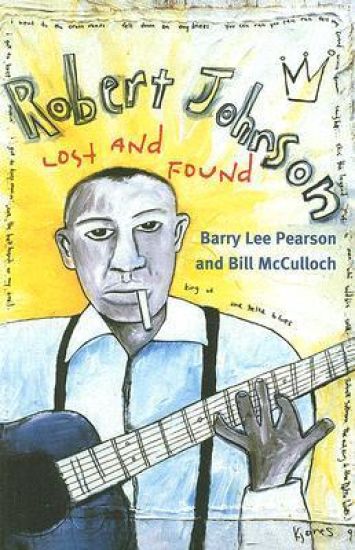
Robert Johnson

Robert Johnson

Barry Lee Pearson; Bill McCulloch

University of Illinois Press
2008
nidottu
Even with just forty-one recordings to his credit, Robert Johnson (1911-38) is a towering figure in the history of the blues. His vast influence on twentieth-century American music, combined with his mysterious death at the age of twenty-seven, still encourage the speculation and myth that have long obscured the facts about his life. The most famous legend depicts a young Johnson meeting the Devil at a dusty Mississippi crossroads at midnight and selling his soul in exchange for prodigious guitar skills. Barry Lee Pearson and Bill McCulloch examine the full range of writings about Johnson and weigh the conflicting accounts of Johnson's life story against interviews with blues musicians and others who knew the man. Their extensive research uncovers a life every bit as compelling as the fabrications and exaggerations that have sprung up around it. In examining the bluesman's life and music, and the ways in which both have been reinvented and interpreted by other artists, critics, and fans, Robert Johnson: Lost and Found charts the cultural forces that have mediated the expression of African American artistic traditions.
Robert Ashley

Robert Ashley

Kyle Gann

University of Illinois Press
2012
nidottu
This book explores the life and works of the pioneering opera composer Robert Ashley, one of the leading American composers of the post-Cage generation. Ashley's innovations began in the 1960s when he, along with Alvin Lucier, Gordon Mumma, and David Behrman, formed the Sonic Arts Union, a group that turned conceptualism toward electronics. He was also instrumental in the influential ONCE Group, a theatrical ensemble that toured extensively in the 1960s.During his tenure as its director, the ONCE Festival in Ann Arbor presented most of the decade's pioneers of the performing arts. Particularly known for his development of television operas beginning with Perfect Lives, Ashley spun a long series of similar text/music works, sometimes termed "performance novels." These massive pieces have been compared with Wagner's Ring Cycle for the vastness of their vision, though the materials are completely different, often incorporating noise backgrounds, vernacular music, and highly structured, even serialized, musical structures. Drawing on extensive research into Ashley's early years in Ann Arbor and interviews with Ashley and his collaborators, Kyle Gann chronicles the life and work of this musical innovator and provides an overview of the avant-garde milieu of the 1960s and 1970s to which he was so central. Gann examines all nine of Ashley's major operas to date in detail, along with many minor works, revealing the fanatical structures that underlie Ashley's music as well as private references hidden in his opera librettos.
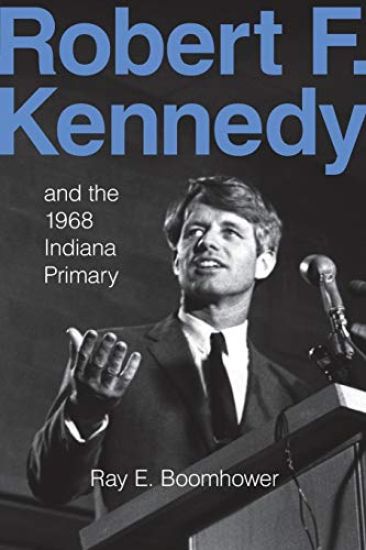
Robert F. Kennedy and the 1968 Indiana Primary

Robert F. Kennedy and the 1968 Indiana Primary

Ray E. Boomhower

Indiana University Press
2017
pokkari
On April 4, 1968, Senator Robert F. Kennedy, Jr., arrived in Indiana to campaign for the Indiana Democratic presidential primary. As Kennedy prepared to fly from an appearance in Muncie to Indianapolis, he learned that civil rights leader Dr. Martin Luther King, Jr., had been shot outside his hotel in Memphis, Tennessee. Before his plane landed in Indianapolis, Kennedy heard the news that King had died. Despite warnings from Indianapolis police that they could not guarantee his safety, and brushing off concerns from his own staff, Kennedy decided to proceed with plans to address an outdoor rally to be held in the heart of the city's African American community. On that cold and windy evening, Kennedy broke the news of King's death in an impassioned, extemporaneous speech on the need for compassion in the face of violence. It has proven to be one of the great speeches in American political history. Marking the 40th anniversary of Kennedy's Indianapolis speech, this book explains what brought the politician to Indiana that day, and explores the characters and events of the 1968 Indiana Democratic presidential primary in which Kennedy, who was an underdog, had a decisive victory.
Robert F. Kennedy and the 1968 Indiana Primary

Robert F. Kennedy and the 1968 Indiana Primary

Ray E. Boomhower

Indiana University Press
2008
sidottu
On April 4, 1968, Senator Robert F. Kennedy, Jr., arrived in Indiana to campaign for the Indiana Democratic presidential primary. As Kennedy prepared to fly from an appearance in Muncie to Indianapolis, he learned that civil rights leader Dr. Martin Luther King, Jr., had been shot outside his hotel in Memphis, Tennessee. Before his plane landed in Indianapolis, Kennedy heard the news that King had died. Despite warnings from Indianapolis police that they could not guarantee his safety, and brushing off concerns from his own staff, Kennedy decided to proceed with plans to address an outdoor rally to be held in the heart of the city's African American community. On that cold and windy evening, Kennedy broke the news of King's death in an impassioned, extemporaneous speech on the need for compassion in the face of violence. It has proven to be one of the great speeches in American political history. Marking the 40th anniversary of Kennedy's Indianapolis speech, this book explains what brought the politician to Indiana that day, and explores the characters and events of the 1968 Indiana Democratic presidential primary in which Kennedy, who was an underdog, had a decisive victory.