Kirjojen hintavertailu. Mukana 11 699 587 kirjaa ja 12 kauppaa.

Kirjahaku

Etsi kirjoja tekijän nimen, kirjan nimen tai ISBN:n perusteella.

1000 tulosta hakusanalla Roberta Gately

The Wine Value Chain in China

The Wine Value Chain in China

Roberta Capitello

Chandos Publishing (Oxford) Ltd
2016
sidottu
The Wine Value Chain in China: Global Dynamics, Marketing and Communication in the Contemporary Chinese Wine Market presents information on China and its role as a relevant player in the international wine industry, both as supplier and consumer. The book provides new insights into the global dynamics of the wine industry, expanding the knowledge of academics, practitioners, and students on the growing demand for wine in China. Special attention is paid to the supply and demand changes, their impacts on Western wine supply chains, and new market opportunities. The book contributes the latest research findings to increase the understanding of the context of wine consumption in China and the most suitable marketing and communication approaches. The book aims to provide academics with the most adequate methodological tools to study a novice market, with both conceptual and empirical chapters included. The book covers a range of topics, including the behavior of Chinese consumers and their attitudes towards wine, the cultural context of wine in China, the characteristics of the wine supply chain in China and its development, the impact of China on Western wine supply chains, wine marketing and communication in China, wine branding in China, including counterfeiting, wine education in China, the links between wine, food, luxury, and Western products in China, and wine tourism.

Midwife of Venice

Midwife of Venice

Roberta Rich

Ebury Press
2012
pokkari
It was on such a night that the men came for Hannah. Hannah Levi is famed throughout Venice for her skills as a midwife but, as a Jew, the law forbids her from attending a Christian woman.
Harem Midwife

Harem Midwife

Roberta Rich

Ebury Press
2014
pokkari
If there ever was a time when the Empire required a male heir it was now. In the opulent royal palace of Murat III, on the shores of Constantinople, midwife Hannah Levi is charged with ensuring the Sultan�s harem provides him with a male heir.
Plant Tissue Culture

Plant Tissue Culture

Roberta H. Smith

Academic Press Inc
2012
nidottu
Plant Tissue Culture, Third Edition builds on the classroom tested, audience proven manual that has guided users through successful plant culturing A.tumefaciens mediated transformation, infusion technology, the latest information on media components and preparation, and regeneration and morphogenesis along with new exercises and diagrams provide current information and examples. The included experiments demonstrate major concepts and can be conducted with a variety of plant material that are readily available throughout the year. This book provides a diverse learning experience and is appropriate for both university students and plant scientists.
Cardio-Oncology

Cardio-Oncology

Roberta A. Gottlieb; Puja K Mehta

Academic Press Inc
2016
sidottu
Cardio-Oncology: Principles, Prevention and Management is a clinical volume that focuses on the basic science of cardio-oncology, addresses cardiotoxicity as a consequence of cancer therapy, and discusses prevention, diagnosis and management of cardiovascular disease in patients with cancer. This comprehensive volume presents unique perspectives ranging from basic science to clinical medicine in the field of cardio-oncology. It would be a valuable resource for cardiologists, oncologists, internists, and pediatricians caring for patients with cancer who have cardiovascular risk factors, as well as for cardio-oncology researchers.
The Myth of the Cultural Jew

The Myth of the Cultural Jew

Roberta Rosenthal Kwall

Oxford University Press Inc
2016
nidottu
A myth exists that Jews can embrace the cultural components of Judaism without appreciating the legal aspects of the Jewish tradition. This myth suggests that law and culture are independent of one another. In reality, however, much of Jewish culture has a basis in Jewish law. Similarly, Jewish law produces Jewish culture. A cultural analysis paradigm provides a useful way of understanding the Jewish tradition as the product of both legal precepts and cultural elements. This paradigm sees law and culture as inextricably intertwined and historically specific. This perspective also emphasizes the human element of law's composition and the role of existing power dynamics in shaping Jewish law. In light of this inevitable intersection between culture and law, The Myth of the Cultural Jew: Culture and Law in Jewish Tradition argues that Jewish culture is shallow unless it is grounded in Jewish law. Roberta Rosenthal Kwall develops and applies a cultural analysis paradigm to the Jewish tradition that departs from the understanding of Jewish law solely as the embodiment of Divine command. Her paradigm explains why both law and culture must matter to those interested in forging meaningful Jewish identity and transmitting the tradition.
The Myth of the Cultural Jew

The Myth of the Cultural Jew

Roberta Rosenthal Kwall

Oxford University Press Inc
2015
sidottu
A myth exists that Jews can embrace the cultural components of Judaism without appreciating the legal aspects of the Jewish tradition. This myth suggests that law and culture are independent of one another. In reality, however, much of Jewish culture has a basis in Jewish law. Similarly, Jewish law produces Jewish culture. A cultural analysis paradigm provides a useful way of understanding the Jewish tradition as the product of both legal precepts and cultural elements. This paradigm sees law and culture as inextricably intertwined and historically specific. This perspective also emphasizes the human element of law's composition and the role of existing power dynamics in shaping Jewish law. In light of this inevitable intersection between culture and law, The Myth of the Cultural Jew: Culture and Law in Jewish Tradition argues that Jewish culture often lacks grounding in Jewish law. Roberta Rosenthal Kwall develops and applies a cultural analysis paradigm to the Jewish tradition that departs from the understanding of Jewish law solely as the embodiment of Divine command. Her paradigm explains why both law and culture must matter to those interested in forging meaningful Jewish identity and transmitting the tradition.
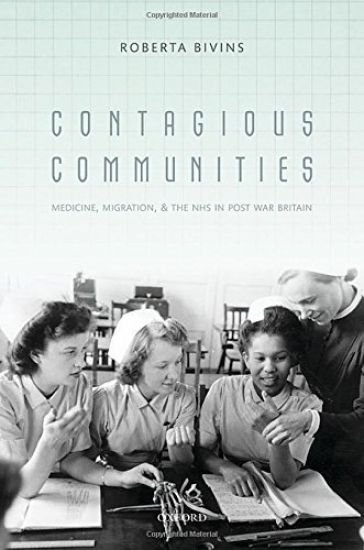
Contagious Communities

Contagious Communities

Roberta Bivins

Oxford University Press
2015
sidottu
It was only a coincidence that the NHS and the Empire Windrush (a ship carrying 492 migrants from Britain's West Indian colonies) arrived together. On 22 June 1948, as the ship's passengers disembarked, frantic preparations were already underway for 5 July, the Appointed Day when the nation's new National Health Service would first open its doors. The relationship between immigration and the NHS rapidly attained - and has enduringly retained - notable political and cultural significance. Both the Appointed Day and the post-war arrival of colonial and Commonwealth immigrants heralded transformative change. Together, they reshaped daily life in Britain and notions of 'Britishness' alike. Yet the reciprocal impacts of post-war immigration and medicine in post-war Britain have yet to be explored. Contagious Communities casts new light on a period which is beginning to attract significant historical interest. Roberta Bivins draws attention to the importance - but also the limitations - of medical knowledge, approaches, and professionals in mediating post-war British responses to race, ethnicity, and the emergence of new and distinctive ethnic communities. By presenting a wealth of newly available or previously ignored archival evidence, she interrogates and re-balances the political history of Britain's response to New Commonwealth immigration. Contagious Communities uses a set of linked case-studies to map the persistence of 'race' in British culture and medicine alike; the limits of belonging in a multi-ethnic welfare state; and the emergence of new and resolutely 'unimagined' communities of patients, researchers, clinicians, policy-makers, and citizens within the medical state and its global contact zones.
The Creativity Crisis

The Creativity Crisis

Roberta Ness

Oxford University Press Inc
2015
sidottu
Every day we hear about some fascinating new discovery. Yet anemic progress toward addressing the greatest risks to humankind -- clean energy, emerging infections, and cancer -- warns us that science may not be meeting its potential. Indeed, there is evidence that advances are slowing. Science is costly and can hurt people; thus it must be pursued with caution. Yet, excessive caution stifles the very thing that powers inventiveness: creation. In her boldest book yet, Roberta Ness argues that the system of funding agencies, universities, and industries designed to promote innovation has come to impede it. The Creativity Crisis strips away the scientific enterprise's veil of mystique to reveal the gritty underbelly of university research. America's economic belt-tightening discourages long-term, risky investments in revolutionary advances and elevates short-term projects with assured outcomes. The pursuit of basic research insights, with the greatest power to transform but little ability to enrich, is being abandoned. The social nature of academia today also contributes to the descent of revolutionary discovery. In academia, which tends to be insular, hierarchical, and tradition-bound, research ideas are "owned" and the owners gain enormous clout to decide what is accepted. Communalism is antithetical to idea ownership. Thus science has not embraced the Web-based democratic sharing of ideas called crowdsourcing, one of the greatest tools for creativity and social change in our age. A final battleground between creation and caution is within the sphere of ethics. Scientists are typically altruistic but sometimes have all-too-human inclinations toward avarice and conceit. The most original thinkers are most likely to flout convention. This tendency can pull them across the lines of acceptable behavior. Caution is a necessary check on the destructive potential of amoral creation. Yet, when every individual and institution is considered a priori to be a threat, adventuresome invention is squelched. Creation and caution in science should be in balance, but they are not. For possibilities to unlock, the ecosystem in which science is done must be fundamentally rebalanced.
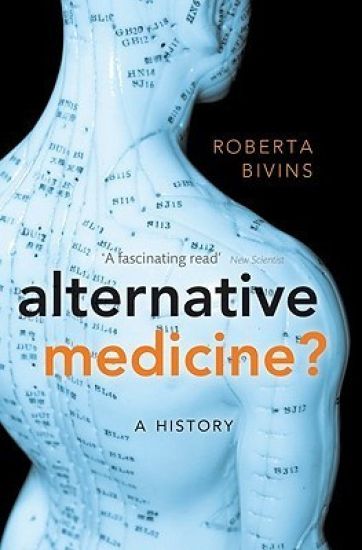
Alternative Medicine?

Alternative Medicine?

Roberta Bivins

Oxford University Press
2010
nidottu
Walk into the local health food shop or pick up today's paper and the chances are that you'll see adverts for acupuncture and herbal medicine, hypnotists and homeopaths. Some doctors and scientists mourn the lost lustre of mainstream medicine and complain about a new breed of 'irrational' consumer. But what exactly is 'alternative' medicine? Is the astonishing popularity of alternative and multicultural medicine really such a recent development? And, given the success story of modern biomedical science, why are alternative and traditional treatments now so fashionable? Has the impersonal chill of high-tech medicine driven consumers into the arms of charismatic quacks? Or is it the cost of western medicine that makes its competitors look so attractive? Do patients seek hope, holism, or just the thrill of rebellion? This book seeks answers to all these questions and more. Comparing the medical systems of China, India, and the west - both mainstream and alternative - Roberta Bivins shows how medical expertise has migrated from one culture to another. From acupuncture in Regency England to homeopathy in the 'Wild West', Bivins unearths the roots of today's distinctions between alternative, complementary, and orthodox medicine, and shows how popular interest in medical alternatives - often of exotic origin - is a phenomenon with a long and fascinating pedigree.
Innovation Generation

Innovation Generation

Roberta B. Ness

Oxford University Press Inc
2012
sidottu
Whether you are a student or an established scientist, researcher, or engineer, you can learn to be more innovative. In Innovation Generation, internationally renowned physician and scientist Roberta Ness provides all the tools you need to cast aside your habitual ways of navigating the every-day world and to think "outside the box." Based on an extraordinarily successful program at the University of Texas, this book provides proven techniques to expand your ability to generate original ideas. These tools include analogy, expanding assumptions, pulling questions apart, changing your point of view, reversing your thinking, and getting the most out of multidisciplinary groups, to name a few. Woven into the discussion are engaging stories of famous scientists who found fresh paths to innovation, including groundbreaking primate scientist Jane Goodall, father of lead research Herb Needleman, and physician Ignaz Semmelweis, whose discovery of infection control saved millions. Finally, the book shows how to combine your newly acquired skills in innovative thinking with the normal process of scientific thinking, so that your new abilities are more than playthings. Innovation will power your science.
Innovation Generation and Creativity in the Sciences

Innovation Generation and Creativity in the Sciences

Roberta B. Ness; Michael Goodman; Aisha S. Dickerson

Oxford University Press Inc
2013
sidottu
Whether you are a student or an established scientist, researcher, or engineer, you can learn to be more innovative. In Innovation Generation, internationally renowned physician and scientist Roberta Ness provides all the tools you need to cast aside your habitual ways of navigating the every-day world and to think "outside the box." Based on an extraordinarily successful program at the University of Texas, this book provides proven techniques to expand your ability to generate original ideas. These tools include analogy, expanding assumptions, pulling questions apart, changing your point of view, reversing your thinking, and getting the most out of multidisciplinary groups, to name a few. Woven into the discussion are engaging stories of famous scientists who found fresh paths to innovation, including groundbreaking primate scientist Jane Goodall, father of lead research Herb Needleman, and physician Ignaz Semmelweis, whose discovery of infection control saved millions. Creativity in the Sciences, a workbook companion to Innovation Generation, provides over 150 exercises and activities to hone creative problem-solving skills. Workbook tasks include improvisation, insight exercises, and generative skill building. Each chapter addresses doubts that individuals harbor concerning their ability to improve their innovative output, the techniques to work around frames, metaphors and biases in thinking, manipulatives to rearrange problem conceptualization, insight, intuition, collective innovative output from groups, and social and environmental factors that affect creative thinking. The workbook features straightforward and heuristic exercises for both individuals and groups. Now available at a special bundled price, these two books will show how to combine your newly acquired skills in innovative thinking with the normal process of scientific thinking, so that your new abilities are more than playthings. Innovation will power your science.
Genius Unmasked

Genius Unmasked

Roberta Ness

Oxford University Press Inc
2013
sidottu
Genius. It is a word that invokes mystique. How did Einstein deduce the theory of special relativity? How did Rutherford intuit the inner secrets of the atom? Although (in hindsight) genius can appear to have been predictable, more often such thinking was inscrutable - like a bolt of insight arising from nowhere. Perhaps the minds of geniuses, prepared through the providence of genetics, were simply lucked upon by chance. Or perhaps their visionary insights were attained through divine intervention. But could there be an entirely different explanation? Could there be a more knowable process underlying genius? Genius Unmasked reveals the nature of genius. Roberta Ness asks, "Is breathtaking creativity really so magical? Or are there, instead, consistent maps that iconic scientists used to discover their imaginative ideas?" What this entertaining book demonstrates is that genius is achieved through a thinking process that is less mystical than it is systematic. Even the greatest of innovative minds used a cognitive tool box that can be opened and understood. Genius Unmasked is an adventure through the lives and minds of more than a dozen genius scientists. It unveils the formula behind their radical thinking. But this is not just a book of stories. Through explanation of innovation tools and their impressive demonstration, it will help you to learn for yourself how to become a better innovator. In the end, Genius Unmasked is a "how to" book for advancing your own personal creativity.
Human Behavior Theory

Human Behavior Theory

Roberta Greene

AldineTransaction
1994
sidottu
In recent years, advocates for civil rights for minorities, women, and gays and lesbians have become more informed consumers of mental health services. As a result, social work practitioners need to prepare themselves to serve diverse constituencies for who previously held behavioral and cultural assumptions have proven not to be universally applicable. The purpose of Greene's book is to help students and practitioners better understand how social workers have used human behavior theories to more competently address variations in group and community membership within the social worker-client encounter.The book's approach is largely thematic. Most of the chapters explore how particular assumptions of a human behavior theory--psychoanalytic theory, psychodynamic/ego psychology theory, systems theory, behavioral theory, symbolic interaction theory, feminist theory, constructionist theory, small group theory, and an ecological perspective --have been used to answer issues related to cultural diversity. The challenges and limitations of each theory's applications across varying client constituencies are discussed throughout. What sorts of new conceptual issues for the practitioner of family services are raised in work with minority families, for example, or with lesbian families? How does a specific theory help, or not help, in group-specific interventions and evaluations?Intended as a companion volume to the widely adopted human behavior text by Greene and Ephross, Greene's new book fills the need for a wide, synthetic reading of the recent literature.
Human Behavior Theory

Human Behavior Theory

Roberta Greene

AldineTransaction
1994
nidottu
In recent years, advocates for civil rights for minorities, women, and gays and lesbians have become more informed consumers of mental health services. As a result, social work practitioners need to prepare themselves to serve diverse constituencies for who previously held behavioral and cultural assumptions have proven not to be universally applicable. The purpose of Greene's book is to help students and practitioners better understand how social workers have used human behavior theories to more competently address variations in group and community membership within the social worker-client encounter.The book's approach is largely thematic. Most of the chapters explore how particular assumptions of a human behavior theory--psychoanalytic theory, psychodynamic/ego psychology theory, systems theory, behavioral theory, symbolic interaction theory, feminist theory, constructionist theory, small group theory, and an ecological perspective --have been used to answer issues related to cultural diversity. The challenges and limitations of each theory's applications across varying client constituencies are discussed throughout. What sorts of new conceptual issues for the practitioner of family services are raised in work with minority families, for example, or with lesbian families? How does a specific theory help, or not help, in group-specific interventions and evaluations?Intended as a companion volume to the widely adopted human behavior text by Greene and Ephross, Greene's new book fills the need for a wide, synthetic reading of the recent literature.
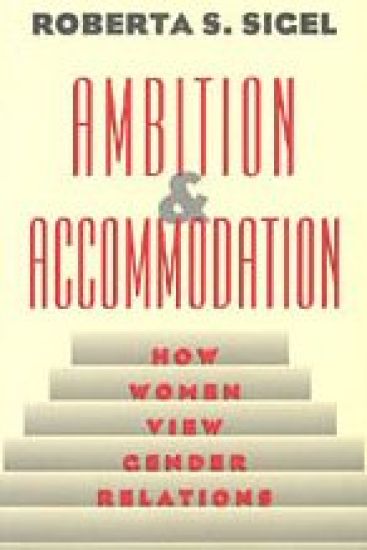
Ambition and Accommodation

Ambition and Accommodation

Roberta S. Sigel

University of Chicago Press
1996
sidottu
What do ordinary citizens really think about issues of gender equality and gender roles? Combining data from both telephone surveys and in-depth focus groups, this volume provides the most detailed portrait to date of how Americans, in particular American women, think they are faring in today's society. By juxtaposing the voices of women and men from all walks of life, Sigel finds that women's perceptions of gender relations are complex and often contradictory. Although most women see gender discrimination pervading nearly all social interactions--private as well as public--they do not invariably feel that they personally have been its victims. They want to see discrimination ended, but believe that men do not necessarily share this goal. Women are torn, according to Sigel, between the desire to improve their positions relative to men and the desire to avoid open conflict with them. Their desire not to jeopardize their relations with men, Sigel holds, helps explain women's willingness to accommodate a less-than-egalitarian situation by, for example, taking on the second shift at home or by working harder than men on the job. Sigel concludes that, although men and women agree on the principle of gender equality, definitions as well as practice differ by gender. This complex picture of how women, while not always content with the status quo, have chosen to accommodate to the world they must face every day is certain to provoke considerable debate.