Kirjojen hintavertailu. Mukana 11 518 949 kirjaa ja 12 kauppaa.

Kirjahaku

Etsi kirjoja tekijän nimen, kirjan nimen tai ISBN:n perusteella.

1000 tulosta hakusanalla Robin C. Stevens

The Habsburg Monarchy c.1765-1918

The Habsburg Monarchy c.1765-1918

Robin Okey

Red Globe Press
2000
sidottu
The multi-national Habsburg empire has never lost its fascination since its fall in 1918. Robin Okey's book shows how the Habsburg peoples experienced the same social, economic and political processes as most other Europeans, in ways that cast interesting light on these processes from both the European and the Habsburg angle. Opposing views that the national problem was therefore subordinate to underlying socio-economic backwardness, Okey argues for the inextricable entanglement of the two themes, as nationalism emerged from a process of social mobilisation which threatened the position of dominant Austro-Germans and Magyars. Robin Okey brings a distinctive approach to an intriguing subject, in a comprehensive study based on wide reading in most of the Monarchy's languages.
The Habsburg Monarchy c.1765-1918

The Habsburg Monarchy c.1765-1918

Robin Okey

Red Globe Press
2000
nidottu
The multi-national Habsburg empire has never lost its fascination since its fall in 1918. Robin Okey's book shows how the Habsburg peoples experienced the same social, economic and political processes as most other Europeans, in ways that cast interesting light on these processes from both the European and the Habsburg angle. Opposing views that the national problem was therefore subordinate to underlying socio-economic backwardness, Okey argues for the inextricable entanglement of the two themes, as nationalism emerged from a process of social mobilisation which threatened the position of dominant Austro-Germans and Magyars. Robin Okey brings a distinctive approach to an intriguing subject, in a comprehensive study based on wide reading in most of the Monarchy's languages.
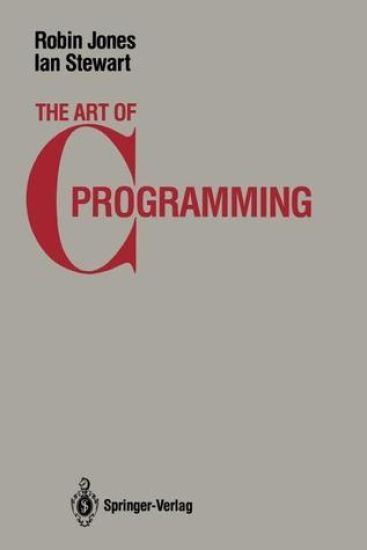
The Art of C Programming

The Art of C Programming

Robin Jones; Ian Stewart

Springer-Verlag New York Inc.
1986
nidottu
The programming language C occupies an unusual position midway between conventional high-level and assembly languages, allowing the programmer to combine the best features of both. This book is an introduction to the language itself, and to the special style of thinking that goes with it. Anyone wishing to learn C is likely to have some experience in a high-level language such as BASIC or Pascal, and it seems sensible to make use of that experience. We therefore assume some facility with conventional notation for computer arith­ metic, and simple notions (such as looping and branching) common to most high-level languages. However, that cannot be the whole story. One cannot learn to speak colloquial French by thinking in English and performing a routine translation. No more can one learn to program in colloquial C by thinking in BASIC and performing a routine translation. However, when learning French it is normal to assume familiarity with English, building on that in the early stages, thereby creating the confidence necessary to provide that mot juste to which nothing corresponding exists in English. Our approach to C is similar. In particular we do not introduce at the very beginning some of the features of C which eventually lead to more efficient and elegant code-for example, the ability to do several things, apparently at once. Initially, such constructs can be confusing. Once the reader has acquired some facility with the language it then becomes possible to bring these features into play in a natural manner.
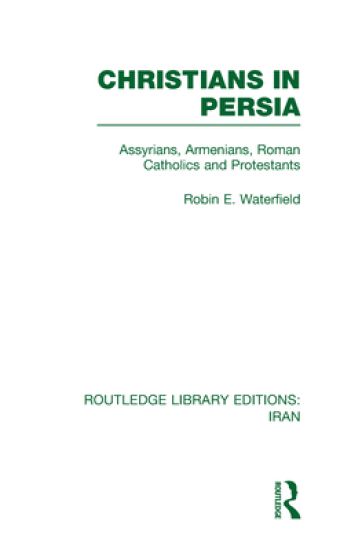
Christians in Persia (RLE Iran C)

Christians in Persia (RLE Iran C)

Robin Waterfield

Routledge
2011
sidottu
When it was originally published this book broke new ground in presenting one continuous narrative of the history of Christians in Persia from the second century A.D to the 1970s. The material gathered here was previously only to be found in obscure books, manuscripts and foreign periodicals. Christians in Persia shows the intricate history of the period concerned; the personalities of the rulers and the ruled; the difficult task of the missionaries; their successes and failures and the consequences of their efforts. All this is related to the wider history of the country and to the expansion of Christianity in the East.
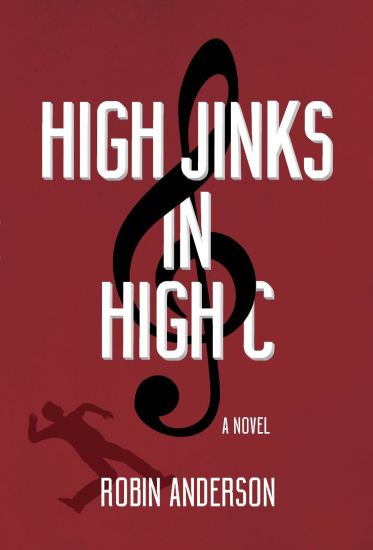
High Jinks in High C

High Jinks in High C

Robin Anderson

Independently Published
2019
nidottu
In the tale of Cinderella the heroine only has two ugly sisters and an ugly stepmother to contend with: whereas in High Jinks in High C, young Dot Brownstone, the heroine (later to metamorphose into the highly ambitious Narcissa Defarge), finds herself having to deal with not only a pair of wearisome, adoptive parents and a zealous, over-possessive childhood friend but more - much more. Enter the dashing young Baron Pieter Listig Maritz (himself a metamorphosis extraordinaire) and Narcissa soon finds herself caught up in a world of wicked uncles, aunts, questionable acquaintances, double-crossing lovers and unparalleled intrigue.Throw in a talented, songstress daughter, a fairy tale castle, a tropical island, a vengeful murder or two and let the high jinks in a very discordant High C begin.
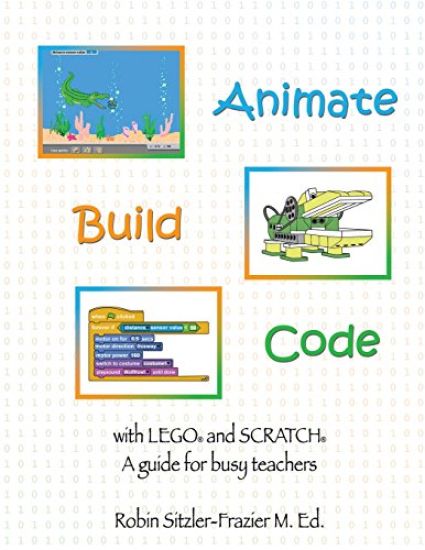
Animate-Build-Code with LEGO(R) and SCRATCH(c): A Guide for Busy Teachers

Animate-Build-Code with LEGO(R) and SCRATCH(c): A Guide for Busy Teachers

Robin Sitzler Frazier

Createspace Independent Publishing Platform
2016
nidottu
TAKE A LOOK INSIDE -Two Getting Started lessons in Scratch(c) to get yourself, and students familiar with basic functions of the Scratch software program -Instructions on how to write, download files to animate and code using Scratch(R)- a free resource, and find the LEGO(R) resources-Guided Lesson Plans -13 lessons using LEGO(R) WeDo Models-Student handout that has a flow sheet to walk them through the steps to animate, build, and code- permission to copy and laminate the sheets-Guidance for setting up classroom activities-Timeline suggested for age/grade specific skill building levels-STEM Vocabulary-Standards of Learning-NGSS-ISTE-ITEEA-Tips Tricks-Resources needed (have LEGO(R) WeDo around school)? Try using to incorporate learning animation and code with Scratch(c) in the classroom. Extend your grant funding with Scratch(R) free resource.
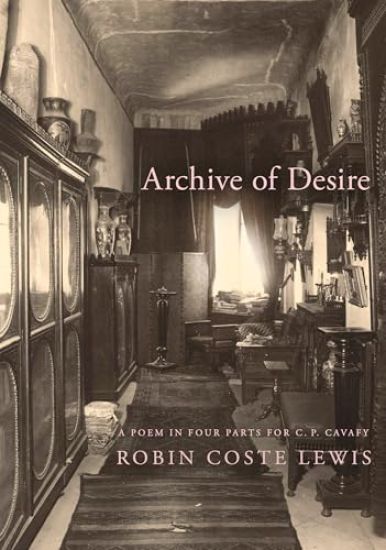
Archive of Desire: A Poem in Four Parts for C. P. Cavafy

Archive of Desire: A Poem in Four Parts for C. P. Cavafy

Robin Coste Lewis

Knopf Publishing Group
2025
sidottu
The National Book Award, PEN/Voelcker, and NAACP Image Award winner returns with another inventive and boundary-breaking book: a sensual journey ignited in the archives of iconic queer Alexandrian poet C. P. Cavafy. In her first book, Robin Coste Lewis's poems exploded the imagery of the Black female figure from antiquity through the present day; her second was an expansive hybrid photographic-poetic study of human migration and the human family; now she delivers a slim "performance in four parts," which originated as an actual sound performance with the composer Vijay Iyer, cellist Jeffrey Zeigler, and visual artist Julie Mehretu. With Lewis as the speaking voice, the quartet reflected on desire, diaspora, and the liminal spaces where art asserts itself, ignited by their encounters with Cavafy's archive in the heart of Athens. Lewis weaves in and out of Cavafy's rooms, notebooks, and the suppressed erotic need underpinning his work, conversing directly with him: "often you/ reminded us/ the only true // barbarians/ are the ones raging in silence / inside // of our own / minds." But she brings equal parts of herself to this study of artistry and sensuality, as in the short, tender section entitled "Cavafy in Compton: Self-Portrait at 16." As in all Lewis's works, she reaches across centuries here to express what is timeless and not bound by our current moment or our single selves: the discipline and glory of art, the give and take of love, the kiss that lives in the moment, the unfolding journey of being human whose contours only become clear with the passage of time, the igniting of memory, and the words we find to describe the journey.
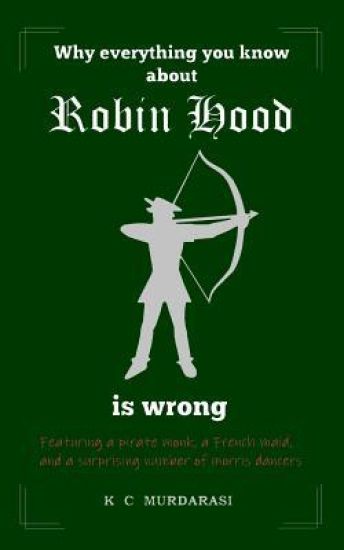
Why Everything You Know about Robin Hood Is Wrong

Why Everything You Know about Robin Hood Is Wrong

K. C. Murdarasi

Hephaestion Press
2018
nidottu
What if everything you ever knew about Robin Hood was wrong? He wasn't a nobleman. He never met Maid Marian. He didn't go on Crusade. And he absolutely did not rob from the rich to give to the poor.For the first time, the information that medieval historians have about Robin Hood is made available to a popular audience. Why Everything You Know about Robin Hood Is Wrong is an illuminating, entertaining and really quite sarcastic trip through what we actually do know about one of England's most famous heroes.Meet the many candidates to be 'the real Robin Hood' Eustace, monk-turned-pirate Hereward, landowner-turned-bandit Fulk, noble-turned-outlaw and discover why none of them actually was. Find out how Maid Marian came over from France and how she was, ahem, intimately connected with Friar Tuck. And learn out more than you ever wanted to know about medieval hoods.
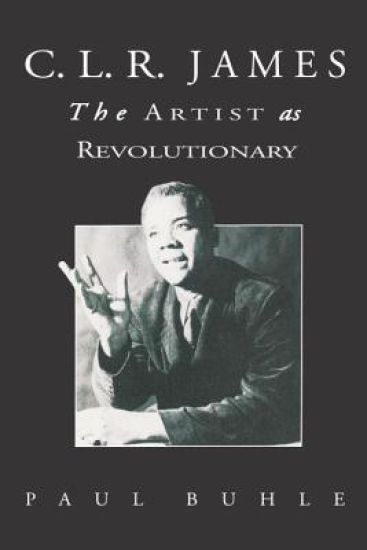
C.L.R. James

C.L.R. James

Lawrence Ware; Paul Buhle; Robin DG Kelley

Verso Books
2017
nidottu
C.L.R. James was a protean 20th century Marxist intellectual, widely recognized as a pioneering scholar of slave revolt; a leading voice of Pan-Africanism; a peripatetic revolutionary and scholar who was active in US and UK radical movements; a novelist, playwright, and critic; and one of the premier writers on cricket and sports. This intellectual portrait was written by James's longtime interlocutor and comrade Paul Buhle, and initially published in 1988. With a new final chapter, updated bibliography, a new foreword by historian Robin D.G. Kelley and a new afterword by philosopher Lawrence Ware, this long-awaited revised edition of a classic biography will be a key resource in the James revival.
HBR's 10 Must Reads on Diversity (with bonus article "Making Differences Matter: A New Paradigm for Managing Diversity" By David A. Thomas and Robin J. Ely)

HBR's 10 Must Reads on Diversity (with bonus article "Making Differences Matter: A New Paradigm for Managing Diversity" By David A. Thomas and Robin J. Ely)

Harvard Business Review; David A. Thomas; Robin J. Ely; Sylvia Ann Hewlett; Joan C. Williams

Harvard Business Review Press
2019
pokkari
Reap the benefits of a diverse workforce.If you read nothing else on promoting diversity and realizing its benefits, read these 10 articles. We've combed through hundreds of Harvard Business Review articles and selected the most important ones to help you create a culture that seeks and celebrates difference.This book will inspire you to:Identify and address biasShort-circuit discrimination instead of unintentionally feeding itAttract, retain, and engage talented people who represent myriad identitiesEnsure that everyone has equal access to growth opportunitiesTrade outdated policies for practices that are proven to foster inclusionHarness employees' unique skills and perspectives to transform how your company operatesThis collection of articles includes "Making Differences Matter: A New Paradigm for Managing Diversity," by David A. Thomas and Robin J. Ely; "Why Diversity Programs Fail," by Frank Dobbin and Alexandra Kalev; "'Numbers Take Us Only So Far,'" by Maxine Williams; "Race Matters: The Truth About Mentoring Minorities," by David A. Thomas; "Leadership in Your Midst: Tapping the Hidden Strengths of Minority Executives," by Sylvia Ann Hewlett, Carolyn Buck Luce, and Cornel West; "What Most People Get Wrong About Men and Women," by Catherine H. Tinsley and Robin J. Ely; "Hacking Tech's Diversity Problems," by Joan C. Williams; "Why Men Still Get More Promotions Than Women," by Herminia Ibarra, Nancy M. Carter, and Christine Silva; "When No One Retires," by Paul Irving; "Neurodiversity as a Competitive Advantage," by Robert D. Austin and Gary P. Pisano; "Managing Multicultural Teams," by Jeanne Brett, Kristin Behfar, and Mary C. Kern; and "7 Myths About Coming Out at Work," by Raymond Trau, Jane O'Leary, and Cathy Brown.