

Kirjahaku
Etsi kirjoja tekijän nimen, kirjan nimen tai ISBN:n perusteella.
1000 tulosta hakusanalla Rodrick Madison

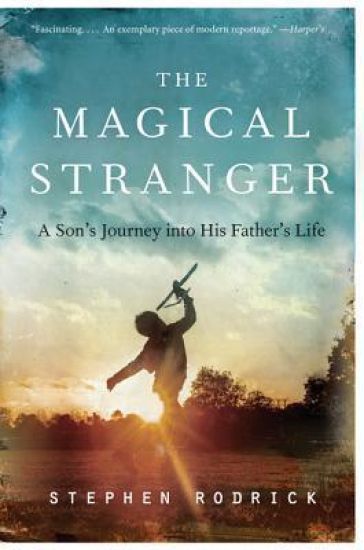
The Magical Stranger: A Son's Journey Into His Father's Life
Stephen Rodrick
HARPER PERENNIAL
2014
nidottu
The Magical Stranger is a moving story of love and sacrifice, fathers and sons, heroism and duty, soldiers and the families they leave behind.On November 28, 1979, squadron commander and Navy pilot Peter Rodrick died when his plane crashed in the Indian Ocean, leaving behind a devastated wife, two daughters, and a 13-year-old son.In this powerful, beautifully written book, journalist Stephen Rodrick explores the life and death of the man who indelibly shaped his life, even as he remained a mystery. Through adolescence and into adulthood, Stephen Rodrick struggled to fully grasp the reality of his father's death and its permanence.To better understand his father, Rodrick turned to members of his father's former squadron, the "World-Famous Black Ravens." As he learns about his father, he uncovers the layers of these sailors' lives: their loves, friendships, dreams, disappointments--and the consequences of their choices on those they leave behind. The journey doesn't end until November 28, 2013, when Rodrick's first son is born 34 years to the day after his father's mishap.A penetrating, thoughtful blend of memoir and reportage, The Magical Stranger is a moving reflection on the meaning of military service and the power of a father's legacy.


The very idea of Britain has changed with the gain and loss of empire, the assimilation and devolution of various portions of the country, and the introduction and then dismantling of a welfare state that was nothing short of revolutionary in the wake of World War II. This volume provides an introduction to the history and culture of a nation that just a century ago was the world's leading imperial power and today is striving to reestablish its place as an international leader. The fortunes of that nation are outlined, describing its development from the days of Roman rule through the most recent events of Tony Blair's prime ministership. Rodrick introduces many important issues in Great Britain's history and also provides the reader with an overview of contemporary British society, from the intricacies of parliamentary politics to the cultural significance of church and crown. Includes a biographical section highlighting famous figures in British history, a timeline of important historical events, and a short bibliographical essay with suggestions for further reading. Focusing on the political and social developments of the 19th and 20th centuries, Rodrick discusses the evolving relationship between monarch and parliament, the dismantling of Britain's empire and the challenges the nation now faces, Britian's contentious relations with the rest of Europe, and the differences between English and British. This volume places modern Britain within the contemporary context of a post-imperial world, addressing the issues of post-colonialism and nationalism in a readable and brief format.
Steep socioeconomic hierarchy in post-industrial Western society threatens public health because of the physiological consequences of material and psychosocial insecurities and deprivations. Following on from their previous books, the authors continue their exploration of the geography of early mortality from age-related chronic conditions, of risk behaviors and their health outcomes, and of infant and child mortality, all due to rigid hierarchy. They divide the 50 states into those that gave their electoral college votes to Trump and those that gave theirs to Clinton in the 2016 presidential election and compare the two sets for socioeconomic and public health profiles. They deliberately apply only simple standard statistical methods in the public health analyses: t-test, Mann-Whitney test, bivariate regression, and backward stepwise multivariate regression. The book assumes familiarity with basic statistics.The authors argue that the unequal power relations that result in eroding public health in the nation and, in particular, in the Trump-voting states, largely cascade from the collapse of American industry, and they analyze the Cold War roots of that collapse. In two largely independent chapters on economics, they explore both the suppression of countervailing forces, such as organized labor, and the diversion of technical resources to the military as essential foundations to the population-level suffering that expressed itself in the 2016 presidential election.This interdisciplinary book has several primary audiences: creators of public policies, such as legislators and governmental staff, public health professionals and social epidemiologists, economists, labor union professionals, civil rights advocates, political scientists, historians, and students of these disciplines from public health through the social sciences.The Open Access version of this book, available at http://www.taylorfrancis.com, has been made available under a Creative Commons Attribution-Non Commercial-No Derivatives 4.0 license.
Steep socioeconomic hierarchy in post-industrial Western society threatens public health because of the physiological consequences of material and psychosocial insecurities and deprivations. Following on from their previous books, the authors continue their exploration of the geography of early mortality from age-related chronic conditions, of risk behaviors and their health outcomes, and of infant and child mortality, all due to rigid hierarchy. They divide the 50 states into those that gave their electoral college votes to Trump and those that gave theirs to Clinton in the 2016 presidential election and compare the two sets for socioeconomic and public health profiles. They deliberately apply only simple standard statistical methods in the public health analyses: t-test, Mann-Whitney test, bivariate regression, and backward stepwise multivariate regression. The book assumes familiarity with basic statistics.The authors argue that the unequal power relations that result in eroding public health in the nation and, in particular, in the Trump-voting states, largely cascade from the collapse of American industry, and they analyze the Cold War roots of that collapse. In two largely independent chapters on economics, they explore both the suppression of countervailing forces, such as organized labor, and the diversion of technical resources to the military as essential foundations to the population-level suffering that expressed itself in the 2016 presidential election.This interdisciplinary book has several primary audiences: creators of public policies, such as legislators and governmental staff, public health professionals and social epidemiologists, economists, labor union professionals, civil rights advocates, political scientists, historians, and students of these disciplines from public health through the social sciences.
First published in 2004. The nineteenth century witnessed a flowering of the culture of self-improvement that was reflected in a plethora of institutes, societies and journals that sprang up across Britain with the goal of spreading knowledge and learning to a wide spectrum of society. The prophets of self-improvement believed that not only was self-improvement a laudable goal in its own right, but more importantly, it would contribute towards a general improvement in society. In an age in which direct participation in the political processes was restricted to a minority, education and self-improvement could act as an alternative force by creating a sophisticated and knowledgeable population. In other words, self-improvement was also seen as a way of creating active and responsible citizens. Focusing on the city of Birmingham, and drawing on both local and national sources, Self Help and Civic Culture explores the changing nature of self improvement and citizenship in Victorian Britain. By approaching the concept of citizenship from a new perspective, provincial identity and its relationship to wider ideas of 'Englishness' and 'Britishness', a distinct ideal of citizenship is elucidated that adds further nuance to current scholarship. By drawing together various issues of citizenship, self-improvement, class and political power, this work brings a new perspective to the on-going attempts to determine who could claim the full rights, duties, privileges and responsibilities of the larger social body, thus illuminating the relationship between culture and power in nineteenth century England.
First published in 2004. The nineteenth century witnessed a flowering of the culture of self-improvement that was reflected in a plethora of institutes, societies and journals that sprang up across Britain with the goal of spreading knowledge and learning to a wide spectrum of society. The prophets of self-improvement believed that not only was self-improvement a laudable goal in its own right, but more importantly, it would contribute towards a general improvement in society. In an age in which direct participation in the political processes was restricted to a minority, education and self-improvement could act as an alternative force by creating a sophisticated and knowledgeable population. In other words, self-improvement was also seen as a way of creating active and responsible citizens. Focusing on the city of Birmingham, and drawing on both local and national sources, Self Help and Civic Culture explores the changing nature of self improvement and citizenship in Victorian Britain. By approaching the concept of citizenship from a new perspective, provincial identity and its relationship to wider ideas of 'Englishness' and 'Britishness', a distinct ideal of citizenship is elucidated that adds further nuance to current scholarship. By drawing together various issues of citizenship, self-improvement, class and political power, this work brings a new perspective to the on-going attempts to determine who could claim the full rights, duties, privileges and responsibilities of the larger social body, thus illuminating the relationship between culture and power in nineteenth century England.
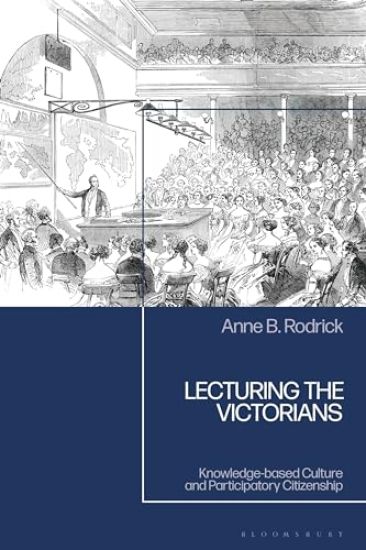
“We are a much-lectured people,” wrote Robert Spence Watson in 1897. Beginning at mid-century, cities and towns across England used the popular lecture for purposes ranging from serious education to effervescent entertainment and from regional pride to imperial belonging. Over time, the popular lecture became the quintessential embodiment of Victorian knowledge-based culture, which itself ranged from the production of new knowledge in the most elite of learned societies to the consumption of established knowledge in middle-class clubs and the hundreds of humble mechanics’ institutions initially founded to provide scientific instruction to workers.What did the “average” Victorian talk and think about? How did the knowledge-based culture of lecture and debate enable men and women to demonstrate both civic engagement and cultural competence? How does this knowledge-based culture and its changing expression give us ways to look at Victorian citizenship long before the extension of the franchise? With engaging and accessible prose Anne Rodrick draws from a variety of primary sources to provide fascinating answers to these pertinent questions. Based on the analysis of several thousand lectures and debates delivered over more than 50 years, this book digs deeply into what those individuals below the most elite levels thought, heard, debated, and claimed as a badge of cultural competence. By the turn of the 20th century, the popular lecture was competing for attention with new institutions of leisure and of higher education, and the discourse surrounding its place in contemporary England helps illuminate important debates over access to and deployment of knowledge and culture.
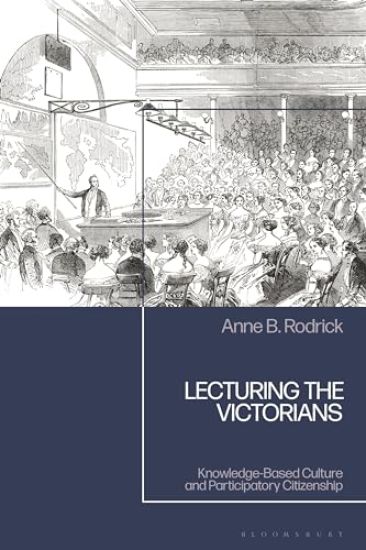
“We are a much-lectured people,” wrote Robert Spence Watson in 1897. Beginning at mid-century, cities and towns across England used the popular lecture for purposes ranging from serious education to effervescent entertainment and from regional pride to imperial belonging. Over time, the popular lecture became the quintessential embodiment of Victorian knowledge-based culture, which itself ranged from the production of new knowledge in the most elite of learned societies to the consumption of established knowledge in middle-class clubs and the hundreds of humble mechanics’ institutions initially founded to provide scientific instruction to workers.What did the “average” Victorian talk and think about? How did the knowledge-based culture of lecture and debate enable men and women to demonstrate both civic engagement and cultural competence? How does this knowledge-based culture and its changing expression give us ways to look at Victorian citizenship long before the extension of the franchise? With engaging and accessible prose Anne Rodrick draws from a variety of primary sources to provide fascinating answers to these pertinent questions. Based on the analysis of several thousand lectures and debates delivered over more than 50 years, this book digs deeply into what those individuals below the most elite levels thought, heard, debated, and claimed as a badge of cultural competence. By the turn of the 20th century, the popular lecture was competing for attention with new institutions of leisure and of higher education, and the discourse surrounding its place in contemporary England helps illuminate important debates over access to and deployment of knowledge and culture.

This addition to The Greenwood Histories of the Modern Nations provides an updated, clear, and concise history of Great Britain that will be of value to undergraduates and to a general readershipThis updated and expanded volume serves as an introduction to the history of Great Britain, from prehistory to the present. Guiding the reader through complex developments in politics, economics, culture, and empire, this book helps readers to understand how the four kingdoms of England, Wales, Scotland, and Ireland have come together and split apart over centuries of change. Chronologically arranged chapters will help readers to better understand British history as it includes pre-Roman Britain, Britain's Tudors, the Reformation, and World Wars I and II, in addition to current events such as Brexit and others for which Theresa May has been prime minister. A timeline, a glossary, and an appendix of significant individuals in the history of Great Britain help to round out the text. The strong narrative line allows readers to understand the ways in which Great Britain has both responded to and guided global changes in economics and class, gender and race, and the politics of expansionism and nativism.

Essays on Medical Failure: A formal multilevel approach
Deborah Wallace Phd; Rodrick Wallace Phd
Createspace Independent Publishing Platform
2011
nidottu

Protein Folding Disorders: From basic biology to public policy
Deborah Wallace; Rodrick Wallace
Createspace Independent Publishing Platform
2011
nidottu
A Plague on Your Houses is a scorching indictment of the decision to close fire companies in New York in the 1970s and a frightening study of the way misguided and malevolent social policy can spark a chain reaction of enormous and unforeseen urban collapse.

Being a grandparent is an amazing job. Having a grandchild that has some challenges can be hard. Herbie was challenged with stuttering, not quite an unfamiliar challenge to his grandmother. She too was challenged with stuttering as a young child. Herbie's grandmother was determined to make the challenge a lot easier for him, by writing this very affectionate story for Herbie. Children who stutter will experience many different emotions on any given day. Becoming frustrated can be an acceletrator to their inability to vocalize their thoughts. These fun books will allow your child to see what he or she can bring to the lives of others, and how special they really are
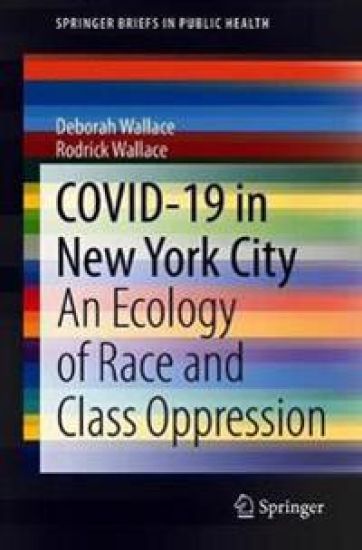
COVID-19 in New York City
Deborah Wallace; Rodrick Wallace
Springer Nature Switzerland AG
2020
nidottu
This book is the first social epidemiological study of COVID-19 spread in New York City (NYC), the primary epicenter of the United States. New York City spread COVID-19 throughout the United States. The context of epicenter formation determined the rapid, extreme rise of NYC case and mortality rates. Decades of public policies destructive of poor neighborhoods of color heavily determined the spread within the City. Premature mortality rates revealed the "weathering" of policy-targeted communities: accelerated aging due to chronic stress. COVID attacks the elderly more severely than those under the age of 60. Communities with high proportions of prematurely aged residents proved fertile ground for COVID illness and mortality. The very public policies that created swaths of white wealth across much of Manhattan and parts of Brooklyn destroyed the human diversity needed to ride out crises. Topics covered within the chapters include: Premature Death Rate Geography in New York City: Implications for COVID-19 NYC COVID Markers at the ZIP Code Level Prospero's New Castles: COVID Infection and Premature Mortality in the NY Metro Region Pandemic Firefighting vs. Pandemic Fire Prevention Conclusion: Scales of Time in Disasters An exemplary study in health disparities, COVID-19 in New York City: An Ecology of Race and Class Oppression is essential reading for social epidemiologists, public health researchers of health disparities, those in public service tasked with addressing these problems, and infectious disease scientists who focus on spread in human populations of new zoonotic diseases. The brief also should appeal to students in these fields, civil rights scholars, science writers, medical anthropologists and sociologists, medical and public health historians, public health economists, and public policy scientists.
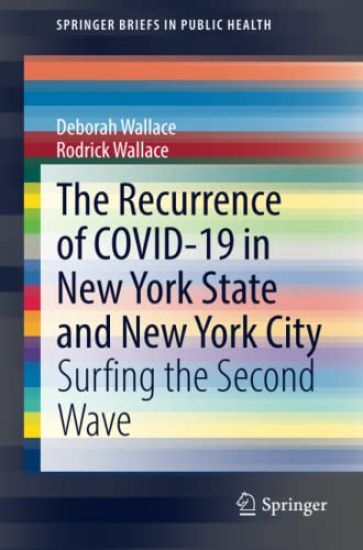
The Recurrence of COVID-19 in New York State and New York City
Deborah Wallace; Rodrick Wallace
Springer Nature Switzerland AG
2021
nidottu
As a follow-up to COVID-19 in New York City: an Ecology of Race and Class Oppression, which showed that decades of discriminatory public policies shaped the Bronx into the epicenter of the first wave of COVID-19, this book examines the build up to the crest and subsequent ebbing of the second wave of COVID-19 across the 62 counties of New York State (NYS) and 152 ZIP Code areas of the four central boroughs of New York City (NYC). Like its predecessor, the sequel examines the vulnerabilities that give rise to spikes in infection rates that form epicenters. Unlike the first wave, NYC was not the epicenter of the second wave; high-incident counties just outside NYS formed an extended initial epicenter and exported COVID-19 to neighboring counties of NYS. Rural NYS counties differed significantly from urban ones socioeconomically and in infection rates during the cresting period. Before the crest, no socioeconomic factor was associated with county infection rates; rather, the major associating factor was political and cultural: percent of the 2020 vote garnered by Trump. Rural counties voted heavily for Trump. This association disappeared post-crest by mid-January 2021. In NYC, the Bronx again behaved like a single high-incidence entity, unlike the other three boroughs that had patches of high and low infection incidence. Among the topics covered:The Second COVID Wave Washes Over New York StateThe Second Wave Storm-Surges Across New York CityDiscussion of County Data from the Second Wave of COVID-19Parsing Meaning From the 152 ZIP Code Data The book closes with a prescription for pandemic response planning based on empowered communities and workers interacting with health departments as equals. The Recurrence of COVID-19 in New York State and New York City is a valuableresource for social epidemiologists, public health researchers of health disparities, those in public service tasked with addressing these problems, and infectious disease scientists who focus on spread in human populations of new zoonotic diseases. The brief also will find readership among students in these fields, civil rights scholars, science writers, medical anthropologists and sociologists, medical and public health historians, public health economists, and public policy scientists.
Right-to-Work Laws and the Crumbling of American Public Health
Deborah Wallace; Rodrick Wallace
Springer International Publishing AG
2018
sidottu
This book discusses the socioeconomic effects of Right-to-Work (RTW) laws on state populations. RTW laws forbid requiring union membership even at union-represented worksites. The core of the 22 long-term RTW states was the Confederacy, cultural descendants of rigidly hierarchical agrarian feudal England. RTW laws buttress hierarchy and power imbalance which unions minimize at the worksite and by encouraging higher educational attainment, social mobility, and individual empowerment through group validation. Contrary to claims of RTW proponents, RTW and non-RTW states do not differ significantly in unemployment rates.RTW states have higher poverty rates, lower median household incomes, and lower educational attainment on average and median than non-RTW states. RTW states on average and median have lower life expectancy, higher obesity prevalence, and higher rates of all-cause mortality, early mortality from chronic conditions, child mortality, and risk behaviors than non-RTW states. The higher mortality rates result in startlingly higher annual numbers of years of life lost before age 75. Stroke mortality at age 55-64 in RTW states results in nearly 10,000 years annually lost in excess of what it would be if the mortality rate were that of non-RTW states.A review of respected publications describes the physiological mechanisms and epidemiology of accelerated aging due to socioeconomic stress. Unions challenge hierarchy directly at work-sites and indirectly through encouraging college education, social mobility, and community and political engagement. How startling that feudal hierarchy lives in 21st century America, shaping vast differences between states in macro- and micro-economics, educational attainment, innovation, life expectancy, obesity prevalence, chronic disease mortality, infant and child mortality, risk behaviors, and other public health markers! Readers will gain insight about the coming clash between feudal individualism and adaptive collectivism, and, in the last chapter, on ways to win the clash by “missionary” work for collectivism.
Right-to-Work Laws and the Crumbling of American Public Health
Deborah Wallace; Rodrick Wallace
Springer International Publishing AG
2019
nidottu
This book discusses the socioeconomic effects of Right-to-Work (RTW) laws on state populations. RTW laws forbid requiring union membership even at union-represented worksites. The core of the 22 long-term RTW states was the Confederacy, cultural descendants of rigidly hierarchical agrarian feudal England. RTW laws buttress hierarchy and power imbalance which unions minimize at the worksite and by encouraging higher educational attainment, social mobility, and individual empowerment through group validation. Contrary to claims of RTW proponents, RTW and non-RTW states do not differ significantly in unemployment rates.RTW states have higher poverty rates, lower median household incomes, and lower educational attainment on average and median than non-RTW states. RTW states on average and median have lower life expectancy, higher obesity prevalence, and higher rates of all-cause mortality, early mortality from chronic conditions, child mortality, and risk behaviors than non-RTW states. The higher mortality rates result in startlingly higher annual numbers of years of life lost before age 75. Stroke mortality at age 55-64 in RTW states results in nearly 10,000 years annually lost in excess of what it would be if the mortality rate were that of non-RTW states.A review of respected publications describes the physiological mechanisms and epidemiology of accelerated aging due to socioeconomic stress. Unions challenge hierarchy directly at work-sites and indirectly through encouraging college education, social mobility, and community and political engagement. How startling that feudal hierarchy lives in 21st century America, shaping vast differences between states in macro- and micro-economics, educational attainment, innovation, life expectancy, obesity prevalence, chronic disease mortality, infant and child mortality, risk behaviors, and other public health markers! Readers will gain insight about the coming clash between feudal individualism and adaptive collectivism, and, in the last chapter, on ways to win the clash by “missionary” work for collectivism.