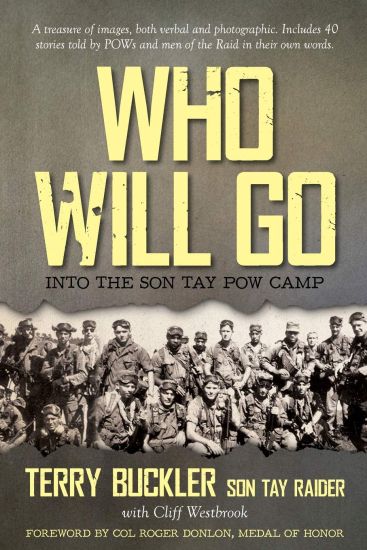
THE SON TAY RAID RANKS AS ONE OF THE MOST DARING MISSIONS IN SPECIAL OPS HISTORY. Hear from the men of the Raid in their own words, moving and personal. The gripping (and often humorous) narrative follows the youngest Raider, Terry Buckler, through Special Forces training and the suspense-filled preparation for the Raid alongside some of the greatest legends in Special Operations history. The Son Tay Raid was a SUCCESS. This heart-lifting book will challenge historians to reconsider the mission taught in military schools around the world. And it will draw any reader in with personal stories of what was seen, heard, and felt by 40 of the Raiders, POWs, and participants supporting the Raid.
THE SON TAY RAID RANKS AS ONE OF THE MOST DARING MISSIONS IN SPECIAL OPS HISTORY. Hear from the men of the Raid in their own words, moving and personal. The gripping (and often humorous) narrative follows the youngest Raider, Terry Buckler, through Special Forces training and the suspense-filled preparation for the Raid alongside some of the greatest legends in Special Operations history. The Son Tay Raid was a SUCCESS. This heart-lifting book will challenge historians to reconsider the mission taught in military schools around the world. And it will draw any reader in with personal stories of what was seen, heard, and felt by 40 of the Raiders, POWs, and participants supporting the Raid.
Dacre is rare in having documentary evidence for an early medieval monastery, mentioned by the Venerable Bede in 731, and in the 12th century, William of Malmesbury thought that it was where King Æthelstan of Wessex met the northern and western lords in 927. High-quality early sculptural fragments and a substantial stone drain had also been found in the 19th and early 20th centuries. Excavations were undertaken in 1982–5, to the north and south of the parish church, and to the west of the churchyard, providing important information about its origins. A substantial early medieval cemetery of more than 200 graves was found to the north, with some burials in chests with iron fittings. Two structures were excavated to the west of this, one, with a rounded eastern end, containing a hearth made from a millstone. This was associated with a substantial assemblage of fine metalwork, loomweights, and vessel and window glass, and several Northumbrian coins were also found. The drain in the southern churchyard was re-excavated, demonstrating that it was constructed of reused Roman stones, probably from a bridge or mill. An early ditched boundary was also identified, circling the south and west sides of the medieval churchyard, which seems to have followed its line. The early cemetery was later partially covered by a medieval farmstead, consisting of at least three buildings, one with a well-made fireplace. This had become derelict by the 15th/16th century, when the village either shrank or moved to the west, leaving the site very much as it is today.
The structure of sequential behavior and its patterns have attracted the attention of researchers from various disciplines, such as game theory, human and animal behavior, evolutionary ecology, psychology, behavioral economy, and cognitive sciences. Sequential behavior seems to be involved in the processes of sequential learning, decision-making processes, and exploratory behavior. There are, however, competing hypotheses regarding the mechanisms involved in the complexity of the behavioral responses of organisms when exposed to changing environments. The behavioral response to different environmental conditions is often utilized in behavioral ecology studies, where the changes in behavior are quantified in terms of probability of dispersal, distance, and speed of movements or time budget, where the time spent on different activities (foraging, resting, explore, etc.) is registered and analyzed in terms of cost-benefit. This book represents a series of articles covering a broad spectrum of organisms and proposes the analysis of sequential behavior utilizing indices commonly applied in the estimation of developmental instability (fluctuating asymmetry, directional asymmetry, and antisymmetry) toward estimating the degree of "Behavioral Instability". Deviations from symmetry will be interpreted in ecological and evolutionary terms, where the cost and benefits of changes of the degree of behavioral instability will be analyzed in terms of overall costs and benefits and its evolutionary significance. Presented in this collection are multidisciplinary studies (theoretical and computational as well as experimental and empirical approaches) that validate the proposed approach and pave the way for future investigation in the novel field of what is best described as behavioral instability.
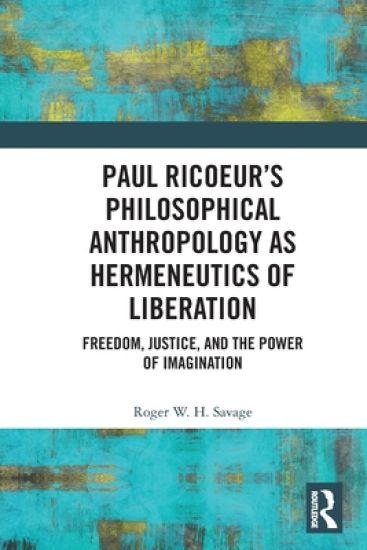
This book offers a unique account of the role imagination plays in advancing the course of freedom’s actualization. It draws on Paul Ricoeur’s philosophical anthropology of the capable human being as the staging ground for an extended inquiry into the challenges of making freedom a reality within the history of humankind. This book locates the abilities we exercise as capable human beings at the heart of a sustained analysis and reflection on the place of the idea of justice in a hermeneutics for which every expectation regarding rights, liberties, and opportunities must be a hope for humanity as a whole. The vision of a reconciled humanity that for Ricoeur figures in a philosophy of the will provides an initial touchstone for a hermeneutics of liberation rooted in a philosophical anthropology for which the pathétique of human misery is its non- or pre-philosophical source. By setting the idea of the humanity in each of us against the backdrop of the necessity of preserving the tension between the space of our experiences and the horizons of our expectations, the book identifies the ethical and political dimensions of the idea of justice’s federating force with the imperative of respect.Paul Ricoeur’s Philosophical Anthropology as Hermeneutics of Liberation will be of interest to scholars and advanced students working in hermeneutics, phenomenology, ethics, political theory, and aesthetics.
This book offers a unique account of the role imagination plays in advancing the course of freedom’s actualization. It draws on Paul Ricoeur’s philosophical anthropology of the capable human being as the staging ground for an extended inquiry into the challenges of making freedom a reality within the history of humankind. This book locates the abilities we exercise as capable human beings at the heart of a sustained analysis and reflection on the place of the idea of justice in a hermeneutics for which every expectation regarding rights, liberties, and opportunities must be a hope for humanity as a whole. The vision of a reconciled humanity that for Ricoeur figures in a philosophy of the will provides an initial touchstone for a hermeneutics of liberation rooted in a philosophical anthropology for which the pathétique of human misery is its non- or pre-philosophical source. By setting the idea of the humanity in each of us against the backdrop of the necessity of preserving the tension between the space of our experiences and the horizons of our expectations, the book identifies the ethical and political dimensions of the idea of justice’s federating force with the imperative of respect.Paul Ricoeur’s Philosophical Anthropology as Hermeneutics of Liberation will be of interest to scholars and advanced students working in hermeneutics, phenomenology, ethics, political theory, and aesthetics.
Islands are special places; they can be havens for unique plants and animals and refuges for wildlife. This book investigates the biogeography of butterfly species over the British islands, particularly the factors that influence their presence on the islands and that have made each island's butterfly fauna distinctive. The book contains a full log of records of species on the islands and much supporting information. The first three chapters set the scene, illustrating the basics of island biogeography theory, their changing circumstances during the current Holocene interglacial, and studies of natural history of British butterflies that mark the islands as the most intensively studied region for wildlife in the world. The book advances by increasing resolution downscale from a European continental perspective, through patterns and changes on the British mainland, a comparison of the two dominant islands of Britain and Ireland, to a close inspection of the dynamics of species on the multitude of offshore islands. Detailed investigations include contrasts in species' richness on the islands and then of the incidences of each species. Case studies highlight the continual turnover of species on islands. Attention is then given to evolutionary changes since the time that glaciers enveloped Europe. A powerful message is conveyed for the maintenance of butterfly species on the smaller British islands now experiencing population losses at a rate unprecedented since the spread of the last ice sheets: the incontrovertible importance of maintaining populations of species on nearby mainland sources for islands as pools for future migrants.
In Butterfly Biology Systems Roger Dennis explores key topics and contentious issues in butterfly biology, specifically those in life history and behaviour. Uniquely, using a systems approach, the book focuses on the degree of integration and feedback between components and elements affecting each issue, as well as the links between different issues. The book comprises four sections. The first two sections introduce the reader to principles and approaches for investigating complex relationships, and provide a platform of knowledge on butterfly biology. The final two sections deal in turn with life history and behaviour, covering key issues affecting different stages of development from eggs to adults. The book is extensively illustrated with original diagrams and models, all of which have detailed legends, produced to enhance a broader understanding, and to provide templates for future research. It includes a detailed bibliography and glossary providing an essential gateway to the extensive literature on butterfly biology. Butterfly Biology Systems is essential reading for graduate students and researchers in insect ecology, evolution, behaviour and conservation. It will also be of great value to anyone interested in butterflies. Introduces a systems approach to butterfly biology Includes succinct reviews of the key interrelationships in butterfly life history and behaviour Illustrates more than 100 models to advance research into butterfly biology systems
Habitat is the fundamental unit for understanding species ecology and preserving biodiversity; it has always had a variety of meanings often not explicitly defined. This important book focuses on the two main uses of the term and their importance for nature conservation. The first, traditional usage (TH), is that of terrestrial, aquatic or aerial spatial units which can be denoted by the species they host, with associated trophic relationships and interdependencies. The second, termed resource-based habitat (RBH), focuses on any one species' habitat. These RBHs are rarely limited to one space but are defined by the intersection of appropriate resources and suitable conditions. Since the ability of individuals to exploit resources is influenced by their own unique combination of traits, the RBH is spatially and temporally variable. The book explores how communities are structured, how species and individuals interact (niches, guilds, food webs, etc.), and how biodiversity changes over space and time. Typically, a location distinguished by specific attributes (TH; a meadow, a wood, a field, etc.) has few common species, but many rare ones and the book explores this long challenging conundrum. The TH usage has immense importance and implications for maintaining wildlife. Because of the variety of the ecological characteristics of different species, the study of them in distinctive spatial units (a lake, a moor, the seashore, the lower atmosphere, etc.) requires special methods in each case to determine their conservation status. The RBH is critical for understanding the factors necessary for the maintenance of 'focal' species, regarded as key or rare elements of ecosystems. The book explores the different ways in which such species are maintained: i.e., their traits, defining their ecological and behavioural uniqueness, morphology, physiology, biochemistry, and the resources-and conditions-on which they depend. It also examines how, as specialists or generalists, species are placed in the trophic hierarchy, how they fit into their communities and influence the evolution (or demise) of other species. Ultimately, the book investigates how best to conserve biodiversity.
In Butterfly Biology Systems Roger Dennis explores key topics and contentious issues in butterfly biology, specifically those in life history and behaviour. Uniquely, using a systems approach, the book focuses on the degree of integration and feedback between components and elements affecting each issue, as well as the links between different issues. The book comprises four sections. The first two sections introduce the reader to principles and approaches for investigating complex relationships, and provide a platform of knowledge on butterfly biology. The final two sections deal in turn with life history and behaviour, covering key issues affecting different stages of development from eggs to adults. The book is extensively illustrated with original diagrams and models, all of which have detailed legends, produced to enhance a broader understanding, and to provide templates for future research. It includes a detailed bibliography and glossary providing an essential gateway to the extensive literature on butterfly biology. Butterfly Biology Systems is essential reading for graduate students and researchers in insect ecology, evolution, behaviour and conservation. It will also be of great value to anyone interested in butterflies. Introduces a systems approach to butterfly biology Includes succinct reviews of the key interrelationships in butterfly life history and behaviour Illustrates more than 100 models to advance research into butterfly biology systems
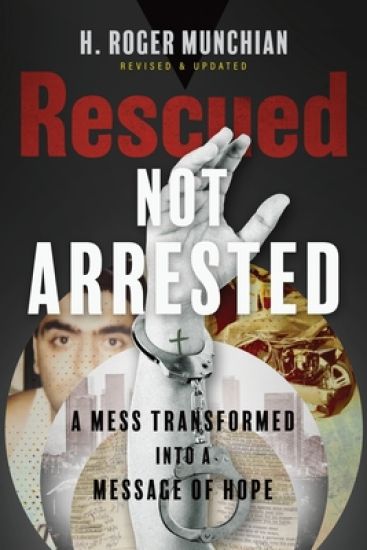
With chains binding him to the edge of insanity, his cry echoes off the jail cell walls: "God help me "Armenian immigrant Roger Munchian grew up among the violence and hopelessness of Los Angeles. Despite the surrounding violence, Munchian was a model student. No one would have suspected the hidden life of drugs, thievery, and violence bubbling behind that facade. His unquenchable thirst for money and power led him to build a multi-million dollar empire on drugs and violence. He ran fast. He ran hard. It took highway death and carnage to finally stop him. The high-speed collision with a highway median wall left twelve-time felon Munchian strapped to the crazy chair in a Maricopa County jail. Booked on two counts of vehicular homicide, he was certain to face death row. His road to wealth and power was bloody, as was his road to salvation. God heard his cry for help and arrived at his jail cell that night with a miracle. For the first time in Munchian's life, God was real. But his past caught up to him and his luck - bought by slick, high-priced lawyers and easy money - ran out. Munchian faced a lifetime of incarceration. His only hope was in the grace of God and the only way out of the mess was by turning his life completely over to Him.Based on a true story. Rescued Not Arrested is a story of how God shows Himself in our deepest depths of hopelessness - and how His love rescues us from our own paths of destruction.
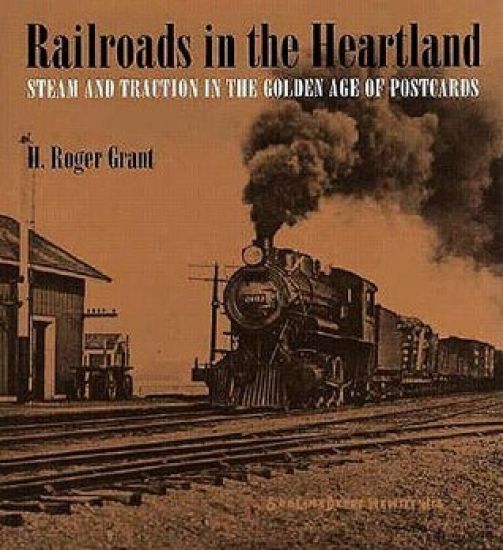
Historians of midwestern railroading during the early part of the twentieth century have generally focused on the production of railroad company histories while ignoring the regional view. Fortunately for railway historians and buffs, coincidentally with the zenith of the Railway Age, the national fad for producing and mailing postcards was at its height. Millions of cards, including "real-photo" images, were produced between 1905 and 1915. Roger Grant has selected more than a hundred representative picture postcards to visualize the principal themes and characteristics that gave this dynamic industry its distinctive regional features.By the turn of the century, the railroad map of the Midwest was unequaled. Anyone who examined it carefully sensed that this was the vital center of America's massive network of steel rails. Depots erected in the western prairie environment were spartan, with only minor decoration, but those in the Midwest usually mirrored more ornate New England styles. These features are often reflected in the images in this heavily illustrated book, which depicts the spare but strong pioneering spirit of the enterprise.
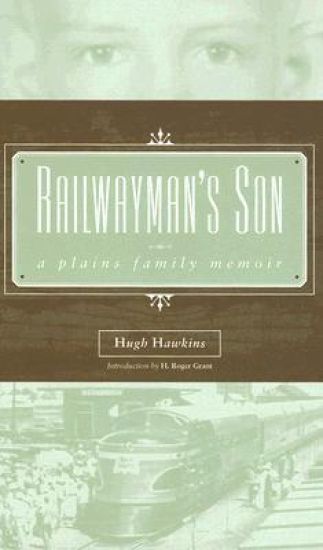
Hugh Hawkins was seven years old when his fathers job with the Rock Island Railroad forced his family to relocate to far western Kansas. Before he turned twelve the family had lived in three Rock Island towns: Herington, Kansas; Goodland, Kansas; and, finally El Reno, Oklahoma. Such was the life of a railwayman's son during the Great Depression. In this warm and thoughtful memoir, Hawkins paints a portrait of a middle-class family's traditions and values in the heartland of the 1930s and 1940s. 'I can't remember the last time I used the words lovely and marvelous to describe a book, but surely they apply to Hugh Hawkins' evocation of a vanished America, a work that is as sure-footed as it is touching' - Madeleine Blais, author of ""Uphill Walkers: Portrait of a Family"". 'Hawkins combines the skills of an accomplished historian with the sensitivities of a novelist to construct an engaging and poignant memoir of a Midwestern childhood in the 1930s and the first half of the 1940s. Through his memories and reflections, the author provides an intimate view of his family and a fresh perspective on the powerful forces that shaped the lives of Americans during these tumultuous times' - N. Ray Hiner, University of Kansas. 'Charming, entertaining, and well-written' - ""Reference & Research Book News"". 'A delightful book, made especially good because of the historical accounting of the era' - ""Mexia Daily News"". Professor emeritus of history and American studies at Amherst College, Hugh Hawkins is the author of numerous works, including ""Pioneer: A History of the Johns Hopkins University"". He lives in Plainfield, Massachusetts.