Russell Kirk is widely regarded as the individual most responsible for the revival of conservative thought in the latter half of the twentieth century. Kirk's conservative philosophy was well-established with his magnum opus, The Conservative Mind, published in 1953, and remained constant until his death in 1994. His Christianity, though, grew from something seen as the foundation of Western Civilization to being also a personal faith. He became a Roman Catholic, drawn by its universality, its traditionalism, and his love for the woman he married. Although he believed in certain Catholic distinctives, such as purgatory, he generally seemed to be more of a generic Christian than a dogmatic follower of Rome.
Volume 12 in the "Major Conservative and Libertarian Thinkers" series focuses on Russell Kirk's conservative philosophy. Russell Kirk is widely regarded as the individual most responsible for the revival of conservative thought in the latter half of the twentieth century. Kirk's conservative philosophy was well-established with his magnum opus, "The Conservative Mind", published in 1953, and remained constant until his death in 1994. His Christianity, though, grew from something seen as the foundation of Western Civilization to being also a personal faith. He became a Roman Catholic, drawn by its universality, its traditionalism, and his love for the woman he married. Although he believed in certain Catholic distinctives, such as purgatory, he generally seemed to be more of a generic Christian than a dogmatic follower of Rome. "Major Conservative and Libertarian Thinkers" provides comprehensive accounts of the works of seminal conservative thinkers from a variety of periods, disciplines, and traditions - the first series of its kind. Even the selection of thinkers adds another aspect to conservative thinking, including not only theorists but also writers and practitioners. The series comprises twenty volumes, each including an intellectual biography, historical context, critical exposition of the thinker's work, reception and influence, contemporary relevance, bibliography including references to electronic resources, and an index.
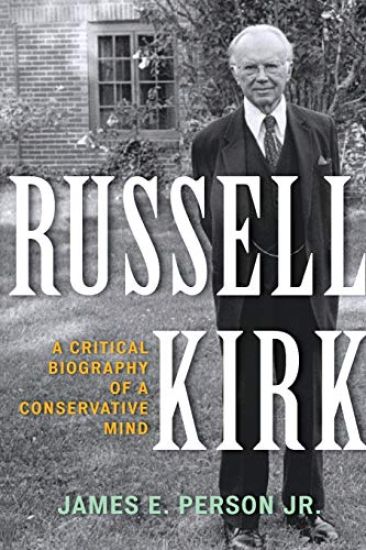
When people look to the founding of the modern conservative movement, they must ultimately look to Russell Kirk (1918–1994). Author of the groundbreaking treatise The Conservative Mind, Kirk defined conservative political thought for the post–World War II era. An imaginative and optimistic thinker, Kirk wrote essays in justice, society, education, economics, history, and literature that are timeless reminders of what Kirk called “the permanent things”: honor, courage, character, virtue, constancy, humility, wisdom, order, and prudence. His creative spirit is immortalized not only in his political work, however—Kirk also left behind a rich collection of spine-tingling horror stories and sophisticated novels. James E. Person Jr. explores every aspect of Kirk’s quiet genius. His findings provide much needed insight into the mind of a philosopher who defined a movement that provokes heated debate to this day. Person’s analysis traces conservatism to its roots and, in the process, uncovers important lessons for the future.
The new edition of this established and highly respected text is THE definitive reference in its field. It details methods for the elimination or prevention/control of microbial growth, and features: New chapters on bioterrorism and community healthcareNew chapters on microbicide regulations in the EU, USA and CanadaLatest material on microbial resistance to microbicidesUpdated material on new and emerging technologies, focusing on special problems in hospitals, dentistry and pharmaceutical practicePractical advice on problems of disinfection and antiseptics in healthcareA systematic review of sterilization methods, with uses and advantages outlined for eachEvaluation of disinfectants and their mechanisms of action with respect to current regulations The differences between European and North American regulations are highlighted throughout, making this a truly global work, ideal for worldwide healthcare professionals working in infectious diseases and infection control.
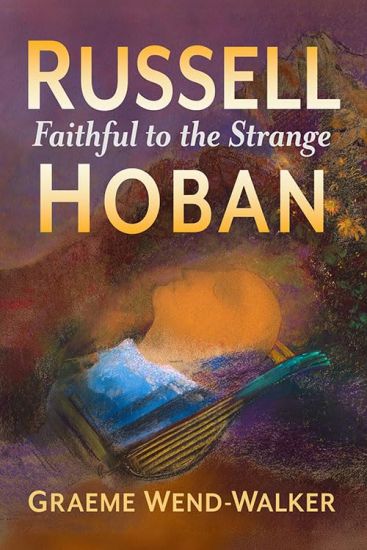
Spanning more than half a century, Russell Hoban's celebrated literary career won him critical accolades and legions of admirers across multiple genres. Many know him from the groundbreaking masterpiece Riddley Walker, with its twelve-year-old protagonist contemplating "what the idear of us myt be" from amidst the ruins of civilization. Some know Hoban from the genre-defying The Mouse and His Child, or from idiosyncratic novels of floundering Londoners struggling with writer's block or whether to steal turtles from the Zoo, hallucinating Death as a chimpanzee, or a grapefruit as the head of Orpheus. Still others fondly recall Frances the Badger's refusal to go to bed, or share Emmet Otter with their own children at Christmas. This book, the first consideration of Russell Hoban's literary career as a whole, explores what binds these seemingly disparate works together. Discovering unexpected patterns between books written from out of what one character describes as a perpetual "state of surprise," this critical study also draws on Hoban's biography, from his formation as an artist under the influence of jazz in New York to the upheaval of his self-reinvention as a writer, as it offers its own reflection on what the idea of Russell Hoban might be.
This second volume of works by Russell Lichter (whom I dubbed The Hermit of Blackpoint in the first volume) is entitled Greenpoint. Like Blackpoint, Greenpoint is the name of an actual geographical location in northern California. Highway 37 on its way from Novato to Vallejo bisects an oak forested area of several square miles, bordered to the east by the mouth of the Petaluma River and Richardson Bay, and to the west by miles of wetlands and cow pastures. Greenpoint is on the northern side of that highway, Blackpoint on the southern. Despite their contiguity they have different genii loci and different topologies. Most Blackpointers could not afford to live in Greenpoint and most Greenpointers wouldn't want to live in Blackpoint. And yet, the two form one whole.The geographical message here is that the works of the first volume form an emotional and spiritual continuum with the works of this volume. They come from, so to speak, the same place, both physically and metaphysically. While some may object to this, there is a lot to be said for remaining true to one's roots in a world that is becoming increasingly rootless, and where isolation and insecure disconnectedness abound, even at the highest economic and social levels.While the Asian philosophies that highly influence both the author and the publisher talk in terms of ?having no abode, ? and ?non-attachment to all phenomena, ? it is the publisher's view that a little Western thought is needed to balance this out, and the author, knowingly or unknowingly, has done so. While it is true that we do well not to be overly-clingy, it is the view of the great systematic German philosophers that place is not merely incidental, but of great spiritual significance. This is to say that the balanced man is willing to let go of place when the time comes that he must do so; but at the same time, we should remember that we really do come from somewhere, and we have roots in places; and to abandon any of those roots too carelessly is to tread on dangerous ground, socially and psychologically.And so the author of this second volume did well to sing his songs from his homeland in his first book, and then to, in a Bach-like way, re-present the first melodies with continual and minute variations on the themes which stir his soul. The tapestry presented is at once sweetly-nostalgic, sharply-observant and aching with earnest melancholy.The author also does a great service by veering from all orthodoxies in his refusal to simply wave away any serious emotion or profound concern. He does not, in these works, accept any philosophical, theological or psychological dictum which would have us shrug-off as negligible such themes as the persistent problems of aging, the vast array of missed opportunities, and past experiences which cannot be recovered. No experience of the heart is sent away with platitudes to feed on.Much like Victor Hugo, The Hermit of Blackpoint cannot be sold a false bill of goods. If something significant happens, he will not lie about it. If he misses a person, place or thing, he pulls no punches in confessing that. The past is not simply negated, belittled or ?transcended, ? but is seized upon if its reality is a powerful one; and if something about it hurts, he lets us know that it does, without any rationalized apology. This business of living is tough and uncertain, and Greenpoint, like its earlier brother Blackpoint, reflect this. And in doing so, both texts alternate between hope and despair; and that very ability to report the facts on the ground as they change, instead of trying to report old news which is no longer true, is not only the hallmark of good journalism, but of good poetry too.