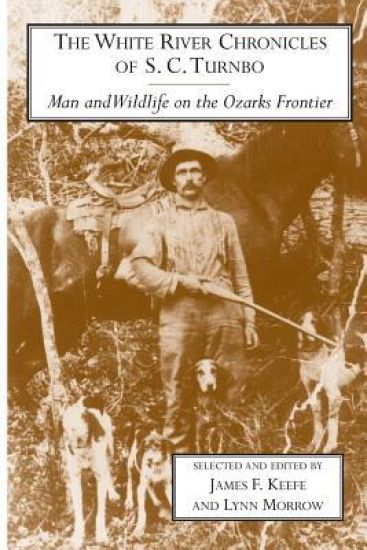
This highly readable folklore collection highlights the most representative and evocative tales in the twenty-five hundred pages of backwoods stories collected by Silas Tunbo toward the end of the last century. Turnbo and his informants, antebellum Ozarks natives, believed that the legends of the hunt were, as William Faulkner would write, “the best of all breathing and forever the best of all listening.” With no apology, the first settlers on the southern frontiers became predators in their own environment. They embraced blood sport and sought its rewards at every turn. The chase promised them a sureness of profit more predictable than land speculation, timbering, or commercial agriculture.These early opportunists believed that the greatest natural resource along the lush White River drainages in Missouri and Arkansas was large game. Although surrounded by living waters, climax forests, and luxuriant grasses, the tellers of Turnbo’s stories only incidentally made mention of flora. Silas Turnbo and his informants were fascinated by animals and the settlers’ ongoing relationship with them—a relationship often defined by contents for supremacy.Significantly, Tunbo’s education included only a few years in subscription schools of the 1850s. His writing is direct and in the idiom of hte Ozarks, including spellings that are occasionally whimsical, perfectly befitting these “fireside stories” of the great outdoor drama of the southern frontiers.
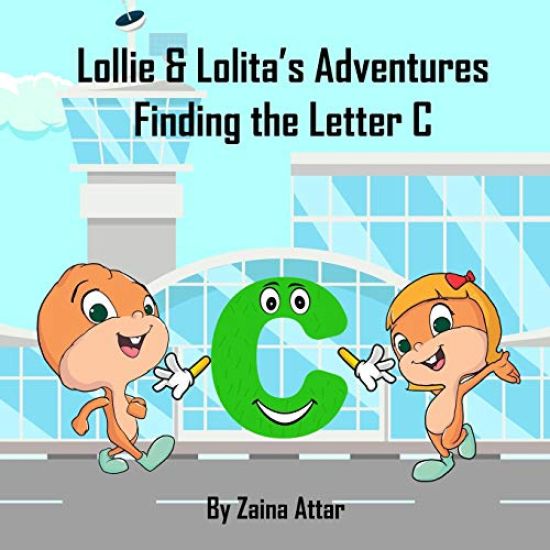
L một ng ngoại mười lăm tuổi, t c giả đ đọc rất nhiều s ch về m u sắc cho trẻ mới biết đi v trẻ nhỏ. Anh ấy thấy họ kh ng c cảm hứng. C rất nhiều h nh thức v m u sắc nghệ thuật tr n thế giới n y: c c bức vẽ hoạt h nh kh ng thể cạnh tranh được. T c giả tự hỏi: "L m g c đủ m u cơ bản để dạy cho c c em nhỏ?"Sau đ , anh ph t hiện ra "Histoire Naturelle des Perroquets" của Fran ois Levaillant. Những h nh ảnh, được tạo ra dưới sự chỉ đạo của Bouquet, Gi o sư Hội họa, Prytan e của Paris v o đầu những năm 1800, thật đ ng kinh ngạc. Anh ấy đ t m ra phương tiện ho n hảo để dạy t n m u sắc cho trẻ em ở khắp mọi nơi.
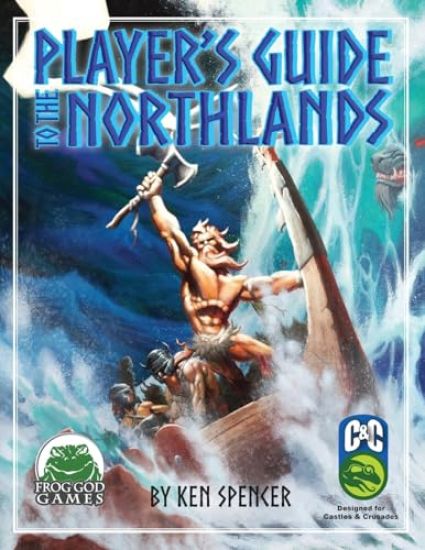
Test your wyrd in the Northlands The Player's Guide to the Northlands provides all you need to create characters tied to Frog God Games' Viking-themed Northlands setting. You'll find cultural lore, new equipment, and options to create heroes suited to the harsh lands of the North.
IntroductionChapter 1: Introduction to algorithm and their typesChapter 2: Performance analysis of an algorithm: Space ComplexityChapter 3: Performance analysis of an algorithm: Time ComplexityChapter 4: Asymptotic NotationsChapter 5: Asymptotic Notation Big OChapter 6: Asymptotic Notation Big Omega and ThetaSorting Algorithms:1: Bubble sort2: Selection Sort3: Insertion Sort4: Merge Sort5: Quick Sort6: Pigeonhole Sort7: 3-Way Quicksort (Dutch National Flag) algorithm8: Cocktail Sort9: Radix Sort10: Bucket Sort11: Counting Sort12: Shell Sort13: Topological sort14: Comb sortSearching Algorithm1: Linear Search2: Binary Search3: Jump Search4: Interpolation Search5: Exponential Search6: Ternary SearchBasic Data Structures:1: Stack Data structure and Implementation using arrays.2: Stack Data structure and Implementation using Linked List.3: Singly Linked List.4: Doubly Linked List DLL] .5: Circular Singly Linked List.6: Circular Doubly Linked List.7: Queue Data Structure with implementation using arrays.8: Queue Data Structure with implementation using linked list.9: Circular Queues Data structure with Implementation using arrays.10: Circular Queue Data structure with Implementation using Linked List.Trees Data Structure Tutorials:1. Tree Data Structure Introduction2. Introduction to Binary Tree3. Binary Tree Traversal4. Binary Search Tree Introduction5. Implementation of BST6. Implementation of Binary tree7. TRIE Data structure8. Heaps9. Priority Queue10. AVL tree11. Introduction to segment trees12. Performing minimum Range query in Segment Tree and implementation13. Lazy propagation of segment trees14. Fenwick trees and implementationGraph Data Structure Tutorials:1. Graph Introduction2. Graph Representation Adjacency Matrix3. Graph Representation Adjacency List4. Graph Traversal5. Graph Traversal using Stack and Queue6. Bipartite graph7. Graph coloring problem8. Isomorphic Graph9. Euler Graph10. Hamiltonian GraphDifferent types of problem solving technique1. Brute force approach2. Recursion3. Dynamic programming approach4. Backtracking approach5. Greedy approach6. Two pointer approachMinimum Spanning Tree:1. Introduction to minimum spanning tree2. Kruskal's algorithm3. Prims AlgorithmFind shortest path algorithm1. Bellman ford2. Dijkstra's3. Floyd warshallsString matching algorithms1. Knuth Morris Pratt String matching algorithm2. Rabin Karp algorithm3. Boyer-Moore string-search algorithmKnapsack Problem:1. Fractional knapsack2. KnapsackAdditional Problems:1. P, NP, NP hard, NP Complete2. Tower of Hanoi3. Sieve of Eratosthenes4. Kadane Algorithm5. Sliding Window Approach6. Travelling Salesman problem7. Minimum Coin Change Problem8. Total number of ways to get denomination of coins.9. Job Sequencing problem10. Activity Selection Problem11. House Robber ProblemHR Interview questions and tips to answer them1. Expectations on oncoming topics2. Mistakes to avoid in an interview.3. Tell me about yourself4. Why should we hire you?5. Why do you want to work for us?6. What are your greatest strengths and weakness?7. What are your greatest achievements/ accomplishments?8. Any questions for us?9. Where do you want to see yourself in 5 years?10. How to you work under pressure?11. How do you make important decisions?12. What motivates you to do the best on job?13. Do you prefer working alone or in a team?14. What do you know about our company?15. Are you planning for further studies?16. What is your salary expectations?Tips for Developers to improve their skills1. How to prepare for coding interview in 3 months.2. Tips to solve coding interview questions3. How to write a resume for coding interview?4. Tips to become good at programming
On a rare rainy Christmas day in Arizona, to the shock of the entire nation, over 100,000 children receive presents-gifts that they wanted most-thus triggering a media frenzied manhunt to find out how this extraordinary achievement was made possible. There was only one clue to begin with: each gift was signed by . . . Santa Claus. Michelle Larough, an aspiring journalist without a proper job, has inadvertently received a piece of evidence that no one else has. Ignoring advice and risking her already stagnant career, she embarks on a mysterious journey that will not only change the course of her entire life, but reveal the greatest, long term plan ever made in history involving some of the biggest corporations in the world . . . . . . and the enigmatic man behind it.
Super gift choice for any occasion. 6X9 Size. 200 Crisp white pages. Standard journal format with line for date on top. Matte finish cover. Strong binding.
John Stevens Cabot Abbott (September 19, 1805 - June 17, 1877), an American historian, pastor, and pedagogical writer, was born in Brunswick, Maine to Jacob and Betsey Abbott.Early lifeHe was a brother of Jacob Abbott, and was associated with him in the management of Abbott's Institute, New York City, and in the preparation of his series of brief historical biographies. Dr. Abbott graduated at Bowdoin College in 1825, prepared for the ministry at Andover Theological Seminary, and between 1830 and 1844, when he retired from the ministry in the Congregational Church, preached successively at Worcester, Roxbury and Nantucket, all in MassachusettsLiterary careerOwing to the success of a little work, The Mother at Home, he devoted himself, from 1844 onwards, to literature. He was a voluminous writer of books on Christian ethics, and of popular histories, which were credited with cultivating a popular interest in history. He is best known as the author of the widely popular History of Napoleon Bonaparte (1855), in which the various elements and episodes in Napoleon's career are described. Abbott takes a very favourable view towards his subject throughout. Also among his principal works are: History of the Civil War in America (1863-1866), and The History of Frederick II, Called Frederick the Great (New York, 1871). He also did a forward to a book called Life of Boone by W.M. Bogart, about Daniel Boone in 1876.
A Programmer's Guide to ADO.NET in C# begins by taking readers through a fast-paced overview of C# and then delves into ADO.NET. Why should C# programmers use it instead of the existing technologies? What new functionality does it offer? The chapters that follow go through the details on each of the major Data Providers of the .NET platform (OleDb, SQL Server, and ODBC) that enable you to read and write data to the targeted database. These chapters also serve as a good reference for looking up detailed methods and properties for these data provider classes. Authors Chand and Gold also show C# programmers how to work with XML classes and how to integrate XML into the ADO.NET architecture. The book provides programmers with handy ideas about taking advantage of the VS.NET IDE and how you can tie your data to the myriad of powerful controls including the multi-faceted Data Grid. Finally, it goes through creating a guest book application for the Web so you can see how all the pieces fit together.
If you have filled your life with limits, like fear, rules, laws, agreements, obligations and expectations, you may prefer to dive into the GEN where you can take a deep full breath of POSSIBLE. GEN is accessible as the CORE PERSON of all persons. It is available for anyone who wishes to make limitations more malleable and stretch their world.
John Stevens Cabot Abbott (September 19, 1805 - June 17, 1877), an American historian, pastor, and pedagogical writer, was born in Brunswick, Maine to Jacob and Betsey Abbott. Early life: He was a brother of Jacob Abbott, and was associated with him in the management of Abbott's Institute, New York City, and in the preparation of his series of brief historical biographies. Dr. Abbott graduated at Bowdoin College in 1825, prepared for the ministry at Andover Theological Seminary, and between 1830 and 1844, when he retired from the ministry in the Congregational Church, preached successively at Worcester, Roxbury and Nantucket, all in Massachusetts. Literary career: Owing to the success of a little work, The Mother at Home, he devoted himself, from 1844 onwards, to literature. He was a voluminous writer of books on Christian ethics, and of popular histories, which were credited with cultivating a popular interest in history. He is best known as the author of the widely popular History of Napoleon Bonaparte (1855), in which the various elements and episodes in Napoleon's career are described. Abbott takes a very favourable view towards his subject throughout. Also among his principal works are: History of the Civil War in America (1863-1866), and The History of Frederick II, Called Frederick the Great (New York, 1871). He also did a forward to a book called Life of Boone by W.M. Bogart, about Daniel Boone in 1876. In general, except that he did not write juvenile fiction, his work in subject and style closely resembles that of his brother, Jacob Abbott.... David "Davy" Crockett (August 17, 1786 - March 6, 1836) was a 19th-century American folk hero, frontiersman, soldier, and politician. He is commonly referred to in popular culture by the epithet "King of the Wild Frontier". He represented Tennessee in the U.S. House of Representatives and served in the Texas Revolution. Crockett grew up in East Tennessee, where he gained a reputation for hunting and storytelling. He was made a colonel in the militia of Lawrence County, Tennessee and was elected to the Tennessee state legislature in 1821. In 1825, he was elected to the U.S. Congress where he vehemently opposed many of the policies of President Andrew Jackson, most notably the Indian Removal Act. Crockett's opposition to Jackson's policies led to his defeat in the 1831 elections. He won again in 1833, then narrowly lost in 1835, prompting his angry departure to Texas (then the Mexican state of Tejas) shortly thereafter. In early 1836, he took part in the Texas Revolution and was killed at the Battle of the Alamo in March. Crockett became famous in his own lifetime for larger-than-life exploits popularized by stage plays and almanacs. After his death, he continued to be credited with acts of mythical proportion. These led in the 20th century to television and movie portrayals, and he became one of the best-known American folk heroes................
John Stevens Cabot Abbott (September 19, 1805 - June 17, 1877), an American historian, pastor, and pedagogical writer, was born in Brunswick, Maine to Jacob and Betsey Abbott. Early life: He was a brother of Jacob Abbott, and was associated with him in the management of Abbott's Institute, New York City, and in the preparation of his series of brief historical biographies. Dr. Abbott graduated at Bowdoin College in 1825, prepared for the ministry at Andover Theological Seminary, and between 1830 and 1844, when he retired from the ministry in the Congregational Church, preached successively at Worcester, Roxbury and Nantucket, all in Massachusetts. Literary career: Owing to the success of a little work, The Mother at Home, he devoted himself, from 1844 onwards, to literature. He was a voluminous writer of books on Christian ethics, and of popular histories, which were credited with cultivating a popular interest in history. He is best known as the author of the widely popular History of Napoleon Bonaparte (1855), in which the various elements and episodes in Napoleon's career are described. Abbott takes a very favourable view towards his subject throughout. Also among his principal works are: History of the Civil War in America (1863-1866), and The History of Frederick II, Called Frederick the Great (New York, 1871). He also did a forward to a book called Life of Boone by W.M. Bogart, about Daniel Boone in 1876. In general, except that he did not write juvenile fiction, his work in subject and style closely resembles that of his brother, Jacob Abbott... Christopher Columbus (1451 - 20 May 1506) was an Italian explorer, navigator, and colonizer. Born in the Republic of Genoa, under the auspices of the Catholic Monarchs of Spain he completed four voyages across the Atlantic Ocean. Those voyages and his efforts to establish settlements on the island of Hispaniola initiated the permanent European colonization of the New World. At a time when European kingdoms were beginning to establish new trade routes and colonies, motivated by imperialism and economic competition, Columbus proposed to reach the East Indies (South and Southeast Asia) by sailing westward. This eventually received the support of the Spanish Crown, which saw a chance to enter the spice trade with Asia through this new route. During his first voyage in 1492, he reached the New World instead of arriving in Japan as he had intended, landing on an island in the Bahamas archipelago that he named San Salvador. Over the course of three more voyages, he visited the Greater and Lesser Antilles, as well as the Caribbean coast of Venezuela and Central America, claiming all of it for the Crown of Castile. Columbus is the European explorer credited with establishing and documenting routes to the Americas, though he was preceded by the Viking expedition led by Leif Erikson in the 11th century.Moreover, the voyages of Columbus led to the first lasting European contact with the Americas, inaugurating a period of exploration, conquest, and colonization that lasted several centuries. These voyages thus had an enormous effect on the historical development of the modern Western world. He spearheaded the transatlantic slave trade and has been accused by several historians of initiating the genocide of the Hispaniola natives. Columbus himself saw his accomplishments primarily in the light of spreading the Christian religion. Columbus had set course in hopes of finding a western route to the Indies (Asia). He called the inhabitants of the lands that he visited indios (Spanish for "Indians"). His strained relationship with the Spanish crown and its appointed colonial administrators in America led to his arrest and dismissal as governor of the settlements on the island of Hispaniola in 1500, and later to protracted litigation over the benefits that he and his heirs claimed were owed to them by the crown......
John Stevens Cabot Abbott (September 19, 1805 - June 17, 1877), an American historian, pastor, and pedagogical writer, was born in Brunswick, Maine to Jacob and Betsey Abbott. Early life: He was a brother of Jacob Abbott, and was associated with him in the management of Abbott's Institute, New York City, and in the preparation of his series of brief historical biographies. Dr. Abbott graduated at Bowdoin College in 1825, prepared for the ministry at Andover Theological Seminary, and between 1830 and 1844, when he retired from the ministry in the Congregational Church, preached successively at Worcester, Roxbury and Nantucket, all in Massachusetts. Literary career: Owing to the success of a little work, The Mother at Home, he devoted himself, from 1844 onwards, to literature. He was a voluminous writer of books on Christian ethics, and of popular histories, which were credited with cultivating a popular interest in history. He is best known as the author of the widely popular History of Napoleon Bonaparte (1855), in which the various elements and episodes in Napoleon's career are described. Abbott takes a very favourable view towards his subject throughout. Also among his principal works are: History of the Civil War in America (1863-1866), and The History of Frederick II, Called Frederick the Great (New York, 1871). He also did a forward to a book called Life of Boone by W.M. Bogart, about Daniel Boone in 1876. In general, except that he did not write juvenile fiction, his work in subject and style closely resembles that of his brother, Jacob Abbott....
John Stevens Cabot Abbott (September 19, 1805 - June 17, 1877), an American historian, pastor, and pedagogical writer, was born in Brunswick, Maine to Jacob and Betsey Abbott. Early life: He was a brother of Jacob Abbott, and was associated with him in the management of Abbott's Institute, New York City, and in the preparation of his series of brief historical biographies. Dr. Abbott graduated at Bowdoin College in 1825, prepared for the ministry at Andover Theological Seminary, and between 1830 and 1844, when he retired from the ministry in the Congregational Church, preached successively at Worcester, Roxbury and Nantucket, all in Massachusetts. Literary career: Owing to the success of a little work, The Mother at Home, he devoted himself, from 1844 onwards, to literature. He was a voluminous writer of books on Christian ethics, and of popular histories, which were credited with cultivating a popular interest in history. He is best known as the author of the widely popular History of Napoleon Bonaparte (1855), in which the various elements and episodes in Napoleon's career are described. Abbott takes a very favourable view towards his subject throughout. Also among his principal works are: History of the Civil War in America (1863-1866), and The History of Frederick II, Called Frederick the Great (New York, 1871). He also did a forward to a book called Life of Boone by W.M. Bogart, about Daniel Boone in 1876. In general, except that he did not write juvenile fiction, his work in subject and style closely resembles that of his brother, Jacob Abbott.... Benjamin Franklin FRS, FRSE (January 17, 1706 O.S. January 6, 1705] - April 17, 1790) was one of the Founding Fathers of the United States. Franklin was a renowned polymath and a leading author, printer, political theorist, politician, freemason, postmaster, scientist, inventor, humorist, civic activist, statesman, and diplomat. As a scientist, he was a major figure in the American Enlightenment and the history of physics for his discoveries and theories regarding electricity. As an inventor, he is known for the lightning rod, bifocals, and the Franklin stove, among other inventions. He facilitated many civic organizations, including Philadelphia's fire department and the University of Pennsylvania, an Ivy League institution. Franklin earned the title of "The First American" for his early and indefatigable campaigning for colonial unity, initially as an author and spokesman in London for several colonies. As the first United States Ambassador to France, he exemplified the emerging American nation.Franklin was foundational in defining the American ethos as a marriage of the practical values of thrift, hard work, education, community spirit, self-governing institutions, and opposition to authoritarianism both political and religious, with the scientific and tolerant values of the Enlightenment. In the words of historian Henry Steele Commager, "In a Franklin could be merged the virtues of Puritanism without its defects, the illumination of the Enlightenment without its heat." To Walter Isaacson, this makes Franklin "the most accomplished American of his age and the most influential in inventing the type of society America would become." Franklin became a successful newspaper editor and printer in Philadelphia, the leading city in the colonies, publishing the Pennsylvania Gazette at the age of 23.He became wealthy publishing this and Poor Richard's Almanack, which he authored under the pseudonym "Richard Saunders". After 1767, he was associated with the Pennsylvania Chronicle, a newspaper that was known for its revolutionary sentiments and criticisms of the British policies. He pioneered and was first president of Academy and College of Philadelphia which opened in 1751 and later became the University of Pennsylvania. He organized and was the first secretary of the American Philosophical Society and was elected president in 1769. ....
John Stevens Cabot Abbott (September 19, 1805 - June 17, 1877), an American historian, pastor, and pedagogical writer, was born in Brunswick, Maine to Jacob and Betsey Abbott.John Stevens Cabot Abbott (September 19, 1805 - June 17, 1877), an American historian, pastor, and pedagogical writer, was born in Brunswick, Maine to Jacob and Betsey Abbott. Early life He was a brother of Jacob Abbott, and was associated with him in the management of Abbott's Institute, New York City, and in the preparation of his series of brief historical biographies. Dr. Abbott graduated at Bowdoin College in 1825, prepared for the ministry at Andover Theological Seminary, and between 1830 and 1844, when he retired from the ministry in the Congregational Church, preached successively at Worcester, Roxbury and Nantucket, all in Massachusetts. Literary career Owing to the success of a little work, The Mother at Home, he devoted himself, from 1844 onwards, to literature. He was a voluminous writer of books on Christian ethics, and of popular histories, which were credited with cultivating a popular interest in history. He is best known as the author of the widely popular History of Napoleon Bonaparte (1855), in which the various elements and episodes in Napoleon's career are described. Abbott takes a very favourable view towards his subject throughout. Also among his principal works are: History of the Civil War in America (1863-1866), and The History of Frederick II, Called Frederick the Great (New York, 1871). He also did a forward to a book called Life of Boone by W.M. Bogart, about Daniel Boone in 1876. In general, except that he did not write juvenile fiction, his work in subject and style closely resembles that of his brother, Jacob Abbott. Marriage and children On August 17, 1835 he married Jane Williams Bourne, daughter of Abner Bourne and Abagail Williams. John and Jane had issue: John Brown Abbott (November 29, 1831 - May 24, 1839) Jane Maria Abbott (born November 25, 1833) Waldo Abbott (September 8, 1836 - July 7, 1864) Harriet Vaughan Abbott (born February 18, 1838) Ellen Williams Abbott(born January 11, 1840) Laura Sallucia Abbott (born October 30, 1843) Elizabeth Ballister Abbott (March 15, 1847 - February 23, 1864) Emma Susan Abbott (born July 12, 1849) Gorham Dummer Abbott (born March 29, 1851) As a part of the 1872 Iwakura Mission Mr. Abbott was given guardianship of Shige Nagai, a Japanese girl sent to the United States to be educated. John Stevens Cabot Abbott died at Fair Haven, Connecticut. In 1910, a series of twenty short biographies of historical characters by J. S. C. and Jacob Abbott, was published. Their brother, Gorham Dummer Abbott, was also an author. Abbott's grandson, Willis Abbott, was a Christian Scientist and an editor of the Christian Science Monitor...............
Hernando de Soto (c. 1495 - May 21, 1542) was a Spanish explorer and conquistador who led the first European expedition deep into the territory of the modern-day United States (Florida, Georgia, Mississippi, Alabama and most likely Arkansas). He is the first European documented as having crossed the Mississippi River. 4] De Soto's North American expedition was a vast undertaking. It ranged throughout the southeastern United States, both searching for gold, reported by various Indian tribes and earlier explorers, and a passage to China or the Pacific coast. De Soto died in 1542 on the banks of the Mississippi River 5] in what is now Guachoya, Arkansas or Ferriday, Louisiana...... John Stevens Cabot Abbott (September 19, 1805 - June 17, 1877), an American historian, pastor, and pedagogical writer, was born in Brunswick, Maine to Jacob and Betsey Abbott.John Stevens Cabot Abbott (September 19, 1805 - June 17, 1877), an American historian, pastor, and pedagogical writer, was born in Brunswick, Maine to Jacob and Betsey Abbott. Early life He was a brother of Jacob Abbott, and was associated with him in the management of Abbott's Institute, New York City, and in the preparation of his series of brief historical biographies. Dr. Abbott graduated at Bowdoin College in 1825, prepared for the ministry at Andover Theological Seminary, and between 1830 and 1844, when he retired from the ministry in the Congregational Church, preached successively at Worcester, Roxbury and Nantucket, all in Massachusetts. 1] Literary career Owing to the success of a little work, The Mother at Home, he devoted himself, from 1844 onwards, to literature. He was a voluminous writer of books on Christian ethics, and of popular histories, which were credited with cultivating a popular interest in history. He is best known as the author of the widely popular History of Napoleon Bonaparte (1855), in which the various elements and episodes in Napoleon's career are described. Abbott takes a very favourable view towards his subject throughout. Also among his principal works are: History of the Civil War in America (1863-1866), and The History of Frederick II, Called Frederick the Great (New York, 1871). He also did a forward to a book called Life of Boone by W.M. Bogart, about Daniel Boone in 1876. In general, except that he did not write juvenile fiction, his work in subject and style closely resembles that of his brother, Jacob Abbott. Marriage and children On August 17, 1835 he married Jane Williams Bourne, daughter of Abner Bourne and Abagail Williams. John and Jane had issue: John Brown Abbott (November 29, 1831 - May 24, 1839) Jane Maria Abbott (born November 25, 1833) Waldo Abbott (September 8, 1836 - July 7, 1864) Harriet Vaughan Abbott (born February 18, 1838) Ellen Williams Abbott(born January 11, 1840) Laura Sallucia Abbott (born October 30, 1843) Elizabeth Ballister Abbott (March 15, 1847 - February 23, 1864) Emma Susan Abbott (born July 12, 1849) Gorham Dummer Abbott (born March 29, 1851) As a part of the 1872 Iwakura Mission Mr. Abbott was given guardianship of Shige Nagai, a Japanese girl sent to the United States to be educated. John Stevens Cabot Abbott died at Fair Haven, Connecticut. In 1910, a series of twenty short biographies of historical characters by J. S. C. and Jacob Abbott, was published. Their brother, Gorham Dummer Abbott, was also an author. Abbott's grandson, Willis Abbott, was a Christian Scientist and an editor of the Christian Science Monitor.................
Henry IV (French: Henri IV, read as Henri-Quatre pronounced 13 December 1553 - 14 May 1610), also known by the epithet "Good King Henry", was King of Navarre (as Henry III) from 1572 to 1610 and King of France from 1589 to 1610. He was the first French monarch of the House of Bourbon, a branch of the Capetian dynasty. Baptised as a Catholic but raised in the Protestant faith by his mother Jeanne d'Albret, Queen of Navarre, he inherited the throne of Navarre in 1572 on the death of his mother. As a Huguenot, Henry was involved in the French Wars of Religion, barely escaping assassination in the St. Bartholomew's Day massacre, and later led Protestant forces against the royal army. Henry, as Head of the House of Bourbon, was a direct male-line descendant of Louis IX of France, and "first prince of the blood". Upon the death of his brother-in-law and distant cousin Henry III of France in 1589, Henry was called to the French succession by the Salic law. He initially kept the Protestant faith and had to fight against the Catholic League, which denied that he could wear France's crown as a Protestant. To obtain mastery over his kingdom, after four years of stalemate, he found it prudent to abjure the Calvinist faith. As a pragmatic politician (in the parlance of the time, a politique), he displayed an unusual religious tolerance for the era. Notably, he promulgated the Edict of Nantes (1598), which guaranteed religious liberties to Protestants, thereby effectively ending the Wars of Religion. He was assassinated in 1610 by Fran ois Ravaillac, a fanatical Catholic, and was succeeded by his son Louis XIII. Considered a usurper by some Catholics and a traitor by some Protestants, Henry became target of at least 12 assassination attempts. An unpopular king immediately after his accession, Henry's popularity greatly improved after his death, in light of repeated victories over his enemies and his conversion to Catholicism. The "Good King Henry" (le bon roi Henri) was remembered for his geniality and his great concern about the welfare of his subjects. He was celebrated in the popular song Vive le roi Henri and in Voltaire's Henriade....... John Stevens Cabot Abbott (September 19, 1805 - June 17, 1877), an American historian, pastor, and pedagogical writer, was born in Brunswick, Maine to Jacob and Betsey Abbott.John Stevens Cabot Abbott (September 19, 1805 - June 17, 1877), an American historian, pastor, and pedagogical writer, was born in Brunswick, Maine to Jacob and Betsey Abbott. Early life He was a brother of Jacob Abbott, and was associated with him in the management of Abbott's Institute, New York City, and in the preparation of his series of brief historical biographies. Dr. Abbott graduated at Bowdoin College in 1825, prepared for the ministry at Andover Theological Seminary, and between 1830 and 1844, when he retired from the ministry in the Congregational Church, preached successively at Worcester, Roxbury and Nantucket, all in Massachusetts. 1] Literary career Owing to the success of a little work, The Mother at Home, he devoted himself, from 1844 onwards, to literature. He was a voluminous writer of books on Christian ethics, and of popular histories, which were credited with cultivating a popular interest in history. He is best known as the author of the widely popular History of Napoleon Bonaparte (1855), in which the various elements and episodes in Napoleon's career are described. Abbott takes a very favourable view towards his subject throughout. Also among his principal works are: History of the Civil War in America (1863-1866), and The History of Frederick II, Called Frederick the Great (New York, 1871). He also did a forward to a book called Life of Boone by W.M. Bogart, about Daniel Boone in 1876....