Kirjojen hintavertailu. Mukana 11 699 587 kirjaa ja 12 kauppaa.

Kirjahaku

Etsi kirjoja tekijän nimen, kirjan nimen tai ISBN:n perusteella.

1000 tulosta hakusanalla Sandeep Das

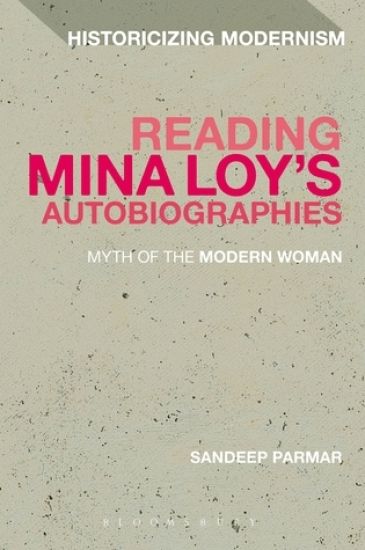
Reading Mina Loy’s Autobiographies

Reading Mina Loy’s Autobiographies

Sandeep Parmar

Bloomsbury Academic USA
2013
sidottu
Mina Loy is recognised today as one of the most innovative modernist poets, numbering Gertrude Stein, Marcel Duchamp, Djuna Barnes and T.S. Eliot amongst her admirers. Drawing on substantial new archival research, this book challenges the existing critical myth of Loy as a ‘modern woman' through an analysis of her unpublished autobiographical prose. Mina Loy's Autobiographies explores this major twentieth century writer's ideas about the ‘modern' and how they apply to the ‘modernist' writer—based on her engagement with twentieth-century avant-garde aesthetics—and charts how Loy herself uniquely defined modernity in her essays on literature and art. Sandeep Parmar here shows how, ultimately, Loy's autobiographies extend the modernist project by rejecting earlier impressions of avant-garde futurity and newness in favour of a ‘late modernist' aesthetic, one that is more pessimistic, inward and interested in the fragmentary interplay between the past and present.
Practical Computing on the Cell Broadband Engine

Practical Computing on the Cell Broadband Engine

Sandeep Koranne

Springer-Verlag New York Inc.
2009
sidottu
Practical Programming in the Cell Broadband Engine offers a unique programming guide for the Cell Broadband Engine, demonstrating a large number of real-life programs to identify and solve problems in engineering, logic design, VLSI CAD, number-theory, graph-theory, computational geometry, image processing, and other subjects. Key features include: Numerous diagrams, mnemonics, tables, charts, code samples for making program development on the CBE as accessible as possible Comprehensive reading list for introductory material to the subject matter A website providing all source codes and sample-data for examples presented in this text.
Handbook of Open Source Tools

Handbook of Open Source Tools

Sandeep Koranne

Springer-Verlag New York Inc.
2010
sidottu
Handbook of Open Source Tools introduces a comprehensive collection of advanced open source tools useful in developing software applications. The book contains information on more than 200 open-source tools which include software construction utilities for compilers, virtual-machines, database, graphics, high-performance computing, OpenGL, geometry, algebra, graph theory , GUIs and more. Special highlights for software construction utilities and application libraries are included. Each tool is covered in the context of a real like application development setting. This unique handbook presents a comprehensive discussion of advanced tools, a valuable asset used by most application developers and programmers; includes a special focus on Mathematical Open Source Software not available in most Open Source Software books, and introduces several tools (eg ACL2, CLIPS, CUDA, and COIN) which are not known outside of select groups, but are very powerful.Handbook of Open Source Tools is designed for application developers and programmers working with Open Source Tools. Advanced-level students concentrating on Engineering, Mathematics and Computer Science will find this reference a valuable asset as well.
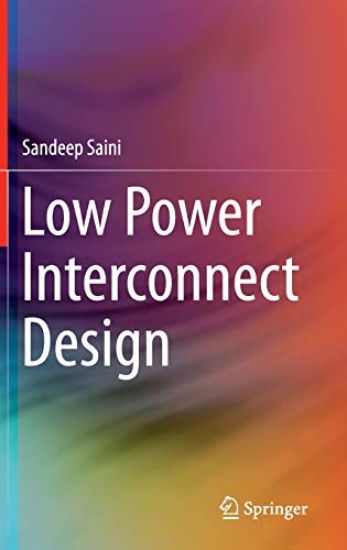
Low Power Interconnect Design

Low Power Interconnect Design

Sandeep Saini

Springer-Verlag New York Inc.
2015
sidottu
This book provides practical solutions for delay and power reduction for on-chip interconnects and buses. It provides an in depth description of the problem of signal delay and extra power consumption, possible solutions for delay and glitch removal, while considering the power reduction of the total system. Coverage focuses on use of the Schmitt Trigger as an alternative approach to buffer insertion for delay and power reduction in VLSI interconnects. In the last section of the book, various bus coding techniques are discussed to minimize delay and power in address and data buses.
Agent-Based Semantic Web Service Composition

Agent-Based Semantic Web Service Composition

Sandeep Kumar

Springer-Verlag New York Inc.
2012
nidottu
Agent-based Semantic Web Service Composition closely examines the various aspects of SWS composition, and explores the concept that a Multi-Agent system can serve as an SWS composition system in which its agents can interact with one another to satisfy a high-level goal. In addition to surveying various proposed multi-agent-based SWS composition models, the book also highlights the cognitive parameter-based semantic web service selection models that can be used in multi-agent-based SWS composition, and outlines a new negotiation agreement-based SWS composition that can outperform existing techniques. Agent-based Semantic Web Service Composition is intended for researchers and practitioners as a reference guide for optimizing SWS composition and implementing multi-agent systems. Instructors and other academics working in a related field will also find the book invaluable.
Reading Mina Loy’s Autobiographies

Reading Mina Loy’s Autobiographies

Sandeep Parmar

Bloomsbury Academic
2014
nidottu
Mina Loy is recognised today as one of the most innovative modernist poets, numbering Gertrude Stein, Marcel Duchamp, Djuna Barnes and T.S. Eliot amongst her admirers. Drawing on substantial new archival research, this book challenges the existing critical myth of Loy as a ‘modern woman' through an analysis of her unpublished autobiographical prose. Reading Mina Loy's Autobiographies explores this major twentieth century writer's ideas about the ‘modern' and how they apply to the ‘modernist' writer—based on her engagement with twentieth-century avant-garde aesthetics—and charts how Loy herself uniquely defined modernity in her essays on literature and art. Sandeep Parmar here shows how, ultimately, Loy's autobiographies extend the modernist project by rejecting earlier impressions of avant-garde futurity and newness in favour of a ‘late modernist' aesthetic, one that is more pessimistic, inward and interested in the fragmentary interplay between the past and present.
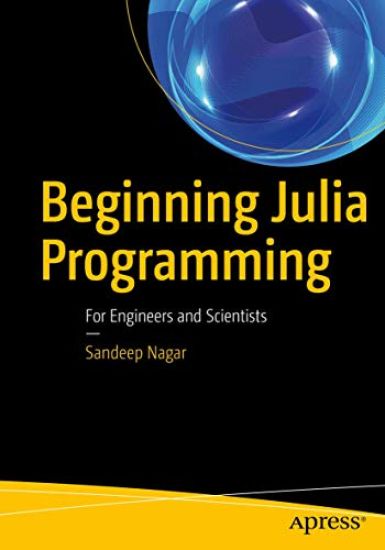
Beginning Julia Programming

Beginning Julia Programming

Sandeep Nagar

APress
2017
nidottu
Get started with Julia for engineering and numerical computing, especially data science, machine learning, and scientific computing applications. This book explains how Julia provides the functionality, ease-of-use and intuitive syntax of R, Python, MATLAB, SAS, or Stata combined with the speed, capacity, and performance of C, C++, or Java. You’ll learn the OOP principles required to get you started, then how to do basic mathematics with Julia. Other core functionality of Julia that you’ll cover, includes working with complex numbers, rational and irrational numbers, rings, and fields. Beginning Julia Programming takes you beyond these basics to harness Julia’s powerful features for mathematical functions in Julia, arrays for matrix operations, plotting, and more. Along the way, you also learn how to manage strings, write functions, work with control flows, and carry out I/O to implement and leverage the mathematics needed for your data scienceand analysis projects."Julia walks like Python and runs like C". This phrase explains why Julia is quickly growing as the most favored option for data analytics and numerical computation. After reading and using this book, you'll have the essential knowledge and skills to build your first Julia-based application. What You'll LearnObtain core skills in Julia Apply Julia in engineering and science applicationsWork with mathematical functions in Julia Use arrays, strings, functions, control flow, and I/O in JuliaCarry out plotting and display basic graphics Who This Book Is ForThose who are new to Julia; experienced users may also find this helpful as a reference.
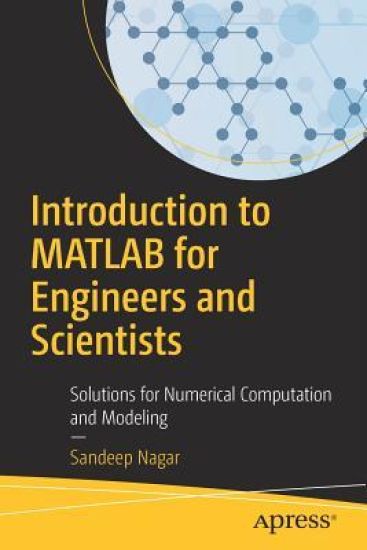
Introduction to MATLAB for Engineers and Scientists
Familiarize yourself with MATLAB using this concise, practical tutorial that is focused on writing code to learn concepts. Starting from the basics, this book covers array-based computing, plotting and working with files, numerical computation formalism, and the primary concepts of approximations. Introduction to MATLAB is useful for industry engineers, researchers, and students who are looking for open-source solutions for numerical computation.In this book you will learn by doing, avoiding technical jargon, which makes the concepts easy to learn. First you’ll see how to run basic calculations, absorbing technical complexities incrementally as you progress toward advanced topics. Throughout, the language is kept simple to ensure that readers at all levels can grasp the concepts. What You'll LearnApply sample code to your engineering or science problemsWork with MATLAB arrays, functions, and loops Use MATLAB’s plotting functions for data visualizationSolve numerical computing and computational engineering problems with a MATLAB case studyWho This Book Is ForEngineers, scientists, researchers, and students who are new to MATLAB. Some prior programming experience would be helpful but not required.
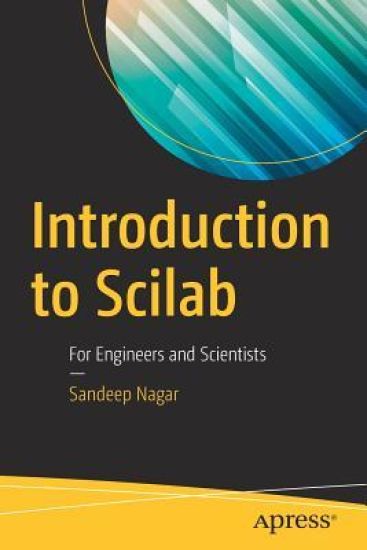
Introduction to Scilab

Introduction to Scilab

Sandeep Nagar

APress
2017
nidottu
Familiarize yourself with Scilab using this concise, practical tutorial that is focused on writing code to learn concepts. Starting from the basics, this book covers array-based computing, plotting, and working with files in Scilab. Introduction to Scilab is useful for industry engineers, researchers, and students who are looking for open-source solutions for numerical computation.In this book you will learn by doing, avoiding technical jargon, which makes the concepts easy to learn. First you’ll see how to run basic calculations, absorbing technical complexities incrementally as you progress toward advanced topics. Throughout, the language is kept simple to ensure that readers at all levels can grasp the concepts. After reading this book, you will come away with sample code that can be re-purposed and applied to your own projects using Scilab.What You'll LearnApply sample code to your engineering or science problemsWork with Scilab arrays, functions, and loops Use Scilab’s plotting functions for data visualizationSolve numerical computing and computational engineering problems with ScilabWho This Book Is ForEngineers, scientists, researchers, and students who are new to Scilab. Some prior programming experience would be helpful but not required.
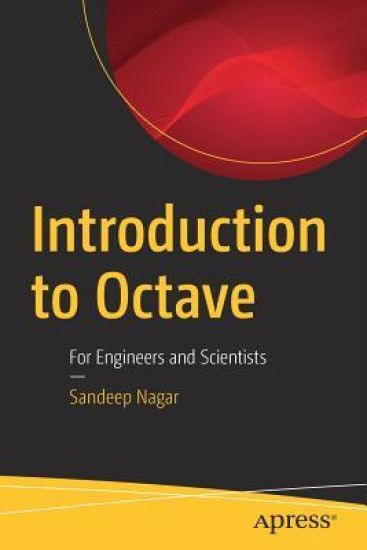
Introduction to Octave

Introduction to Octave

Sandeep Nagar

APress
2017
nidottu
Familiarize yourself with Octave using this concise, practical tutorial that is focused on writing code to learn concepts. Starting from the basics, this book covers array-based computing, plotting, and working with files in Octave, which can run MATLAB files without modification. Introduction to Octave is useful for industry engineers, researchers, and students who are looking for open-source solutions for numerical computation.In this book you will learn by doing, avoiding technical jargon, which makes the concepts easy to learn. First you’ll see how to run basic calculations, absorbing technical complexities incrementally as you progress toward advanced topics. Throughout, the language is kept simple to ensure that readers at all levels can grasp the concepts. What You'll LearnApply sample code to your engineering or science problemsWork with Octave arrays, functions, andloops Use Octave’s plotting functions for data visualizationSolve numerical computing and computational engineering problems with OctaveWho This Book Is ForEngineers, scientists, researchers, and students who are new to Octave. Some prior programming experience would be helpful but not required.
Introduction to Python for Engineers and Scientists
Familiarize yourself with the basics of Python for engineering and scientific computations using this concise, practical tutorial that is focused on writing code to learn concepts. Introduction to Python is useful for industry engineers, researchers, and students who are looking for open-source solutions for numerical computation. In this book you will learn by doing, avoiding technical jargon, which makes the concepts easy to learn. First you’ll see how to run basic calculations, absorbing technical complexities incrementally as you progress toward advanced topics. Throughout, the language is kept simple to ensure that readers at all levels can grasp the concepts. What You'll Learn Understand the fundamentals of the Python programming languageApply Python to numerical computational programming projects in engineering and scienceDiscover the Pythonic way of lifeApplydata types, operators, and arrays Carry out plotting for visualizationWork with functions and loops Who This Book Is For Engineers, scientists, researchers, and students who are new to Python. Some prior programming experience would be helpful but not required.