Kirjojen hintavertailu. Mukana 12 390 323 kirjaa ja 12 kauppaa.

Kirjahaku

Etsi kirjoja tekijän nimen, kirjan nimen tai ISBN:n perusteella.

1000 tulosta hakusanalla Schelling Hans

Romantic Metasubjectivity Through Schelling and Jung
Romantic Metasubjectivity Through Schelling and Jung: Rethinking the Romantic Subject explores the remarkable intellectual isomorphism between the philosophy of Friedrich Schelling and Carl Jung’s analytical psychology in order to offer a crucial and original corrective to the "reflection theory" of subjectivity.Arguing that the reflection theory of the subject does not do justice to the full compass of Romantic thinking about the human being, Romantic Metasubjectivity sees human identity as neither discursive aftereffect nor centred around a self-transparent "I" but rather as constellated around the centripetal force of what Novalis calls "The Self of one’s self." The author begins with a unique reading of Schelling’s early Naturphilosophie as primal site rather than Freudian scene, thinking this site through his Philosophical Inquiries Into the Nature of Human Freedom to The Ages of the World. Reading Jungian metapsychology and its core concepts as therapeutic amplifications of Schelling, the author articulates an intellectual counter-transference in which Schelling and Jung contemporise each other. The book then demonstrates how Romantic metasubjectivity operates in the libidinal matrix of Romantic poetry through readings of William Wordsworth’s The Prelude and Percy Shelley’s Prometheus Unbound. The book concludes with a discussion of the hit TV series Breaking Bad as a "case study" of the challenges Romantic metasubjectivity raises for fundamental ethical dilemmas which confront us in the twenty-first century.Romantic Metasubjectivity is a highly original work of scholarship and will appeal to students and scholars in German Idealism, Romanticism, philosophy, psychoanalysis, theory, Jung studies, and those with an interest in contemporary theories of the subject.
The New Schelling

The New Schelling

BLOOMSBURY PUBLISHING PLC
2004
sidottu
Friedrich Wilhelm Joseph Von Schelling (1775GCo1854) was a colleague of Hegel, Holderlin, Fichte, Goethe, Schlegel, and Schiller. Always a champion of Romanticism, Schelling advocated a philosophy which emphasized intuition over reason, which maintained aesthetics and the creative imagination to be of the highest value. At the same time, SchellingGCOs concerns for the self and the rational make him a major precursor to existentialism and phenomenology. The New Schelling brings together a wide-ranging set of essays which elaborate the connections between Schelling and other thinkersGCosuch as Marx, Nietzsche, Freud, Sartre, Deleuze, and LacanGCoand argue for the unexpected modernity of SchellingGCOs work. Contributors: Manfred Frank, J++rgen Habermas, Iain Hamilton Grant, Joseph Lawrence, Odo Marquand, Judith Norman, Alberto Toscano, Michael Vater, Alistair Welchman, Slavoj +a Zi+azek.
The New Schelling

The New Schelling

Continuum International Publishing Group Ltd.
2004
nidottu
Friedrich Wilhelm Joseph Von Schelling (1775-1854) was a colleague of Hegel, Holderlin, Fichte, Goethe, Schlegel, and Schiller. Always a champion of Romanticism, Schelling advocated a philosophy which emphasized intuition over reason, which maintained aesthetics and the creative imagination to be of the highest value. At the same time, Schellings concerns for the self and the rational make him a major precursor to existentialism and phenomenology. The New Schelling brings together a wide-ranging set of essays which elaborate the connections between Schelling and other thinkers such as Marx, Nietzsche, Freud, Sartre, Deleuze, and Lacan and argue for the unexpected modernity of Schellings work. Contributors: Manfred Frank, Jrgen Habermas, Iain Hamilton Grant, Joseph Lawrence, Odo Marquand, Judith Norman, Alberto Toscano, Michael Vater, Alistair Welchman, Slavoj azek.
Philosophies of Nature after Schelling

Philosophies of Nature after Schelling

Iain Hamilton Grant

BLOOMSBURY PUBLISHING PLC
2006
sidottu
The whole of modern European philosophy', wrote F.W.J. Schelling in 1809, 'has this common deficiency - that nature does not exist for it.' Despite repeated echoes of Schelling's assessment throughout the natural sciences, and despite the philosophy of nature recently proposed but not completed by Gilles Deleuze, Philosophies of Nature After Schelling argues that Schelling's verdict remains accurate two hundred years later. Presenting a lucid account of Schelling's major works in the philosophy of nature alongside those of his scientific contemporaries who pursued and furthered that work, this book does not simply aim to present Schelling's extravagant 'speculative physics' as an historical episode. Rather, Schelling's programme is presented as a viable and necessary corrective both to the rejection of metaphysics and the correlative 'antiphysics' at the ethical heart of contemporary philosophy.
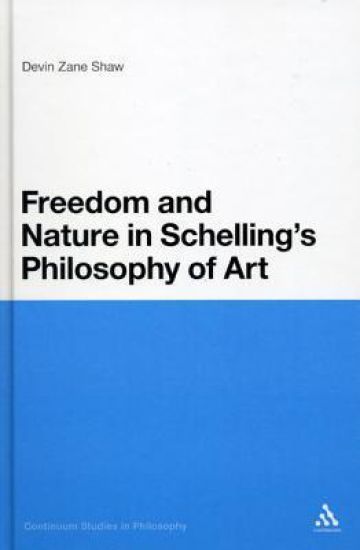
Freedom and Nature in Schelling's Philosophy of Art

Freedom and Nature in Schelling's Philosophy of Art

Devin Zane Shaw

Continuum Publishing Corporation
2012
nidottu
Schelling is often thought to be a protean thinker whose work is difficult to approach or interpret. Devin Zane Shaw shows that the philosophy of art is the guiding thread to understanding Schelling's philosophical development from his early works in 1795-1796 through his theological turn in 1809-1810. Schelling's philosophy of art is the keystone' of the system; it unifies his idea of freedom and his philosophy of nature. Schelling's idea of freedom is developed through a critique of the formalism of Kant's and Fichte's practical philosophies, and his nature-philosophy is developed to show how subjectivity and objectivity emerge from a common source in nature. The philosophy of art plays a dual role in the system. First, Schelling argues that artistic activity produces through the artwork a sensible realization of the ideas of philosophy. Second, he argues that artistic production creates the possibility of a new mythology that can overcome the socio-political divisions that structure the relationships between individuals and society. Shaw's careful analysis shows how art, for Schelling, is the highest expression of human freedom.
Freedom and Nature in Schelling's Philosophy of Art

Freedom and Nature in Schelling's Philosophy of Art

Devin Zane Shaw

CONTINUUM PUBLISHING CORPORATION
2011
sidottu
Schelling is often thought to be a protean thinker whose work is difficult to approach or interpret. Devin Zane Shaw shows that the philosophy of art is the guiding thread to understanding Schelling's philosophical development from his early works in 1795-1796 through his theological turn in 1809-1810. Schelling's philosophy of art is the keystone of the system; it unifies his idea of freedom and his philosophy of nature. Schelling's idea of freedom is developed through a critique of the formalism of Kant's and Fichte's practical philosophies, and his nature-philosophy is developed to show how subjectivity and objectivity emerge from a common source in nature. The philosophy of art plays a dual role in the system. First, Schelling argues that artistic activity produces through the artwork a sensible realization of the ideas of philosophy. Second, he argues that artistic production creates the possibility of a new mythology that can overcome the socio-political divisions that structure the relationships between individuals and society. Shaw's careful analysis shows how art, for Schelling, is the highest expression of human freedom.
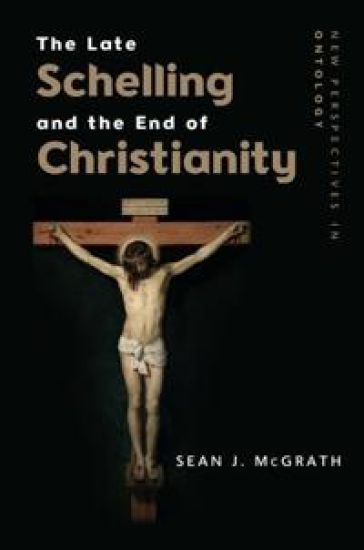
The Late Schelling and the End of Christianity

The Late Schelling and the End of Christianity

Sean J. McGrath

Edinburgh University Press
2020
sidottu
This is the first major effort to systematically organise and evaluate Schelling's arguments for a Philosophy of Revelation and to demonstrate their importance for contemporary debates in speculative realism, new realism and post-secularism. Schelling's decisionism has long been recognised as the historical root of European existentialism, but has never been properly explained as a philosophical strategy. According to McGrath, Schelling's turn to the real is neither fideistic nor absurdist, but the consequence of the free decision of the philosopher who has soberly assessed the results of logic, nature-philosophy and epistemology.
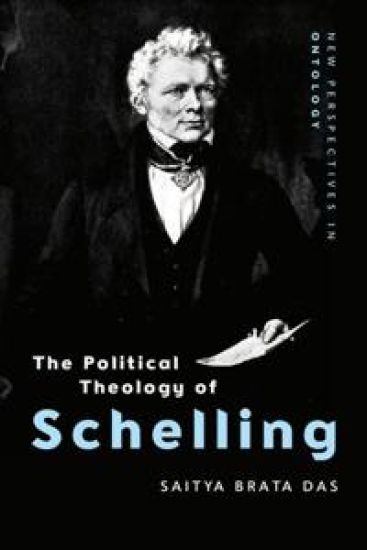
The Political Theology of Schelling

The Political Theology of Schelling

Saitya Brata Das

Edinburgh University Press
2016
sidottu
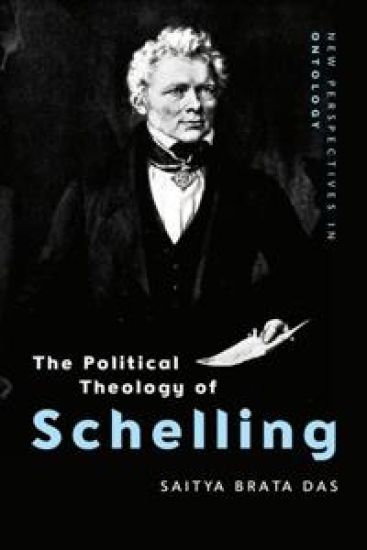
Saitya Brata Das rigorously examines Schelling's theologico-political works and sets his thought against his more dominant contemporary, Hegel.Das argues that Schelling inaugurates a new thinking outside of Occidental metaphysics, by a paradoxical manner of exit, which prepares for the post-metaphysical philosophy of Martin Heidegger, Franz Rosenzweig and Jacques Derrida.This new reflection, outside of the Universal world-historical politics of modernity, is achieved by re-thinking religion as eschatology. Intervening in contemporary debates on post-secularism and the return to religion, Das shows that religion, in an essential sense, always opens up infinitude from the heart of finitude, to an irreducible outside of the profane order of worldly hegemonies. Religion here assumes a negative political theology of exception without sovereign power.
The Political Theology of Schelling

The Political Theology of Schelling

Saitya Brata Das

Edinburgh University Press
2018
nidottu
Saitya Brata Das rigorously examines Schelling's theologico-political works and sets his thought against his more dominant contemporary, Hegel. Das argues that Schelling inaugurates a new thinking outside of Occidental metaphysics, by a paradoxical manner of exit, which prepares for the post-metaphysical philosophy of Martin Heidegger, Franz Rosenzweig and Jacques Derrida. This new reflection, outside of the Universal world-historical politics of modernity, is achieved by re-thinking religion as eschatology. Intervening in contemporary debates on post-secularism and the return to religion, Das shows that religion, in an essential sense, always opens up infinitude from the heart of finitude, to an irreducible outside of the profane order of worldly hegemonies. Religion here assumes a negative political theology of exception without sovereign power.
The 1801 Schelling-Eschenmayer Controversy

The 1801 Schelling-Eschenmayer Controversy

Benjamin Berger; Daniel Whistler

Edinburgh University Press
2020
sidottu
During the first decade of the 19th century, F. W. J. Schelling was involved in 3 distinct controversies with one of his most perceptive and provocative critics, A. K. A. Eschenmayer. The first of these controversies took place in 1801 and focused on the philosophy of nature. Now, Berger and Whistler provide a ground-breaking account of this moment in the history of philosophy. They argue that key Schellingian concepts, such as identity, potency and abstraction, were first forged in his early debate with Eschenmayer. Through a series of translations and commentaries, they show that the 1801 controversy is an essential resource for understanding Schelling's thought, the philosophy of nature and the origins of absolute idealism.
Philosophies of Nature after Schelling

Philosophies of Nature after Schelling

Iain Hamilton Grant

Continuum International Publishing Group Ltd.
2008
nidottu
The whole of modern European philosophy', wrote F.W.J. Schelling in 1809, 'has this common deficiency - that nature does not exist for it.' Despite repeated echoes of Schelling's assessment throughout the natural sciences, and despite the philosophy of nature recently proposed but not completed by Gilles Deleuze, Philosophies of Nature After Schelling argues that Schelling's verdict remains accurate two hundred years later. Presenting a lucid account of Schelling's major works in the philosophy of nature alongside those of his scientific contemporaries who pursued and furthered that work, this book does not simply aim to present Schelling's extravagant 'speculative physics' as an historical episode. Rather, Schelling's programme is presented as a viable and necessary corrective both to the rejection of metaphysics and the correlative 'antiphysics' at the ethical heart of contemporary philosophy.