Kirjojen hintavertailu. Mukana 11 627 220 kirjaa ja 12 kauppaa.

Kirjahaku

Etsi kirjoja tekijän nimen, kirjan nimen tai ISBN:n perusteella.

1000 tulosta hakusanalla Scott Hildreth

Scott Adams and Philosophy

Scott Adams and Philosophy

Open Court Publishing Co ,U.S.
2018
pokkari
As cartoonist, author, public speaker, blogger, and periscoper, Scott Adams has had best-sellers in several different fields: his Dilbert cartoons, his meditations on the philosophy of Dilbert, his works on how to achieve success in business and all other areas of life, his two remarkable books on religion, and now his controversial work on political persuasion. Adams’s two most recent best-sellers are How to Fail at Almost Everything and Still Win Big: Kind of the Story of My Life (2014) and Win Bigly: Persuasion in a World Where Facts Don’t Matter (2017). Adams predicted Donald Trump’s election victory (on August 13th 2016) and has explained then and more recently how Trump operates as a Master Persuader, using “weapons-grade” persuasive techniques to defeat his opponents and often to stay several moves ahead of them. Adams has provocative ideas in many areas, for example his outrageous claim that 30 percent of the population have absolutely no sense of humor, and take their cue from conventional opinion in deciding whether something is a joke, since they have no way of deciding this for themselves. In Scott Adams and Philosophy, an elite cadre of people who think for a living put Scott Adams’s ideas under scrutiny. Every aspect of Adams’s fascinating and infuriating system of ideas is explained and tested. Among the key topics: Does humor inform us about reality? Do religious extremists know something the rest of us don’t? What are facts and how can they not matter? What happens when confirmation bias meets cognitive dissonance? How can we tell whether President Trump is a genius or just dumb-lucky? Does the Dilbert philosophy discourage the struggle for better workplace conditions? How sound is Adams’s claim that “systems” thinking beats goal-directed thinking? Does Dilbert exhibit a Nietzschean or a Kierkegaardian sense of life? Or is it Sisyphian in Camus’s sense? Can truth be over-rated? “The political side that is out of power is the side that hallucinates the most.” If there’s a serious chance we’re living in a Matrix-type simulation, how should we change our behavior? Are most public policy issues just too complex and technical for most people to have an opinion about? In politics, says Adams, it’s as if different people watch the same movie at the same time, some thinking it’s a romantic comedy and others thinking it’s a horror picture. How is that possible? Does logic play any part in persuasion?
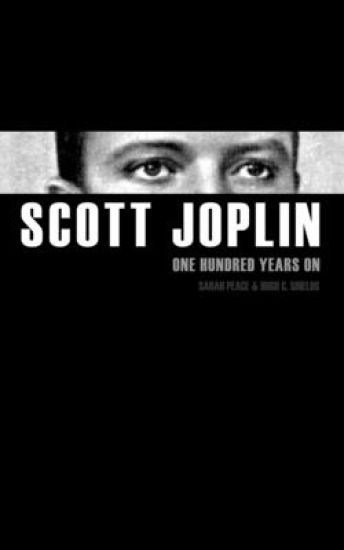
Scott Joplin

Scott Joplin

Garland Publishing Inc
1998
sidottu
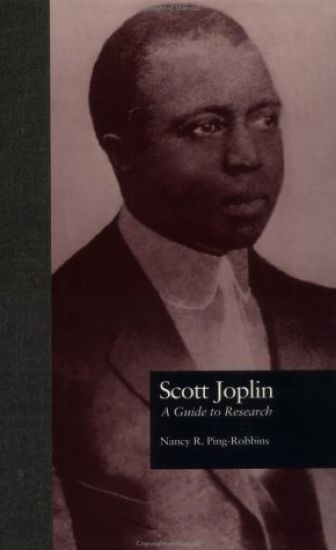
First Published in 1998. This book is the first resource guide to published materials on Scott Joplin and encompasses a wide variety of items having to do with the man, his Iife, his music, and his influence on ragtime throughout the twentieth century. This guide includes articles and listings on festivals, concerts, clubs or societies, individual performers, performing groups, radio, television, and film as well as bibliography on Joplin and ragtime in general.
Scott, Dickens, Eliot, Hardy

Scott, Dickens, Eliot, Hardy

Continuum Publishing Corporation
2011
sidottu
This is a comprehensive critical analysis of the most important Shakespearean critics, editors, actors and directors. This volume focuses on Shakespeare's reception by nineteenth-century novelists. "Great Shakespeareans" offers a systematic account of those figures who have had the greatest influence on the interpretation, understanding and cultural reception of Shakespeare, both nationally and internationally. In this volume, leading scholars assess the contribution of Sir Walter Scott, Charles Dickens, George Eliot and Thomas Hardy to the afterlife and reception of Shakespeare and his plays. Each substantial contribution assesses the double impact of Shakespeare on the figure covered and of the figure on the understanding, interpretation and appreciation of Shakespeare, provide a sketch of their subject's intellectual and professional biography and an account of the wider cultural context, including comparison with other figures or works within the same field.
Scott Mitchell Houses

Scott Mitchell Houses

Scott Mitchell

Rizzoli International Publications
2020
sidottu
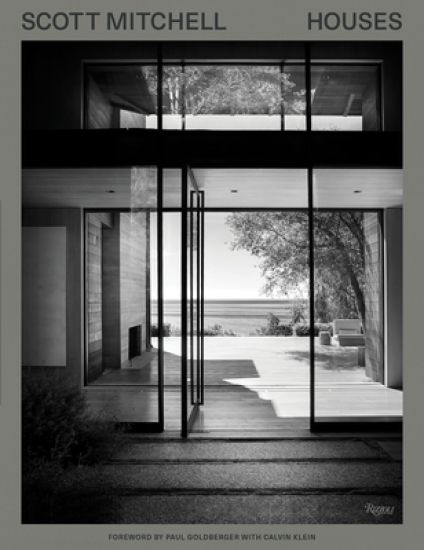
A master of his genre, Scott Mitchell is celebrated for his warm approach to connecting the built and natural environment. Sought after for their minimalist, material-driven aesthetic, Mitchell's houses are studies in space, materiality, and light. Emphasizing an elegant spatial order, his projects respond to the natural appeal of their locations, be they bucolic retreats on Long Island or resplendent beach houses overlooking the Pacific Ocean. The first volume on his work, Scott Mitchell Houses is a sublime exploration of the architectural designer's impressive portfolio of projects. Dynamic compositions of light and shadow with a masterful use of concrete, Mitchell's monolithic forms draw on the surrounding environment via floor-to-ceiling windows that open onto vistas so cinematic that Tom Ford utilized one of Mitchell's homes in his neo-noir film Nocturnal Animals. Through previously unpublished photographs, readers are given an exclusive view into eight pivotal projects that span the globe from the Hamptons to Melbourne, featuring images by Ross Bleckner, Scott Frances, Trevor Mein, and Steve Shaw. Sure to appeal to fans of architecture and interiors, this book is an ode to a becalming modern luxury.
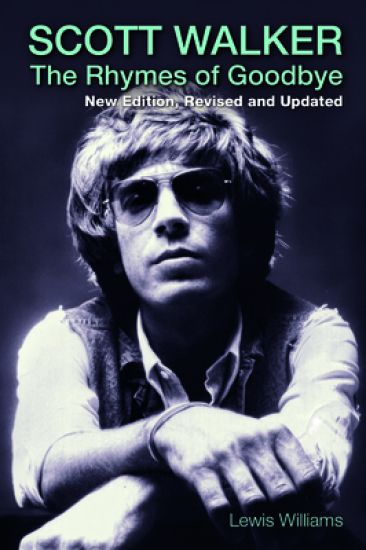
Scott Walker

Scott Walker

Lewis Williams

Plexus Publishing Ltd
2019
nidottu
Scott arrived in the UK in 1965 with 2 American friends and formed The Walker Brothers. Their second release 'Make It Easy On Yourself' went to Number 1 in the British Charts and Number 16 in the US. Responsible for some of the biggest hits of the 60s, Scott Walker was once more popular than The Beatles and his music influenced the likes of Radiohead, Leonard Cohen and David Bowie. The Rhymes of Goodbye tells the amazing story of Scott Walker's life and work through his songs - a track by track commentary in the tradition of Revolution In The Head that encompasses his entire career from the first Walker Brothers single up to his final work before his death in March 2019. Featuring an informed guide to Walker's exceptional and esoteric lyricism and providing an insightful analysis that will delight his legions of fans, lifelong fan Lewis Williams presents a wealth of engaging information about an artist who has been described as the most enigmatic singer of modern times.By examining Walker's unique catalogue of songs, from classics like 'The Sun Ain't Gonna Shine Anymore' to the most sought after of rarities, The Rhymes of Goodbye approaches its subject with obsessive enthusiasm to create a definitive portrait of the artist. Divided into sections that correspond to the distinct phases of Walker's recording career, this book covers the Walker Brothers' glory years - when Scott, John and Gary Walker enjoyed the same level of popularity as the Beatles, Scott's return to the public eye as a solo artists during 1967-70, his 'lost albums' of the early 1970s, the Walker Brothers reunion and the success of 'No Regrets', and his eighties forays into experimentalism and soundtracks. Additionally, obscurities such as rare live tracks by the Walker Brothers and recordings from the Scott Walker BBC TV show are explored in an insightful and fascinating manner.
Scott Mead: Thoughts For My Children
Scott Mead delves into his extensive photographic archive to reflect on family, legacy and what it means to share lessons with future generations. 'Thoughts For My Children took shape over many years, in many places and at many times. Perspectives and insights on life’s journey would come to me, usually out of the blue and at unexpected times, sometimes on planes far above the clouds, in new places or in familiar surroundings where my mind would wander. At first, I would jot them down on small pieces of paper or in my journal or somewhere else, in a not particularly organised way. Every so often, what I had recalled as a worthwhile thought was lost with the paper it was written on and so eventually the phone became the safest place to store them.' – Scott Mead Over time, this collection of thoughts evolved into a book that explores family, legacy and what it means to share the lessons we learn with future generations. The images that sit alongside the text, part of Mead’s extensive photographic archive, continue to resonate beyond the pages of the family album and expand the reach of the words into something at once deeply personal and universal. Thoughts for My Children is meant to be picked up and carried with you, the small format inviting moments of contemplation and celebrating the lives unfolding around it. It was made about and for the passing of time – a voice to return to in moments of difficulty and happiness, and a companion for wherever life may take you.
Scott Mead: Rites of Passage
Photographer Scott Mead showcases the poignant black-and-white photographs from his archive for the first time, documenting his early adulthood in New England, USA, from 1971 to 1976. Photographer Scott Mead (b. 1954) revisits his formative years spent documenting New England, USA, in Rites of Passage for the first time. Shot over a five-year period between 1971 and 1976, we follow Mead through early adulthood and explore scenes of discovery, ritual, rural beauty and urban metropolis. At a junction between an American road trip and a personal visual diary, Mead’s images depict a world as it was then, shaped by political upheaval, profound civil changes and the Cold War. The cloth-bound hardback book features a hundred large-format prints of Mead’s poignant photographs to be considered in a new context. Rites of Passage shows Mead with a camera always at hand and presents his delicate, often amusing and sometimes uneasy portraits alongside cityscapes, landscapes and snapshots of the lives of friends and strangers. All of the artist’s proceeds from Rites of Passage benefit Great Ormond Street Hospital for Children in London.
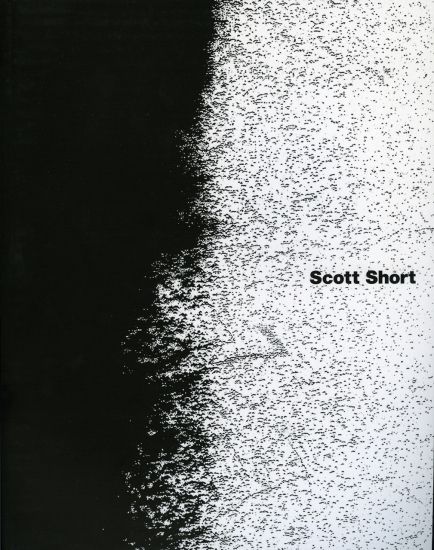
Scott Short

Scott Short

Michelle Grabner; Hamza Walker

Renaissance Society at the University of Chicago
2010
nidottu
This catalogue accompanies the first solo museum exhibition of painter Scott Short. In Short's work notions of color and abstraction are boldly reinterpreted. His method of generating compositions is to make a black and white photocopy of a sheet of colored construction paper, and then makes a copy of a copy of a copy, until the result is hundreds of times removed from the original. Short then selects one of these many copies, enlarges it, and painstakingly copies it in paint on canvas. Despite its labor intensiveness, the procedural aspect of Short's paintings is subordinate to their effect. Visually, Short's paintings are Abstractions with a capital A. Once the photocopies have undergone the shift of scale and material that occurs when Short transcribes them as paintings, they become as a species of abstraction even Greenberg would acknowledge. The fact, however, that Short is dedicated to copying makes his painting the keepers of their own dialectic, in which roles become reversed. Although it is the photocopier that performs the creative role of abstracting, Short's mechanical manual labor allows the copy to become the original and the abstract to lay claim to being strictly representational. Michelle Grabner's essay explores the ideological intersections of copying, repetition, and manual dexterity in art practice. Hamza Walker's essay discusses how Short's practice nullifies the distinction between abstraction and figuration.
Imaginative Spasms: The Postmodern Poems of Scott Alderson

Imaginative Spasms: The Postmodern Poems of Scott Alderson

Scott Alderson

Three Small White Mice Publications
2017
nidottu
Provoking, Original, Lyrical, To-the-Point PoetryImaginative Spasms is the eighth collection by Canadian poet, Scott Alderson. A university degree in English not required to understand the words and meanings behind these poems. Seven previously published chapbooks and full-size collections plus new pieces put forth through social media comprise the body of Imaginative Spasms. The books contained in this work span from 1994 to 2005. Also included are new pieces from 2015 to 2017. Scott Alderson Poetry has appealed to people from all walks of life, even some who claimed to dislike poetry initially Previous publications were marketed using unorthodox methods such as door-to-door sales as well as direct sales through busking at street level in downtown Calgary, Alberta, Canada.The title Imaginative Spasms was chosen over others as the author was diagnosed in 2012 with primary progressive multiple sclerosis. Now it's your turn to ride the emotional roller coaster of postmodern poetry. All aboard
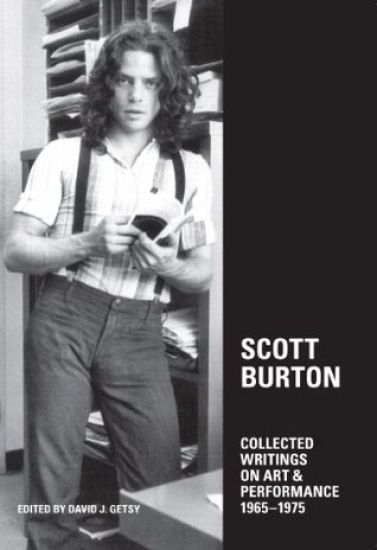
Scott Burton: Collected Writings on Art and Performance, 1965-1975
Before gaining widespread recognition for sculptural work that sought to dissolve aesthetic boundaries, most notably between sculpture and furniture, Scott Burton produced a substantial body of art writing in the late 1960s and early 1970s. An eclectic and wide-ranging critic, he wrote such important texts as the introduction to the groundbreaking exhibition "Live in Your Head: When Attitudes Become Form" and served as an editor for both ARTnews and Art in America. In these same years, Burton became known as a performance artist, developing themes he pursued in his writing. Yet, his role as an artist-critic has rarely been discussed. Scott Burton: Collected Writings on Art and Performance, 1965–1975 brings together for the first time Burton's essays and unpublished manuscripts from these years, tracing his work as an art critic as well as his early statements on performance. In his writing, Burton championed positions that others held as mutually exclusive and antagonistic. He advocated for reductive abstract art while defending figuration, and he argued for the urgency of time-based and ephemeral art practices in the same years that he curated exhibitions of realist painting. Distinct in these diverse texts are Burton's increasing concerns with art's appeal to affects, empathies, and subjective responses; the early formulation of his desire to make art public and demotic; and his critical grasp on the implications and exclusions of mainstream narratives of art. This collection offers rich new context for Burton's sculpture and public art and reveals him as an important voice in the rapidly changing art world of the 1960s and 1970s.