Kirjojen hintavertailu. Mukana 12 382 490 kirjaa ja 12 kauppaa.

Kirjahaku

Etsi kirjoja tekijän nimen, kirjan nimen tai ISBN:n perusteella.

1000 tulosta hakusanalla Seeni

Seeing Like a Firm

Seeing Like a Firm

Pierre-Yves Néron

OXFORD UNIVERSITY PRESS INC
2024
sidottu
Business corporations are political entities and need to be considered as such. Seeing Like a Firm invites readers to do just that by providing a political theory of the business firm and, in doing so, offering new perspectives on the recent history of social justice, neoliberalism, and conservatism. This book challenges the usual way of thinking about corporations in two ways. Firstly, it argues that firms 'see' in a conservative way and embrace a 'conservatism of commerce' that requires socioeconomic inequality. In doing so, it challenges our usual interpretation of neoliberalism and its connections with the contemporary business corporation. Secondly, it argues that we need a relational concept of equality and justice to think about corporations. Given that the corporate 'optic' is built on dismissing demands for equal standing, Pierre-Yves Néron asserts that relational egalitarians should deconstruct it, argue against it, tackle it. By offering a new interpretation of conservatism based not on a desire to simply preserve the existing system but on an 'aesthetics of inequality', Néron provides an alternative way to think about the main challenges that proponents of equality face.
Seeking Wisdom in Death's Shadows

Seeking Wisdom in Death's Shadows

Thomas Attig

OXFORD UNIVERSITY PRESS INC
2026
sidottu
Seeking Wisdom in Death's Shadows: Collected Writings on How We Grieve is a rich compilation of nine original and fourteen previously published essays that makes accessible the origins and development of Thomas Attig's most significant and sometimes revolutionary contributions to understanding and living in the shadows of death, dying, loss, and grief. Together for the first time in one volume, the collection constitutes a natural companion to Attig's How We Grieve: Relearning the World and The Heart of Grief: Death and the Search for Lasting Love. Gathered together, these essays trace significant developments in Attig's thinking through nearly fifty years in the discipline, including his web metaphor for the embodied, interdependent, soulful, spiritual, and resilient grieving self; his groundbreaking view of grieving as relearning how to live in a world changed profoundly by loss; and his view that the wisdom needed for effective grieving supports engaging with mysteries or challenges in life that none can change, control, or solve. The book is divided into five sections, beginning with an introduction to the author's applied philosophy of life with loss and grief. This is followed by sections on contemporary discussions about grieving, aspects of self and grieving, caregiving in death's shadows, and harvesting wisdom. Together, this volume's presentation of original essays accompanied by pieces drawn from the scholarly literature cover an expansive range of topics, constructive critiques of several strands of influential contemporary thinking about them, and a unique philosophical approach and understanding that offers timeless value to scholars, practitioners, and grievers alike.
Seeing China's Belt and Road

Seeing China's Belt and Road

OXFORD UNIVERSITY PRESS INC
2024
sidottu
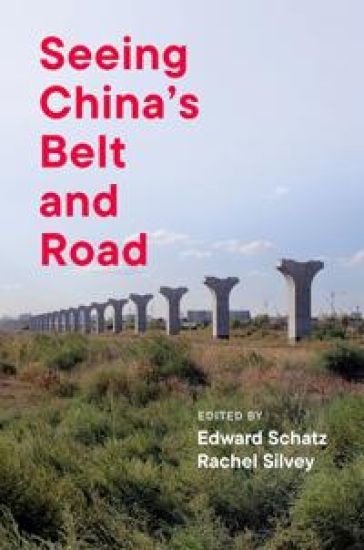
Launched in 2013, the Belt and Road Initiative (BRI) is China's signature trillion-dollar global policy. Based on infrastructure development assistance and financing, the BRI quickly set in motion a possible restructuring of the global economy and indeed the world order. In Seeing China's Belt and Road, Edward Schatz and Rachel Silvey assemble leading field researchers to consider the BRI from different "downstream" contexts, ranging from Central and Southeast Asia to Europe and Africa. By uncovering perspectives on the BRI from Chinese authorities, local businesses, state bureaucrats, expatriated migrants, ordinary citizens, and environmental activists, Seeing China's Belt and Road shows the BRI's dynamic, multidimensional character as it manifests in specific sites. A timely analysis of the BRI, this book moves beyond polarized debates about China's rise and offers a grounded assessment of the dynamic complexity of changes to the world order.
Seeing China's Belt and Road

Seeing China's Belt and Road

OXFORD UNIVERSITY PRESS INC
2025
nidottu
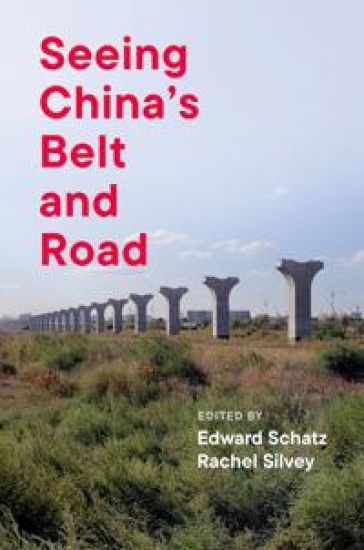
Launched in 2013, the Belt and Road Initiative (BRI) is China's signature trillion-dollar global policy. Based on infrastructure development assistance and financing, the BRI quickly set in motion a possible restructuring of the global economy and indeed the world order. In Seeing China's Belt and Road, Edward Schatz and Rachel Silvey assemble leading field researchers to consider the BRI from different "downstream" contexts, ranging from Central and Southeast Asia to Europe and Africa. By uncovering perspectives on the BRI from Chinese authorities, local businesses, state bureaucrats, expatriated migrants, ordinary citizens, and environmental activists, Seeing China's Belt and Road shows the BRI's dynamic, multidimensional character as it manifests in specific sites. A timely analysis of the BRI, this book moves beyond polarized debates about China's rise and offers a grounded assessment of the dynamic complexity of changes to the world order.
Seeing Atrocities

Seeing Atrocities

Paul Morrow

OXFORD UNIVERSITY PRESS INC
2025
sidottu
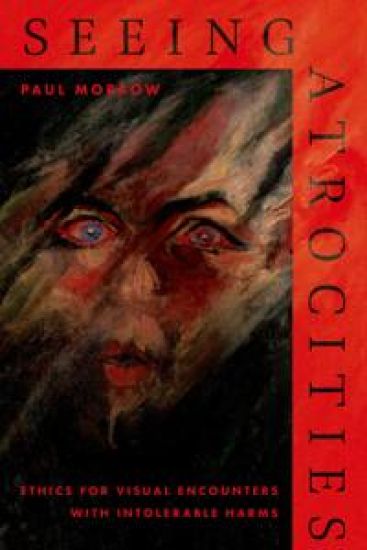
In the 21st century, it is impossible to avoid seeing atrocities. Pictures of grievous death populate the pages of newspapers and aggregators almost daily. Billboards and banner ads for humanitarian organizations routinely feature scenes of famine and forced displacement. With the spread of social media, our closest friends and relatives have become key sources of visual encounters with intolerable harms. Seeing Atrocities explains what we stand to gain from such encounters, and supplies crucial tools for navigating them. Images--from photographs and films to children's drawings and VR-renderings--convey vital information about causes and culpability for atrocities. At the same time, images increasingly serve as vectors for mis- and disinformation, fueling conspiracy theories and inspiring acts of violent extremism. Whether in the classroom or the courtroom, the museum or the living room, the stakes of visual encounters with atrocities are substantial. So too are the risks of misjudging them. By showing what it means to see atrocities as atrocities, Paul Morrow forges new links between ethics, political philosophy, and the philosophy of perception. By surveying a broad range of visual encounters with atrocities, he aids lawyers, journalists, and educators in their efforts to teach, report on, or adjudicate such harms. Finally, by proposing specific norms for seeing, sharing, and exhibiting atrocities, he addresses moral questions confronting every reader in our globally connected world.
Seeing, Knowing, and Doing

Seeing, Knowing, and Doing

Robert Audi

OXFORD UNIVERSITY PRESS INC
2025
nidottu
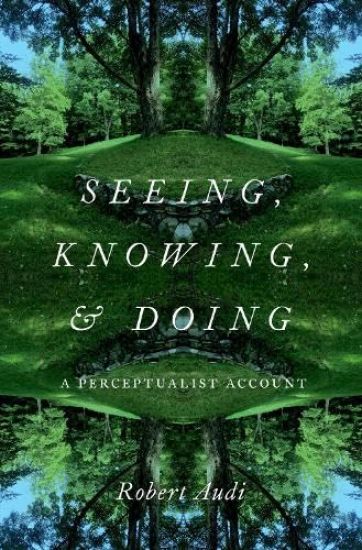
Perception is basic for human knowledge and a major concern of both epistemology and the philosophy of mind. The scholarship in this area, however, has left two important aspects of perception underexplored: its relevance to understanding a priori knowledge--traditionally conceived as independent of perception--and its role in human action. This book provides a full-scale account of perception, a theory of the a priori, and an account of how perception guides action. In exploring perception and action, it clarifies the relation between action and practical reasoning, the notion of rational action, and the relation between knowledge of the practical (of how things are done) and practical knowledge (knowing how to do things). In the first part of the book, Robert Audi lays out a theory of perception as experiential, representational, and causally connected with its objects. He argues that perception is a discriminative response to its objects; it embodies phenomenally distinctive elements; and it yields rich information that underlies human knowledge. Part Two presents a theory of self-evidence and the a priori. Audi's theory is perceptualist in that it explicates the apprehension of a priori truths by articulating its parallels to perception. The theory also unifies empirical and a priori knowledge by clarifying their reliable causal connections with their objects--connections many have thought impossible for a priori knowledge. The final part explores how perception guides action, the role of propositional knowledge in our abilities to do what we know how to do, the nature of reasons for action, the role of inference in determining it, and the overall conditions for its rationality. Addressing longstanding questions left unaddressed in the current literature, Audi's comprehensive theory of perception will appeal to scholars and students interested in philosophy of perception, mind, and epistemology.
Seeking a Role

Seeking a Role

Brian Harrison

Oxford University Press
2009
sidottu
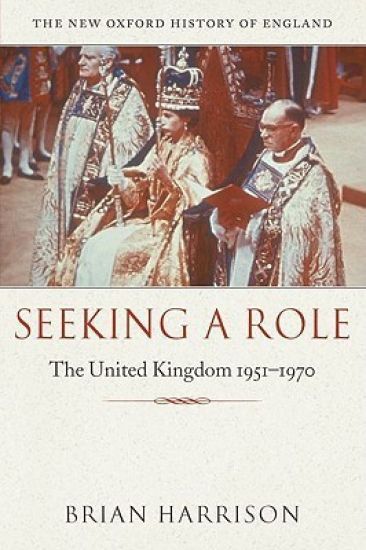
In this, the first of two self-standing volumes bringing The New Oxford History of England up to the present, Brian Harrison begins in 1951 with much of the empire intact and with Britain enjoying high prestige in Europe. The United Kingdom could still then claim to be a great power, whose welfare state exemplified compromise between Soviet planning and the USA's free market. When the volume ends in 1970, no such claims carried conviction. The empire had gone, central planning was in trouble, and even the British political system had become controversial. In an unusually wide-ranging, yet impressively detailed volume, Harrison approaches the period from unfamiliar directions. He explains how British politicians in the 1950s and 1960s responded to this transition by pursuing successive roles for Britain: worldwide as champion of freedom, and in Europe as exemplar of parliamentary government, the multi-racial society, and economic planning. His main focus, though, rests not on the politicians but on the decisions the British people made largely for themselves: on their environment, social structure and attitudes, race relations, family patterns, economic framework, and cultural opportunities. By 1970 the consumer society had supplanted postwar austerity, the socialist vision was fading, and 'the sixties' (the theme of his penultimate chapter) had introduced new and even exotic themes and values. Having lost an empire, Britain was still resourcefully seeking a role: it had yet to find it.
Seeing the Inside

Seeing the Inside

Taylor

Clarendon Press
1996
nidottu
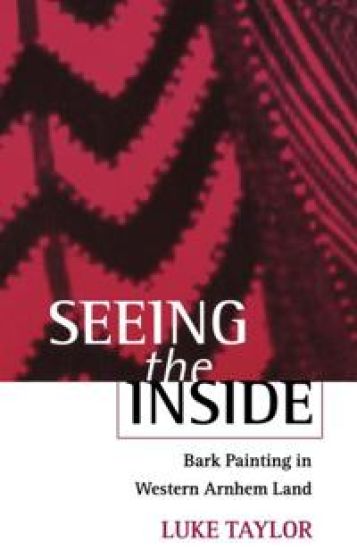
Seeing the Inside is the first detailed study of one of the world's great visual art traditions and its role in the society that produces it. The bark painting of Aboriginal artists in western Arnhem Land is the product of a unique tradition of many thousands of years' duration. In recent years it has attracted enormous interest in the rest of Australia and beyond, with the result that the artists, who live primarily as hunters in this relatively secluded region of northern Australia, now paint for sale to the world art market. Though the richness and power of Aboriginal arts are now, belatedly, finding wide recognition, they remain insufficiently understood. In this thoroughly illustrated book Luke Taylor examines the creative methods of the bark painters and the cultural meaning of their work. He discusses, on the one hand, the arrangements which allow the artists to project their culture on to an international stage, and on the other, the continuing social and religious roles of their paintings within their own society. The result is a remarkable and fascinating picture of artistic creativity in a changing world.
Seeing Reason

Seeing Reason

Keith Stenning

Oxford University Press
2002
nidottu
'A picture is worth a thousand words' Or is it? What difference does it make whether information is presented using illustrations or language? 'Seeing Reason' is an interdisciplinary study of a central topic in cognitive science: how does the mind respond to different kinds of representation of the same information, especially when learning, reasoning, and communicating. It uses philosophical, logical, linguistic, psychological, and educational methods to explore this topic, reporting theories, observations, and arguments developed during several years' research. Though the focus is on fundamental cognitive theories of human capacities, the issues are closely related to intensely practical issues about the teaching and learning of reasoning and communication skills. Along the way it examines why the human mind has so evolved, the relationship between private language and public thought, and integrates cognitive and social accounts of communication. Written to be accessible to students and researchers within the fields of philosophy and psychology, this book shares new insights into how people process information, and how we use that information to reason, make decisions, and develop theories about the world in which we live.
Seeing the World and Knowing God

Seeing the World and Knowing God

Paul S. Fiddes

Oxford University Press
2014
nidottu
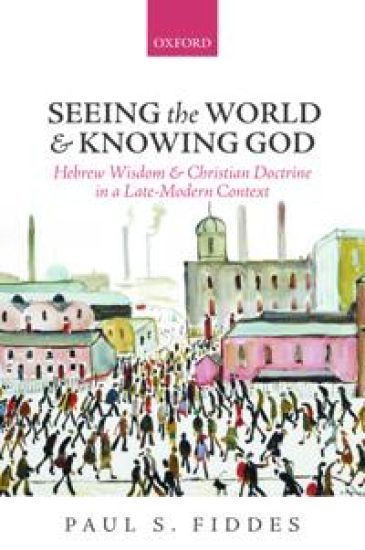
This book aims to create a Christian theology of wisdom for the present day, in discussion with two sets of conversation-partners. The first are writers of the 'wisdom literature' in ancient Israel and the Jewish community in Alexandria. Here, special attention is given to the biblical books of Proverbs, Job, and Ecclesiastes. The second conversation-partners are philosophers and thinkers of the late-modern age, among them Jacques Derrida, Emmanuel Levinas, Julia Kristeva, Paul Ricoeur, and Hannah Arendt. In the late-modern period there has been a reaction against an inherited conception of the conscious and rational self as mastering and even subjugating the world around, and there has been an attempt to overcome the consequent split between the subject and objects of observation. Paul S. Fiddes enters into dialogue with these late-modern concerns about the relation between the self and the world, proposing that the wisdom which is indicated by the ancient Hebraic concept of ?okmah integrates a 'practical wisdom' of handling daily experience with the kind of wisdom which is 'attunement' to the world and ultimately to God as creator and sustainer of all. Fiddes brings detailed exegesis of texts from the ancient wisdom literature into interaction with an account of the subject in late-modern thought, in order to form a theology in which seeing the world is knowing a God whose transcendent reality is always immanent in the signs and bodies of the world. He thus argues that participation in a triune, relational God shapes a wisdom that addresses problems of a dominating self, and opens the human person to others.
Seeing Justice Done

Seeing Justice Done

Paul Friedland

Oxford University Press
2014
nidottu
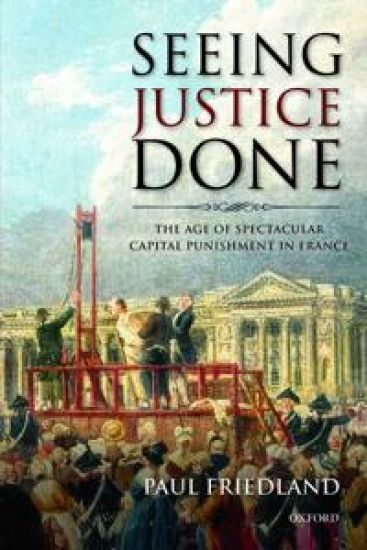
From the early Middle Ages to the twentieth century, capital punishment in France, as in many other countries, was staged before large crowds of spectators. Paul Friedland traces the theory and practice of public executions over time, both from the perspective of those who staged these punishments as well as from the vantage point of the many thousands who came to 'see justice done'. While penal theorists often stressed that the fundamental purpose of public punishment was to strike fear in the hearts of spectators, the eagerness with which crowds flocked to executions, and the extent to which spectators actually enjoyed the spectacle of suffering suggests that there was a wide gulf between theoretical intentions and actual experiences. Moreover, public executions of animals, effigies, and corpses point to an enduring ritual function that had little to do with exemplary deterrence. In the eighteenth century, when a revolution in sensibilities made it unseemly for individuals to take pleasure in or even witness the suffering of others, capital punishment became the target of reformers. From the invention of the guillotine, which reduced the moment of death to the blink of an eye, to the 1939 decree which moved executions behind prison walls, capital punishment in France was systematically stripped of its spectacular elements. Partly a history of penal theory, partly an anthropologically-inspired study of the penal ritual, Seeing Justice Done traces the historical roots of modern capital punishment, and sheds light on the fundamental 'disconnect' between the theory and practice of punishment which endures to this day, nit only in France but in the Western penal tradition more generally.
Seeking Sanctuary

Seeking Sanctuary

Shannon McSheffrey

Oxford University Press
2017
sidottu
Seeking Sanctuary explores a curious aspect of premodern English law: the right of felons to shelter in a church or ecclesiastical precinct, remaining safe from arrest and trial in the king's courts. This is the first volume in more than a century to examine sanctuary in England in the fifteenth and sixteenth centuries. Looking anew at this subject challenges the prevailing assumptions in the scholarship that this 'medieval' practice had become outmoded and little-used by the fifteenth and sixteenth centuries. Although for decades after 1400 sanctuary-seeking was indeed fairly rare, the evidence in the legal records shows the numbers of felons seeing refuge in churches began to climb again in the late fifteenth century and reached its peak in the period between 1525 and 1535. Sanctuary was not so much a medieval practice accidentally surviving into the early modern era, as it was an organism that had continued to evolve and adapt to new environments and indeed flourished in its adapted state. Sanctuary suited the early Tudor regime: it intersected with rapidly developing ideas about jurisdiction and provided a means of mitigating the harsh capital penalties of the English law of felony that was useful not only to felons but also to the crown and the political elite. Sanctuary's resurgence after 1480 means we need to rethink how sanctuary worked, and to reconsider more broadly the intersections of culture, law, politics, and religion in the years between 1400 and 1550.
Seeing, Knowing, Understanding

Seeing, Knowing, Understanding

Barry Stroud

Oxford University Press
2018
sidottu
Barry Stroud presents nineteen of his philosophical essays written since 2001, on topics to do with knowing, seeing, and understanding. He discusses the nature of philosophy, sense experience, the possibility of perceptual knowledge, intentional action and self-knowledge, the reality of the colours of things, alien thought and the limits of understanding, moral knowledge, meaning, use, and understanding of language.
Seeing More

Seeing More

Samantha Matherne

Oxford University Press
2024
sidottu
Samantha Matherne defends a systematic interpretation of the philosopher Immanuel Kants theory of imagination. In contrast with more traditional theories of imagination, as a kind of fantasy that we exercise only in relation to objects that are not real or not present, Matherne argues that Kant theorizes imagination as something that we exercise just as much in relation to objects that are real and present. In short, she attributes to Kant a view of imagining as something that pervades our lives. In order to bring out this pervasiveness, Matherne offers an account of what kind of mental capacity Kant takes imagination to be in general. She then explores Kants picture of how we exercise our imagination in perception, ordinary experience, the appreciation of beauty and sublimity, the production of art, the pursuit of happiness, and the pursuit of morality. However, she makes the case that Kants analysis of this wide range of phenomena is underwritten by a unified theory of what imagination is, as a remarkably flexible cognitive capacity that we can exercise in constrained and creative, playful and serious ways.
Seeking Natural Knowledge in Later 17th Century England

Seeking Natural Knowledge in Later 17th Century England

Anthony Turner

Oxford University Press
2025
sidottu
Anthony Turner offers a view of the social and cultural context of the collecting of natural history in late 17th century England, constructed around the biography of Robert Plot. Seeking Natural Knowledge in Later 17th Century England seeks in particular to show the continuing intrinsic connection between chorography, antiquarianism, natural history and even, though to a lesser degree, applied mathematics, and the interest of such matters for the University of Oxford. An introductory chapter places chorography in its European cosmological context before looking at details of its study — in both its antiquarian and practical aspects — in Early Modern England, and the methods by which it was pursued there. Parallels are drawn with similar activity in France and Germany. In the following chapters, through an account of the work of Robert Plot, the way in which his writings established a new form of chorographical natural history investigation and writing is described, and how this work fed into, and in part provoked, the foundation of the Ashmolean Museum as a non-collegiate university institution in Oxford. Activity in the Museum during its early years is described, as is the work of the Philosophical Society that met within it and was closely associated. A final chapter describes the influence of Robert Plot and his successors up to the very early 18th century. Seven appendices supply an essential documentary underpinning for the work, offering new material on the burial of Plot, a detailed bibliography of his works, and an account of his portraits, before completing Gunther's documentation of the Oxford Society and its activities by the publication of several documents concerning it that have hitherto remained in manuscript.
Seeing, Doing, and Knowing

Seeing, Doing, and Knowing

Mohan Matthen

Clarendon Press
2007
nidottu
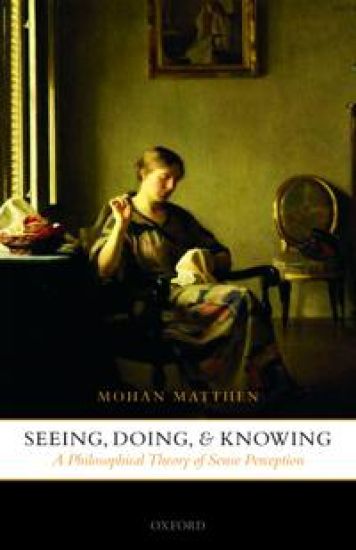
Seeing, Doing, and Knowing is an original and comprehensive philosophical treatment of sense perception as it is currently investigated by cognitive neuroscientists. Its central theme is the task-oriented specialization of sensory systems across the biological domain. Sensory systems are automatic sorting machines; they engage in a process of classification. Human vision sorts and orders external objects in terms of a specialized, proprietary scheme of categories - colours, shapes, speeds and directions of movement, etc. This 'Sensory Classification Thesis' implies that sensation is not a naturally caused image from which an organism must infer the state of the world beyond; it is more like an internal communication, a signal concerning the state of the world issued by a sensory system, in accordance with internal conventions, for the use of an organism's other systems. This is why sensory states are both easily understood and persuasive. Sensory classification schemes are purpose-built to serve the knowledge-gathering and pragmatic needs of particular types of organisms. They are specialized: a bee or a bird does not see exactly what a human does. The Sensory Classification Thesis helps clarify this specialization in perceptual content and supports a new form of realism about the deliverances of sensation: 'Pluralistic Realism' is based on the idea that sensory systems coevolve with an organism's other systems; they are not simply moulded to the external world. The last part of the book deals with reference in vision. Cognitive scientists now believe that vision guides the limbs by means of a subsystem that links up with the objects of physical manipulation in ways that bypass sensory categories. In a novel extension of this theory, Matthen argues that 'motion-guiding vision' is integrated with sensory classification in conscious vision. This accounts for the quasi-demonstrative form of visual states: 'This particular object is red', and so on. He uses this idea to cast new light on the nature of perceptual objects, pictorial representation, and the visual representation of space.
Seeing, Doing, and Knowing

Seeing, Doing, and Knowing

Mohan Matthen

Clarendon Press
2005
sidottu
Seeing, Doing, and Knowing is an original and comprehensive philosophical treatment of sense perception as it is currently investigated by cognitive neuroscientists. Its central theme is the task-oriented specialization of sensory systems across the biological domain. Sensory systems are automatic sorting machines; they engage in a process of classification. Human vision sorts and orders external objects in terms of a specialized, proprietary scheme of categories - colours, shapes, speeds and directions of movement, etc. This 'Sensory Classification Thesis' implies that sensation is not a naturally caused image from which an organism must infer the state of the world beyond; it is more like an internal communication, a signal concerning the state of the world issued by a sensory system, in accordance with internal conventions, for the use of an organism's other systems. This is why sensory states are both easily understood and persuasive. Sensory classification schemes are purpose-built to serve the knowledge-gathering and pragmatic needs of particular types of organisms. They are specialized: a bee or a bird does not see exactly what a human does. The Sensory Classification Thesis helps clarify this specialization in perceptual content and supports a new form of realism about the deliverances of sensation. This 'Pluralistic Realism' is based on the idea that sensory systems coevolve with an organism's other systems; they are not simply moulded to the external world. The last part of the book deals with reference in vision. Cognitive scientists now believe that vision guides the limbs by means of a subsystem that links up with the objects of physical manipulation in ways that bypass sensory categories. In a novel extension of this theory, Matthen argues that 'motion-guiding vision' is integrated with sensory classification in conscious vision. This accounts for the quasi-demonstrative form of visual states: 'This particular object is red', and so on. He uses this idea to cast new light on the nature of perceptual objects, pictorial representation, and the visual representation of space.
Seeing the Face, Seeing the Soul

Seeing the Face, Seeing the Soul

George Boys-Stones; Jas Elsner; Antonella Ghersetti; Robert Hoyland; Ian Repath; Simon Swain

Oxford University Press
2007
sidottu
Polemon of Laodicea (near modern Denizli, south-west Turkey) was a wealthy Greek aristocrat and a key member of the intellectual movement known as the Second Sophistic. Among his works was the Physiognomy, a manual on how to tell character from appearance, thus enabling its readers to choose friends and avoid enemies on sight. Its formula of detailed instruction and personal reminiscence proved so successful that the book was re-edited in the fourth century by Adamantius in Greek, translated and adapted by an unknown Latin author of the same era, and translated in the early Middle Ages into Syriac and Arabic. The surviving versions of Adamantius, Anonymus Latinus, and the Leiden Arabic more than make up for the loss of the original. The present volume is the work of a team of leading Classicists and Arabists. The main surviving versions in Greek and Latin are translated into English for the first time. The Leiden Arabic translation is authoritatively re-edited and translated, as is a sample of the alternative Arabic Polemon. The texts and translations are introduced by a series of masterly studies that tell the story of the origins, function, and legacy of Polemon's work, a legacy especially rich in Islam. The story of the Physiognomy is the story of how one man's obsession with identifying enemies came to be taken up in the fascinating transmission of Greek thought into Arabic.
Seen | Unseen

Seen | Unseen

Martin Kemp

Oxford University Press
2006
sidottu
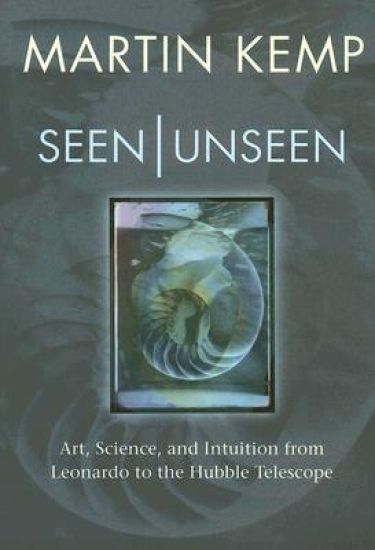
Seen | Unseen is a deep, richly illustrated, and erudite analysis of the interconnections between science and the visual arts. Martin Kemp explores the responses of artists, scientists, and their instruments, to the world - ranging from early representations of perspective, to pinhole cameras, particle accelerators and the Hubble telescope. From Leonardo, Durer, and the inventors of photography to contemporary sculptors, and from Galileo and Darwin to Stephen J. Gould, Kemp considers the way in which scientists and artists have perceived the world and responded to its patterns, and sees common 'structural intuitions' reflected in their work.
Seeing Things

Seeing Things

Robert Hudson

Oxford University Press Inc
2013
sidottu
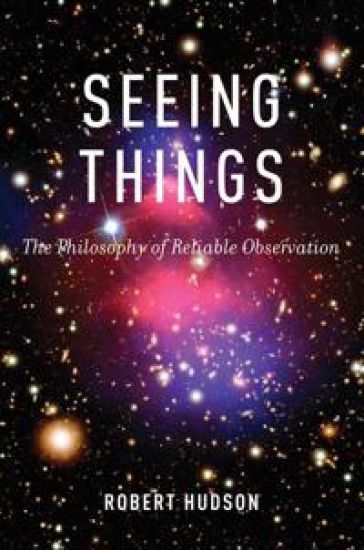
In Seeing Things, Robert Hudson assesses a common way of arguing about observation reports called "robustness reasoning." Robustness reasoning claims that an observation report is more likely to be true if the report is produced by multiple, independent sources. Seeing Things argues that robustness reasoning lacks the special value it is often claimed to have. Hudson exposes key flaws in various popular philosophical defenses of robustness reasoning. This philosophical critique of robustness is extended by recounting five episodes in the history of science (from experimental microbiology, atomic theory, astrophysics and astronomy) where robustness reasoning is -- or could be claimed to have been -- used. Hudson goes on to show that none of these episodes do in fact exhibit robustness reasoning. In this way, the significance of robustness reasoning is rebutted on both philosophical and historical grounds. But the book does more than critique robustness reasoning. It also develops a better defense of the informative value of observation reports. The book concludes by relating insights into the failure of robustness reasoning to a popular approach to scientific realism called "(theoretical) preservationism." Hudson argues that those who defend this approach to realism commit similar errors to those who advocate robustness reasoning. In turn, a new form of realism is formulated and defended. Called "methodological preservationism," it recognizes the fundamental value of naked eye observation to scientists -- and the rest of us.