Kirjojen hintavertailu. Mukana 11 244 527 kirjaa ja 12 kauppaa.

Kirjahaku

Etsi kirjoja tekijän nimen, kirjan nimen tai ISBN:n perusteella.

1000 tulosta hakusanalla Silvia Strassi

Homesick

Homesick

Silvia Saunders

HARPERCOLLINS PUBLISHERS
2025
nidottu
A story of falling out of love from the winner of the Comedy Women in Print Award, for fans of Monica Heisey and Dolly Alderton 'A thoughtful and tender take on the concept of "home"' Pandora Sykes MOVING IN. GROWING UP. FALLING OUT OF LOVE. Mara’s first year in London hasn’t gone to plan. A hostile housemate and endless tube journeys to see her elusive boyfriend, Tom, weren’t on her vision board. So when the chance to find her own place arises, Mara is hopeful. She’s desperate for somewhere to start her ‘real life’ – with linen bedding, fresh flowers on the table, and Tom. But between noisy new neighbours and Tom pushing her away, Mara is about to discover that things aren’t going to be quite so easy to fix. –––––––––––––––––––––––––––––––––––––––––––––––- Readers are already falling in love with Homesick … 'A beautifully crafted story … filled with memorable characters and relatable situations, making it a heartfelt exploration of first loves, found families, and the bittersweet experience of growing up'????? 'I couldn't have loved this more … It's a really accomplished and very funny commentary on urban living and twenty first century existence … I was wrapped up in the propulsive plot' ????? 'What I appreciate about Homesick is the exploration of everyday issues … Mara's year of self-discovery is a great reminder that life is a complex journey' ????? 'This novel offers a poignant exploration of love and self-discovery … With its mix of laugh-out-loud moments and genuine emotional depth, this book is a delightful read' ?????
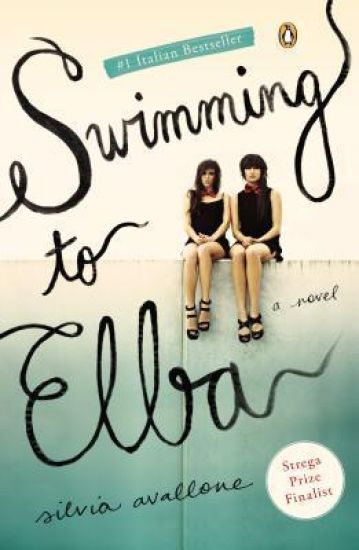
Swimming to Elba

Swimming to Elba

Silvia Avallone

Penguin Putnam Inc
2013
pokkari
The provocative international bestseller about two young girls growing up fast in a failing industrial town on the coast of Italy They were always a pair: daring, intelligent Anna and breathtakingly gorgeous Francesca. Just shy of fourteen, their newly acquired curves and skimpy bathing suits have earned them celebrity status on the beaches of their gritty town, where the glittering resort island of Elba taunts them from across the bay. The girls, aware of their newfound power, are on the brink of everything--high school, adulthood, ambition--but when their intense friendship suffers a blow, each sets off on her own, only to learn that the "glamorous" world of adult physicality can be at best banal and at worst dehumanizing. As their choices take them to a painful crossroads, the girls must reconnect if they have any hope of escaping their small-town destinies. Frank, sensual, and evocative of the Academy Award-winning film Cinema Paradiso and the international bestseller The Solitude of Prime Numbers, Swimming to Elba is a harrowing yet redemptive meditation on politics, family, sex, and the lasting power of friendship.
Mediated Communication & You: An Introduction to Internet & Media Effects

Mediated Communication & You: An Introduction to Internet & Media Effects

Silvia Knobloch-Westerwick; Axel Westerwick

Oxford University Press
2020
nidottu
Engaging, up-to-date, and accessible, Mediated Communication & You: An Introduction to Internet & Media Effects introduces you to crucial questions and issues in media use, the possible negative effects of media, and theories and research on mediated communication. The text helps readers develop an awareness of the diversity of mediated messages and media use responses. It also considers potential positive outcomes of media use and why we enjoy the internet and media, topics that are particularly important in today's digital world. Topics covered include: how mediated communication affects our worldviews and social groups; how news coverage takes shape and is consumed by audiences; political communication and opinion expression; emotions and pleasure resulting from mediated communication; health communication; computer-mediated communication; and much more.
The Politics of Police Detention in Japan

The Politics of Police Detention in Japan

Silvia Croydon

Oxford University Press
2016
sidottu
Filling a huge vacuum of scholarship on the Japanese criminal justice system, The Politics of Police Detention in Japan: Consensus of Convenience shines a spotlight on the remand procedure for criminal suspects in Japan, where the 23-day duration for which individuals can be held in police custody prior to being indicted is the longest amongst developed nations, with the majority of countries stipulating 4 days or less. Moreover, in practice, the average length of suspect detention in police cells is even longer due to multiple charges being imposed, and there is very little use of detention facilities independent of the investigation, with only 2% of suspects held in this way. Despite detention of this kind leading to criticism of Japan as a hotbed of false convictions, there has never been a systematic study of this divergent measure or its history. The Politics of Police Detention in Japan addresses this omission, first, by drawing on Japanese history-of-law scholarship to identify the origins of the modern day practice, tracing the source of legitimacy for the continuous remand of suspects with the police back to the Meiji era. There is further historical analysis addressing the post-war occupation of Japan under Allied forces through to the development of the National Police Agency, as each stage further undermines Japanese criminal procedure and limits reform. Secondly, the author conducts a political analysis of the mechanisms through which it is sustained, featuring extensive interviews with key players, including several Justice Ministers and other politicians, Ministry of Justice and Police officials, judges, prosecutors, lawyers, and NGO representatives. As the first in-depth empirical investigation of Japan's police detention arrangements, this important and engrossing book highlights how a state sets the boundary between the liberty of individuals and the security of the community - a dichotomy that is far from unique to police detention.
Eternity Clauses in Democratic Constitutionalism

Eternity Clauses in Democratic Constitutionalism

Silvia Suteu

Oxford University Press
2021
sidottu
This book analyses unamendability in democratic constitutionalism and engages critically and systematically with its perils, offering a much-needed corrective to existing understandings of this phenomenon. Whether formalized in the constitutional text or developed as part of judicial doctrines of implicit unamendability, eternity clauses raise fundamental questions about the core democratic commitments underpinning any given constitution. The book takes seriously the democratic challenge eternity clauses pose and argues that this goes beyond the old tension between constitutionalism and democracy. Instead, eternity clauses reveal themselves to be a far more ambivalent constitutional mechanism, one with greater and more insidious potential for abuse than has been recognized. The 'dark side' of unamendability includes its propensity to insulate majoritarian, exclusionary, and internally incoherent values, as well as its sometimes purely pragmatic role in elite bargaining. The book adopts a contextual approach and brings to the fore a variety of case studies from non-traditional jurisdictions. These insights from the periphery illuminate the prospects of unamendability fulfilling its intended aims - protecting constitutional democracy foremost among them. With its promise most appealing in transitional, post-conflict, and fragile democracies, unamendability reveals itself, counterintuitively, to be both less potent and potentially more dangerous in precisely these contexts. The book also places the rise of eternity clauses in the context of other significant trends in recent constitutional practice: the transnational embeddedness of constitution-making and of constitutional adjudication; the rise of popular participation in constitutional reform processes; and the ongoing crisis of democratic backsliding in liberal democracies.
Schadenfreude and its Wicked Delights in Ancient Greece

Schadenfreude and its Wicked Delights in Ancient Greece

Silvia Montiglio

Oxford University Press
2025
sidottu
Schadenfreude, "pleasure in other people's misfortunes", is an emotion that pervades Greek texts and pervaded Greek communities. Many of their salient characteristics provided the ideal terrain for schadenfreude: competitiveness, a fierce attachment to honor and reputation, the neat partition between friends and enemies, and the exposure of people's lives to the public eye. This book draws on the major literary genres--epic, archaic poetry, tragedy, comedy, historiography, oratory, and philosophy--and on sources describing a variety of cultural practices and beliefs--symposiastic entertainments, sport competitions, curses, the fear of fortune and of the gods, punishments on earth and in the underworld--to tease out the specific configurations of schadenfreude in ancient Greece from the archaic period to roughly the second century CE. Among the emotion's striking features are its tendency to take a loud voice, as mockery or laughter, its being often released in public, and subsequently its damaging force and the intensity with which it was feared. While we tend to think of schadenfreude as a passive, private, unexpressed, and unconfessed emotion, the Greeks often endowed it with an active power. They were also freer to show it because they ignored the love commandment; on the contrary, to rejoice in an enemy's misfortune was common practice and even met with approval. But at the same time, Greek authors ask the questions: when is schadenfreude acceptable? How much of it? Shouldn't we refrain from displaying it, if not from feeling it, in certain cases, for instance at the expense of a dead individual, even if the individual was an enemy? This book seeks to map the Greek answers to these and related questions.
Trafficking in Human Beings

Trafficking in Human Beings

Silvia Scarpa

Oxford University Press
2008
sidottu
In recent decades the international community has focused its attention on trafficking in persons, one of the most worrying phenomena of the 21st century. In Part I, this book examines trafficking in persons in the light of the recent definition of the phenomenon given by the UN Trafficking Protocol, and various other international legal instruments including treaties and 'soft law'. It analyses trafficking causes and consequences, and the most common forms of exploitation related to it. Part II reviews the most important international conventions against slavery and the slave trade, and the Protocol to Prevent, Suppress and Punish Trafficking in Persons, Especially Women and Children. It also analyses the most important policy documents setting the basic standards of protection for trafficked victims - namely the United Nations High Commissioner for Human Rights' Recommended Principles and Guidelines on Human Rights and Human Trafficking - and comments on the extension of the jus cogens principle of international law that prohibits slavery, to argue that trafficking in persons ought rightly to be considered a part of it. Part III deals with the Council of Europe and the European Union, and their fight against trafficking in people, arguing that the focus has been placed mistakenly on the prosecution of traffickers rather than on the protection of trafficked victims. The book concludes with a recommendation to shift towards a more balanced approach to trafficking in persons, and the overriding need to conduct further research on specific issues related to the spread of trafficking and the exploitation of its victims.
Cypro-Minoan Inscriptions

Cypro-Minoan Inscriptions

Silvia Ferrara

Oxford University Press
2012
sidottu
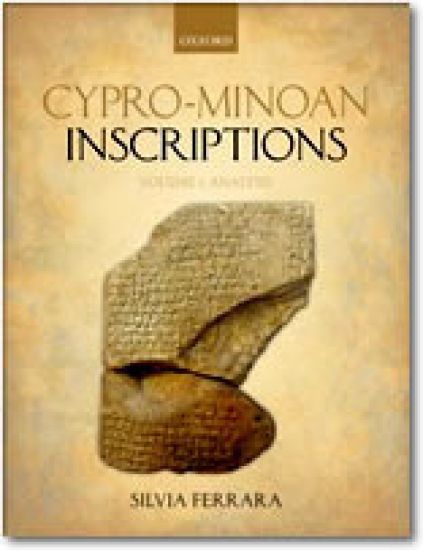
This volume offers the first comprehensive examination of an ancient writing system from Cyprus and Syria known as Cypro-Minoan. After Linear B was deciphered by Michael Ventris in 1952, other un-deciphered scripts of the second millennium BC from the Aegean world (Linear A) and the Eastern Mediterranean (Cypro-Minoan) became the focus of those trying to crack this ancient and historical code. Despite several attempts for both syllabaries, this prospect has remained unrealized. This is especially true for Cypro-Minoan, the script of Late Bronze Age Cyprus found also at Ugarit in Syria, which, counting no more than 250 inscriptions, remains not only poorly documented, but also insufficiently explored in previous scholarship. Today progress in the study of this enigmatic script demands that we direct our attention to gaining new insight through a contextual analysis of Cypro-Minoan by tracing its life in the archaeological record and investigating its purpose and significance in the Cypriot and Syrian settlements that created and used it. With a new methodology concentrating on a ground-breaking contextual approach, Ferrara presents the first large-scale study of Cypro-Minoan with an analysis of all the inscriptions through a multidisciplinary perspective that embraces aspects of archaeology, epigraphy, and palaeography.
Cypro-Minoan Inscriptions

Cypro-Minoan Inscriptions

Silvia Ferrara

Oxford University Press
2013
sidottu
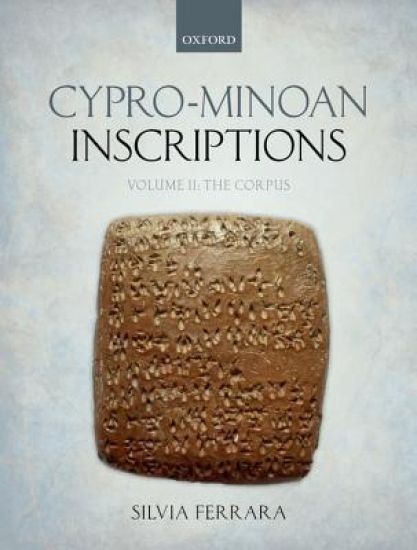
This volume is the first comprehensive archaeological catalogue of all the extant inscriptions written in the un-deciphered syllabary of Late Bronze Age Cyprus (1500-1200 BC): the so-called Cypro-Minoan script. In conjunction with Cypro-Minoan Inscriptions Volume 1: Analysis, this volume focuses on the physical reality of the inscribed objects containing Cypro-Minoan and the archaeological contexts in which they were found. Offering a detailed, systematic, and rigorous examination of both the objects and their functions in the material record, it proposes a new way of examining the inscriptions. This comprehensive standpoint therefore considers not only the inscriptions themselves, but more importantly the contexts and functions of the inscribed objects, which are significant for the documentary evidence they bear and the part they play as physical entities manufactured, shaped, and used by past peoples for a defined purpose. Organized in a catalogue format, each object is analysed, illustrated, and accompanied by a detailed commentary on the context of recovery and typological characteristics with full bibliographical references. While a standalone reference work, it aims to showcase the inscribed objects discussed in Volume 1: Analysis, fully illustrating them in a series of photographs, including 50 colour plates, and drawings.
Love and Providence

Love and Providence

Silvia Montiglio

Oxford University Press Inc
2012
sidottu
From the Odyssey and King Lear to modern novels by Umberto Eco and John le Carré, the recognition scene has enjoyed a long life in western literature. It first became a regular feature of prose literature in the Greek novels of the first century CE. In these examples, it is the event that ensures the happy ending for the hero and heroine, and as such, it seems, was as pleasing for Greek readers as the canonical Hollywood kiss is for contemporary movie goers. Recognitions are particularly gratifying in the context of the ancient novels because the genre as a whole celebrates the idyllic social order to which the heroes and heroines belong and from which they have been harshly severed. In spite of their high frequency and thematic importance, novelistic recognitions have attracted little critical attention, especially in relation to epic and tragedy. With Love and Providence, Silvia Montiglio seeks to fill this gap. She begins by introducing the meaning of recognitions in the ancient novel both within the novels' narrative structure and thought world--that is, the values and ideals propounded in the narrative. She pursues these goals while examining novels by Chariton, Xenophon of Ephesus, Achilles Tatius, Longus, Heliodorus, Apuleius, and Petronius, as well as the Life of Apollonius of Tyre, the pseudo-Clementine recognitions, and the Jewish novel Joseph and Aseneth. In addition to addressing questions brought about by the recognitions--What does it mean for lovers to recognize each other at the end of their adventures? Is recognition the confirmation of sameness or an acknowledgement of change?--Montiglio addresses the rapport novelists entertain with their literary tradition, epic and drama. The book concludes by emphasizing the originality of the novels for the development of the recognition motif, and by explaining its influence in early-modern European literature.
Double-Edged Comforts

Double-Edged Comforts

Silvia Bottinelli

McGill-Queen's University Press
2021
sidottu
Peeking into the home through the eyes of artists and image-makers, this book unveils the untold story of Italian domestic experiences from the 1940s to the 1970s. Torn between the trauma of World War II and the frenzied optimism of the postwar decades, and haunted by the echoes of fascism, the domestic realm embodied contrasting and often contradictory meanings: care and violence, oppression and emotional fulfillment, nourishment and privation. Silvia Bottinelli casts a fresh light on domestic experiences that are easily overlooked and taken for granted, finding new expressions of home - as an idea, an emotion, a space, and a set of habits - in a variety of cultural and artistic movements, including new realism, visual poetry, pop art, arte povera, and radical architecture, among others. Double-Edged Comforts finds nuance by viewing artistic interpretations of domestic life in dialogue with contemporaneous visual culture: the advertisements, commercials, illustrations, and popular magazines that influenced and informed art, even materially, and often triggered the critical reactions of artists. Bottinelli pays particular attention to women's perspectives, discussing artworks that have fallen through the cracks of established art historical narratives and giving specific consideration to women artists: Carla Accardi, Marisa Merz, Maria Lai, Ketty La Rocca, Lucia Marcucci, and others who were often marginalized by the Italian art system in this period. From sleeping and bathing, chores, and making and eating food to the arrival of television, Double-Edged Comforts provides a fresh account of modern domesticity relevant to anyone interested in understanding how we make sense of the places we live and what we do there, showing how art complicates the familiar comforts and meanings of home.
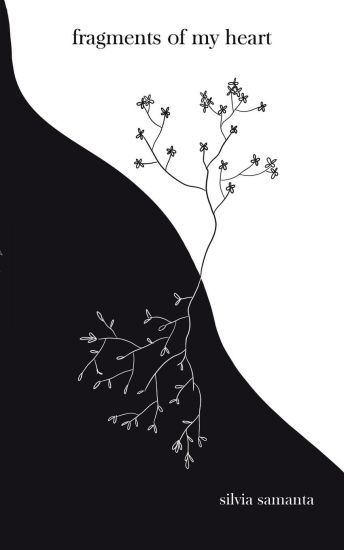
Fragments of My Heart

Fragments of My Heart

Silvia Samanta

Tellwell Talent
2023
pokkari
don't be afraid to take the less popular pathlet them follow the herd blindlyyou do what you need to doto reach where you need to beit doesn't have to be a castleor the center stageit can be a place less traveled by othersit can be the most stranded town at the end of a rugged roadwhere no one wants to gobut if you find peace thereso be ityou have nothing to prove to anyonebut yourselfyou be you
The Scottish Enlightenment

The Scottish Enlightenment

Silvia Sebastiani

Palgrave Macmillan
2013
sidottu
The Scottish Enlightenment shaped a new conception of history as a gradual and universal progress from savagery to civil society. Whereas women emancipated themselves from the yoke of male-masters, men in turn acquired polite manners and became civilized. Such a conception, however, presents problematic questions: why were the Americans still savage? Why was it that the Europeans only had completed all the stages of the historic process? Could modern societies escape the destiny of earlier empires and avoid decadence? Was there a limit beyond which women's influence might result in dehumanization? The Scottish Enlightenment's legacy for modernity emerges here as a two-faced Janus, an unresolved tension between universalism and hierarchy, progress and the limits of progress.
Caliban and the Witch

Caliban and the Witch

Silvia Federici

Penguin Classics
2021
pokkari
'A groundbreaking work . . . Federici has become a crucial figure for . . . a new generation of feminists' Rachel Kushner, author of The Mars RoomA cult classic since its publication in the early years of this century, Caliban and the Witch is Silvia Federici's history of the body in the transition to capitalism. Moving from the peasant revolts of the late Middle Ages through the European witch-hunts, the rise of scientific rationalism and the colonisation of the Americas, it gives a panoramic account of the often horrific violence with which the unruly human material of pre-capitalist societies was transformed into a set of predictable and controllable mechanisms. It Is a study of indigenous traditions crushed, of the enclosure of women's reproductive powers within the nuclear family, and of how our modern world was forged in blood.'Rewarding . . . allows us to better understand the intimate relationship between modern patriarchy, the rise of the nation state and the transition from feudalism to capitalism' Guardian
Aspetti d'arte e religiosità popolare: Le edicole votive di Macerata, Casalba e Caturano
Camminando nei centri storici locali, ci si imbatte nel contesto sociale, storico e religioso del nostro territorio.Volgendo lo sguardo verso l'alto si scorgono le vecchie edicole votive; anche se sbiadite e polverose, ci raccontano la loro storia, che corrisponde al vissuto dei nostri compaesani, quindi, al nostro passato.Lo scopo della presente pubblicazione e compiere un viaggio a ritroso nel tempo, con l'obiettivo di incuriosire chi percorre la nostra terra senza prestare attenzione a questi segni della memoria; ulteriore finalita e dimostrare come la religiosita popolare sia sempre stata parte di tale contesto territoriale e come essa abbia favorito l'aggregazione sociale.
A Journey Through Sudan

A Journey Through Sudan

Silvia Luciani

Lulu.com
2019
pokkari
Sudan, 1985. Mara Voski_, a young Yugoslavian journalist, arrives in Khartoum to cover the preparations for the upcoming elections. She also anticipates seeing again some friends she had met there a couple of years earlier, and especially Nyamila Deng, a young Dinka woman with whom she had shared an adventurous journey through South Sudan in 1983, at the beginning of a devastating civil war. When Mara reaches her friends' address, however, she finds their house deserted. In search of her friends, she comes across a fellow journalist, Andrew Dawson, who eventually helps her locate Nyamila. But if the relationship with Andrew deepens into more than a simple friendship, meeting Nyamila again will prove emotionally traumatic, for Mara: the beautiful, enigmatic Nyamila isn't any longer - and maybe has never been - the person Mara thought she knew. And Andrew... Who is Andrew, in reality? In the microcosm of the Khartoum of the '80s, nothing and nobody seem to be what they appear.