This early work by Sinclair Lewis was originally published in 1917 and we are now republishing it with a brand new introductory biography. Sinclair Lewis was born in Sauk Centre, Minnesota, USA in 1885. A lonely and socially awkward child, Lewis tried unsuccessfully to run away from home, before entering Yale University in 1903. It was here that, in the Yale Courant and the Yale Literary Magazine, Lewis had his first works - mostly romantic poetry and short sketches - published. In 1920, while living in Washington D.C., Lewis had his first major success with the novel Main Street. Selling around two million copies within a few years, it catapulted Lewis into fame and riches, and he followed it with the critically acclaimed Babbitt (1922), and Arrowsmith (1925) - for which he received, but refused, the Pulitzer Prize.
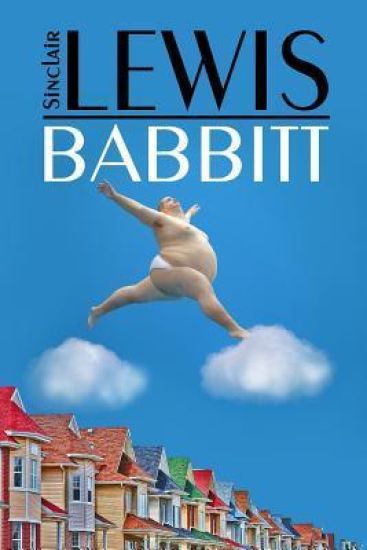
Since the 1922 publication of "Babbitt," its eponymous antihero a prosperous real estate broker and relentless social climber inhabiting a Midwestern town called Zenith has become a symbol of stultifying values and middle-class hypocrisy. At once a conformist and a rebel, George F. Babbitt represents an ordinary man whose life turns upside down during one of the most profound sea changes in American cultural history: the mechanization and hucksterism of the Roaring Twenties. Babbitt, his family, and his social circle are the very essence of the American Dream in all its glory and emptiness, and their story is a stirring portrait of a way of life in profound flux. "Babbitt" remains one of Sinclair Lewis s most widely read novels. Contemptible and touching, frivolous and tragic, Babbitt is a rich, complex character whose legacy carries an eerie resonance to this day. Includes a new afterword by Azar NafisiIntroduction by Sally E. Parry"
Main Street: The Story of Carol Kennicott is a novel written by American author Sinclair Lewis. The book tells the story of a young woman named Carol Kennicott, who moves from the city to a small town in Minnesota with her husband, Dr. Will Kennicott. The novel explores the clash between Carol's progressive ideas and the conservative values of the town's residents. As Carol tries to improve the town's culture and society, she faces resistance from the locals who are unwilling to change their ways. The novel also delves into Carol's own struggles with her identity and her place in society as a woman. Throughout the book, Lewis provides a satirical commentary on small-town life in America during the early 20th century. He highlights the narrow-mindedness and hypocrisy of the townspeople, as well as the challenges faced by those who try to challenge the status quo. Overall, Main Street: The Story of Carol Kennicott is a thought-provoking novel that explores themes of conformity, individualism, and societal change. It remains a classic of American literature and a must-read for anyone interested in the history and culture of small-town America.This Is A New Release Of The Original 1920 Edition.This scarce antiquarian book is a facsimile reprint of the old original and may contain some imperfections such as library marks and notations. Because we believe this work is culturally important, we have made it available as part of our commitment for protecting, preserving, and promoting the world's literature in affordable, high quality, modern editions, that are true to their original work.
Main Street: The Story of Carol Kennicott is a satirical novel written by Sinclair Lewis, and published in 1920. Awards and nominations Main Street was initially awarded the 1921 Pulitzer Prize for literature, but was rejected by the Board of Trustees, who overturned the jury's decision. The prize went, instead, to Edith Wharton for The Age of Innocence. In 1926 Lewis refused the Pulitzer when he was awarded it for Arrowsmith. In 1930, Lewis was the first American ever awarded the Nobel Prize for Literature. While a Nobel Prize is awarded to the author not the work, and itself does not cite a particular work for which he was chosen, Main Street was Lewis' best-known work and enormously popular at the time. In the Nobel committee's presentation speech, both Main Street and Arrowsmith were cited. The prize was awarded "...for his vigorous and graphic art of description and his ability to create, with wit and humour, new types of characters." In 1998, the Modern Library ranked Main Street #68 on its list of the 100 best English-language novels of the 20th century.
"Whatever the misery, he could not regain contentment with a world which, once doubted, became absurd." --- Sinclair Lewis, Babbit Babbitt, first published in 1922, is a novel by Sinclair Lewis. Largely a satire of American culture, society, and behavior, it critiques the vacuity of middle-class American life and its pressure toward conformity. An immediate and controversial bestseller, Babbitt is one of Lewis's best-known novels and was influential in the decision to award him the Nobel Prize in literature in 1930. The word "Babbitt" entered the English language as a "person and especially a business or professional man who conforms unthinkingly to prevailing middle-class standards".
Babbitt, by Sinclair Lewis, is largely a satire of American culture, society, and behavior, it critiques the vacuity of middle-class American life and its pressure toward conformity. An immediate and controversial bestseller, Babbitt is one of Lewis's best-known novels and was influential in the decision to award him the Nobel Prize in literature in 1930.Lewis has been both criticized and congratulated for his unorthodox writing style in Babbitt. As one reviewer puts it: "There is no plot whatever... Babbitt simply grows two years older as the tale unfolds." Lewis presents a chronological series of scenes in the life of his title character. After introducing George F. Babbitt as a middle-aged man, "nimble in the calling of selling houses for more than people could afford to pay," Lewis presents a meticulously detailed description of Babbitt's morning routine.In writing Babbitt, Lewis had very clear goals. He wanted to create not a caricature but a living and breathing individual with recognizable hopes and dreams. In a letter to his publisher, Lewis wrote: "He is all of us Americans at 46, prosperous but worried, wanting - passionately - to seize something more than motor cars and a house before it's too late." Babbitt's mediocrity is central to Lewis's hopes of creating a realistic character. He believed the fatal flaw of other authors' attempts to capture the American businessman was that they always made him out to be exceptional. In early descriptions of Babbitt, Lewis mused: "This is the story of the ruler of America." As he saw it, the "Tired American Businessman" wielded power not through his exceptionality, but through militant normalcy. But Lewis also strove to portray the American businessman as deeply dissatisfied and privately aware of his shortcomings. He was "the most grievous victim of his own militant dullness" and secretly longed for freedom and romance. Readers praising Lewis for his "realism" eagerly admitted the regularity with which they encountered Babbitts in their daily lives, but could also relate to some of Babbitt's anxieties about conformity and personal fulfillment.The word "Babbitt" entered the English language as a "person and especially a business or professional man who conforms unthinkingly to prevailing middle-class standards".