Kirjojen hintavertailu. Mukana 11 342 296 kirjaa ja 12 kauppaa.

Kirjahaku

Etsi kirjoja tekijän nimen, kirjan nimen tai ISBN:n perusteella.

1000 tulosta hakusanalla Stanley Waterloo

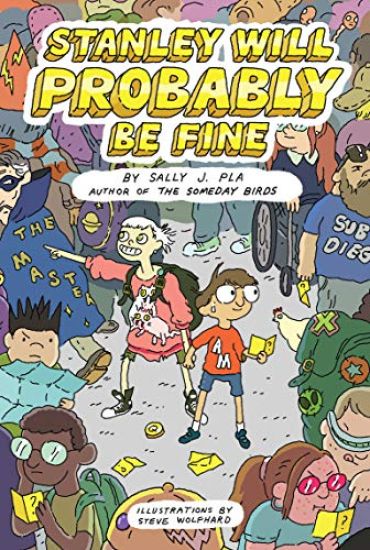
Stanley Will Probably Be Fine

Stanley Will Probably Be Fine

Sally J. Pla

HARPERCOLLINS PUBLISHERS INC
2019
nidottu
This funny and moving second novel from the Schneider Award-winning author of The Fire, the Water, and Maudie McGinn features comic trivia, a safety superhero, and a super-cool scavenger hunt all over downtown San Diego as our young hero, Stanley Fortinbras, grapples with his anxiety--and learns what, exactly, it means to be brave.Nobody knows comics trivia like Stanley knows comics trivia.It's what he takes comfort in when the world around him gets to be too much. And after he faints during a safety assembly, Stanley takes his love of comics up a level by inventing his own imaginary superhero, named John Lockdown, to help him through.Help is what he needs, because Stanley's entered Trivia Quest--a giant comics-trivia treasure hunt--to prove he can tackle his worries, score VIP passes to Comic Fest, and win back his ex-best friend. Partnered with his fearless new neighbor Liberty, Stanley faces his most epic, overwhelming, challenging day ever.What would John Lockdown do?Stanley's about to find out.A New York Public Library Best Kids Book * A Kirkus Best Book * A Bank Street Best Children's Book

Stanley the Dog: The First Day of School

Stanley the Dog: The First Day of School

Bobby Bones

HARPERCOLLINS PUBLISHERS INC
2022
sidottu
From the award-winning radio and TV personality and beloved two-time New York Times bestselling author Bobby Bones, Stanley the Dog: The First Day of School is a hilarious and heartfelt new picture book about a bulldog pup named Stanley and his adventures on the first day of school. Today is Stanley’s first day of school—and he really doesn’t want to go. Stanley would rather dawdle in bed and dither over which collar to wear than get on the school bus. With his stomach turning into tighter knots by the minute, Stanley’s worried whether a bulldog like him will ever fit in with the other pups at school.For one thing, Stanley doesn’t know any of the school rules. He rolls when he’s supposed to sit. Barks when he’s supposed to stay. And worst of all, he doesn’t know how to make friends. But when disaster strikes, maybe all Stanley needs to do is be himself in order save the day?Illustrated with hilariously loving detail by Stephanie Laberis and inspired by Bobby Bones’s own real-life bulldog puppy, Stanley the Dog: The First Day of School will remind every reader about the challenges of trying new things and the value of staying true to yourself.
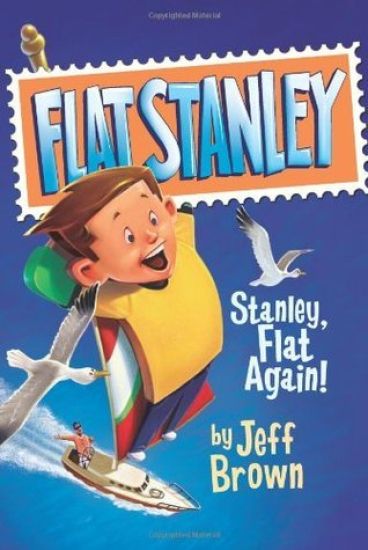
Stanley, Flat Again!

Stanley, Flat Again!

Jeff Brown

Harpercollins
2009
nidottu
Is Stanley flat again ?Stanley Lambchop has had his share of unusual adventures. But being flat was one thing he thought he was through with forever.Then one morning, he discovers he was wrong. Still, there is so much that a boy who is only one inch thick can do that a round person can't. Maybe this time, all it will take is one amazing event for everything to finally make sense.The Flat Stanley books by Jeff Brown have been entertaining young readers for years. Read them all
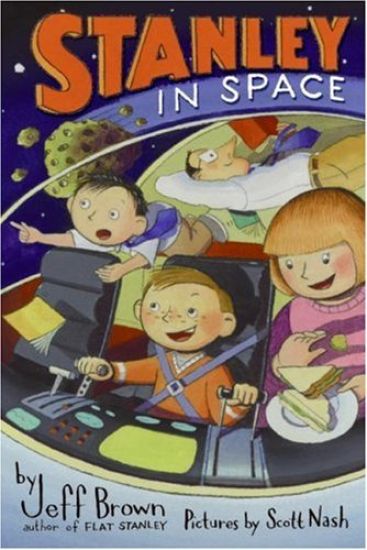
Stanley in Space

Stanley in Space

Jeff Brown

Harpercollins
2009
nidottu
When the residents of a far-distant planet send a message to Earth asking for someone to meet with them, the President of the United States asks Stanley Lambchop, an all-American boy, to be his ambassador.
Stanley And The Women

Stanley And The Women

Kingsley Amis

Vintage
2004
pokkari
Just when Stanley Duke thinks it safe to sink into middle age, his son, Steve, goes insane. As if that weren't terrible enough, Stanley finds himself beset on all sides by women - neurotic, half-baked, critical or just plain capricious.
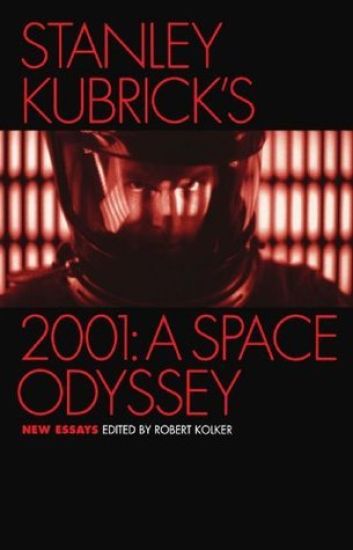
Stanley Kubrick's 2001: A Space Odyssey

Stanley Kubrick's 2001: A Space Odyssey

Oxford University Press Inc
2006
nidottu
Though Stanley Kubrick's 2001: A Space Odyssey boasts a large and ever-expanding fan-base, there are few among even the most avid enthusiasts that fully understands the film's inheritance, complexities, and ironies. The essays in this collection, commissioned from a wide variety of scholars, examine in detail various possible readings of the film, its historical context, and its status as a quintessential science-fiction genre piece.
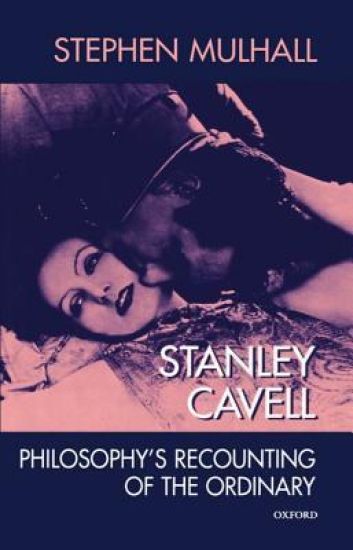
Stanley Cavell

Stanley Cavell

Stephen Mulhall

Clarendon Press
1999
nidottu
Stephen Mulhall presents the first full-length philosophical study of the work of Stanley Cavell, best known for his highly influential contributions to the fields of film studies, Shakespearian literary criticism, and the confluence of psychoanalysis and literary theory. It is not properly appreciated that Cavell's project originated in his interpretation of Austin's and Wittgenstein's philosophical interest in the criteria governing ordinary language, and is given unity by an abiding concern with the nature and the varying cultural manifestations of the sceptical impulse in modernity. This book elucidates the essentially philosophical roots and trajectory of Cavell's work, traces its links with Romanticism and its recent turn towards a species of moral pefectionism associated with Thoreau and Emerson, and concludes with an assessment of its relations to liberal-democratic political theory, Christian religious thought, and feminist literary studies. It will be of interest to anyone concerned with the relationships between Anglo-American and Continental philosophy, and between philosophy and other disciplines in the humanities. 'an excellent presentation and discussion of [Cavell's] thought . . . very timely' Political Studies 'Learning to read Mulhall is both a suitable and a worthy first step to learning to read Cavell' British Journal of Aesthetics 'there can be no doubt as to the depth of Mulhall's knowledge of Cavell's writings or to his ability as an advocate. [The book] is also very well written. Mulhall's prose is capable of registering the fine grain in a subtle and elusive thinker and, while more conventional than Cavell's, is no less supple or eloquent.' Times Literary Supplement '[Mulhall's] explication is careful enough to explain the importance of Cavell's work, clarify the subtleties of Cavell's ideas, provide a complete overview of Cavell's thought, and show the coherence in Cavell's diverse writings . . .invaluable' Harvard Review
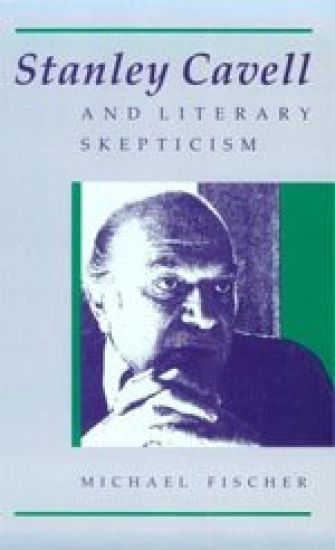
Stanley Cavell and Literary Skepticism

Stanley Cavell and Literary Skepticism

Michael Fischer

University of Chicago Press
1989
sidottu
Stanley Cavell's work is distinctive not only in its importance to philosophy but also for its remarkable interdisciplinary range. Cavell is read avidly by students of film, photography, painting, and music, but especially by students of literature, for whom Cavell offers major readings of Thoreau, Emerson, Shakespeare, and others. In this first book-length study of Cavell's writings, Michael Fischer examines Cavell's relevance to the controversies surrounding poststructuralist literary theory, particularly works by Jacques Derrida, J. Hillis Miller, Paul de Man, and Stanley Fish. Throughout his study, Fischer focuses on skepticism, a central concern of Cavell's multifaceted work. Cavell, following J. L. Austin and Wittgenstein, does not refute the radical epistemological questioning of Descartes, Hume, and others, but rather characterizes skepticism as a significant human possibility or temptation. As presented by Fischer, Cavell's accounts of both external-world and other-minds skepticism share significant affinities with deconstruction, a connection overlooked by contemporary literary theorists. Fischer follows Cavell's lead in examining how different genres address the problems raised by skepticism and goes on to show how Cavell draws on American and English romanticism in fashioning a response to it. He concludes by analyzing Cavell's remarks about current critical theory, focusing on Cavell's uneasiness with some of the conclusions reached by its practitioners. Fischer shows that Cavell's insights, grounded in powerful analyses of Descartes, Hume, and Wittgenstein, permit a fresh view of Derrida, Miller, de Man, and Fish. The result is not only a revealing characterization of deconstruction but a much-needed and insightful introduction to Cavell's rich but difficult oeuvre.
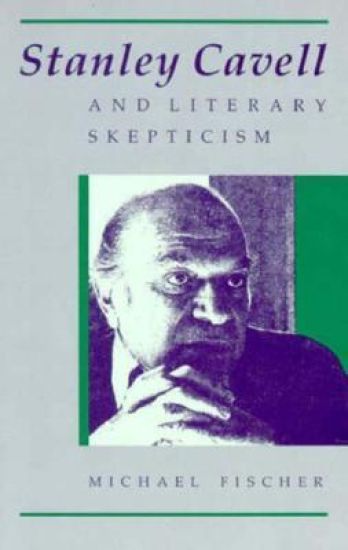
Stanley Cavell and Literary Skepticism

Stanley Cavell and Literary Skepticism

Michael Fischer

University of Chicago Press
1989
nidottu
Stanley Cavell's work is distinctive not only in its importance to philosophy but also for its remarkable interdisciplinary range. Cavell is read avidly by students of film, photography, painting, and music, but especially by students of literature, for whom Cavell offers major readings of Thoreau, Emerson, Shakespeare, and others. In this first book-length study of Cavell's writings, Michael Fischer examines Cavell's relevance to the controversies surrounding poststructuralist literary theory, particularly works by Jacques Derrida, J. Hillis Miller, Paul de Man, and Stanley Fish. Throughout his study, Fischer focuses on skepticism, a central concern of Cavell's multifaceted work. Cavell, following J. L. Austin and Wittgenstein, does not refute the radical epistemological questioning of Descartes, Hume, and others, but rather characterizes skepticism as a significant human possibility or temptation. As presented by Fischer, Cavell's accounts of both external-world and other-minds skepticism share significant affinities with deconstruction, a connection overlooked by contemporary literary theorists. Fischer follows Cavell's lead in examining how different genres address the problems raised by skepticism and goes on to show how Cavell draws on American and English romanticism in fashioning a response to it. He concludes by analyzing Cavell's remarks about current critical theory, focusing on Cavell's uneasiness with some of the conclusions reached by its practitioners. Fischer shows that Cavell's insights, grounded in powerful analyses of Descartes, Hume, and Wittgenstein, permit a fresh view of Derrida, Miller, de Man, and Fish. The result is not only a revealing characterization of deconstruction but a much-needed and insightful introduction to Cavell's rich but difficult oeuvre.
Stanley Milgram

Stanley Milgram

Peter Lunt

Red Globe Press
2009
nidottu
In a series of ingenious studies, social psychologist Stanley Milgram, examined the impact of modern society on the psychology of individuals.His most famous experiment saw participants commanded to administer painful electric shocks to supposed fellow volunteers and their compliance raised serious questions about the limits of moral autonomy and the ability of individuals to resist authority. Lunt explores the historical and cultural setting of Milgram's social psychology, his intellectual roots and the continuing relevance of his research today. This authoritative introduction is essential reading for all those interested in the psychology of power and obedience.
Stanley Kunitz

Stanley Kunitz

Gregory Orr

Columbia University Press
1985
sidottu
Orr explores the biographical sources of Kunitz's work, the strategies by which he achieves his aim of converting life into legend, and the theory and tactic of the dramatic lyric, the poetic form Kunitz has practiced and perfected over the course of a lifetime.
Stanley the Baker

Stanley the Baker

William Bee

Penguin Random House Children's UK
2024
nidottu
It's another busy day at Stanley's bakery! There's so much to do before Stanley's customers arrive! He must prove the dough and bake enough treats to make a yummy display. Will he get everything done in time to open the bakery?A wonderful first introduction to baking for little readers.Discover more Stanley books: Stanley's BoatStanley's ParkStanley's GarageStanley the BuilderStanley the FarmerStanley's CafeStanley's ShopStanley the PostmanStanley's SchoolStanley's TrainStanley's Fire EngineStanley's Library
Stanley Said No

Stanley Said No

Sue Meikle

Penguin Random House Children's UK
2026
nidottu
A laugh-out-loud story about the perils of always saying ‘no’, brings together a brilliant new picture book duo, Sue Meikle and Denis Angelov. Stanley is a boy who loves to say ‘NO!’ And once he starts, he just can't stop. He doesn’t want to sit sensibly on the bus. . . He doesn’t want to hold his mum's hand. . . And ‘NO!’, he doesn’t want to wait in line! But one day on a trip to a museum, Stanley discovers that saying no can have monstrous consequences. Can Stanley find his way out of a sticky situation, or will he bite off more than he can chew?
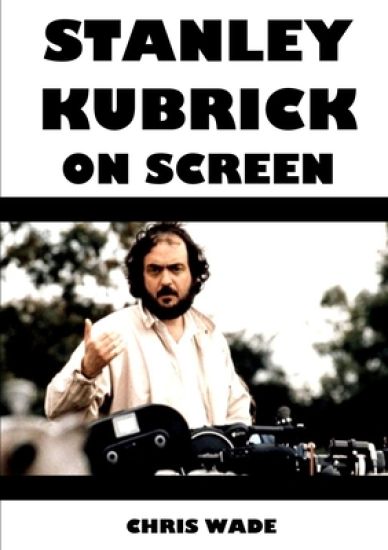
Stanley Kubrick On Screen

Stanley Kubrick On Screen

chris wade

Lulu.com
2019
nidottu
STANLEY KUBRICK: ON SCREEN IS A GUIDE TO THE FILMS OF ONE OF THE MOST ICONIC DIRECTORS OF ALL TIME. FROM HIS EARLY SHORTS, THROUGH HIS BREAKTHROUGH MOVIES LIKE THE KILLING AND PATHS OF GLORY, CLASSICS INCLUDING 2001: A SPACE ODYSSEY, A CLOCKWORK ORANGE AND THE SHINING, TO HIS FINAL PICTURE EYES WIDE SHUT, RELEASED AFTER HIS DEATH IN 1999, KUBRICK REDEFINED EVER GENRE HE TOOK ON. HIS FILMS ARE BECOMING MORE INFLUENTIAL, IMPORTANT AND LAYERED AS TIME GOES ON, REVEALING NEW DEPTHS WITH EACH DECADE THAT PASSES. THE BOOK GOES INTO THE MAKING OF EACH FILM, WITH NEW COMMENTS FROM KUBRICK COLLABORATORS AND IMAGES FROM THE MOVIES THEMSELVES.
Stanley Cavell, Religion, and Continental Philosophy

Stanley Cavell, Religion, and Continental Philosophy

Espen Dahl

Indiana University Press
2014
sidottu
The American philosopher Stanley Cavell (b. 1926) is a secular Jew who by his own admission is obsessed with Christ, yet his outlook on religion in general is ambiguous. Probing the secular and the sacred in Cavell's thought, Espen Dahl explains that Cavell, while often parting ways with Christianity, cannot dismiss it either. Focusing on Cavell's work as a whole, but especially on his recent engagement with Continental philosophy, Dahl brings out important themes in Cavell's philosophy and his conversation with theology.
Stanley Kubrick

Stanley Kubrick

Mario Falsetto

Praeger Publishers Inc
2001
sidottu
The second edition of Mario Falsetto's extensive analysis of Kubrick's films carefully examines the filmmaker's oeuvre in its entirety--from smaller, early films (The Killing) through mid-career masterpieces (Dr. Strangelove; 2001: A Space Odyssey; A Clockwork Orange), later films such as Full Metal Jacket, and his final work, 1999's Eyes Wide Shut. The author, offering close readings supported by precise shot descriptions, shows us how Kubrick's body of work represents a stylistically and thematically consistent cinematic vision, one that merges formal experimentation with great philosophical complexity. Falsetto explores many of Kubrick's often-used devices, including the long-take aesthetic, voice-overs, and moving camera, and discusses the thematic uses to which these techniques are applied. Finally, he presents the very first formal analysis of Eyes Wide Shut, the director's final, very much underrated masterwork.
Stanley Kubrick

Stanley Kubrick

Mario Falsetto

Praeger Publishers Inc
2001
nidottu
The second edition of Mario Falsetto's extensive analysis of Kubrick's films carefully examines the filmmaker's oeuvre in its entirety--from smaller, early films (The Killing) through mid-career masterpieces (Dr. Strangelove; 2001: A Space Odyssey; A Clockwork Orange), later films such as Full Metal Jacket, and his final work, 1999's Eyes Wide Shut. The author, offering close readings supported by precise shot descriptions, shows us how Kubrick's body of work represents a stylistically and thematically consistent cinematic vision, one that merges formal experimentation with great philosophical complexity. Falsetto explores many of Kubrick's often-used devices, including the long-take aesthetic, voice-overs, and moving camera, and discusses the thematic uses to which these techniques are applied. Finally, he presents the very first formal analysis of Eyes Wide Shut, the director's final, very much underrated masterwork.
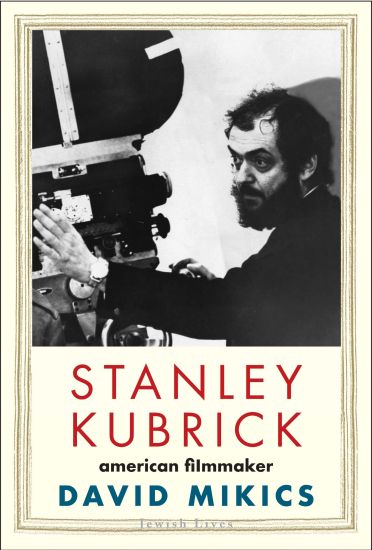
Stanley Kubrick

Stanley Kubrick

David Mikics

Yale University Press
2020
sidottu
An engrossing biography of one of the most influential filmmakers in cinematic history"A cool, cerebral book about a cool, cerebral talent. . . . A brisk study of [Kubrick's] films, with enough of the life tucked in to add context as well as brightness and bite.”—Dwight Garner, New York Times"An engaging and well-researched primer to the work of a cinematic legend."—Library Journal Kubrick grew up in the Bronx, a doctor’s son. From a young age he was consumed by photography, chess, and, above all else, movies. He was a self-taught filmmaker and self-proclaimed outsider, and his films exist in a unique world of their own outside the Hollywood mainstream. Kubrick’s Jewishness played a crucial role in his idea of himself as an outsider. Obsessed with rebellion against authority, war, and male violence, Kubrick was himself a calm, coolly masterful creator and a talkative, ever-curious polymath immersed in friends and family. Drawing on interviews and new archival material, David Mikics for the first time explores the personal side of Kubrick’s films.