Kirjojen hintavertailu. Mukana 11 627 220 kirjaa ja 12 kauppaa.

Kirjahaku

Etsi kirjoja tekijän nimen, kirjan nimen tai ISBN:n perusteella.

1000 tulosta hakusanalla Stephane Ruel

Divagations

Divagations

Stéphane Mallarmé

The Belknap Press
2009
nidottu
"This is a book just the way I don't like them," the father of French Symbolism, Stéphane Mallarmé, informs the reader in his preface to Divagations: "scattered and with no architecture." On the heels of this caveat, Mallarmé's diverting, discursive, and gorgeously disordered 1897 masterpiece tumbles forth--and proves itself to be just the sort of book his readers like most. The salmagundi of prose poems, prose-poetic musings, criticism, and reflections that is Divagations has long been considered a treasure trove by students of aesthetics and modern poetry. If Mallarmé captured the tone and very feel of fin-de-siècle Paris, he went on to captivate the minds of the greatest writers of the twentieth century--from Valéry and Eliot to Paul de Man and Jacques Derrida. This was the only book of prose he published in his lifetime and, in a new translation by Barbara Johnson, is now available for the first time in English as Mallarmé arranged it. The result is an entrancing work through which a notoriously difficult-to-translate voice shines in all of its languor and musicality. Whether contemplating the poetry of Tennyson, the possibilities of language, a masturbating priest, or the transporting power of dance, Mallarmé remains a fascinating companion--charming, opinionated, and pedantic by turns. As an expression of the Symbolist movement and as a contribution to literary studies, Divagations is vitally important. But it is also, in Johnson's masterful translation, endlessly mesmerizing.
Awakening Islam

Awakening Islam

Stéphane Lacroix

Harvard University Press
2011
sidottu
Amidst the roil of war and instability across the Middle East, the West is still searching for ways to understand the Islamic world. Stéphane Lacroix has now given us a penetrating look at the political dynamics of Saudi Arabia, one of the most opaque of Muslim countries and the place that gave birth to Osama bin Laden.The result is a history that has never been told before. Lacroix shows how thousands of Islamist militants from Egypt, Syria, and other Middle Eastern countries, starting in the 1950s, escaped persecution and found refuge in Saudi Arabia, where they were integrated into the core of key state institutions and society. The transformative result was the Sahwa, or “Islamic Awakening,” an indigenous social movement that blended political activism with local religious ideas. Awakening Islam offers a pioneering analysis of how the movement became an essential element of Saudi society, and why, in the late 1980s, it turned against the very state that had nurtured it. Though the “Sahwa Insurrection” failed, it has bequeathed the world two very different, and very determined, heirs: the Islamo-liberals, who seek an Islamic constitutional monarchy through peaceful activism, and the neo-jihadis, supporters of bin Laden's violent campaign.Awakening Islam is built upon seldom-seen documents in Arabic, numerous travels through the country, and interviews with an unprecedented number of Saudi Islamists across the ranks of today’s movement. The result affords unique insight into a closed culture and its potent brand of Islam, which has been exported across the world and which remains dangerously misunderstood.
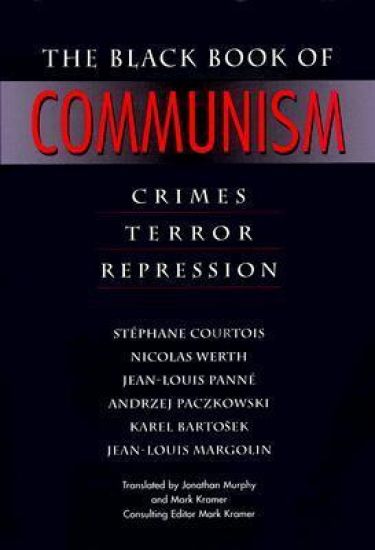
The Black Book of Communism

The Black Book of Communism

Stéphane Courtois; Nicolas Werth; Jean-Louis Panné; Andrzej Paczkowski; Karel Bartošek; Jean-Louis Margolin

Harvard University Press
1999
sidottu
Already famous throughout Europe, this international bestseller plumbs recently opened archives in the former Soviet bloc to reveal the actual, practical accomplishments of Communism around the world: terror, torture, famine, mass deportations, and massacres. Astonishing in the sheer detail it amasses, the book is the first comprehensive attempt to catalogue and analyze the crimes of Communism over seventy years."Revolutions, like trees, must be judged by their fruit," Ignazio Silone wrote, and this is the standard the authors apply to the Communist experience—in the China of "the Great Helmsman," Kim Il Sung's Korea, Vietnam under "Uncle Ho" and Cuba under Castro, Ethiopia under Mengistu, Angola under Neto, and Afghanistan under Najibullah. The authors, all distinguished scholars based in Europe, document Communist crimes against humanity, but also crimes against national and universal culture, from Stalin's destruction of hundreds of churches in Moscow to Ceausescu's leveling of the historic heart of Bucharest to the widescale devastation visited on Chinese culture by Mao's Red Guards.As the death toll mounts—as many as 25 million in the former Soviet Union, 65 million in China, 1.7 million in Cambodia, and on and on—the authors systematically show how and why, wherever the millenarian ideology of Communism was established, it quickly led to crime, terror, and repression. An extraordinary accounting, this book amply documents the unparalleled position and significance of Communism in the hierarchy of violence that is the history of the twentieth century.
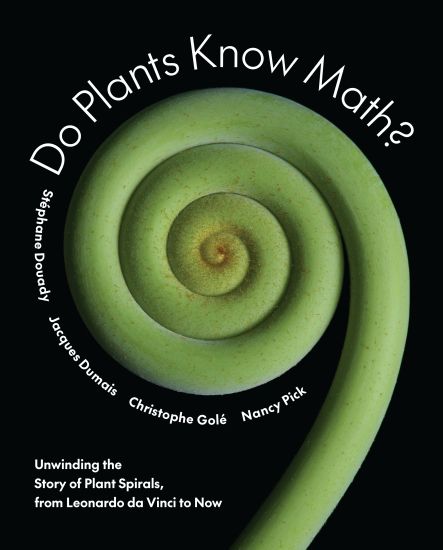
Do Plants Know Math?

Do Plants Know Math?

Stéphane Douady; Jacques Dumais; Christophe Golé; Nancy Pick

PRINCETON UNIVERSITY PRESS
2024
sidottu
A breathtakingly illustrated look at botanical spirals and the scientists who puzzled over themCharles Darwin was driven to distraction by plant spirals, growing so exasperated that he once begged a friend to explain the mystery “if you wish to save me from a miserable death.” The legendary naturalist was hardly alone in feeling tormented by these patterns. Plant spirals captured the gaze of Leonardo da Vinci and became Alan Turing’s final obsession. This book tells the stories of the physicists, mathematicians, and biologists who found themselves magnetically drawn to Fibonacci spirals in plants, seeking an answer to why these beautiful and seductive patterns occur in botanical forms as diverse as pine cones, cabbages, and sunflowers.Do Plants Know Math? takes you down through the centuries to explore how great minds have been captivated and mystified by Fibonacci patterns in nature. It presents a powerful new geometrical solution, little known outside of scientific circles, that sheds light on why regular and irregular spiral patterns occur. Along the way, the book discusses related plant geometries such as fractals and the fascinating way that leaves are folded inside of buds. Your neurons will crackle as you begin to see the connections. This book will inspire you to look at botanical patterns—and the natural world itself—with new eyes.Featuring hundreds of gorgeous color images, Do Plants Know Math? includes a dozen creative hands-on activities and even spiral-plant recipes, encouraging readers to explore and celebrate these beguiling patterns for themselves.
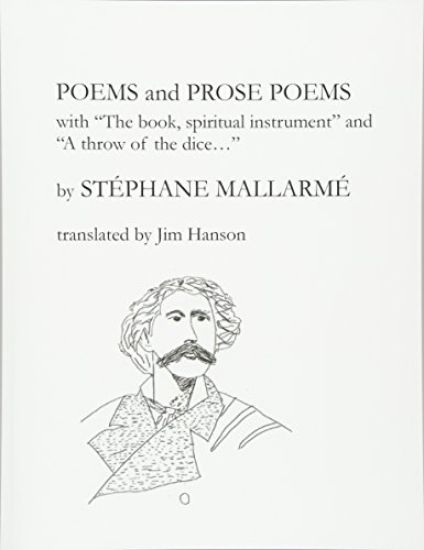
Poems and Prose Poems: with "The book, spiritual instrument" and "A throw of the dice. . ."
I started to translate Mallarm 's poems because I wasn't content with the English versions I could find. In translation, poets who preceded and followed Mallarm are accessible to us. Baudelaire is accessible to us, Apollinaire is accessible to us. I couldn't find a way into Mallarm in the English versions I found, and I suspected it wasn't his fault. Mallarm was an English teacher, and he did translations of the poems of his beloved Edgar Allan Poe, in prose, of course. But his poems in French were metrical and rhymed. Sometimes the meaning of his poems is guided, let us say, by the rhyme and meter he chose, "ceding the initiative to words" as he wrote in "Variations sur un sujet". There are alternate homophonic readings of some of his lines as well, that could never be rendered into another language as poetry, only as notes. My inability to reproduce the multiple layers of Mallarm 's poems in French into American verse is a disappointment, but an inevitable one. Those layers rely on sound similarities that aren't available in our language. Most translations of Mallarm into English rhyme and use traditional meters. This seemed to me to be the wrong approach. We have seen how Mallarm approached translating Poe, after all. Mallarm translated this way moves even further away from the meaning of the poem as a second rhyme scheme, this time in English, imposes an alien framework over the poem. These translations, no matter how carefully constructed, often sound academic to me. I come from a poetry tradition that learned a great deal from 20th century French poetry, Apollinaire, Reverdy, Desnos and all the rest of them. Some of the great pleasures in music in 20th century American poetry come from responses to French poetry, for instance, John Ashbery's "The Tennis Court Oath", or Charles Olson's Rimbaud takeoff "Variations done for Gerald Van Der Wiele", or Ted Berrigan's translations of French poetry in "Bean Spasms". Hopefully the music I heard there echoes a little in these versions.
Islam in Politics in Russia and Central Asia

Islam in Politics in Russia and Central Asia

Stephane A. Dudolgnon; Komatsu Hisao

Kegan Paul
2001
sidottu
First Published in 2001. This volume contains the proceedings of the international colloquium held by the IAS Project in October 1999. These papers deal with the modem and contemporary history of Central Eurasia, for a comprehensive reflection on various phenomena that led to a political valuation of Islam under non-Muslim domination, whether Russian or Chinese, since the beginning of the 18th century. A comparative approach to the current situations in the Russian Federation and the newly independent states of Central Asia has allowed us to study the various modes of the political instrumentalization of Islam, by both political power and opposition, in such various areas as the Ferghana Valley in Uzbekistan and the Volga-Urals region of Russia.
Le Dialogue d’idées au dix-huitième siècle

Le Dialogue d’idées au dix-huitième siècle

Stéphane Pujol

Voltaire Foundation
2005
nidottu
L'objet de cette enquête est de décrire la rhétorique du dialogue comme genre littéraire et philosophique, d'interroger cette double identité, d'en saisir les stratégies et les figures et d'en connaître les enjeux. L'auteur explique le développement du genre aux dix-septième et dix-huitième siècles, les facteurs sociologiques, culturels et idéologiques qui ont présidé à son succès. L'ouvrage étudie successivement le poids de la tradition classique, le succès d'une forme et les voies d'une méthode, avant d'examiner la diversité de ses usages, depuis le dialogue des morts jusqu'au dialogue philosophique proprement dit, sans oublier les textes pédagogiques ou polémiques. Ce travail reprend sous un jour nouveau la question des rapports entre littérature et philosophie. Au dix-huitième siècle, le dialogue d'idées s'inscrit dans un mouvement critique d'interrogation du savoir et des modalités de transmission. Tous les dialogues ont en commun d'installer le discours philosophique sur une scène fictive, tant il est vrai que le dialogue dramatise le mouvement de la pensée comme il théâtralise le débat d'idées. Force est de constater que de Fontenelle à Diderot, de La Hontan à Voltaire, de Montesquieu à Sade, il est peu d'hommes de lettres au siècle des Lumières, qui ne l'aient pas cultivé.
Walther P.38

Walther P.38

Stéphane Cailleau

Schiffer Publishing Ltd
2020
sidottu
Adopted by the German Wehrmacht at the end of 1939, more than 1.2 million P.38s were manufactured up to 1945. Designed by the Walther company from its civilian model PP, it was the first double-action military pistol. Its robustness and simplicity of manufacture made it a worthy successor to the legendary P.08 Luger in the Second World War. This illustrated book presents the design, manufacturing, and development of the various models, from initial acceptance by the German military in 1938 through their production and use from 1939 to 1945. Includes close-up views of markings and other details, as well as a visual breakdown of the weapon. Accessories such as magazines, ammunition, holsters, and cleaning kits are featured throughout the book, as are rarely seen combat-related uniform and equipment items.
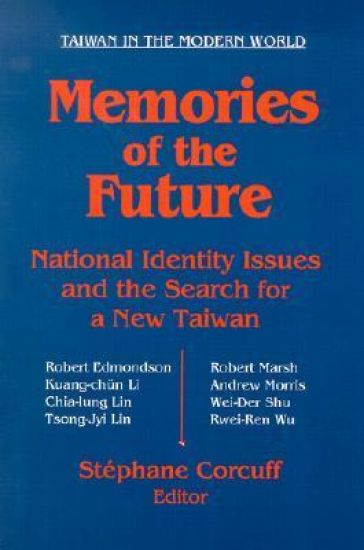
Memories of the Future

Memories of the Future

Stephane Corcuff

Routledge
2002
sidottu
The product of five years of North American Taiwan Studies Conferences, this book carefully analyzes the emergence of national feelings in Taiwan, its historical roots and its contemporary manifestations. It addresses questions central to the looming international issue of Taiwan/China. Part one considers the historical events that help to explain the emergence and development of a separatist, dissident discourse. The second part deals with the current issue of national identity transition in Taiwan. The final part places the national identity debate in a broader perspective by focusing on the larger issues of the maturation of the national identity question.
Memories of the Future

Memories of the Future

Stephane Corcuff

Routledge
2002
nidottu
The product of five years of North American Taiwan Studies Conferences, this book carefully analyzes the emergence of national feelings in Taiwan, its historical roots and its contemporary manifestations. It addresses questions central to the looming international issue of Taiwan/China. Part one considers the historical events that help to explain the emergence and development of a separatist, dissident discourse. The second part deals with the current issue of national identity transition in Taiwan. The final part places the national identity debate in a broader perspective by focusing on the larger issues of the maturation of the national identity question.
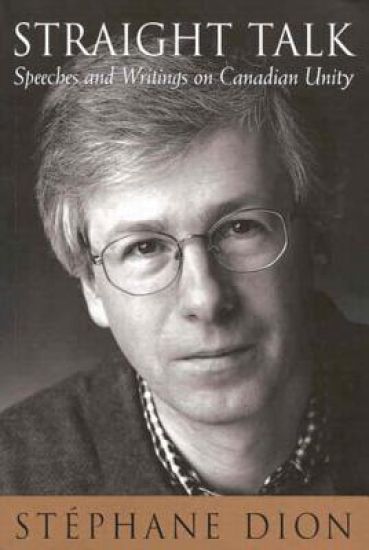
Straight Talk

Straight Talk

Stéphane Dion

McGill-Queen's University Press
1999
sidottu
So begins this collection of Stephane Dion's speeches from 1996 to 1998. Organized around four central themes, Straight Talk shows the breadth and strength of Dion's convictions. Dion believes that Canada is first and foremost a nation of caring people, in contrast to the image projected by the endless, dry constitutional debate. He argues that the melding of diversity and unity that is the basis of this nation is possible only because of the particular federalism that Canadians have invented. This federalism, however, is far from perfect and it is the responsibility of government to continue to work to improve it, always remembering that its core must be the quality of service it provides to Canadians. Dion believes that the Quebec question is not a constitutional question but one that concerns identity: many francophones believe that their identity and culture are not respected in the rest of Canada and see the anglophone majority as a force for assimilation, while many in other provinces feel that separatists do not share the same values of openness and tolerance. He believes strongly that the secession process the Parti Quebecois has proposed - effecting independence on the basis of incorrect legal theory, an unclear referendum question, and a majority of fifty percent plus one - is difficult to reconcile with democracy and raises questions that must be discussed openly and resolved democratically. Straight Talk is a refreshingly honest and frank discussion about a matter that has been at the forefront of Canadian's thoughts for too many years.
Straight Talk

Straight Talk

Stéphane Dion

McGill-Queen's University Press
1999
nidottu
So begins this collection of Stephane Dion's speeches from 1996 to 1998. Organized around four central themes, Straight Talk shows the breadth and strength of Dion's convictions. Dion believes that Canada is first and foremost a nation of caring people, in contrast to the image projected by the endless, dry constitutional debate. He argues that the melding of diversity and unity that is the basis of this nation is possible only because of the particular federalism that Canadians have invented. This federalism, however, is far from perfect and it is the responsibility of government to continue to work to improve it, always remembering that its core must be the quality of service it provides to Canadians. Dion believes that the Quebec question is not a constitutional question but one that concerns identity: many francophones believe that their identity and culture are not respected in the rest of Canada and see the anglophone majority as a force for assimilation, while many in other provinces feel that separatists do not share the same values of openness and tolerance. He believes strongly that the secession process the Parti Quebecois has proposed - effecting independence on the basis of incorrect legal theory, an unclear referendum question, and a majority of fifty percent plus one - is difficult to reconcile with democracy and raises questions that must be discussed openly and resolved democratically. Straight Talk is a refreshingly honest and frank discussion about a matter that has been at the forefront of Canadian's thoughts for too many years.
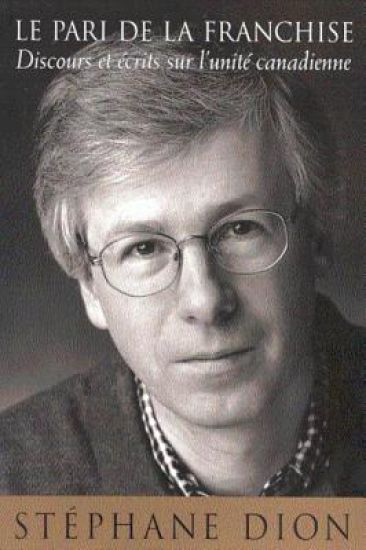
Le Pari de la Franchise

Le Pari de la Franchise

Stéphane Dion

McGill-Queen's University Press
1999
nidottu
Le Canada n'avait pas connu de politicien de la trempe de Stéphane Dion depuis Pierre Trudeau. Ses réponses cinglantes aux déclarations du Premier ministre Lucien Bouchard sur la séparation ont rendu les souverainistes furieux. Et ses discours ont étonné les commentateurs, toutes tendances politiques confondues. Pour la première fois depuis longtemps, un politicien a eu l'audace de prendre à partie l'opposition. Comme Trudeau, Dion est un brillant universitaire, recruté par le Parti libéral du Canada en raison de ses profondes convictions et de son désir d'imprimer un nouveau dynamisme au fédéralisme canadien. Nommé ministre des Affaires intergouvernementales et élu au Parlement, il s'est retrouvé au coeur même des débats portant sur les grands enjeux en matière des relations fédérales-provinciales. Mais ce sont ses incursions au Québec qui ont attiré l'attention des médias. Ses lettres au Premier ministre Bouchard et au vice-premier ministre Bernard Landry ont défini pour la première fois le coût de la séparation. Il a irrité les séparatistes en déclarant que si le Canada était divisible, le Québec l'était aussi. Il a aussi irrité les anglophones en présentant la Loi 101, la loi du Québec qui porte sur la langue, comme une grande loi canadienne. Stéphane Dion parle avec clarté et passion de la complexité, de la beauté et des contradictions du Canada. Le pari de la franchise définit sa pensée en matière de réconciliation nationale.
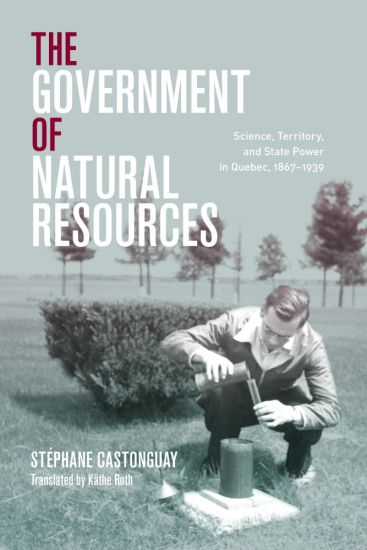
The Government of Natural Resources

The Government of Natural Resources

Stéphane Castonguay; Graeme Wynn

University of British Columbia Press
2021
sidottu
The Government of Natural Resources explores scientific and technical activity in Quebec from Confederation until the eve of the Second World War. Scientific and technical personnel are an often quiet presence within the state, but they play an integral role.At the turn of the twentieth century, the provincial government created geology, forestry, fishery, and agronomy services. These new services drew from recently established university technical programs to amass a corps of skilled employees to support their mission: exploiting resources and occupying territory. Stéphane Castonguay traces the history of mining, logging, hunting, fishing, and agriculture in Quebec to reveal how territorial and environmental transformations thus became a tool of government. By helping to define and shape such interventions, scientific activity contributed to state formation and expanded administrative capacity. The lessons that this thoughtful reconceptualization of resource development offers reach well beyond provincial borders.
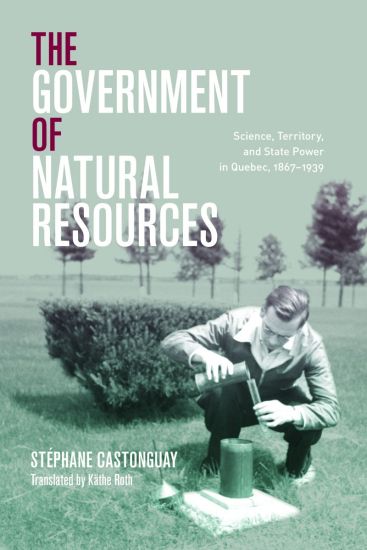
The Government of Natural Resources

The Government of Natural Resources

Stéphane Castonguay; Graeme Wynn

University of British Columbia Press
2022
pokkari
The Government of Natural Resources explores scientific and technical activity in Quebec from Confederation until the eve of the Second World War. Scientific and technical personnel are an often quiet presence within the state, but they play an integral role.At the turn of the twentieth century, the provincial government created geology, forestry, fishery, and agronomy services. These new services drew from recently established university technical programs to amass a corps of skilled employees to support their mission: exploiting resources and occupying territory. Stéphane Castonguay traces the history of mining, logging, hunting, fishing, and agriculture in Quebec to reveal how territorial and environmental transformations thus became a tool of government. By helping to define and shape such interventions, scientific activity contributed to state formation and expanded administrative capacity. The lessons that this thoughtful reconceptualization of resource development offers reach well beyond provincial borders.
Instantly Understand Any Wine with Confidence

Instantly Understand Any Wine with Confidence

Stéphane Rosa; Jess Grinneiser

RIZZOLI INTERNATIONAL PUBLICATIONS
2022
nidottu
With this innovative book, browsing and buying wine is transformed into a fun, positive experience, empowering anyone to understand at a glance which bottle is the right choice taking into account budget, occasion, and personal taste. Featuring an infographic, user-friendly, intuitive approach that minimizes impressionistic, flowery descriptions by using pictograms to navigate wine selection, this new method of buying wine is full of information and encouragement a smart life hack zeroing in on 300 of the world s most widely available bottles. Each profile also points the reader to several similar wines in an if you like this, you will also like that feature that actually increases the number of wines covered to almost 1,500 varieties. The book works by first organizing wines into flavor families. Within a family, individual wines are profiled in pictograms and graphs keying out important characteristics: region of origin, grape variety, mouth feel, flavor portrait (showing levels of alcohol, acidity, and tannins), price range, ideal serving temperature, best age range, and finally food pairings.
The Pride of Place

The Pride of Place

Stephane Gerson

Cornell University Press
2003
pokkari
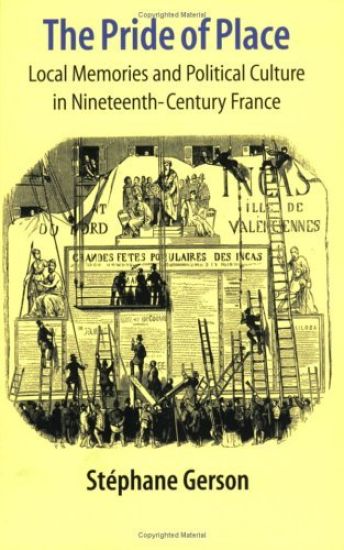
Nineteenth-century France grew fascinated with the local past. Thousands of citizens embraced local archaeology, penned historical vignettes and monographs, staged historical pageants, and created museums and pantheons of celebrities. Stéphane Gerson's rich, elegantly written, and timely book provides the first cultural and political history of what contemporaries called the "cult of local memories," an unprecedented effort to resuscitate the past, instill affection for one's locality, and hence create a sense of place. A wide range of archival and printed sources (some of them untapped until now) inform the author's engaging portrait of a little-known realm of Parisian entrepreneurs and middling provincials, of obscure historians and intellectual luminaries. Arguing that the "local" and modernity were interlaced, rather than inimical, between the 1820s and 1890s, Gerson explores the diverse uses of local memories in modern France—from their theatricality and commercialization to their political and pedagogical applications. The Pride of Place shows that, contrary to our received ideas about French nationhood and centralism, the "local" buttressed the nation while seducing Parisian and local officials. The state cautiously supported the cult of local memories even as it sought to co-opt them and grappled with their cultural and political implications. The current enthusiasm for local memories, Gerson thus finds, is neither new nor a threat to Republican unity. More broadly yet, this book illuminates the predicament of countries that, like France, are now caught between supranational forces and a revival of local sentiments.
The Angel of History

The Angel of History

Stéphane Mosès

Stanford University Press
2008
sidottu
In The Angel of History, Mosès looks at three Jewish philosophers—Franz Rosenzweig, Walter Benjamin, and Gershom Scholem—who formulated a new vision of history in 1920s Germany by moving away from the spirit of assimilation and the Enlightenment belief in humanity's inevitable progress. Instead, they imagined history as discontinuous, made of moments that form no totality but whose ruptures are both more significant—and more promising—than any apparent homogeneity. Their direct experience of the twentieth century's great upheavals led these three thinkers to abandon the old models of causality that had previously accounted for human experience, and their cultural and religious background allowed them to turn to the Jewish experience of history. Jewish messianism always had to confront the experience of catastrophe, deception, and failure. Mosès shows how this tradition informed a genuine Jewish conception of history in which redemption may—or may not—occur at any moment, giving a new chance for hope by locating utopia in the heart of the present.
The Angel of History

The Angel of History

Stéphane Mosès

Stanford University Press
2008
pokkari
In The Angel of History, Mosès looks at three Jewish philosophers—Franz Rosenzweig, Walter Benjamin, and Gershom Scholem—who formulated a new vision of history in 1920s Germany by moving away from the spirit of assimilation and the Enlightenment belief in humanity's inevitable progress. Instead, they imagined history as discontinuous, made of moments that form no totality but whose ruptures are both more significant—and more promising—than any apparent homogeneity. Their direct experience of the twentieth century's great upheavals led these three thinkers to abandon the old models of causality that had previously accounted for human experience, and their cultural and religious background allowed them to turn to the Jewish experience of history. Jewish messianism always had to confront the experience of catastrophe, deception, and failure. Mosès shows how this tradition informed a genuine Jewish conception of history in which redemption may—or may not—occur at any moment, giving a new chance for hope by locating utopia in the heart of the present.