Kirjojen hintavertailu. Mukana 11 699 587 kirjaa ja 12 kauppaa.

Kirjahaku

Etsi kirjoja tekijän nimen, kirjan nimen tai ISBN:n perusteella.

1000 tulosta hakusanalla Stephen J. Shoemaker

The Dead Volcano

The Dead Volcano

Stephen J. Cimbala

Praeger Publishers Inc
2002
sidottu
Cimbala argues that nuclear complacency is based on a misreading of history and on unsound political and military analysis. The stability factors built into the Cold War international system are now missing. The spread of nuclear weapons after the Cold War moved toward regional actors outside of Europe, some with religious or national scores to settle. Technology transfer of ballistic missiles and other delivery systems for weapons of mass destruction, including biological and chemical as well as nuclear weapons, brings the danger of nuclear eruption closer to reality. Finally, the mechanism of deterrence that seemed so dependable as a means of war prevention from 1947 to 1991 only seems so by virtue of nostalgia.The early decades of the Cold War were made somewhat unpredictable by uncertain U.S.-Soviet political relations, by nuclear force building based on worst-case estimates, and by rickety command and control systems that could have failed both sides in a crisis. The Soviets and Americans gradually improved their relationship and stabilized Cold War competition, including nuclear rivalry, but they had more than 40 years to practice and no immediate territorial disputes. As Cimbala makes clear, it cannot be assumed that the Soviet-American nonbelligerence of the Cold War is transferable into a multipolar, post-Cold War international system marked by spreading weapons and trigger-sensitive control systems. This provocative analysis will be of interest to all scholars, students, and policy makers involved with defense, security, and foreign policy studies.
Political Support in a Frustrated America

Political Support in a Frustrated America

Stephen J. Farnsworth

Praeger Publishers Inc
2003
sidottu
Public confidence and trust in government is low these days. Farnsworth pinpoints this disappointment to shifting expectations of what, exactly, government should do. Politicians were once expected to maintain economic growth, but in our post-scarcity era most citizens expect them to provide services - such as welfare or environmental -that are often contentious. Enlarging the scope of local political empowerment will increase public support by making politics more approachable and responsive.
Military Persuasion in War and Policy

Military Persuasion in War and Policy

Stephen J. Cimbala

Praeger Publishers Inc
2002
sidottu
Cimbala analyzes military persuasion—the art of using armed force to support diplomacy, deterrence, crisis management, unconventional conflicts, peace operations, and other military activities short of major conventional war. As he shows, military persuasion requires that policy makers and diplomats understand the subtle interaction between force and diplomacy; each supports, or destroys, the other, depending upon the situation. Even conventional wars have aspects of armed persuasion. The Powell doctrine that calls for overwhelming force in case of any U.S. military intervention was not even employed by then Chairman of the Joint Chiefs of Staff Colin Powell in the Gulf War of 1991, despite the popular impression to the contrary. Since U.S. policy is not based on imperial policing, but on constructive engagement with the object of supporting democratic regimes and market economies, the use of deterrence and limited military commitments of highly trained, specialized warrior-diplomats will be typical of 21st century-conflicts. As Cimbala shows in his various case studies, armed forces are used most of the time for coercion, not for mass destruction. Yet much professional military thinking, expert lay opinion, and U.S. government analysis presupposes that there is a clear dividing line between all-out peace and all-out war. In addition, U.S. political culture is insensitive to the requirement for matching the political objective to the military means available, as opposed to clamoring for a psychologically satisfying form of victory. Despite these apparent obstacles, Cimbala maintains that the United States must master military persuasion because its resources for defense are limited and its commitments are ubiquitous. This book will be of particular interest to scholars, students, and professionals involved with defense, security, and foreign policy studies.
Forced to Fail

Forced to Fail

Stephen J. Caldas; Carl L. Bankston III

Praeger Publishers Inc
2005
sidottu
Caldas and Bankston provide a critical, dispassionate analysis of why desegregation in the United States has failed to achieve the goal of providing equal educational opportunities for all students. They offer case histories through dozens of examples of failed desegregation plans from all over the country. The book takes a very broad perspective on race and education, situated in the larger context of the development of individual rights in Western civiliztion. The book traces the long legal history of first racial segregation, and then racial desegregation in America. The authors explain how rapidly changing demographics and family structure in the United States have greatly complicated the project of top-down government efforts to achieve an ideal racial balance in schools. It describes how social capital—a positive outcome of social interaction between and among parents, children, and teachers—creates strong bonds that lead to high academic achievement. The authors show how coercive desegregation weakens bonds and hurts not only students and schools, but also entire communities. Examples from all parts of the United States show how parents undermined desegregation plans by seeking better educational alternatives for their children rather than supporting the public schools to which their children were assigned. Most important, this book offers an alternative, more realistic viewpoint on class, race, and education in America.
Fire

Fire

Stephen J. Pyne

University of Washington Press
2019
pokkari
Over vast expanses of time, fire and humanity have interacted to expand the domain of each, transforming the earth and what it means to be human. In this concise yet wide-ranging book, Stephen J. Pyne—named by Science magazine as "the world's leading authority on the history of fire"—explores the surprising dynamics of fire before humans, fire and human origins, aboriginal economies of hunting and foraging, agricultural and pastoral uses of fire, fire ceremonies, fire as an idea and a technology, and industrial fire.In this revised and expanded edition, Pyne looks to the future of fire as a constant, defining presence on Earth. A new chapter explores the importance of fire in the twenty-first century, with special attention to its role in the Anthropocene, or what he posits might equally be called the Pyrocene.
Fire

Fire

Stephen J. Pyne

University of Washington Press
2019
sidottu
Over vast expanses of time, fire and humanity have interacted to expand the domain of each, transforming the earth and what it means to be human. In this concise yet wide-ranging book, Stephen J. Pyne—named by Science magazine as "the world's leading authority on the history of fire"—explores the surprising dynamics of fire before humans, fire and human origins, aboriginal economies of hunting and foraging, agricultural and pastoral uses of fire, fire ceremonies, fire as an idea and a technology, and industrial fire.In this revised and expanded edition, Pyne looks to the future of fire as a constant, defining presence on Earth. A new chapter explores the importance of fire in the twenty-first century, with special attention to its role in the Anthropocene, or what he posits might equally be called the Pyrocene.
Fire on the Rim

Fire on the Rim

Stephen J. Pyne

University of Washington Press
1995
pokkari
In this lively account of one [fire] season, Pyne introduces us to the tightly knit world of a fire crew, to the complex geography of the North Rim, to the technique and changing philosophy of fire management.
Fire in America

Fire in America

Stephen J. Pyne

University of Washington Press
1997
pokkari
From prehistory to the present-day conservation movement, Pyne explores the efforts of successive American cultures to master wildfire and to use it to shape the landscape.
World Fire

World Fire

Stephen J. Pyne

University of Washington Press
1997
pokkari
Back in PrintWorld Fire is the story of how fire and humans have coevolved. The two are inseparable, and together they have repeatedly remade the planet."Pyne considers the evolution of fire in such diverse regions as Australia, Africa, Brazil, Sweden, Greece, Iberia, Russia, and India and then ponders Antarctica, the land without fire. As he examines changing techniques for and attitudes toward fire control, Pyne challenges our concepts of nature and wilderness and explains why the study and management of fire have tremendous environmental, cultural, and political implications."—Booklist"A sweeping historical treatise that examines our world's love/hate relationship with conflagration. His engrossing ideas leave bright embers in the memory."—Outside
Burning Bush

Burning Bush

Stephen J. Pyne

University of Washington Press
1998
pokkari
Pyne traces the impact of fire in Australia, from its influence on vegetation to its use by Aborigines and European settlers."Mr. Pyne, showing what a historian deeply schooled in environmental science can contribute to our awareness of nature and culture, has produced a provocative work that is a major contribution to the literature of environmental studies."—New York Times Book Review
The Ice

The Ice

Stephen J. Pyne

University of Washington Press
1998
pokkari
"The Ice is a compilation of more about ice than you knew you wanted to know, yet sheer compelling significance holds attention page by page. . . . Pyne conveys a view of Antarctica that interweaves physical science with humanistic inquiry and perception. His audacity as well as his presentation warrant admiration, for the implications of The Ice are vast."—New York Times Book Review
Vestal Fire

Vestal Fire

Stephen J. Pyne

University of Washington Press
2000
pokkari
Stephen Pyne has been described as having a consciousness "composed of equal parts historian, ecologist, philosopher, critic, poet, and sociologist." At this time in history when many people are trying to understand their true relationship with the natural environment, this book offers a remarkable contribution--breathtaking in the scope of its research and exhilarating to read.Pyne takes the reader on a journey through time, exploring the terrain of Europe and the uses and abuses of its lands as well as, through migration and conquest, many parts of the rest of the world. Whether he is discussing the Mediterranean region, Russia, Scandinavia, the British Isles, central Europe, or colonized islands; whether he is considering the impact of agriculture, forestry, or Enlightenment thinking, the author brings an unmatched insight to his subject.Vestal Fire takes its title from Vesta, Roman goddess of the hearth and keeper of the sacred fire on Mount Olympus. But the book's title also suggests the strengths and limitations of Europe's peculiar conception of fire, and through fire, of its relationship to nature. Between the untamed fire of the wilderness and the tended fire of the hearth lies a never-ending dialectic in which human beings struggle to control natural forces and processes that in fact can sometimes be directed but never wholly dominated or contained.
Drinking Careers

Drinking Careers

Stephen J. Kunitz; Jerrold E. Levy

Yale University Press
1995
sidottu
In this book, the first long-term follow-up study of alcohol use among Native Americans, a physician and sociologist and an anthropologist examine the data on three groups of Navajos whom they first interviewed about their use of alcohol in 1966. The authors find verification for their initial hypothesis that young men who would have been classed as alcoholic often stop or moderate their drinking as they age. They also find that there is considerable diversity in patterns of alcohol use among both women and men. Stephen J. Kunitz and Jerrold E. Levy study the histories of those who have died as well as those who have survived since the first study was done. They show that, compared to those who have survived, the former were more likely to have been solitary drinkers and were on average younger at the time when they were first interviewed. The authors also present data for the entire Navajo population on changing mortality from alcohol-related causes from the 1960s to the present; they compare alcohol-related death rates among Navajos to those among rural Anglos in Arizona and New Mexico; they analyze two family histories—one of a family with severe alcohol problems, the other of a family with none—that illustrate how traditional patterns of wealth have shaped the way people have learned to use alcohol; they study the factors that may have led to the emergence of a solitary, unrestrained drinking style among some Navajos; and they describe the changes in treatment programs and the transformation of traditional healing systems as they are integrated into a bureaucratized health care system.
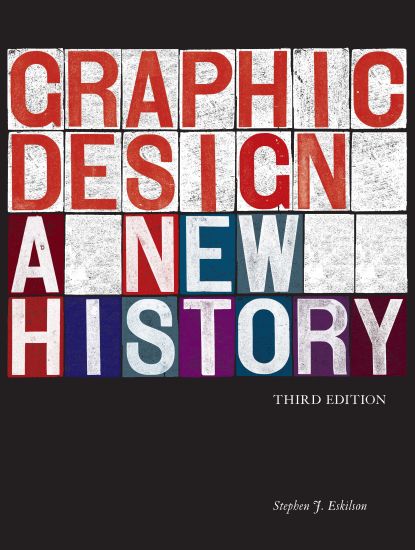
Graphic Design: A New History

Graphic Design: A New History

Stephen J. Eskilson

YALE UNIVERSITY PRESS
2019
sidottu
A classic and indispensable account of graphic design history from the Industrial Revolution to the present Now in its third edition, this acclaimed survey explores the evolution of graphic design from the nineteenth century to the present day. Following an exploration of design's prehistory in ancient civilizations through the Industrial Revolution, author Stephen J. Eskilson argues that modern design as we know it grew out of the influence of Victorian-age reformers. He traces the emergence of modernist design styles in the early twentieth century, examining the wartime politicization of regional styles. Richly contextualized chapters chronicle the history of the Bauhaus and the rise of the International Style in the 1950s and '60s, and the postmodern movement of the 1970s and '80s. Contemporary considerations bring the third edition up to date, with discussions of app design, social media, emojis, big data visualization, and the use of animated graphics in film and television. The contemporary phenomenon of the citizen designer, professionals who address societal issues either through or in addition to their commercial work, is also addressed, highlighting protagonists like Bruce Mau and the Center for Urban Pedagogy. This edition also features forty-five additional images, an expanded introduction and epilogue, and revised text throughout. A newly redesigned interior reinforces the fresh contents of this now-classic volume.
Stalking and Violence

Stalking and Violence

Stephen J. Morewitz

Kluwer Academic/Plenum Publishers
2002
sidottu
Stalking and Violence: New Patterns of Obsession and Trauma provides new perspectives on the prevalence, causes, and effects of stalking in intimate and non-intimate relations. Drawing on the results of a large random survey of restraining orders, this book found that stalking is highly prevalent in a variety of relationships and is a pattern of behaviors that is routinely regulated by the demographic and social characteristics of the victims and offenders. This book demonstrates that it is possible to develop reliable stalker profiles to help better detect and respond to the threat of stalking. These findings differ from previous studies that considered stalking limited to severely disturbed persons. Covering a wide range of topics from offender profiling, the dangers of stalking, cyberstalking, traumatic health effects, and the responses of the police and courts to stalking, this book will be relevant to a wide range of professionals and students in the fields of mental health, criminal justice, law, social work, medicine, nursing, public health, security/safety, and internet technology.
Domestic Violence and Maternal and Child Health

Domestic Violence and Maternal and Child Health

Stephen J. Morewitz

Kluwer Academic/Plenum Publishers
2004
sidottu
DOMESTIC VIOLENCE AND MATERNAL CHILD HEALTH is one of the first books to evaluate the impact of intimate partner abuse on maternal and child health. New abuse patterns against pregnant women and their unborn babies and children are described based on quantitative and qualitative findings from the Stalking and Violence Project (SVP), case studies from a clinical psychologist's private practice, and a review of the literature. (See Appendix A­ Research Methods and Appendix B-Study Results, Tables 1-9). Intimate partner abuse is prevalent and can endanger the lives of pregnant women, their fetuses and their children. The long-term societal impacts of violence are significant for the cycle of violence can be transmitted one from generation to the next. Despite the re­ search studies that have been conducted in this area, little is known about the risk factors for partner abuse and the impact of that abuse on maternal child health and adult health. More research needs to be done about how nurses, physicians, social workers, and therapists can better diagnose and treat partner violence during and after preg­ nancy. Effective interventions by the police, courts, and legislators also need further investigation. One of the central assumptions in this book is that partner abuse is a patterned set of behaviors developed by the batterer to ex­ ert power over women in intimate and non-intimate relationships.
Strategic Impasse

Strategic Impasse

Stephen J. Cimbala

Praeger Publishers Inc
1989
sidottu
There is probably no area of more crucial concern nor one more subject to possible misunderstanding and riddled with paradox than nuclear weapons and their use, not only in war, but as deterrents to war. In Strategic Impasse, Cimbala examines the critical issues, problems, and paradoxes inherent in the current nuclear situation. It is from a fundamental contradiction--the usefulness of nuclear weapons versus the undesirability of nuclear war--that nuclear deadlock arises. Their usefulness as deterrents is based on their destructive potential and the balance of power in Europe cannot be adjusted until the inflexible, bipolar balance of terror is addressed. Ironically, superpower sovereignty in nuclear first strike/retaliation capability, shared across the divided East-West political buffer zone, created the impetus for improvements in conventional warfare. To the extent war can be contained below the nuclear threshold, conventional weaponry contributes to deterrence by denial. One difficulty lies in the improbability of completely isolating the nuclear from the conventional battlefield in a European scenario. Also, a level of superpower force perceived to be adequate in peacetime might prove to be an inadequate intrawar deterrent. Because of the underdevelopment of conceptual frameworks, credible deterrence--the creation of nuclear campaigns designed to prevent war--remains conjectural. Highly usable weapons require a command system that can provide for simultaneous fighting and escalation, but escalation beyond a certain level conflicts with control and therefore usability. In turn, low expectations of weapon usability may weaken deterrence. In Gorbachev's defensive sufficiency, forces for aggression and surprise attack would be diminished, while forces for defense would be strengthened. The problem lies not only in differentiating between offensive and defensive weaponry but in achieving a consensus on such a definition by NATO's member countries.The book is divided into three parts: the first section, Issues of Theory and Strategy, scrutinizes the relationship between offense and defense and examines SDI and more inclusive strategic defense matters. It also questions the connection between policy objectives and force, and explores the complication of externalities, such as relations with allies. In section two, Stretching Deterrence, Cimbala reviews the operational art likely to be employed by the Soviets in a conventionally fought European war and defines and appraises the sensor-cyber revolution in technology and its impacts on preferred strategies. The final part, Beyond Deterrence, considers war termination scenarios and related issues, including sociopolitical aspects, surveys the part nuclear weapons play in superpower competition in the Third World, and explains how issues of sovereignty effect deterrence, avoidance, and future super power relations. Strategic Impasse will enable scholars and students of military affairs as well as political scientists and government officials to see beyond current nuclear rhetoric and to make informed judgments on an issue that fundamentally affects this nation's and the world's future.