Kirjojen hintavertailu. Mukana 11 717 486 kirjaa ja 12 kauppaa.

Kirjahaku

Etsi kirjoja tekijän nimen, kirjan nimen tai ISBN:n perusteella.

1000 tulosta hakusanalla Steven Jones

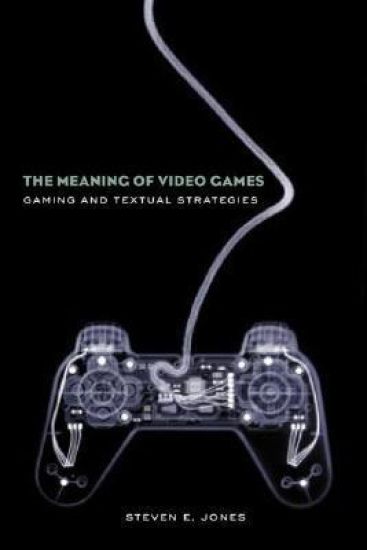
The Meaning of Video Games

The Meaning of Video Games

Steven E. Jones

Routledge
2008
nidottu
The Meaning of Video Games takes a textual studies approach to an increasingly important form of expression in today’s culture. It begins by assuming that video games are meaningful–not just as sociological or economic or cultural evidence, but in their own right, as cultural expressions worthy of scholarly attention. In this way, this book makes a contribution to the study of video games, but it also aims to enrich textual studies.Early video game studies scholars were quick to point out that a game should never be reduced to merely its "story" or narrative content and they rightly insist on the importance of studying games as games. But here Steven E. Jones demonstrates that textual studies–which grows historically out of ancient questions of textual recension, multiple versions, production, reproduction, and reception–can fruitfully be applied to the study of video games. Citing specific examples such as Myst and Lost, Katamari Damacy, Halo, Façade, Nintendo’s Wii, and Will Wright’s Spore, the book explores the ways in which textual studies concepts–authorial intention, textual variability and performance, the paratext, publishing history and the social text–can shed light on video games as more than formal systems. It treats video games as cultural forms of expression that are received as they are played, out in the world, where their meanings get made.

Against Technology

Against Technology

Steven E. Jones

Routledge
2006
sidottu
This book addresses the question of what it might mean today to be a Luddite--that is, to take a stand against technology. Steven Jones here explains the history of the Luddites, British textile works who, from around 1811, proclaimed themselves followers of "Ned Ludd" and smashed machinery they saw as threatening their trade. Against Technology is not a history of the Luddites, but a history of an idea: how the activities of a group of British workers in Yorkshire and Nottinghamshire came to stand for a global anti-technology philosophy, and how an anonymous collective movement came to be identified with an individualistic personal conviction. Angry textile workers in the early nineteenth century became romantic symbols of a desire for a simple life--certainly not the original goal of the actions for which they became famous. Against Technology is, in other words, a book about representations, about the image and the myth of the Luddites and how that myth was transformed over time into modern neo-Luddism.
Against Technology

Against Technology

Steven E. Jones

Routledge
2006
nidottu
This book addresses the question of what it might mean today to be a Luddite--that is, to take a stand against technology. Steven Jones here explains the history of the Luddites, British textile works who, from around 1811, proclaimed themselves followers of "Ned Ludd" and smashed machinery they saw as threatening their trade. Against Technology is not a history of the Luddites, but a history of an idea: how the activities of a group of British workers in Yorkshire and Nottinghamshire came to stand for a global anti-technology philosophy, and how an anonymous collective movement came to be identified with an individualistic personal conviction. Angry textile workers in the early nineteenth century became romantic symbols of a desire for a simple life--certainly not the original goal of the actions for which they became famous. Against Technology is, in other words, a book about representations, about the image and the myth of the Luddites and how that myth was transformed over time into modern neo-Luddism.
Historic Downtown Cincinnati

Historic Downtown Cincinnati

Kent Jones; Steven J. Rolfes

Arcadia Publishing (SC)
2011
nidottu
Journey into the rich history of Cincinnati and see how it got the name The Queen City of the West. A must for fans of Cincinnati and Ohio history Walking down the dirt, cobblestone, or paved streets of downtown Cincinnati in the past, there is no telling whom a person would meet. Someone might rub elbows with future presidents, such as Hayes, Taft, or that visiting lawyer from Illinois--Lincoln; dine with Generals Wayne, Grant, or Sherman; have tea with Harriet Beecher Stowe; or share a mug of Hauck beer with Frank Duveneck, Stephen Foster, or that poet-warrior William Lytle. A person lingering in the opulent hotels may meet visiting artists such as Junius Booth, Charles Dickens, Mark Twain, Henry Irving, and his manager, Bram Stoker; hear a speech by abolitionist Salmon P. Chase or flirt with the pretty Confederate spy Lottie Moon. Once the furthest expansion of the western frontier, every street and corner of downtown Cincinnati has been tread by the famous and infamous. Historic Downtown Cincinnati is the story of America, of businessmen like the brothers-in-law Procter and Gamble, of visionaries like McGuffy, and powerful political bosses like George Cox.
In the Woods

In the Woods

Carrie Jones; Steven E. Wedel

TOR TEEN
2020
nidottu
It should have been just another quiet night on the farm when Logan witnessed the attack, but it wasn't. Something is in the woods.Something unexplainable.Something deadly. Hundreds of miles away, Chrystal's plans for summer in Manhattan are abruptly upended when her dad reads tabloid coverage of some kind of grisly incident in Oklahoma. When they arrive to investigate, they find a witness: a surprisingly good-looking farm boy. As townsfolk start disappearing and the attacks get ever closer, Logan and Chrystal will have to find out the truth about whatever's hiding in the woods...before they become targets themselves.
Roberto Busa, S. J., and the Emergence of Humanities Computing
It’s the founding myth of humanities computing and digital humanities: In 1949, the Italian Jesuit scholar, Roberto Busa, S.J., persuaded IBM to offer technical and financial support for the mechanized creation of a massive lemmatized concordance to the works of St. Thomas Aquinas. Using Busa’s own papers, recently accessioned in Milan, as well as IBM archives and other sources, Jones illuminates this DH origin story. He examines relationships between the layers of hardware, software, human agents, culture, and history, and answers the question of how specific technologies afford and even constrain cultural practices, including in this case the academic research agendas of humanities computing and, later, digital humanities.
Roberto Busa, S. J., and the Emergence of Humanities Computing
It’s the founding myth of humanities computing and digital humanities: In 1949, the Italian Jesuit scholar, Roberto Busa, S.J., persuaded IBM to offer technical and financial support for the mechanized creation of a massive lemmatized concordance to the works of St. Thomas Aquinas. Using Busa’s own papers, recently accessioned in Milan, as well as IBM archives and other sources, Jones illuminates this DH origin story. He examines relationships between the layers of hardware, software, human agents, culture, and history, and answers the question of how specific technologies afford and even constrain cultural practices, including in this case the academic research agendas of humanities computing and, later, digital humanities.
Improving Accountability for Effective Command Climate: A Strategic Imperative

Improving Accountability for Effective Command Climate: A Strategic Imperative

Steven M. Jones; Strategic Studies Institute

Lulu.com
2014
nidottu
The U.S. Army War College provides an excellent environment for selected military officers and government civilians to reflect and use their career experience to explore a wide range of strategic issues. To assure that the research developed by Army War College students is available to army and Department of Defense leaders, the Strategic Studies Institute publishes selected papers in its Carlisle Papers in Security Strategy Series. Colonel Steven M. Jones, the author of this Carlisle Paper and member of the Class of 2003, explores the nature of command climate in the U.S. Army, its antecedents, and its consequences. He then proposes strategic remedies relating to unit climate assessment, leader development, performance appraisal, and accountability systems.
Instant Message (Im)

Instant Message (Im)

Steven Jackson; Barbara Jones

AuthorHouse
2005
pokkari
Based on true events," INSTANT MESSAGE" (IM) A love story made on-line, filled with Sex, Lies and Hatred, is an eye opener that captures real life experiences among millions of faceless names who chat on the internet. People with different backgrounds and various personalities exchange their false and true-selves with others. "INSTANT MESSAGE" (IM) will text YOU into the lives of those who chit-chat their way through cyberspace looking to text into the hearts of souls who search for love. If safety depends on your security and passion depends on your love...is it easy to fall out of love as it is to fall into love with an internet lover? So why marry your high school sweetheart when you can marry a complete stranger? How safe is it?
Cell Tower

Cell Tower

Steven E. Jones

Bloomsbury Academic USA
2020
nidottu
Object Lessons is a series of short, beautifully designed books about the hidden lives of ordinary things. Cropping up everywhere, whether steel latticework or tapered monopoles, encrusted with fiberglass antennas, cell towers raise up high into the air the communications equipment that channels our calls, texts, and downloads. For security reasons, their locations are never advertised. But it’s our romantic notions of connectivity that hide them in plain sight. We want the network to be invisible, ethereal, and ubiquitous. The cell tower stands as a challenge to these desires. Object Lessons is published in partnership with an essay series in The Atlantic.
Mystic Secrets Of The Bible: It's time to find out what most religious leaders don't discuss, and what they don't want you to know
This book will WAKE UP millions, but it could SHAKE UP those controlling our religious systems. It may even surprise and electrify a few, but it will definitely liberate and enlighten all who will dare to read it, and apply it. What are these mysteries? What secrets have been kept from us for way too long? What is the knowledge to be gained and the wisdom to be attained? This book will answer questions you have asked to which you've never received answers based in spiritual fact. You will also find answers here to questions that you have never dared to ask, for fear you would be looked upon as someone strange, bizarre, or even outlandish and unconventional. These are the MYSTIC SECRETS OF THE BIBLE. (c) 2017 By Steven D. Jones, All Rights Reserved. Written in simple, plain language, and easy to understand. It's time for us to get some real answers. It's time for us to know the truth. ****IT'S TIME FOR US TO FIND OUT****
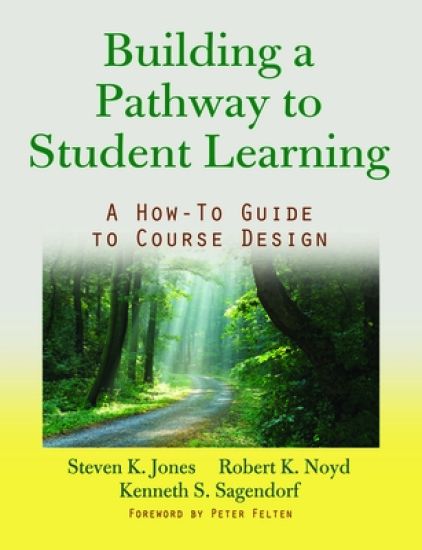
Building a Pathway to Student Learning

Building a Pathway to Student Learning

Steven G. Jones; Robert K. Noyd; Kenneth S. Sagendorf

Stylus Publishing
2014
sidottu
This book leads you through the process of designing a learning-centered course. It is written as a “how-to” handbook, providing step-by-step guidance on creating a pathway to student learning, including 26 workboxes (also available free online) that lead you through each element of the course design process and promote a rich reflection process akin to being in a workshop setting. The authors prompt you to (1) consider the distinctive characteristics of your students; (2) clearly articulate your course learning goals; (3) create aligned summative assessments; (4) identify the specific knowledge, skills, and attitudes students will need in order to be successful; (5) craft effective learning experiences, informed by the well-documented research on how people learn; and (6) incorporate formative assessment to ensure you and your students are staying on track. Completion of the sequence of worksheets leads to a poster as a visual display of your course design. This graphic depiction of your course ties the components together, provides a clear map of action for teaching your course, for modifying as you evaluate the success of particular strategies or want to introduce new concepts, and for developing your syllabus. A rubric for evaluating course posters is included.For faculty developers, this book provides a proven and ready-made resource and text around which to design or redesign learner-centered course design workshops or multi-day course design retreats, replicating or modifying the renowned workshop that the authors have developed at the Air Force Academy for both faculty new to teaching and those with many years of teaching experience under their belt.
Building a Pathway to Student Learning

Building a Pathway to Student Learning

Steven G. Jones; Robert K. Noyd; Kenneth S. Sagendorf

Stylus Publishing
2014
nidottu
This book leads you through the process of designing a learning-centered course. It is written as a “how-to” handbook, providing step-by-step guidance on creating a pathway to student learning, including 26 workboxes (also available free online) that lead you through each element of the course design process and promote a rich reflection process akin to being in a workshop setting. The authors prompt you to (1) consider the distinctive characteristics of your students; (2) clearly articulate your course learning goals; (3) create aligned summative assessments; (4) identify the specific knowledge, skills, and attitudes students will need in order to be successful; (5) craft effective learning experiences, informed by the well-documented research on how people learn; and (6) incorporate formative assessment to ensure you and your students are staying on track. Completion of the sequence of worksheets leads to a poster as a visual display of your course design. This graphic depiction of your course ties the components together, provides a clear map of action for teaching your course, for modifying as you evaluate the success of particular strategies or want to introduce new concepts, and for developing your syllabus. A rubric for evaluating course posters is included.For faculty developers, this book provides a proven and ready-made resource and text around which to design or redesign learner-centered course design workshops or multi-day course design retreats, replicating or modifying the renowned workshop that the authors have developed at the Air Force Academy for both faculty new to teaching and those with many years of teaching experience under their belt.
Blame Teachers

Blame Teachers

Steven P. Jones

Information Age Publishing
2015
nidottu
There is a story going around about the public schools and the people who teach in them—a story about how awful our nation’s teachers are and why we should blame teachers for the poor state of our public schools. But is the story about teachers right or fair? Why do so many people point fingers at teachers and seem to resent them so much?Blame Teachers: The Emotional Reasons for Educational Reform examines why many people blame teachers for what they understand to be the poor state of our schools. Blame comes easily to many people when they read about poor student performance and how “protected” teachers are by teachers’ unions and tenure policies. And with blame comes resentment, and with resentment comes demands for all kinds of educational reform—calls for more standardized testing, merit pay, charter schools, and all the rest. And we expect teachers to like and accept all the reforms being proposed.Conceiving educational reform out of blame and resentment aimed at teachers does no good for teachers, students, or schools. Blame Teachers outlines many of the strange and unacceptable assumptions about teaching and the purposes of education contained in these educational reforms. Intended for teachers, teacher education students, policymakers and the larger public, Blame Teachers suggests much better and more productive conversations we can have with teachers—conversations much more likely to improve teaching and learning in classrooms. The book argues for conversations with teachers that don’t begin or end with blame and resentment.
Blame Teachers

Blame Teachers

Steven P. Jones

Information Age Publishing
2015
sidottu
There is a story going around about the public schools and the people who teach in them—a story about how awful our nation’s teachers are and why we should blame teachers for the poor state of our public schools. But is the story about teachers right or fair? Why do so many people point fingers at teachers and seem to resent them so much?Blame Teachers: The Emotional Reasons for Educational Reform examines why many people blame teachers for what they understand to be the poor state of our schools. Blame comes easily to many people when they read about poor student performance and how “protected” teachers are by teachers’ unions and tenure policies. And with blame comes resentment, and with resentment comes demands for all kinds of educational reform—calls for more standardized testing, merit pay, charter schools, and all the rest. And we expect teachers to like and accept all the reforms being proposed.Conceiving educational reform out of blame and resentment aimed at teachers does no good for teachers, students, or schools. Blame Teachers outlines many of the strange and unacceptable assumptions about teaching and the purposes of education contained in these educational reforms. Intended for teachers, teacher education students, policymakers and the larger public, Blame Teachers suggests much better and more productive conversations we can have with teachers—conversations much more likely to improve teaching and learning in classrooms. The book argues for conversations with teachers that don’t begin or end with blame and resentment.
The Hidden Buffalo

The Hidden Buffalo

Steven E. Jones

Createspace Independent Publishing Platform
2018
nidottu
Brandon lives with his Grandpa in a cozy house, in a friendly neighborhood. HIs large bedroom is filled with fun things like toys and stuffed animals. But lately Brandon has been afraid, especially at night. When it's time for bed, he keeps the light on in his room and cannot sleep. His Grandpa is worried and wonders what is making Brandon so fearful. Can Grandpa find a way to help Brandon overcome his fear?Author and illustrator Steve Jones addresses children's basic fears with insight and sensitivity. As one of six siblings, he has drawn on his own childhood experience, his years of teaching in the New York City school system and a lifetime dedication to illustrative art.Steve Jones' extraordinary illustrations perfectly enhance his story, creating an evocative book, especially suited for elementary school grades. The Hidden Buffalo(c) engages and amuses, as it allows children to reflect upon and explore their own fears and solutions.
Why Kids Love (and Hate) School

Why Kids Love (and Hate) School

Steven P. Jones; Eric C. Sheffield

Stylus Publishing
2018
sidottu
Some students hate school, and some students love it. Some students enter classrooms with an “I dare you try to teach me” look on their faces, and others bounce into class excited to learn and anxious to please the teacher. We know we can’t automatically blame teachers or schools when students don’t want to learn. But we also know that sometimes teachers and schools don’t always set students up for success, and they don’t always help them love what they’re learning. And that’s not supposed to happen.Why Kids Love (and Hate) School: Reflections on Practice investigates some of the school and classroom practices that help students love school—and some that send students in the opposite direction. Intended for classroom teachers, teacher education students, and school administrators, chapters in the book investigate a variety of topics: how schools can build effective school cultures, the “struggle” students encounter in learning, practices of other countries that help students love school, testing practices that cause students to hate school—and much more.