

Kirjahaku
Etsi kirjoja tekijän nimen, kirjan nimen tai ISBN:n perusteella.
1000 tulosta hakusanalla Stuart A. Wright

Public Health Leadership and Management
Stuart A. Capper; Peter M. Ginter; Linda E. Swayne
SAGE Publications Inc
2001
sidottu
"The fifteen case studies in this book place the reader in a wide variety of real public health leadership situations. . . . Each situation is presented to the student with the swirl of communications, conflicts, and conundrums that I have found accompany any difficult public health leadership judgment. The case writers have done a very good job of placing the student in public health decisional situations that, to me, feel like the reality of my own professional life." —William L. Roper, MD, MPH, Dean, School of Public Health The University of North Carolina at Chapel Hill, from the Foreword The six chapters and fifteen cases contained in this book challenge students to ask the appropriate questions and stimulate their thinking about public health leadership and management. The chapters provide the student with: a framework and tools for case analysis, and the important environmental context of the health care system in general and public health systems specifically. The 15 public health case studies: are all based on actual situations faced by real public health leaders encompass all of the core disciplines in public health are geographically diverse, and include international content, and provide substantial detail that immerses the student in meaningful decisional simulations. The situations presented by each case are vivid and provide not only a basis for practicing professional public health judgments but also provide a lasting impression that aids in retention of the lessons learned.

John Trumbull's sweeping historical paintings of battle scenes of the American Revolution hang in the United States Capitol in Washington, D.C., for all to see. This patriot-artist painted lifelike portraits of George Washington, Thomas Jefferson, and Benjamin Franklin, and he traveled around the country to capture realistic likenesses of the other Founding Fathers who drafted the Declaration of Independence in 1776.Pore over the landmark work left by this brilliant artist and become acquainted with a man who, despite great adversity, was determined to portray in lush detail the first stirrings of the nation that would become America. The inscription on John Trumbull's memorial fittingly reads: "To his country he gave his sword and pencil."
In a spellbinding account of her two-year teaching stint and travels in China, Woronov provides, through numerous anecdotes, insight into the everyday life of the modern Chinese people. 20 photos.
John Trumbull's sweeping historical paintings of battle scenes of the American Revolution hang in the United States Capitol in Washington, D.C., for all to see. This patriot-artist painted lifelike portraits of George Washington, Thomas Jefferson, and Benjamin Franklin, and he traveled around the country to capture realistic likenesses of the other Founding Fathers who drafted the Declaration of Independence in 1776.Pore over the landmark work left by this brilliant artist and become acquainted with a man who, despite great adversity, was determined to portray in lush detail the first stirrings of the nation that would become America. The inscription on John Trumbull's memorial fittingly reads: "To his country he gave his sword and pencil."
In a spellbinding account of her two-year teaching stint and travels in China, Woronov provides, through numerous anecdotes, insight into the everyday life of the modern Chinese people. 20 photos.

The debate between the proponents of "classical" and "Bayesian" statistica} methods continues unabated. It is not the purpose of the text to resolve those issues but rather to demonstrate that within the realm of actuarial science there are a number of problems that are particularly suited for Bayesian analysis. This has been apparent to actuaries for a long time, but the lack of adequate computing power and appropriate algorithms had led to the use of various approximations. The two greatest advantages to the actuary of the Bayesian approach are that the method is independent of the model and that interval estimates are as easy to obtain as point estimates. The former attribute means that once one learns how to analyze one problem, the solution to similar, but more complex, problems will be no more difficult. The second one takes on added significance as the actuary of today is expected to provide evidence concerning the quality of any estimates. While the examples are all actuarial in nature, the methods discussed are applicable to any structured estimation problem. In particular, statisticians will recognize that the basic credibility problem has the same setting as the random effects model from analysis of variance.

Lawyers in the United States are frequently described as "hired guns," willing to fight for any client and advance any interest. Claiming that their own beliefs are irrelevant to their work, they view lawyering as a technical activity, not a moral or political one. But there are others, those the authors call cause lawyers, who refuse to put aside their own convictions while they do their legal work. This "deviant" strain of lawyering is as significant as it is controversial, both in the legal profession and in the world of politics. It challenges mainstream ideas of what lawyers should do and of how they should behave. Human rights lawyers, feminist lawyers, right-to-life lawyers, civil rights and civil liberties lawyers, anti-death penalty lawyers, environmental lawyers, property rights lawyers, anti-poverty lawyers—cause lawyers go by many names, serving many causes. Something to Believe In explores the work that cause lawyers do, the role of moral and political commitment in their practice, their relationships to the organized legal profession, and the contributions they make to democratic politics.

A collection of essays on nature, naturalists, and the natural history of fishes in central Appalachia. A nature lover's paradise, central Appalachia supports a diversity of life in an extensive network of waterways and is home to a dazzling array of fish species. This book focuses not only on the fishes of central Appalachia but also on the fascinating things these fishes do in their natural habitats. An ecological dance unfolds from a species and population perspective, although the influence of the community and the ecosystem also figures in the text. Stuart A. Welsh's essays link central Appalachian fishes with the complexities of competition and predation, species conservation, parasitic infections, climate change, public attitudes, reproductive and foraging ecology, unique morphology, habitat use, and nonnative species. The book addresses a selection of the families of central Appalachian fishes, including lampreys, gars, freshwater eels, pikes, minnows, suckers, catfishes, trouts, trout-perches, sculpins, sunfishes, and perches. These essays often refer to the works of naturalists who contributed to our knowledge of nature during previous centuries and who recorded their discoveries when science writing was less concise than it is today. Although many of these works are nearly forgotten, these early naturalists built a strong knowledge base that supports much of our current science and thus merits reexamination. Most people are not scientists, but many have an interest in nature and are, in their own way, naturalists. This book is for those people willing to peer beneath the water's surface.

No one has recorded when well digging started, but surely humans imitated elephants in digging holes in the sand to access cooler water that didn’t make the children sick. Eventually, humankind began to redesign, maintain, and repair the wells they constructed, but when wells became "commodities" in the twentieth century, this maintenance ethic was fogotten. Recapturing that ethic, Sustainable Wells: Maintenance, Problem Prevention, and Rehabilitation is a guide to keeping well systems operating at peak capacity. The book focuses on how to prevent and forestall problems, and manage the problems with wells as they age. Examining the many challenges that come with maintaining well performance, the book provides a comprehensive yet readable state-of-the-art summary of performance maintenance, problem prevention, and rehabilitation or restoration practice with the goal of sustaining optimal performance over the long run. Rather than focusing on a certain aspect of well cleaning, or a particular technical approach, it covers the scope of maintenance and rehabilitation, from planning to evaluation testing. It also addresses the crucial subjects of preventive design, maintenance monitoring from electrical to biofouling, and evaluation testing. An exploration of the subject without a vendor or strong regional bias, the book is based on the authors’ extensive hands-on experience serving well-operating clientele. In addition to water supply wells, it addresses the problems and maintenance issues of monitoring, plume control, and other "environmental" wells. Compiling information from existing literature into a single source, and combining that information with experience, the book provides recommendations based on historical performance. Copiously illustrated with approximately ninety black and white photographs, figures, and a color insert, the book reflects the changes in the profession that have occurred during the past decade or so. These features and more make this the first resource to turn to when devising solutions for maintaining and improving well performance.

The Geezers' Guide to Colorado Hikes
Stuart A. Schneck; Ida I. Nakashima
University Press of Colorado
2002
nidottu
Written by two self-proclaimed "geezers" who have shared forty-six years of hiking together, The Geezers' Guide to Colorado Hikes is the first book aimed at hikers over the age of sixty, as well as not-yet-acclimated visitors to Colorado, who want a glorious outdoor experience with minimal accompanying pain. Fifty-six hikes are described that fit, in a graded fashion, the physical capabilities of most older hikers. While the majority of hikes listed are in the Denver / Boulder area and the nearby foothills, the authors have detailed several routes in Rocky Mountain National Park, Aspen, and Vail that will entice more ambitious readers up into the high Colorado Rockies. The Geezers' Guide to Colorado Hikes includes an overview of the physiology of altitude and aging, a summary of altitude-related medical problems, notes on hike preparation and what to pack, and 56 recommended hikes with: Degree of difficulty ratings, distances, e stimated round-trip time for the older hiker, starting altitude and elevation gain figures, driving direction, trail descriptions, and maps.

There is a growing problem of performance degradation of wells and associated systems on sites where groundwater quality is monitored or remediation performed. This book acts as a valuable guide in keeping monitoring and pumping well systems operating to their best capacity. It addresses the need for and methods of environmental well maintenance and restoration. This guidebook to the causes of well deterioration, methods of well maintenance, and well restoration or well rehabilitation methods offers methods for prevention and control of deterioration. If you are a consumer of professional services in well rehabilitation, this book will help you get the most from your professional help. It you are a provider, it is an important source of information intended to help you do your job better and more safely.

In Building Bridges, Stuart A. Pizer gives much-needed recognition to the central role of negotiation in the analytic relationship and in the therapeutic process. Building on a Winnicottian perspective that comprehends paradox as the condition for preserving an intrapsychic and relational "potential space," Pizer explores how the straddling of paradox requires an ongoing process of negotiation and demonstrates how such negotiation articulates the creative potential within the potential space of analysis.Following careful review of Winnicott's perspective on paradox-via the pairings of privacy and interrelatedness, isolation and interdependence, ruthlessness and concern, and the notion of transitional phenomena-Pizer locates these elemental paradoxes within the negotiations of an analytic process. Together, he observes, analyst and patient negotiate the boundaries, potentials, limits, tonalities, resistances, and meanings that determine the course of their clinical dialogue. Elaborating on the theme of a multiply constituted, "distributed" self, Pizer presents a model for the tolerance of paradox as a developmental achievement related to ways in which caretakers function as "transitional mirrors." He then explores the impact of trauma and dissociation on the child's ability to negotiate paradox and clarifies how negotiation of paradox differs from negotiation of conflict. Pizer also broadens the scope of his study by turning to negotiation theory and practices in the disciplines of law, diplomacy, and dispute resolution. Enlivened by numerous clinical vignettes and a richly detailed chronicle of an analytic case from its earliest negotiations to termination, Building Bridges adds a significant dimension to theoretical understanding and clinical practice. It is altogether a psychoanalytic work of our time.
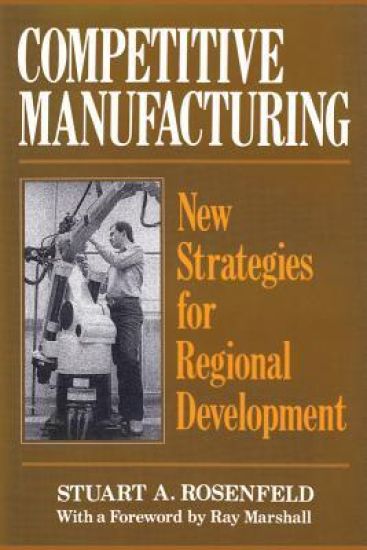
Stuart A. Rosenfeld presents a timely analysis of the problems the United States and other industrialized countries face as they adjust from economies based on natural resources and goods to economies based on quality of human resources and high-performance, market-oriented organizations. Some of the questions raised include: Will American industry successfully face the competitive challenge of the global economy? Can US manufacturing raise productivity and innovate enough to remain healthy? Have the latest advances in process technology and management practice penetrated the rural industrial base? How can public policy help improve the competitiveness of the crucial manufacturing sector?This book challenges the conventional wisdom in economic development policy. Past state and local industrial policy focused on locational decisions, not on issues of competitiveness. Building the competitive advantage of industry is more important than promoting the competitive advantages of location. Incentives to modernize are more important than subsidies to locate.Competitive Manufacturing uses the rural South, the most industrialized rural region of the nation, to examine the strengths and weaknesses of manufacturing as the basis for economic growth. Using historical analysis, surveys, and intensive case studies, the author analyzes the technological capabilities of rural manufacturing, the factors that influence the decision to modernize, and the effects of technology on education and work. Comparative studies in Denmark and Italy point to new directions for US economic development policy.

An insightful academic study of the survival of primal Celtic shamanism in later folk-traditions of Gaelic speaking peoples.

In Building Bridges, Stuart A. Pizer gives much-needed recognition to the central role of negotiation in the analytic relationship and in the therapeutic process. Building on a Winnicottian perspective that comprehends paradox as the condition for preserving an intrapsychic and relational “potential space,” Pizer explores how the straddling of paradox requires an ongoing process of negotiation and demonstrates how such negotiation articulates the creative potential within the potential space of analysis.Following careful review of Winnicott’s perspective on paradox—via the pairings of privacy and interrelatedness, isolation and interdependence, ruthlessness and concern, and the notion of transitional phenomena—Pizer locates these elemental paradoxes within the negotiations of an analytic process. Together, he observes, analyst and patient negotiate the boundaries, potentials, limits, tonalities, resistances, and meanings that determine the course of their clinical dialogue. Elaborating on the theme of a multiply constituted, “distributed” self, Pizer presents a model for the tolerance of paradox as a developmental achievement related to ways in which caretakers function as “transitional mirrors.” He then explores the impact of trauma and dissociation on the child’s ability to negotiate paradox and clarifies how negotiation of paradox differs from negotiation of conflict. Pizer also broadens the scope of his study by turning to negotiation theory and practices in the disciplines of law, diplomacy, and dispute resolution.Enlivened by numerous clinical vignettes and a richly detailed chronicle of an analytic case from its earliest negotiations to termination,Building Bridges adds a significant dimension to theoretical understanding and clinical practice. Now republished as a Classic Edition with an Introduction by Donnel Stern, this book is altogether a psychoanalytic work of our time.

In Building Bridges, Stuart A. Pizer gives much-needed recognition to the central role of negotiation in the analytic relationship and in the therapeutic process. Building on a Winnicottian perspective that comprehends paradox as the condition for preserving an intrapsychic and relational “potential space,” Pizer explores how the straddling of paradox requires an ongoing process of negotiation and demonstrates how such negotiation articulates the creative potential within the potential space of analysis.Following careful review of Winnicott’s perspective on paradox—via the pairings of privacy and interrelatedness, isolation and interdependence, ruthlessness and concern, and the notion of transitional phenomena—Pizer locates these elemental paradoxes within the negotiations of an analytic process. Together, he observes, analyst and patient negotiate the boundaries, potentials, limits, tonalities, resistances, and meanings that determine the course of their clinical dialogue. Elaborating on the theme of a multiply constituted, “distributed” self, Pizer presents a model for the tolerance of paradox as a developmental achievement related to ways in which caretakers function as “transitional mirrors.” He then explores the impact of trauma and dissociation on the child’s ability to negotiate paradox and clarifies how negotiation of paradox differs from negotiation of conflict. Pizer also broadens the scope of his study by turning to negotiation theory and practices in the disciplines of law, diplomacy, and dispute resolution.Enlivened by numerous clinical vignettes and a richly detailed chronicle of an analytic case from its earliest negotiations to termination,Building Bridges adds a significant dimension to theoretical understanding and clinical practice. Now republished as a Classic Edition with an Introduction by Donnel Stern, this book is altogether a psychoanalytic work of our time.

Church Life and Thought in North Africa AD 200
Stuart A. Donaldson
Cambridge University Press
2013
pokkari
Stuart A. Donaldson was an admired scholar, Master of Magdalene College, Cambridge, and Vice-Chancellor of Cambridge University from 1912 to 1913. This book is a detailed study of the Church in North Africa in AD 200, and was first published in 1909. With specific focus on the writings of Tertullian, Donaldson writes in depth about Christian Doctrine and Practice in the North African Church. The text is made accessible to all by the careful translation of Greek and Latin passages into English. Donaldson discusses early North African Eucharist, creed and prayer, as well as explaining the threefold order of government in the Church. His other chapters explore North African Martyrs, Monatism and the Bible, and there is also an intriguing section on those other religions which stood to rival Christianity in 200 AD.
Loss Models: From Data to Decisions, 4e Student Solutions Manual
Stuart A. Klugman; Harry H. Panjer; Gordon E. Willmot
John Wiley Sons Inc
2012
nidottu
Student Solutions Manual to Accompany Loss Models: From Data to Decisions, Fourth Edition. This volume is organised around the principle that much of actuarial science consists of the construction and analysis of mathematical models which describe the process by which funds flow into and out of an insurance system.