First published in 1986. This volume brings together five lectures which were originally delivered at different sessions of the famous Eranos Conferences in Ascona, Switzer#2;land. Henry Corbin himself had outlined the plan for this book, whose title suggests that these diverse studies converge on a common spiritual centre.
Another brilliant Wilde/Chase thriller from one of the best in the business - Andy McDermott.Archaeologist Nina Wilde's life has fallen apart. Her husband, ex-SAS soldier Eddie Chase is on the run, falsely accused of murder, and her only distraction has been investigating the origin of three strange statues stolen from her just before Eddie's disappearance. When Nina discovers they may be relics from the lost civilisation of Atlantis, it's clear that she has to get her head back in the game, and fast.Eddie, meanwhile, tries to stay ahead of the authorities as he hunts the man responsible for his fugitive status across the globe. A mysterious benefactor offers the information he needs - but the price will put him in direct conflict with his wife.When Nina learns that a Japanese industrialist has obtained the statues on the black market she immediately heads to Tokyo meet him, unaware that Eddie is already on his way. Their arrival unleashes a chain of events that could have devastating consequences for the world, setting Nina and Eddie on their most dangerous quest ever - with the future of humanity itself at stake...
Discover the astrological meaning of the ancient Egyptian decans, their correspondence to gods and the afterlife, and how each individual’s decan placement defines their experiences. Astrologers divide each of the 12 zodiac signs into three parts, called decans. The ancient Egyptians had an independent system of decans that is now all but forgotten. This form of astrology was not oriented toward the affairs of the living but was aimed at helping the soul achieve enlightenment after death. Each of the decans was associated with a powerful Egyptian god who would protect the soul as it traveled through their particular area of the heavens. Temple of the Stars provides in-depth explanations for each decan, including its symbol, associated god, and well-known figures born under the same placement, and it explores how that decan defines the realities and spiritual problems of the modern individual. Through a combination of empirical and intuitive methods, this book arrives at penetrating new interpretations both of the decans and the astrological signs.
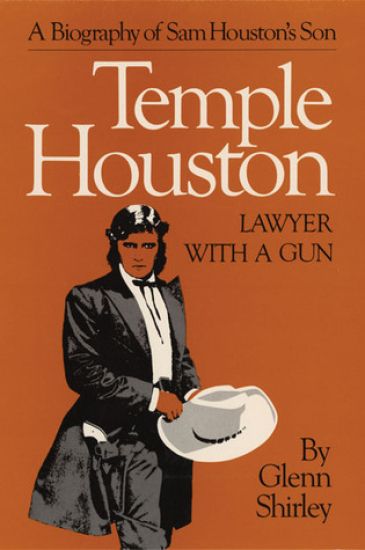
A lively biography of Sam Houston's illustrious sonThe youngest son of General Sam Houston and Margaret Lea Houston, Temple Lea Houston lived his comparatively short life fast and hard. From 1881 to 1905, he was one of the Southwest's most brilliant, eccentric, and widely known criminal lawyers. This is the story of Temple Houston's decision to give up a political future in Texas, escape the shadow of his famous father, and seek fame and fortune in Oklahoma Territory.In several high-profile cases, Houston earned fame as a silver-tongued defense attorney. His clients were murderers, cattle thieves, gunfighters, and prostitutes. The writer Edna Ferber later immortalized Houston by using him as the model for Yancey Cravat, the glittering hero of her novel Cimarron.This carefully researched biography is enriched with lively narratives of the colorful events and characters that brightened territorial days. A vivid story colorfully told, Temple Houston is western Americana at its best.
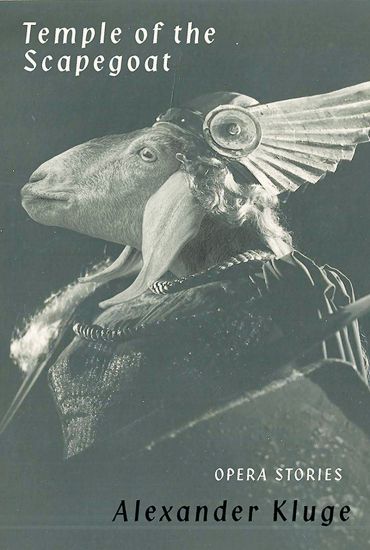
Combining fact and fiction, each of the one hundred and two tales of Alexander Kluge’s Temple of the Scapegoat (dotted with photos of famous operas and their stars) compresses a lifetime of feeling and thought: Kluge is deeply engaged with the opera and an inventive wellspring of narrative notions. The titles of his stories suggest his many turns of mind: “Total Commitment,” “Freedom,” “Reality Outrivals Theater,” “The Correct Slowing-Down at the Transitional Point Between Terror and an Inkling of Freedom,” “A Crucial Character (Among Persons None of Whom Are Who They Think They Are),” and “Deadly Vocal Power vs. Generosity in Opera.” An opera, Kluge says, is a blast furnace of the soul, telling of the great singer Leonard Warren who died onstage, having literally sung his heart out. Kluge introduces a Tibetan scholar who realizes that opera “is about comprehension and passion. The two never go together. Passion overwhelms comprehension. Comprehension kills passion. This appears to be the essence of all operas, says Huang Tse-we.” He also comes to understand that female roles face the harshest fates: “Compared to the mass of soprano victims (out of 86,000 operas, 64,000 end with the death of the soprano), the sacrifice of tenors is small (out of 86,000 operas 1,143 tenors are a write-off).”
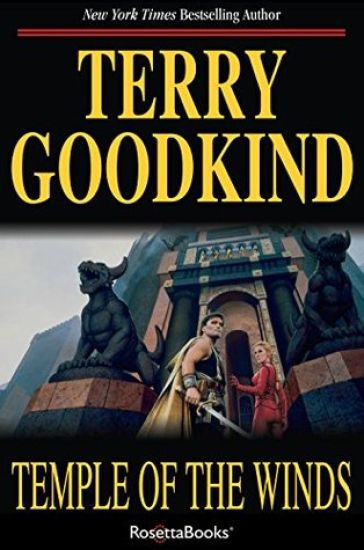
On the red moon will come the firestorm...Wielding the Sword of Truth, Richard Rahl has battled death itself and come to the defense of the D'Haran people. But now the power-mad Emperor Jagang confronts Richard with a swift and inexorable foe: a mystical plague cutting a deadly swath across the land and slaying thousands of innocent victims.To quench the inferno, he must seek remedy in the wind...To fight it Richard and his beloved Kahlan Amnell will risk everything to uncover the source of the terrible plague-the magic sealed away for three millennia in the Temple of the Winds.Lightning will find him on that path...But when prophecy throws the shadow of betrayal across their mission and threatens to destroy them, Richard must accept the Truth and find a way to pay the price the winds demand...or he and his world will perish.
This collection raises timely questions about peace and stability as it interrogates the past and present status of international relations. The post–World War II liberal international order, upheld by organizations such as the United Nations, the North Atlantic Treaty Organization, and similar alliances, aspired to ensure decades of collective security, economic stability, and the rule of law. All of this was a negotiated process that required compromise—and yet it did not make for a peaceful world. When Winston Churchill referred to the UN framework as "the temple of peace" in his famous 1946 Iron Curtain speech, he maintained that international alliances could help provide necessary stability so free people could prosper, both economically and politically. Though the pillars of international order remain in place today, in a world defined as much by populism as protest, leaders in the United States no longer seem inclined to serve as the indispensable power in an alliance framework that is built on shared values, human rights, and an admixture of hard and soft power. In this book, nine scholars and practitioners of diplomacy explore both the successes and the flaws of international cooperation over the past seventy years. Collectively, the authors seek to address questions about how the liberal international order was built and what challenges it has faced, as well as to offer perspectives on what could be lost in a post-American world.
This collection raises timely questions about peace and stability as it interrogates the past and present status of international relations. The post–World War II liberal international order, upheld by organizations such as the United Nations, the North Atlantic Treaty Organization, and similar alliances, aspired to ensure decades of collective security, economic stability, and the rule of law. All of this was a negotiated process that required compromise—and yet it did not make for a peaceful world. When Winston Churchill referred to the UN framework as "the temple of peace" in his famous 1946 Iron Curtain speech, he maintained that international alliances could help provide necessary stability so free people could prosper, both economically and politically. Though the pillars of international order remain in place today, in a world defined as much by populism as protest, leaders in the United States no longer seem inclined to serve as the indispensable power in an alliance framework that is built on shared values, human rights, and an admixture of hard and soft power. In this book, nine scholars and practitioners of diplomacy explore both the successes and the flaws of international cooperation over the past seventy years. Collectively, the authors seek to address questions about how the liberal international order was built and what challenges it has faced, as well as to offer perspectives on what could be lost in a post-American world.
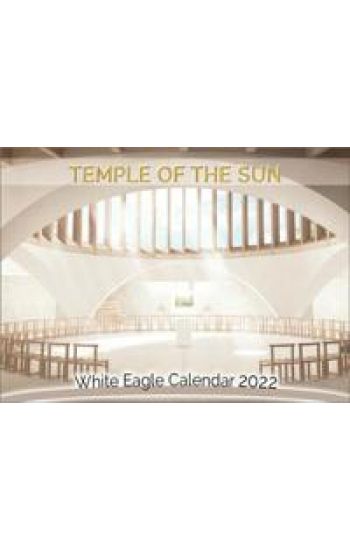
An artist's impression of the inside of the new White Eagle temple at New Lands is depicted on the cover of this 2022 White Eagle Calendar. The sun's rays flow through a clerestory filling the temple with light, and are symbolic of the rays from the spiritual Sun which reach us constantly, sustaining all life on Earth. The White Eagle teaching, accompanied by beautiful photos, is connected with historic temples, but shows how that same energy of the spiritual sun is as significant today as it always was, and vital for our wellbeing on every level. The physical temple is an inspiring reminder of the spiritual temple each one of us is in the process of building - a temple to perfectly house our spiritual nature, and fully reflect divine compassion. The calendar is designed to be a companion in the home or workplace. It is spiral-bound to be hung and has a cardboard backing so it can also be placed on a desk or table.
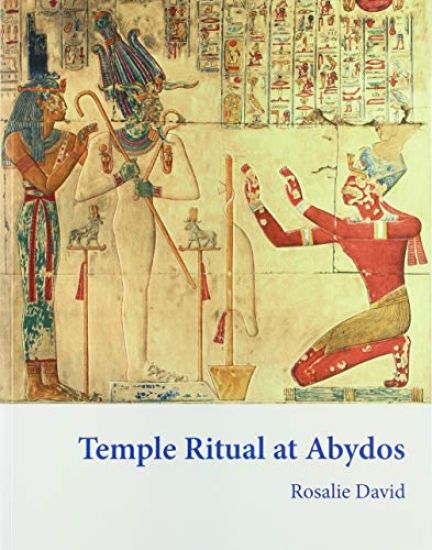
The Temple of Sethos I at Abydos is one of the best-preserved monuments from the New Kingdom. This work was 1st published in two now long-out-of-print but much sought-after classics: Religious Ritual at Abydos (1973), and A Guide to Religious Ritual at Abydos (1981). This edition incorporates new material: a complete set of translations of the ritual inscriptions with their transliterations; simplified line drawings of the temple scenes; photographs from the archives of the Egypt Exploration Society; and images from A. M. Calverley and M. F. Broome, The Temple of King Sethos I at Abydos, available for the 1st time in a practical and affordable format.
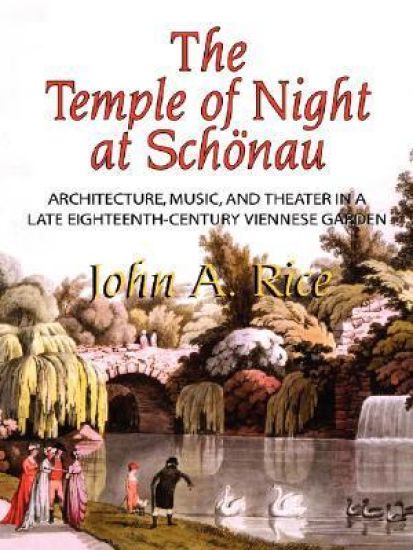
Between 1796 & 1800 Baron Peter von Braun, a rich businessman & manager of Vienna's court theaters, transformed his estate at Schonau into an English-style landscape park. The most celebrated building was the Temple of Night, a domed rotunda accessible only through a meandering rockwork grotto. A life-size statue of the goddess Night on a chariot pulled by two horses presided over the Temple, while from the dome, came the sounds of a mechanical musical instrument. Only the ruins survive, & the Temple has received little scholarly attention. This book brings it back to life by assembling the descriptions of it by early 19th-cent. eyewitnesses. "Will appeal to anyone interested in the history of garden design, arch., theater, & music." Illus.
In this guide to the cosmology of ancient Egypt, Jeremy Naydler recreates the experience of living in another time and place. Temple of the Cosmos explores Egypt's sacred geography and mythology; but more importantly, it reveals with unprecedented clarity an ancient consciousness in tune with the rhythms of the earth. The ancient Egyptians experienced their gods not as remote beings but rather as psychic and natural forces, transpersonal energies that played a part in everyday life. This direct experience of the gods shaped the Egyptian concepts of human development, healing, magic, and the soul's journey through the Underworld as described in the Books of the Dead. While building on the pioneering efforts of R. A. Schwaller de Lubicz and others, Temple of the Cosmos is much more than a recapitulation of previous theories of Egyptian spirituality. Rather, this book breaks new ground by placing the work of other Egyptologists in an original, magical context. The result is a brilliant reimagining of the Egyptian worldview and its sacred path of spiritual unfolding.
The Temple of Solomon completes the trilogy dealing with the dwelling places of God in the Old Testament. Kevin Conner's study yields rich and precious truths concerning Christ and His church. These truths are tied into the New Testament as the church is presented as the "Temple of God."