
Kirjahaku
Etsi kirjoja tekijän nimen, kirjan nimen tai ISBN:n perusteella.
1000 tulosta hakusanalla Theodore Bennett
Theodore Roosevelt, the Progressive Party, and the Transformation of American Democracy
Sidney M. Milkis
University Press of Kansas
2009
nidottu
Led by Theodore Roosevelt, the Progressive Party made the 1912 campaign a passionate contest for the soul of the American people. Promoting an ambitious program of economic, social, and political reform—“New Nationalism”—that posed profound challenges to constitutional government, TR and his Progressive supporters provoked an extraordinary debate about the future of the country. Sidney Milkis revisits this emotionally charged contest to show how a party seemingly consumed by its leader’s ambition dominated the election and left an enduring legacy that set in motion the rise of mass democracy and the expansion of national administrative power.Milkis depicts the Progressive Party as a collective enterprise of activists, spearheaded by TR, who pursued a program of reform dedicated to direct democracy and social justice and a balance between rights and civic duty. These reformers hoped to create a new concept of citizenship that would fulfil the lofty aspirations of “we the people” in a quest for a “more perfect union”—a quest hampered by fierce infighting over civil rights and antitrust policy.Milkis shows that the Progressive campaign aroused not just an important debate over reforms but also a battle for the very meaning of Progressivism. He describes how Roosevelt gave focus to the party with his dedication to “pure democracy”—even shoehorning judicial recall into his professed “true conservative” stance. Although this pledge to make the American people “masters of their Constitution” provoked considerable controversy, Milkis contends that the Progressives were not all that far removed from the more nationally minded of the Founders.As Milkis reveals, the party’s faith in a more plebiscitary form of democracy would ultimately rob it of the very organization it needed in order to survive after Roosevelt. Yet the Progressive Party’s program of social reform and “direct democracy” has reverberated through American politics—especially in 2008, with Barack Obama appealing to similar instincts. By probing the deep historical roots of contemporary developments in American politics, his book shows that Progressivism continues to shape American politics a century later.
Theodore Roosevelt and the American Political Tradition
Jean M. Yarbrough
University Press of Kansas
2014
nidottu
Rough Rider, hunter, trust-buster, president and Bull Moose candidate. Biographers have long fastened on TR as man of action, while largely ignoring his political thought. Now, in time for the centennial of his Progressive run for the presidency, Jean Yarbrough provides a searching examination of TR’s political thought, especially in relation to the ideas of Washington, Hamilton and Lincoln - the statesmen TR claimed most to admire.Yarbrough sets out not only to explore Roosevelt’s vision for America but also to consider what his political ideas have meant for republican self-government. She praises TR for his fighting spirit, his love of country and efforts to promote republican greatness, but faults him for departing from the political principles of the more nationalistic Founders he esteemed. With the benefit of hindsight, she argues that the progressive policies he came to embrace have over time undermined the very qualities Roosevelt regarded as essential to civic life. In particular, the social welfare policies he championed have eroded industry and self-reliance; the expansion of the regulatory state has multiplied the special interests seeking access to political power; and the bureaucratic experts in whom he reposed such confidence have all too often turned out to be neither disinterested nor effective.Yarbrough argues that TR’s early historical studies - inspired by Darwinian biology and Hegelian political thought - treated westward expansion from an evolutionary and developmental perspective that placed race and conquest at the centre of the narrative, while relegating individual rights and consent of the governed to the sidelines.Although his early career showed him to be a moderate Republican reformer, Yarbrough argues that even then he did not share Hamilton’s enthusiasm for the commercial republic and substituted an appeal to “abstract duty” for The Federalist’s reliance on self-interest. As New York governor and first-term president, TR attempted to strike a “just balance” between democratic and oligarchic interests, but by the end of his presidency he had tipped the balance in favour of progressive policies. From the New Nationalism until his death in 1919, Roosevelt continued to claim the mantle of Washington and Lincoln, even as he moved further from their political principles.Through careful examination of TR’s political thought, Yarbrough’s book sheds new light on his place in the American political tradition, while enhancing our understanding of the roots of progressivism and its transformation of the Constitution.
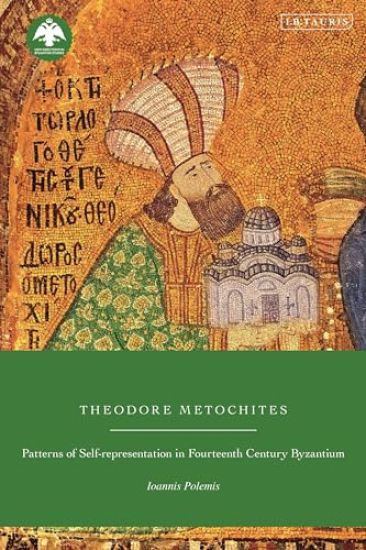
The statesman and scholar Theodore Metochites was one of the most important personalities of the fourteenth-century Byzantine Empire. A close advisor to the emperor Andronikos II and restorer of the famous monastery of Chora in Constantinople, Metochites left various writings including orations, poems, essays and commentaries on classical and religious texts, in which he discusses the numerous problems that troubled him and his contemporaries, such as the decline of the state and the tension between public life and that of the philosopher.In this book, Ioannis Polemis provides the first in-depth study of Metochites’ oeuvre, revealing the complex way he represented the authorial self to critique the politics and mores of his day, whilst at the same time shielding himself from potential criticism. Polemis details the way Metochites deftly manipulated figures and tropes from classical antiquity and early Christianity to justify his role in public life, which was traditionally shunned by scholars in the pursuit of ‘logos’. The book provides unique insights into one of the late Empire’s most important figures, as well as more widely deepening our understanding of classical reception in Byzantium and the social, political and intellectual climate of Constantinople in the fourteenth century.
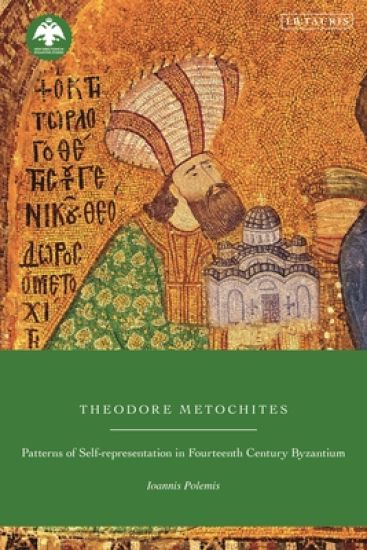
The statesman and scholar Theodore Metochites was one of the most important personalities of the fourteenth-century Byzantine Empire. A close advisor to the emperor Andronikos II and restorer of the famous monastery of Chora in Constantinople, Metochites left various writings including orations, poems, essays and commentaries on classical and religious texts, in which he discusses the numerous problems that troubled him and his contemporaries, such as the decline of the state and the tension between public life and that of the philosopher.In this book, Ioannis Polemis provides the first in-depth study of Metochites’ oeuvre, revealing the complex way he represented the authorial self to critique the politics and mores of his day, whilst at the same time shielding himself from potential criticism. Polemis details the way Metochites deftly manipulated figures and tropes from classical antiquity and early Christianity to justify his role in public life, which was traditionally shunned by scholars in the pursuit of ‘logos’. The book provides unique insights into one of the late Empire’s most important figures, as well as more widely deepening our understanding of classical reception in Byzantium and the social, political and intellectual climate of Constantinople in the fourteenth century.
Harness the Power of TR's CharismaTheodore Roosevelt was a leader of uncommon strength who, through the sheer force of his extraordinary will, turned America into a modern world power. Thrown headfirst into the presidency by the assassination of his predecessor, he led with courage, character, and vision in the face of overwhelming challenges, whether busting corporate trusts or building the Panama Canal. Roosevelt has been a hero to millions of Americans for over a century and is a splendid model to help you master today's turbulent marketplace and be a hero and a leader in your own organization.
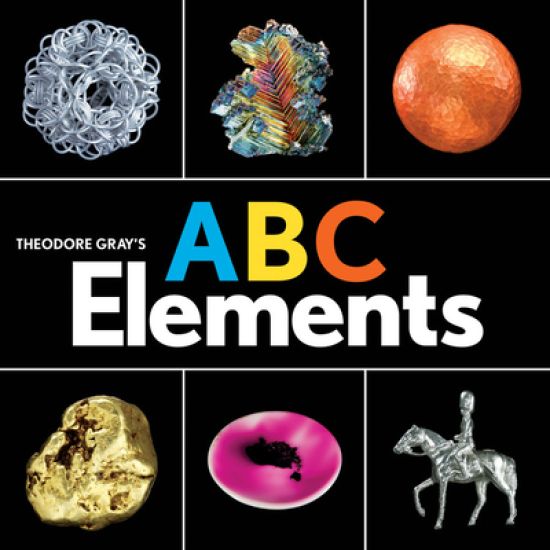
A delightful new Elements board book that teaches baby, 0-3, all about the ABCs and the elements of the periodic table at the same time. With baby-friendly text and big, bright colorful photographs!ABC ELEMENTS features 26 elements that represent each of the letters of the alphabet-A for Aluminum, B for Bismuth, C for Copper etc. Each letter of the alphabet will be illustrated with a big, beautiful photograph of the element from Theodore Gray's famous photographic element collection.
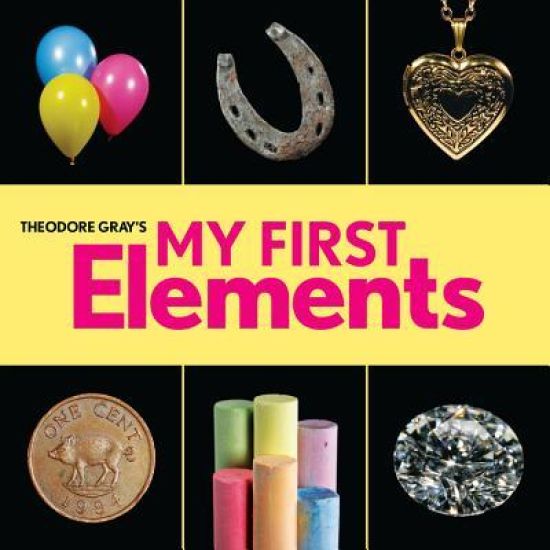
Introduce Baby to the wonderful, colorful elements that make up his or her world!This board book for babies, ages 6 months to 3 years, features big, bold, and bright photography from Theodore Gray's bestselling adult book The Elements, paired with delightful, baby-friendly text. My First Elements includes 10 elements, one per spread. Each spread features a big photograph of the element on one page, such as an iron horseshoe or nugget of gold. The opposite page shows photographs of the places in baby's world where the element is found from balloons for helium to a swimming pool for chlorine to seaweed for iodine.
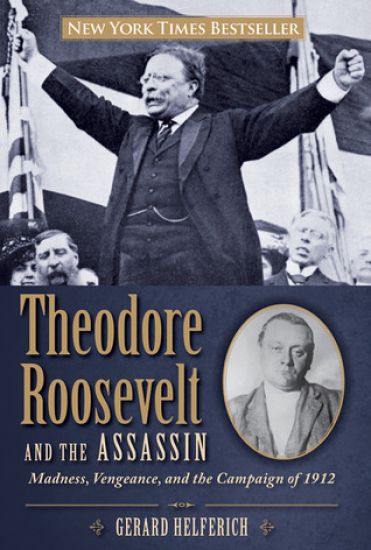
A New York Times Bestseller, rich with local color, period detail, and a fully realized historical and political backdrop, that tells the forgotten story of the lone, fanatical assailant who stalked Theodore Roosevelt on the 1912 presidential campaign trail until the evening of October 14 in Milwaukee, when he shot the Bull Moose in the chest from ten feet away
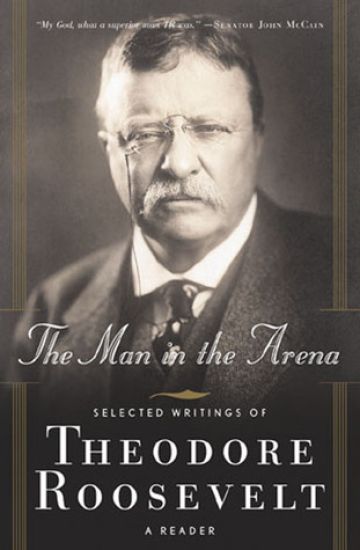
The Man in the Arena: Selected Writings of Theodore Roosevelt: A Reader
Theodore Roosevelt
Forge
2004
nidottu
The first compilation of selections from the major works of Teddy Roosevelt since the resurgence in his popularity due to the major award-winning/bestselling biographies by Edmond Morris and H. W. Brands By the time he was twenty-five the future president of the United States was already a published author. From The Naval War of 1812 through his four-volume Winning of the West, Teddy Roosevelt proved himself a master historian...but one must not make the mistake of labeling him a stodgy academic. The future president was also a great outdoorsman, with such works as Ranch Life and the Hunting Trail and African Game Trails capturing his rough and ready lifestyle. Theodore Roosevelt was part Francis Parkman, part Lowell Thomas, and one hundred percent spirit of America and master of the printed page. The Man in the Arena collects self-contained excerpts from some of his greatest works, including such revealing memoirs as The Rough Riders, the Autobiography, and Through the Brazilian Wilderness, in an effort to capture the many aspects of a great American who was indeed larger than life and his own best "Boswell." "This collection of his writings gives credence to Henry Adams's assertion that Roosevelt was "pure Act" there was, it seems, no subject (or foe) he was afraid to tackle. " - Publishers Weekly
Theodore Roosevelt's Letters to His Children (1919)
Theodore Roosevelt
KESSINGER PUBLISHING CO
2003
pokkari
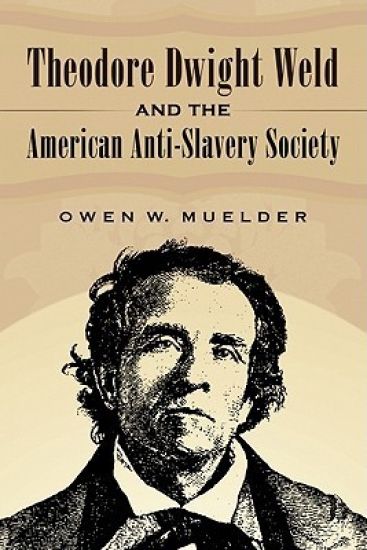
Theodore Dwight Weld and the American Anti-Slavery Society
Owen W. Muelder
McFarland Co Inc
2011
pokkari
In the 1830s, the abolitionist movement gained remarkable momentum due in large measure to the establishment of the American Anti-Slavery Society and the work carried out by one of its most important leaders, Theodore Dwight Weld. One of Weld's most significant accomplishments was the recruitment of a group of key abolitionist agents, known as the "Seventy," who worked to expand the reach of abolitionist thought and action and enlisted new members into the movement. This volume chronicles the founding, development, and mission of the American Anti-Slavery Society, the contributions of Weld, and the crusading efforts of the agents he assembled. With the most complete list to date of the identities of the Seventy, this work constitutes a valuable contribution to the history of the abolitionist movement.
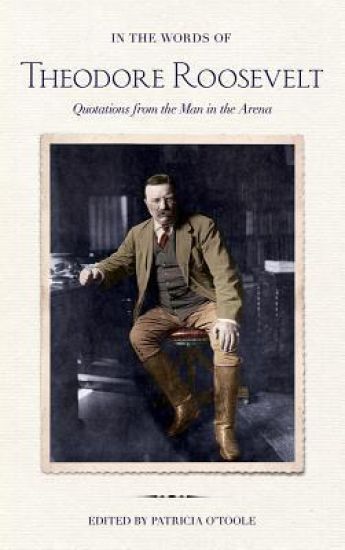
"We cannot do great deeds unless we are willing to do the small things that make up the sum of greatness."—on Action "The American people are good-natured to the point of lax indifference; but once roused, they act with the most straightforward and practical resolution."—on America "Speak softly and carry a big stick—you will go far. If a man continually blusters, if he lacks civility, a big stick will not save him from trouble; and neither will speaking softly avail, if back of the softness there does not lie strength, power."—on the Big Stick "We are, as a whole, still in that low state of civilization where we do not understand that it is also vandalism wantonly to destroy or to permit the destruction of what is beautiful in nature, whether it be a cliff, a forest, or a species of mammal or bird. Here in the United States we turn our rivers and streams into sewers and dumping-grounds, we pollute the air, we destroy forests, and exterminate fishes, birds and mammals—not to speak of vulgarizing charming landscapes with hideous advertisements. But at last it looks as if our people were awakening."—on Natural Resources The public life of Theodore Roosevelt (1858–1919) was marked by his service as the twenty-sixth President of the United States, Vice President, Governor of New York State, Assistant Secretary of the Navy, U.S. Civil Service Commissioner, President of the New York City Police Commission, and New York State Assemblyman. In his life outside of government he was famous as an author, naturalist, rancher, big game hunter, and explorer. The twentieth century would become known as the American Century, and it was Theodore Roosevelt, through his foreign policy, who ushered the United States into the ranks of the world's great powers. In domestic affairs, he used his presidential powers to level the playing field between capital and labor, to protect consumers, and to establish a conservation program that was far-sighted and comprehensive, covering the nation's natural resources, its wilderness areas, its endangered species, its scenic beauty, and the cultural artifacts of its indigenous peoples. Distilled from Roosevelt's voluminous writings and speeches, In the Words of Theodore Roosevelt is a discerning collection of quotations by this American icon who continues to inspire and captivate an extraordinary array of twenty-first-century Americans. Carefully selected and organized by topic by Patricia O'Toole, these quotations reflect the vast range of Roosevelt's interests, the depth of his wisdom, his almost superhuman energy, and his directness. Many of the issues that Roosevelt addressed—from America's international role to the environment—remain pressing concerns today, giving his century-old words remarkable currency. This singular collection of quotations—enhanced by O'Toole's illuminating introductory essay, notes on biographical and historical context, and bibliographies of Roosevelt's writings—is a trove for writers, teachers, students, and all who recognize Theodore Roosevelt's unique role in U.S. history.
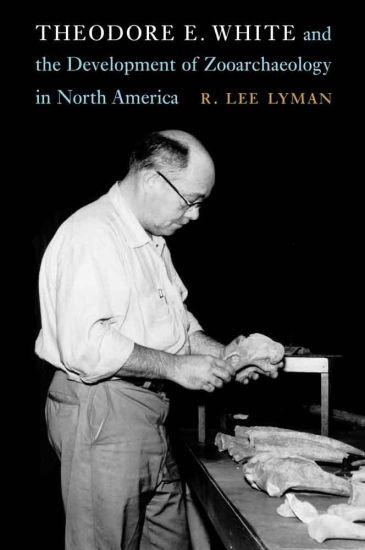
Theodore E. White and the Development of Zooarchaeology in North America
R. Lee Lyman
University of Nebraska Press
2016
sidottu
Theodore E. White and the Development of Zooarchaeology in North America illuminates the researcher and his lasting contribution to a field that has largely ignored him in its history. The few brief histories of North American zooarchaeology suggest that Paul W. Parmalee, John E. Guilday, Elizabeth S. Wing, and Stanley J. Olsen laid the foundation of the field. Only occasionally is Theodore White (1905–77) included, yet his research is instrumental for understanding the development of zooarchaeology in North America. R. Lee Lyman works to fill these gaps in the historical record and revisits some of White’s analytical innovations from a modern perspective. A comparison of publications shows that not only were White’s zooarchaeological articles first in print in archaeological venues but that he was also, at least initially, more prolific than his contemporaries. While the other “founders” of the field were anthropologists, White was a paleontologist by training who studied long-extinct animals and their evolutionary histories. In working with remains of modern mammals, the typical paleontological research questions were off the table simply because the animals under study were too recent. And yet White demonstrated clearly that scholars could infer significant information about human behaviors and cultures. Lyman presents a biography of Theodore White as a scientist and a pioneer in the emerging field of modern anthropological zooarchaeology.
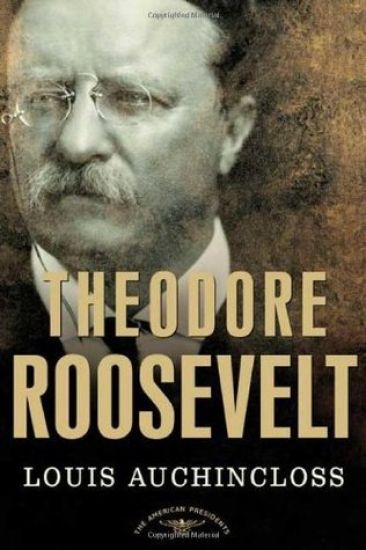
Louis Auchincloss's warm and knowing biography introduces us to the man behind the many myths of Theodore Roosevelt. From his early involvement in the politics of New York City and then New York State, we trace his celebrated military career and finally his ascent to the national political stage. Caricatured through history as the "bull moose," Roosevelt was in fact a man of extraordinary discipline whose refined and literate tastes actually helped spawn his fascination with the rough-and-ready worlds of war and wilderness.
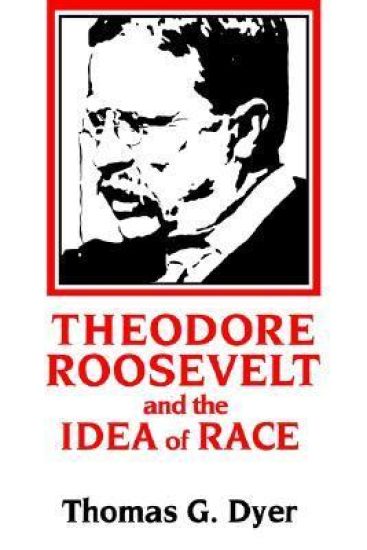
Theodore Roosevelt and the Idea of Race
Thomas G. Dyer
Louisiana State University Press
1992
nidottu
This provocative study examines Theodore Roosevelt's ideas about race, focusing especially on his attitude toward blacks, American Indians, immigration, and imperialism. Thomas G. Dyer gives careful attention to formal and nonformal aspects of Roosevelt's thought, as revealed in his voluminous published works and personal papers.Dyer's book asks a number of important questions. In what proportions do popular thought and formal racial theory appear in Roosevelt's attitudes? What was the intellectual context of his speculations on race? How was his racial thought related to broader areas of intellectual activity such as natural science and social philosophy? How did Roosevelt regard various white and nonwhite ethnic groups? How did Roosevelt's racial thought conform to the prevailing philosophies of the late nineteenth and early twentieth centuries?Historians have traditionally disagreed about the character of Theodore Roosevelt's racial ideology. Dyer's illuminating study clarifies many of the relevant issues by viewing Roosevelt's racial theory as an integrated whole.
In this critical study of Theodore Roethke's poetry, Peter Balakian treats the evolution of the poet's work from his first book, Open House (1941), to his last, The Far Field (1964). Balakian argues that Roethke was among the most innovative poets of his time and that The Lost Son and Other Poems (1948) brought America to a new frontier in the contemporary era. Balakian maintains that Roethke combined and furthered major traditions in English and American poetry -- the formal poetics and meditative sensibility of British metaphysical and Romantic poetry, the American visionary tradition, and the innovations of modernism. The early chapters of the book explore Roethke's intellectual, religious, and psychological development and his development as a poet. Balakian discusses the influence of William Carlos Williams on Roethke's work and claims that the relationship between the two poets provided Roethke with a sense of the American grain. Later chapters treat the shift from self-absorption to union with otherness that marks Roethke's love poems, exploring the poet's development of mysticism and a poetic persona and examining the influences of Eliot and Whitman on his work. Balakian also discusses the metaphysical language necessary for Roethke's late poems and follows Roethke's spiritual progress as he prophetically faces his final work. In presenting the evolution of Roethke's career, Balakian offers fresh and original readings of the poetry. He avoids any monolithic approach to the body of Roethke's work, employing instead various approaches to Roethke's stages of poetic evolution. Balakian makes use of the psychology of C.G. Jung and Erich Neumann, the writings of the mystics, the aesthetics of William Carlos Williams, and the myth of the American frontier. With a literary historian's concern for Roethke's place in history and a critic's eye for the sources and structures of poetry, Balakian studies the resonances of language and the inner life of this poet's craft. Theodore Roethke's Far Fields places Roethke firmly in literary and intellectual history and asserts his place as a major poet.
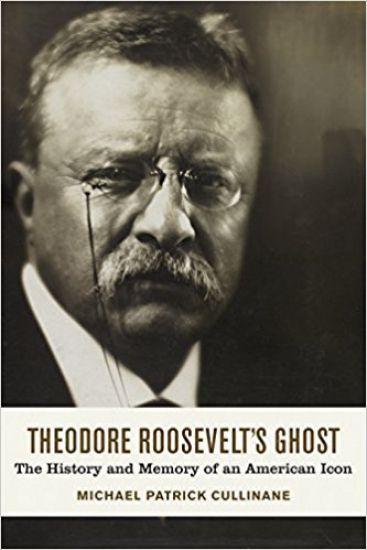
A century after his death, Theodore Roosevelt remains one of the most recognizable figures in U.S. history, with depictions of the president ranging from the brave commander of the Rough Riders to a trailblazing progressive politician and early environmentalist to little more than a caricature of grinning teeth hiding behind a mustache and pince-nez. Theodore Roosevelt's Ghost follows the continuing shifts and changes in this president's reputation since his unexpected passing in 1919.In the most comprehensive examination of Roosevelt's legacy, Michael Patrick Cullinane explores the frequent refashioning of this American icon in popular memory. The immediate aftermath of Roosevelt's death created a groundswell of mourning and goodwill that ensured his place among the great Americans of his generation, a stature bolstered by the charitable and political work of his surviving family. When Franklin Roosevelt ascended to the presidency, he worked to situate himself as the natural heir of Theodore Roosevelt, reshaping his distant cousin's legacy to reflect New Deal values of progressivism, intervention, and patriotism. Others retroactively adapted Roosevelt's actions and political record to fit the discourse of social movements from anticommunism to civil rights, with varying degrees of success. Richard Nixon's frequent invocation led to a decline in Roosevelt's popularity and a corresponding revival effort by scholars endeavoring to give an accurate, nuanced picture of the 26th president.This wide-ranging study reveals how successive generations shaped the public memory of Roosevelt through their depictions of him in memorials, political invocations, art, architecture, historical scholarship, literature, and popular culture. Cullinane emphasizes the historical contexts of public memory, exploring the means by which different communities worked to construct specific representations of Roosevelt, often adapting his legacy to suit the changing needs of the present. Theodore Roosevelt's Ghost provides a compelling perspective on the last century of U.S. history as seen through the myriad interpretations of one of its most famous and indefatigable icons.
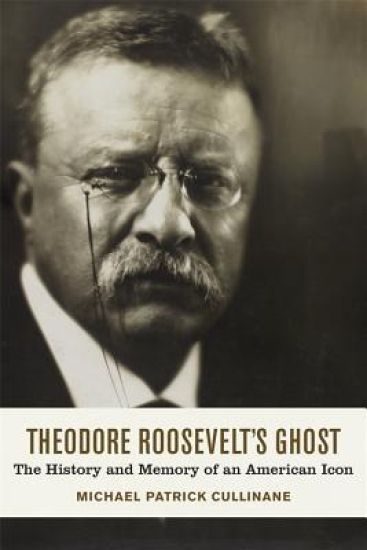
A century after his death, Theodore Roosevelt remains one of the most recognizable figures in U.S. history, with depictions of the president ranging from the brave commander of the Rough Riders to a trailblazing progressive politician and early environmentalist to little more than a caricature of grinning teeth hiding behind a mustache and pince-nez. Theodore Roosevelt's Ghost follows the continuing shifts and changes in this president's reputation since his unexpected passing in 1919.In the most comprehensive examination of Roosevelt's legacy, Michael Patrick Cullinane explores the frequent refashioning of this American icon in popular memory. The immediate aftermath of Roosevelt's death created a groundswell of mourning and goodwill that ensured his place among the great Americans of his generation, a stature bolstered by the charitable and political work of his surviving family. When Franklin Roosevelt ascended to the presidency, he worked to situate himself as the natural heir of Theodore Roosevelt, reshaping his distant cousin's legacy to reflect New Deal values of progressivism, intervention, and patriotism. Others retroactively adapted Roosevelt's actions and political record to fit the discourse of social movements from anticommunism to civil rights, with varying degrees of success. Richard Nixon's frequent invocation led to a decline in Roosevelt's popularity and a corresponding revival effort by scholars endeavoring to give an accurate, nuanced picture of the 26th president.This wide-ranging study reveals how successive generations shaped the public memory of Roosevelt through their depictions of him in memorials, political invocations, art, architecture, historical scholarship, literature, and popular culture. Cullinane emphasizes the historical contexts of public memory, exploring the means by which different communities worked to construct specific representations of Roosevelt, often adapting his legacy to suit the changing needs of the present. Theodore Roosevelt's Ghost provides a compelling perspective on the last century of U.S. history as seen through the myriad interpretations of one of its most famous and indefatigable icons.