

Kirjahaku
Etsi kirjoja tekijän nimen, kirjan nimen tai ISBN:n perusteella.
1000 tulosta hakusanalla Timo Barth


El papel del gen Hr en el desarrollo del cerebro, el intestino y el timo en el ratón
Olga Tacius; Alexei Stepanov
Ediciones Nuestro Conocimiento
2021
nidottu

Il ruolo del gene Hr nello sviluppo del cervello, dell'intestino e del timo nel topo
Olga Tacius; Alexei Stepanov
Edizioni Sapienza
2021
nidottu

O papel do gene Hr no desenvolvimento do cérebro, do intestino e do timo no rato
Olga Tacius; Alexei Stepanov
Edições Nosso Conhecimento
2021
nidottu

Oeuvres complètes de W. Shakespeare; La société. Mesure pour mesure. Timo d'Athènes. Jules César
William Shakespeare
Anatiposi Verlag
2023
nidottu

Oeuvres complètes de W. Shakespeare; La société. Mesure pour mesure. Timo d'Athènes. Jules César
Anatiposi Verlag
2023
sidottu
Modelling Nonlinear Economic Time Series
Timo Teräsvirta; Dag Tjøstheim; Clive W. J. Granger
Oxford University Press
2010
sidottu
This book contains an extensive up-to-date overview of nonlinear time series models and their application to modelling economic relationships. It considers nonlinear models in stationary and nonstationary frameworks, and both parametric and nonparametric models are discussed. The book contains examples of nonlinear models in economic theory and presents the most common nonlinear time series models. Importantly, it shows the reader how to apply these models in practice. For this purpose, the building of various nonlinear models with its three stages of model building: specification, estimation and evaluation, is discussed in detail and is illustrated by several examples involving both economic and non-economic data. Since estimation of nonlinear time series models is carried out using numerical algorithms, the book contains a chapter on estimating parametric nonlinear models and another on estimating nonparametric ones. Forecasting is a major reason for building time series models, linear or nonlinear. The book contains a discussion on forecasting with nonlinear models, both parametric and nonparametric, and considers numerical techniques necessary for computing multi-period forecasts from them. The main focus of the book is on models of the conditional mean, but models of the conditional variance, mainly those of autoregressive conditional heteroskedasticity, receive attention as well. A separate chapter is devoted to state space models. As a whole, the book is an indispensable tool for researchers interested in nonlinear time series and is also suitable for teaching courses in econometrics and time series analysis.
Modelling Nonlinear Economic Time Series
Timo Teräsvirta; Dag Tjøstheim; Clive W. J. Granger
Oxford University Press
2010
nidottu
This book contains an extensive up-to-date overview of nonlinear time series models and their application to modelling economic relationships. It considers nonlinear models in stationary and nonstationary frameworks, and both parametric and nonparametric models are discussed. The book contains examples of nonlinear models in economic theory and presents the most common nonlinear time series models. Importantly, it shows the reader how to apply these models in practice. For this purpose, the building of various nonlinear models with its three stages of model building: specification, estimation and evaluation, is discussed in detail and is illustrated by several examples involving both economic and non-economic data. Since estimation of nonlinear time series models is carried out using numerical algorithms, the book contains a chapter on estimating parametric nonlinear models and another on estimating nonparametric ones. Forecasting is a major reason for building time series models, linear or nonlinear. The book contains a discussion on forecasting with nonlinear models, both parametric and nonparametric, and considers numerical techniques necessary for computing multi-period forecasts from them. The main focus of the book is on models of the conditional mean, but models of the conditional variance, mainly those of autoregressive conditional heteroskedasticity, receive attention as well. A separate chapter is devoted to state space models. As a whole, the book is an indispensable tool for researchers interested in nonlinear time series and is also suitable for teaching courses in econometrics and time series analysis.

This book reveals why the UN is more successful than unilateral great powers in protecting civilians from violence, and focuses on the discourse, development and consequences of UN peacekeeping. Analysing statistics of state fragility and fatalities of violence, it reveals that the UN has managed to save tens of thousands of lives with its peacekeeping: a surprising statistic given the media consensus about the UN’s powerlessness and inefficiency. Using computer-assisted discourse analysis of resolutions from the UN Security Council, 1993-2019, the book offers data that describe the character and development of UN approach to the protection of civilians from violence. It then links the data to the statistics of conflict fatalities and state fragility to reveal, by means of qualitative and quantitative analysis, when, where, how and why the UN has been successful at protecting civilians. Two reasons for the UN’s success are highlighted in the book as being statistically most significant. First, the organization offers local ownership to peaceful solutions by considering conflicting parties as the primary agents of protection. Second, the UN approach is much less power-oriented than unilateral approaches by the great powers: protection for the UN does not mean deterrence or destruction, but rather, support for local protectors of civilians. However, strong great power influence on such operations tends to weaken UN’s ability to save lives.This book will be of much interest to students of humanitarian intervention, peacekeeping, human rights and International Relations in general.
Paper and the British Empire examines the evolution of the paper industry within British organisational frameworks and highlights the role of the Empire as a market and business-making area in a world of shrinking commerce and rising trade barriers.Drawing on a valuable range of primary sources, this book covers the period 1861–1960 and examines events from the establishment of free trade backed by the gold standard to Britain’s membership of the European Free Trade Association. In the field of the paper industry, the speed and intensity of the industrialisation process around the globe have been shaped by a wide variety of variables, including the surrounding institutional framework; entrepreneurial and organisational strategies; the cost and accessibility of transport; and the availability of capital, knowledge, energy resources, and technology. The supply of papermaking raw materials has also been key and has historically been the most important determinant for geographical location and dominance. The research in this work focuses on the roles played by such variants, on the one hand, and demand characteristics on the other. In particular, it considers developments connected to a quest for Empire-grown raw materials in order to tackle the problem of the lack of indigenous raw materials and the resulting dependence on Scandinavian wood pulp imports.This text is of considerable interest to advanced students and researchers in economic history, business history, and the paper industry, and will also be useful to organisations working within the pulp and paper industries.

Towards Glocal Social Work in the Era of Compressed Modernity
Timo Harrikari; Pirkko-Liisa Rauhala
Routledge
2020
nidottu
This book addresses the change of social work in the frame of modernisation. Through Mary Richmond’s classical idea of social work, the book seeks to set current societal trends affecting social work into the context of a long historical line, opening spaces for the new debates within the social work discipline as well as proposing and taking some new directions in the current era of compressed modernity. From the viewpoint of social work, there still is an individual in a situation, however, the situation has profoundly changed during the past hundred years.Divided into seven chapters, topics covered include, firstly, the rethinking of Richmond’s original idea, revisiting the modernisation theories and social transformations as well as discussion on the social work theories and mandates according to the chosen classics. Secondly, the book continues with sketching the pillars of compressed modernity and rethinking the global and local relations. During the era of glocalisation, polycentrism, digitalisation and hybridisation, the previous conceptualisations of social theory have to be reconsidered. Finally, a proposal for glocal social work vision is represented by setting questions which should be taken under scrutinity.Academics, researchers, practising social workers and students of social work, as well as of social policy, administration, social law and other social sciences, will find this book to be an essential text for understanding the current societal changes, trends and tendencies. The book provides a lot of information for policymakers and citizens interested in the background knowledge for the contemporary societal situation.
Social Change and Social Work discusses and examines how social work is challenged by social, political and economic tendencies going on in current societies. The authors ask how social work as a discipline and practice is encountering global and local transformations. Divided into three parts, topics covered include the changing social work mandate throughout history; social work paradigms and theoretical considerations; phenomenological social work; practice research; and gender and generational research. Taken together, the chapters in this anthology provide an authoritative and up-to-date overview of current discussions within the European social work research community.
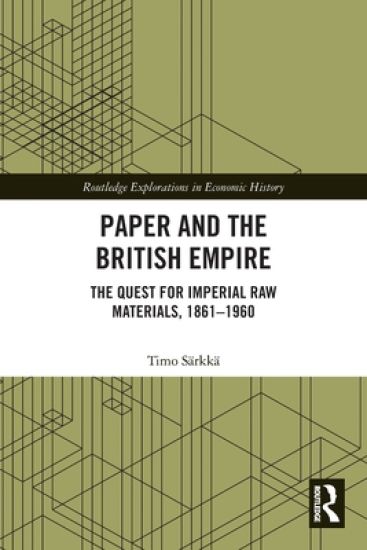
Paper and the British Empire examines the evolution of the paper industry within British organisational frameworks and highlights the role of the Empire as a market and business-making area in a world of shrinking commerce and rising trade barriers.Drawing on a valuable range of primary sources, this book covers the period 1861–1960 and examines events from the establishment of free trade backed by the gold standard to Britain’s membership of the European Free Trade Association. In the field of the paper industry, the speed and intensity of the industrialisation process around the globe have been shaped by a wide variety of variables, including the surrounding institutional framework; entrepreneurial and organisational strategies; the cost and accessibility of transport; and the availability of capital, knowledge, energy resources, and technology. The supply of papermaking raw materials has also been key and has historically been the most important determinant for geographical location and dominance. The research in this work focuses on the roles played by such variants, on the one hand, and demand characteristics on the other. In particular, it considers developments connected to a quest for Empire-grown raw materials in order to tackle the problem of the lack of indigenous raw materials and the resulting dependence on Scandinavian wood pulp imports.This text is of considerable interest to advanced students and researchers in economic history, business history, and the paper industry, and will also be useful to organisations working within the pulp and paper industries.

This book reveals why the UN is more successful than unilateral great powers in protecting civilians from violence, and focuses on the discourse, development and consequences of UN peacekeeping. Analysing statistics of state fragility and fatalities of violence, it reveals that the UN has managed to save tens of thousands of lives with its peacekeeping: a surprising statistic given the media consensus about the UN’s powerlessness and inefficiency. Using computer-assisted discourse analysis of resolutions from the UN Security Council, 1993-2019, the book offers data that describe the character and development of UN approach to the protection of civilians from violence. It then links the data to the statistics of conflict fatalities and state fragility to reveal, by means of qualitative and quantitative analysis, when, where, how and why the UN has been successful at protecting civilians. Two reasons for the UN’s success are highlighted in the book as being statistically most significant. First, the organization offers local ownership to peaceful solutions by considering conflicting parties as the primary agents of protection. Second, the UN approach is much less power-oriented than unilateral approaches by the great powers: protection for the UN does not mean deterrence or destruction, but rather, support for local protectors of civilians. However, strong great power influence on such operations tends to weaken UN’s ability to save lives.This book will be of much interest to students of humanitarian intervention, peacekeeping, human rights and International Relations in general.

The Marquis de Sade is famous for his forbidden novels like Justine, Juliette, and the 120 Days of Sodom. Yet, despite Sade's immense influence on philosophy and literature, his work remains relatively unknown. His novels are too long, repetitive, and violent. At last in The Philosophy of the Marquis de Sade, a distinguished philosopher provides a theoretical reading of Sade. Airaksinen examines Sade's claim that in order to be happy and free we must do evil things. He discusses the motivations of the typical Sadean hero, who leads a life filled with perverted and extreme pleasures, such as stealing, murder, rape, and blasphemy. Secondary sources on Sade, such as Hobbes, Erasmusm, and Brillat-Savarin are analyzed, and modern studies are evaluated. The Philosophy of the Marquis de Sade greatly enhances our understanding of Sade and his philosophy of pain and perversion.

Introduction to International Environmental Law provides a concise overview of international environmental law and the relations and agreements among nations to facilitate environmental protection. Beginning by exploring the history nature and sources of international environmental law, Professor Koivurova moves on to consider the key principles as well as examining the implementation and effectiveness of international environmental law in practice. It considers how international environmental law has developed away from other branches of international law which are heavily based on state sovereignty, in order to more effectively facilitate environmental protection and concludes by posing questions about the future of the field.Taking a concise, accessible approach throughout and employing case studies drawn from a global range of examples, this book is the ideal first point of entry to the context, principles and issues of this important subject.

Introduction to International Environmental Law provides a concise overview of international environmental law and the relations and agreements among nations to facilitate environmental protection. Beginning by exploring the history nature and sources of international environmental law, Professor Koivurova moves on to consider the key principles as well as examining the implementation and effectiveness of international environmental law in practice. It considers how international environmental law has developed away from other branches of international law which are heavily based on state sovereignty, in order to more effectively facilitate environmental protection and concludes by posing questions about the future of the field.Taking a concise, accessible approach throughout and employing case studies drawn from a global range of examples, this book is the ideal first point of entry to the context, principles and issues of this important subject.

Building Information Modeling for Renovation and Refurbishment
Timo Hartmann; Sharon Susan Verghese; Jan-Derrick Braun; Jessica Steinjan
Elsevier - Health Sciences Division
2026
nidottu
Building Information Modeling or BIM has been widely applied to new construction projects, but is less used to used to support renovation activities. Building Information Modeling for Renovation and Refurbishment: A Practical Guide addresses that issue and provides a practical guide centered around well-defined use cases of applying BIM to demonstration projects. The authors have worked on the European Union’s Horizon 2020 funded BIM-Speed project where they developed more than 20 such use cases with demonstrative implementations on real-world renovation projects. The use cases were also formalized as standard BuildingSmart International use cases. The book provides a more accessible and general description of a selected number of the most important of these use cases for renovation practitioners. Additionally, the book will discuss requirements for information management and BIM implementation planning for renovation projects to allow for the seamless implementation of use cases on projects.
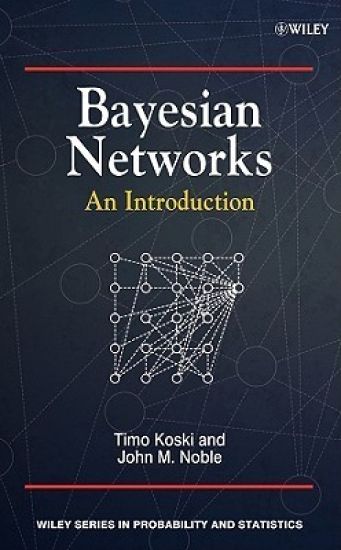
Bayesian Networks: An Introduction provides a self-contained introduction to the theory and applications of Bayesian networks, a topic of interest and importance for statisticians, computer scientists and those involved in modelling complex data sets. The material has been extensively tested in classroom teaching and assumes a basic knowledge of probability, statistics and mathematics. All notions are carefully explained and feature exercises throughout. Features include: An introduction to Dirichlet Distribution, Exponential Families and their applications.A detailed description of learning algorithms and Conditional Gaussian Distributions using Junction Tree methods.A discussion of Pearl's intervention calculus, with an introduction to the notion of see and do conditioning.All concepts are clearly defined and illustrated with examples and exercises. Solutions are provided online. This book will prove a valuable resource for postgraduate students of statistics, computer engineering, mathematics, data mining, artificial intelligence, and biology. Researchers and users of comparable modelling or statistical techniques such as neural networks will also find this book of interest.