

Kirjahaku
Etsi kirjoja tekijän nimen, kirjan nimen tai ISBN:n perusteella.
1000 tulosta hakusanalla Timothy J. Gibb


Surveying Practice Problems provides 105 multiple-choice surveying problems to assist civil engineers and land surveyors in preparation for their professional licensing examinations. Topics include: Horizontal Curves, Vertical Curves, Distance, Leveling, Area, Angles, Traverse, and Photogrammetry.This book is divided into 3 Sections: Questions, Detailed Solutions, and Quick Solutions. The Detailed Solutions Section is the largest section, where problems are solved using equations, figures, tables and notes. The Quick Solutions Section only provides the multiple-choice letter corresponding to the correct answer, so readers can quickly check their answers.Surveying Practice Problems contains only problems and solutions. This book does not teach the subject of surveying from scratch. This book is ideal for those who are already familiar with the subject of engineering surveying and could benefit from more example problems.
Civil Engineering Practice Examination #1 provides 40 multiple-choice civil engineering exam problems to help civil engineers prepare for their professional licensing examinations. This practice examination follows the specifications of the breadth examination (morning session), as defined by the National Council of Examiners for Engineering and Surveying (NCEES). This exam includes 8 questions from each of the 5 civil engineering sub-disciplines tested during the morning session of the Civil PE Exam: Water Resources/Environmental, Geotechnical, Structural, Construction and Transportation.Civil Engineering Practice Examination #1 should be used as an assessment tool for the test-taker to evaluate his or her strengths and weaknesses within the field of civil engineering.

Mormonism is a truly unique American religion. Born in upstate New York and suckled on the breast of freedom, a small group of self-styled "Saints" began preaching the gospel of Christ as revealed to Joseph Smith by divine revelation. Smith spoke of a heavenly visitation by God the Father and His Son Jesus Christ, endowing young Joseph with the authority to restore God's one, true church here on earth. Under the direction of Joseph Smith, Jr. and later Brigham Young, The Church of Jesus Christ of Latter-day Saints quickly rose to a position of prominence in the mid 19th century. Latter-day Saints are largely regarded by society as industrious, honest, moral and descent people, but there is another side of Mormonism hidden from the prying eyes of outsiders. Secret Agenda is a well documented expos revealing an ongoing conspiracy, stretching all the way back to the first prophet of the Church and his vision of establishing a theocratic government. Written by a seventh generation Mormon with ancestral ties to the ultra secretive Council of Fifty, Timothy pulls back the veil of secrecy to reveal the true aim of the Church. Beneath the deceptively calm surface of a global religious institution, a storm is raging. With more than 15 million members world-wide, The Church of Jesus Christ of Latter-day Saints is preparing to fulfill its ultimate destiny. Unbeknownst to American citizens, an unassuming adversary patiently waits in the shadows - ready to pounce at a moment's notice. Lurking just around the corner, a well organized shadow government is waiting for all of the right pieces to fall into place. Imagine what would happen if only a small portion of "The Mormon Plan for America" is allowed to be implemented. Personal freedoms currently enjoyed by all American citizens would be stripped away under the tyrannical rule of a theocratic government. Make no mistake, America is under siege

Water Resources Practice Problems provides 111 multiple-choice water resource engineering problems to assist civil engineers in preparation for their professional licensing examination. This book is ideal for those who are already familiar with the subject of water resources engineering and could benefit from more example problems.

Maqoma: The legend of a great Xhosa warrior
Timothy J. Stapleton
Amava Heritage Publishing Pty Ltd
2016
pokkari
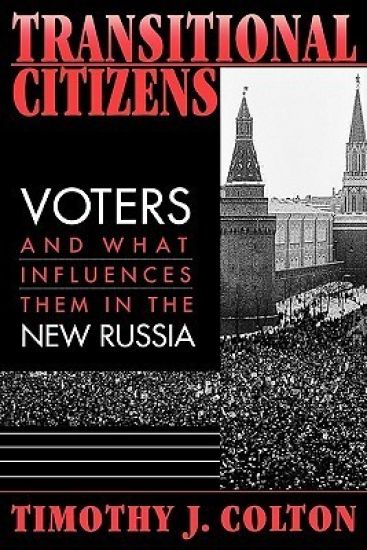
Subjects obey. Citizens choose. Transitional Citizens looks at the newly empowered citizens of Russia's protodemocracy facing choices at the ballot box that just a few years ago, under dictatorial rule, they could not have dreamt of.The stakes in post-Soviet elections are extraordinary. While in the West politicians argue over refinements to social systems in basically good working order, in the Russian Federation they address graver concerns--dysfunctional institutions, individual freedom, nationhood, property rights, provision of the basic necessities of life in an unparalleled economic downswing. The idiom of Russian campaigns is that of apocalypse and mutual demonization. This might give an impression of political chaos. However, as Timothy Colton finds, voting in transitional Russia is highly patterned. Despite their unfamiliarity with democracy, subjects-turned-citizens learn about their electoral options from peers and the mass media and make choices that manifest a purposiveness that will surprise many readers.Colton reveals that post-Communist voting is not driven by a single explanatory factor such as ethnicity, charismatic leadership, or financial concerns, but rather by multiple causes interacting in complex ways. He gives us the most sophisticated and insightful account yet of the citizens of the new Russia.
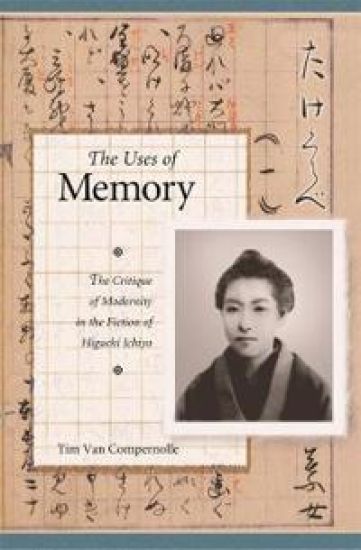
The pioneering writer Higuchi Ichiyo (1872–1896) has been described as “the last woman of old Japan,” a consummate stylist of classical prose, whose command of the linguistic and rhetorical riches of the premodern tradition might suggest that her writings are relics of the past with no concern for the problems of modern life.Timothy Van Compernolle investigates the social dimensions of Ichiyo’s artistic imagination and argues that she creatively reworked the Japanese literary tradition in order to understand, confront, and critique the emerging modernity of the Meiji period. For Ichiyo, the classical canon was a reservoir of tropes and paradigms that could be reshaped and renewed as a way to explore the sociopolitical transformations of the 1890s and cast light upon the human costs of modernization.Drawing critical momentum from the dialogical theory of Mikhail Bakhtin, the author explores in five of Ichiyo’s best known stories how traditional rhetoric and literary devices are dialogically engaged with discourses associated with modernity within the pages of Ichiyo’s narratives. In its close, sensitive readings of Ichiyo’s oeuvre, The Uses of Memory not only complicates the scholarly discussion of her position in the Japanese literary canon, but also broaches larger theoretical issues.
Once the hub of the tsarist state, later Brezhnev's "model Communist city"--home of the Kremlin, Red Square, and St. Basil's Cathedral--Moscow is for many the quintessence of everything Russian. Timothy Colton's sweeping biography of this city at the center of Soviet life reveals what such a position has meant to Moscow and ultimately to Russia itself. Linchpin of the Soviet system and exemplar of its ideology, Moscow was nonetheless instrumental in the Soviet Union's demise. It was in this metropolis of nine million people that Boris Yeltsin, during two frustrating years as the city's party boss, began his move away from Communist orthodoxy. Colton charts the general course of events that led to this move, tracing the political and social developments that have given the city its modern character. He shows how the monolith of Soviet power broke down in the process of metropolitan governance, where the constraints of censorship and party oversight could not keep up with proliferating points of view, haphazard integration, and recurrent deviation from approved rules and goals. Everything that goes into making a city--from town planning, housing, and retail services to environmental and architectural concerns--figures in Colton's account of what makes Moscow unique. He shows us how these aspects of the city's organization, and the actions of leaders and elite groups within them, coordinated or conflicted with the overall power structure and policy imperatives of the Soviet Union. Against this background, Colton explores the growth of the anti-Communist revolution in Moscow politics, as well as fledgling attempts to establish democratic institutions and a market economy. As it answers persistent questions about Soviet political history, this lavishly illustrated volume may also point the way to understanding Russia's future.
Commissars, Commanders, and Civilian Authority
Timothy J Colton
Harvard University Press
1979
sidottu
For six decade the Soviet system has been immune to military rebellion and takeover, which often characterizes modernizing countries. How can we explain the stability of Soviet military politics, asks Timothy Colton in his compelling interpretation of civil-military relations in the Soviet Union. Hitherto most western scholars have posited a basic dichotomy of interests between the Soviet army and the Communist party. They view the two institutions as conflictprone, with civilian supremacy depending primarily upon the party's control of officers through its organs within the military establishment. Colton challenges this thesis and argues that the military party organs have come to possess few of the attributes of an effective controlling device, and that the commissars and their heirs have operated as allies rather than adversaries of the military commanders. In explaining the extraordinary stability in army-party relations in terms of overlapping interests rather than controlling mechanisms, Colton offers a major case study and a new model to students of comparative military politics.
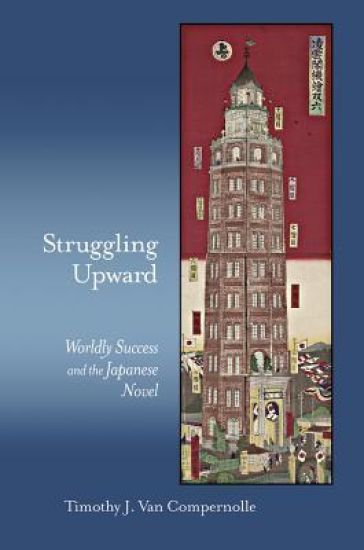
Struggling Upward reconsiders the rise and maturation of the modern novel in Japan by connecting the genre to new discourses on ambition and social mobility. Collectively called risshin shusse, these discourses accompanied the spread of industrial capitalism and the emergence of a new nation-state in the archipelago. Drawing primarily on historicist strategies of literary criticism, the book situates the Meiji novel in relation to a range of texts from different culturally demarcated zones: the visual arts, scandal journalism, self-help books, and materials on immigration to the colonies, among others. Timothy J. Van Compernolle connects these Japanese materials to topics of broad theoretical interest within literary and cultural studies, including imperialism, gender, modernity, novel studies, print media, and the public sphere. As the first monograph to link the novel to risshin shusse, Struggling Upward argues that social mobility is the privileged lens through which Meiji novelists explored abstract concepts of national belonging, social hierarchy, and the new space of an industrializing nation.
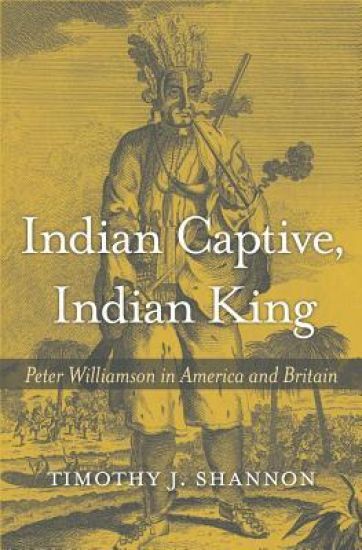
In 1758 Peter Williamson appeared on the streets of Aberdeen, Scotland, dressed as a Native American and telling a remarkable tale. He claimed that as a young boy he had been kidnapped from the city and sold into slavery in America. In performances and in a printed narrative he peddled to his audiences, Williamson described his tribulations as an indentured servant, Indian captive, soldier, and prisoner of war. Aberdeen’s magistrates called him a liar and banished him from the city, but Williamson defended his story.Separating fact from fiction, Timothy J. Shannon explains what Williamson’s tale says about how working people of eighteenth-century Britain, so often depicted as victims of empire, found ways to create lives and exploit opportunities within it. Exiled from Aberdeen, Williamson settled in Edinburgh, where he cultivated enduring celebrity as the self-proclaimed “king of the Indians.” His performances and publications capitalized on the curiosity the Seven Years’ War had ignited among the public for news and information about America and its native inhabitants. As a coffeehouse proprietor and printer, he gave audiences a plebeian perspective on Britain’s rise to imperial power in North America.Indian Captive, Indian King is a history of empire from the bottom up, showing how Williamson’s American odyssey illuminates the real-life experiences of everyday people on the margins of the British Empire and how those experiences, when repackaged in travel narratives and captivity tales, shaped popular perceptions about the empire’s racial and cultural geography.