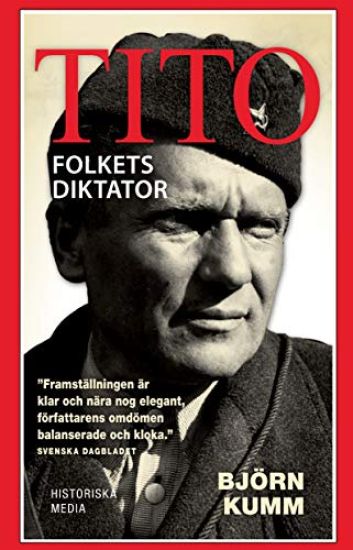
Josip Broz, känd som Tito, var Jugoslaviens ledare från 1945 fram till sin död 1980. Han föddes i Kroatien, deltog i första världskriget och blev krigsfånge i Ryssland, där han hamnade mitt i revolutionen och blev bolsjevik. Som "kamrat Walter" rekryterade han frivilliga till spanska inbördeskriget och utnämndes strax före andra världskriget till ledare för Jugoslaviens kommunistiska parti. Under den nazityska ockupationen ledde Tito en framgångsrik motståndsrörelse, som 1945 övertog makten. Under det kalla kriget balanserade han mellan de båda supermakterna, USA och Sovjetunionen. Var det Tito som höll samman den jugoslaviska staten? Var Jugoslaviens sönderfall oundvikligt efter hans död? Var Tito en självupptagen tyrann eller finns det, som många anser, skäl att kalla honom "folkets diktator"? Större delen av 1900-talets världshistoria återspeglas i Titos liv, men vem var han i själva verket? Det vill Björn Kumm förklara i sin biografi över en av förra århundradets mest omtalade politiska ledare.
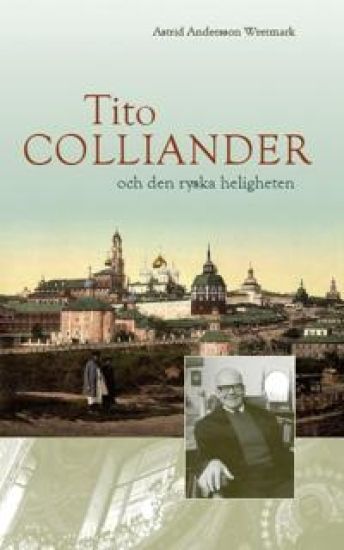
Tito colliander (1904-89) var en av 1900-taletsfrämsta finlandssvenska författare. Mest känd blev han för en memoarsvit där han meditativt berättar om sitt liv. Man får där följa honom från barndomsåren i hungerns och revolutionens Petrograd via konstnärsår i Paris och författarliv på Karelska näset. Under en period på 30-talet bor han i den estniska byn Petseri, dominerad avett berömt kloster och präglad av en rysk kultur. Det är här som han återknyter till barndomens upplevelser av »den ryska heligheten« och tar steget in i den ortodoxa kyrkan. Hans liv ter sig ibland kaotiskt men han hämtar så småningom stadga och styrka i den andliga tradition som förmedlas av hans biktfar, prästmunken Fader Johannes i Nya Valamo kloster i Finland.Om Tito Collianders memoarsvit skrev en gång den kände publicisten Herbert Tingsten: »Jag vet mig inte hos någon predikare eller mystiker ha funnit en sådan bild av det andliga, av det oförgängliga«.Astrid Andersson Wretmark är teologie doktor och präst i Svenska kyrkan. Hon har under en lång följd av år intresserat sig för Tito Colliander och uppsökt många av de miljöer han skriver om. I den här boken spårar hon »den ryska helighetens« inflytande på han liv och författarskap.
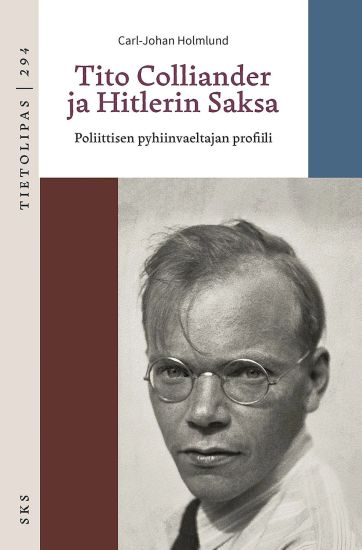
Mikä on saanut taiteilijat, kirjailijat ja tutkijat ihailemaan totalitaristisia valtioita?Tito Colliander ja Hitlerin Saksa - Poliittisen pyhiinvaeltajan profiili käsittelee kirjailija Tito Collianderin (1904-1989) suhdetta kansallissosialistiseen Saksaan. Teos asettaa Collianderin osaksi laajempaa suomalaisen sivistyneistön ja älymystön kirjallisen fasismin tutkimusta.Samalla teoksessa tarkastellaan myös muita suomalaisia kansallissosialismia kuvanneita kirjailijoita Olavi Paavolaisesta V. A. Koskenniemeen.
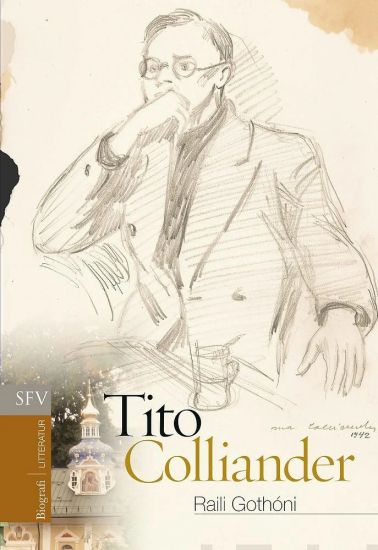
Författaren Tito Collianders (1904-1989) sanningsletande och hans kritiska inställning till banala svar på existentiella frågor tilltalar också dagens människor med en aktualitet som vägrar blekna. Hans självbiografier - men också hans romaner - återspeglar barn- och ungdomsåren i S:t Petersburg, svältåret efter ryska revolutionen och vandringsåren i Europa.Han bröt mot kronologin och sammanflätade platser, tider, åldrar och generationer osystematiskt till en helhet som undflyr entydiga tolkningar.
Kirjailija Tito Colliander (1904–1989) etsi totuutta ja torjui helpot vastaukset olemassaolon peruskysymyksiin tavalla, joka puhuttelee lukijoita kaikkina aikoina. Hänen omaelämäkerralliset teoksensa samoin kuin hänen romaaninsa peilaavat lapsuus- ja nuoruusvuosia Pietarissa, nälkävuotta Venäjän vallankumouksen jälkeen ja vaellusvuosia Euroopassa. Hän punoi teoksissaan paikat, ajat, iät ja sukupolvet ajattomaksi ja järjestyksettömäksi kokonaisuudeksi, joka pakenee yksiulotteisia tulkintoja.
Even though RuRu was a toy, he was Tito's best friend. They went everywhere and did everything together RuRu took vacations with Tito, slept with Tito, and played with him. Tito felt there was no one else in world like RuRu They were inseparable until life changes tore them apart
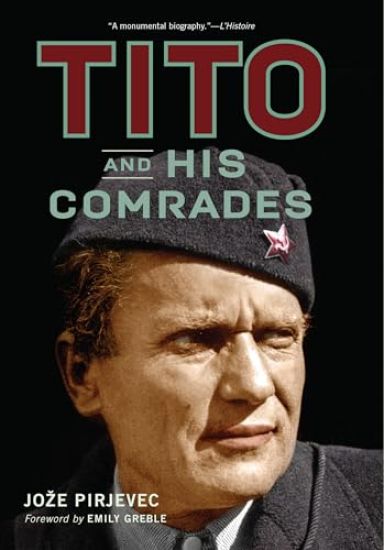
Josip Broz (1892–1980), nicknamed Tito, led Yugoslavia for nearly four decades with charisma, cunning, and an iron fist. A leader of the non-aligned nations, he and his Partisans fought Hitler during World War II and resisted the Soviet Union's postwar grasp, and he long enjoyed a reputation in the West as "the only good Communist" despite a dubious human rights record at home. Jože Pirjevec employs impressive research from archives in eight languages to offer this illuminating portrait of one of the most powerful figures of the Cold War era. This edition includes a foreword by Emily Greble that reveals the life and legacy of a complex man in turbulent times.
Observera att förlaget som ger ut denna produkt baserar innehållet i sina produkter på fria källor som Wikipedia. Boken är med stor sannolikhet endast ett utdrag ur dessa informationskällor, alltså inte en vanlig bok i den bemärkelsen.
Observera att förlaget som ger ut denna produkt baserar innehållet i sina produkter på fria källor som Wikipedia. Boken är med stor sannolikhet endast ett utdrag ur dessa informationskällor, alltså inte en vanlig bok i den bemärkelsen.
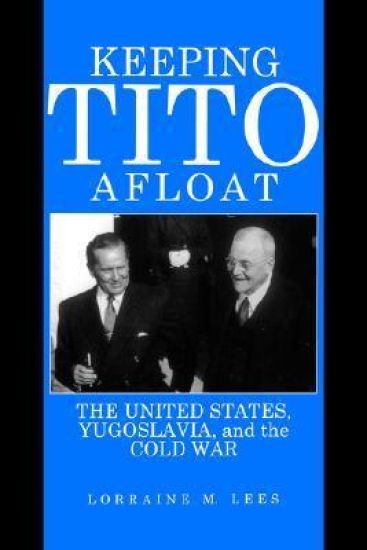
Keeping Tito Afloat draws upon newly declassified documents to show the critical role that Yugoslavia played in U.S. foreign policy with the communist world in the early years of the Cold War. After World War II, the United States considered Yugoslavia to be a loyal Soviet satellite, but Tito surprised the West in 1948 by breaking with Stalin. Seizing this opportunity, the Truman administration sought to "keep Tito afloat" by giving him military and economic aid. President Truman hoped that American involvement would encourage other satellites to follow Tito's example and further damage Soviet power. However, Lees demonstrates that it was President Eisenhower and Secretary of State John Foster Dulles who most actively tried to use Tito as a "wedge" to liberate the Eastern Europeans.By the end of 1958, Eisenhower and Dulles discontinued this "wedge strategy" because it raised too many questions about the ties that should exist between communist, noncommunist, and neutral states. As Tito shrewdly kept the U.S. at arm's length, Eisenhower was forced to accept Tito's continued absence from the Soviet orbit as victory enough. In the period between 1958 and 1960, Lees examines U.S. political objectives that remained after military support for Tito was discontinued. Although use of Yugoslavia as a wedge never fully succeeded, Lees shows how that strategy reflected the pragmatic and geopolitical policies of the Truman and Eisenhower administrations. Keeping Tito Afloat utilizes diverse sources including personal interviews with key U.S. and Yugoslav officials, official and private papers and oral histories from the Roosevelt, Truman, and Eisenhower libraries, State Department records, some only recently declassified, from the National Archives, and the papers of George F. Kennan and John Foster Dulles.
Keeping Tito Afloat draws upon newly declassified documents to show the critical role that Yugoslavia played in U.S. foreign policy with the communist world in the early years of the Cold War. After World War II, the United States considered Yugoslavia to be a loyal Soviet satellite, but Tito surprised the West in 1948 by breaking with Stalin. Seizing this opportunity, the Truman administration sought to "keep Tito afloat" by giving him military and economic aid. President Truman hoped that American involvement would encourage other satellites to follow Tito's example and further damage Soviet power. However, Lees demonstrates that it was President Eisenhower and Secretary of State John Foster Dulles who most actively tried to use Tito as a "wedge" to liberate the Eastern Europeans.By the end of 1958, Eisenhower and Dulles discontinued this "wedge strategy" because it raised too many questions about the ties that should exist between communist, noncommunist, and neutral states. As Tito shrewdly kept the U.S. at arm's length, Eisenhower was forced to accept Tito's continued absence from the Soviet orbit as victory enough. In the period between 1958 and 1960, Lees examines U.S. political objectives that remained after military support for Tito was discontinued. Although use of Yugoslavia as a wedge never fully succeeded, Lees shows how that strategy reflected the pragmatic and geopolitical policies of the Truman and Eisenhower administrations. Keeping Tito Afloat utilizes diverse sources including personal interviews with key U.S. and Yugoslav officials, official and private papers and oral histories from the Roosevelt, Truman, and Eisenhower libraries, State Department records, some only recently declassified, from the National Archives, and the papers of George F. Kennan and John Foster Dulles.
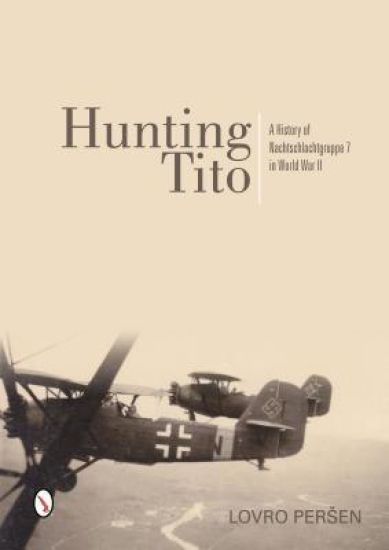
For the first time, the history of one of the most significant and longest-lasting Luftwaffe combat units is presented. Operating against Tito and his partisans in Yugoslavia, Nachtschlachtgruppe 7, and its predecessor units Störkampfstaffel Kroatien and Südost, fought an extraordinary war--one that was different from any other Nachtschlachtgruppe in existence on either the eastern or western fronts. The history of Nachtschlachtgruppe 7 is unbreakably cross-linked with its "sister" unit Nahaufklärungsstaffel Kroatien, who eventually became its 2.Staffel in Autumn 1943. Despite their obsolete equipment--flying the Hs 126, Do 17 and He 46--they fought courageously against Tito's forces until the end of the war.
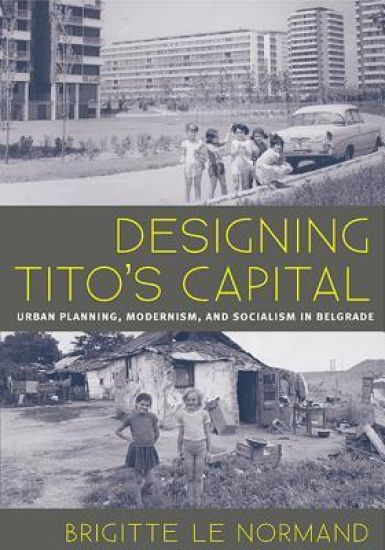
The devastation of World War II left the Yugoslavian capital of Belgrade in ruins. Communist Party leader Josip Broz Tito saw this as a golden opportunity to recreate the city through his own vision of socialism. In Designing Tito’s Capital, Brigitte Le Normand analyzes the unprecedented planning process called for by the new leader, and the determination of planners to create an urban environment that would benefit all citizens.Led first by architect Nikola Dobrovic and later by Miloš Somborski, planners blended the predominant school of European modernism and the socialist principles of efficient construction and space usage to produce a model for housing, green space, and working environments for the masses. A major influence was modernist Le Corbusier and his Athens Charter published in 1943, which called for the total reconstruction of European cities, transforming them into compact and verdant vertical cities unfettered by slumlords, private interests, and traffic congestion. As Yugoslavia transitioned toward self-management and market socialism, the functionalist district of New Belgrade and its modern living were lauded as the model city of socialist man.The glow of the utopian ideal would fade by the 1960s, when market socialism had raised expectations for living standards and the government was eager for inhabitants to finance their own housing. By 1972, a new master plan emerged under Aleksandar Ðordevic, fashioned with the assistance of American experts. Espousing current theories about systems and rational process planning and using cutting edge computer technology, the new plan left behind the dream for a functionalist Belgrade and instead focused on managing growth trends. While the public resisted aspects of the new planning approach that seemed contrary to socialist values, it embraced the idea of a decentralized city connected by mass transit.Through extensive archival research and personal interviews with participants in the planning process, Le Normand’s comprehensive study documents the evolution of ‘New Belgrade’ and its adoption and ultimate rejection of modernist principles, while also situating it within larger continental and global contexts of politics, economics, and urban planning.
Tiny Tito and Gigantic Jerome are two very unlikely best friends who show the world, particularly children ages 4 - 8, that being a little different can be a very good thing. The other dogs who excluded the pair from their canine fun learn just how gifted Tito and Jerome are when two heroes are needed to save the day
Tito's Death Marches by Joseph Hecimovic is a historical account of the forced marches of Croatian soldiers and civilians at the end of World War II. Tito, the Yugoslav leader, ordered the marches as a form of punishment for those who had fought against his communist regime. The book details the atrocities committed during these marches, including starvation, disease, and brutal violence. Hecimovic draws upon eyewitness accounts and archival documents to provide a comprehensive understanding of this little-known chapter of history. The author also explores the political and social context of the marches, shedding light on the complex and often violent history of Yugoslavia during this period. This book is a valuable resource for anyone interested in the history of Yugoslavia, World War II, and the aftermath of conflict.An Eyewitness Account Of The Croatian War Prisoners And Civilians After World War II.This scarce antiquarian book is a facsimile reprint of the old original and may contain some imperfections such as library marks and notations. Because we believe this work is culturally important, we have made it available as part of our commitment for protecting, preserving, and promoting the world's literature in affordable, high quality, modern editions, that are true to their original work.