Kirjojen hintavertailu. Mukana 12 537 368 kirjaa ja 12 kauppaa.

Kirjahaku

Etsi kirjoja tekijän nimen, kirjan nimen tai ISBN:n perusteella.

1000 tulosta hakusanalla Tone Finnanger

Tone Control Circuit

Tone Control Circuit

VDM Publishing House
2010
nidottu
Observera att förlaget som ger ut denna produkt baserar innehållet i sina produkter på fria källor som Wikipedia. Boken är med stor sannolikhet endast ett utdrag ur dessa informationskällor, alltså inte en vanlig bok i den bemärkelsen.
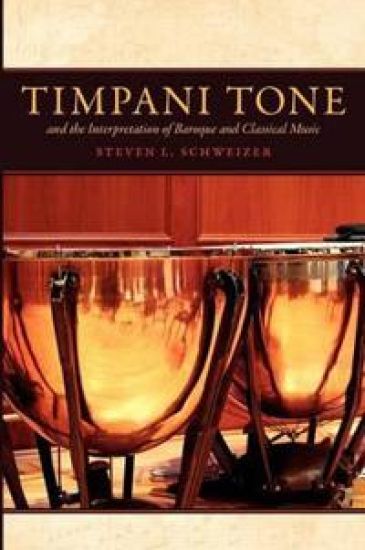
Timpani Tone and the Interpretation of Baroque and Classical Music
Timpani Tone and the Interpretation of Baroque and Classical Music explores the nature, production, and evolution of timpani tone and provides insights into how to interpret the music of J. S. Bach, Handel, Haydn, and Mozart. In drawing on 31 years of experience, Steven L. Schweizer focuses on the components of timpani tone and methods for producing it. In so doing, he discusses the importance of timpani bowl type; mallets; playing style; physical gestures; choice of drums; mallet grip; legato, marcato, and staccato strokes; playing different parts of the timpano head; and psychological openness to the music in effectively shaping and coloring timpani parts. In an acclaimed chapter on interpretation, Schweizer explores how timpanists can use knowledge of the composer's style, psychology, and musical intentions; phrasing and articulation; the musical score; and a conductor's gestures to effectively and convincingly play a part with emotional dynamism and power. The greater part of the book is devoted to the interpretation of Baroque and Classical orchestral and choral music. Meticulously drawing on original sources and authoritative scores from the seventeenth through nineteenth centuries, Schweizer convincingly demonstrates that timpanists were capable of producing a broader range of timpani tone earlier than is normally supposed. The increase in timpani size, covered timpani mallets, and thinner timpani heads increased the quality of timpani tone; therefore, today's timpanist's need not be entirely concerned with playing with very articulate sticks. In exhaustive sections on Bach, Handel, Haydn, and Mozart, Schweizer takes the reader on an odyssey through the interpretation of their symphonic and choral music. Relying on Baroque and Classical performance practices, timpani notation, the composer's musical style, and definitive scores, he interprets timpani parts from major works of these composers. Schweizer pays particular attention to timpani tone, articulation, phrasing, and dynamic contouring: elements necessary to effectively communicate their part to listeners.
Timpani Tone and the Interpretation of Baroque and Classical Music
Timpani Tone and the Interpretation of Baroque and Classical Music explores the nature, production, and evolution of timpani tone and provides insights into how to interpret the music of J. S. Bach, Handel, Haydn, and Mozart. In drawing on 31 years of experience, Steven L. Schweizer focuses on the components of timpani tone and methods for producing it. In so doing, he discusses the importance of timpani bowl type; mallets; playing style; physical gestures; choice of drums; mallet grip; legato, marcato, and staccato strokes; playing different parts of the timpano head; and psychological openness to the music in effectively shaping and coloring timpani parts. In an acclaimed chapter on interpretation, Schweizer explores how timpanists can use knowledge of the composer's style, psychology, and musical intentions; phrasing and articulation; the musical score; and a conductor's gestures to effectively and convincingly play a part with emotional dynamism and power. The greater part of the book is devoted to the interpretation of Baroque and Classical orchestral and choral music. Meticulously drawing on original sources and authoritative scores from the seventeenth through nineteenth centuries, Schweizer convincingly demonstrates that timpanists were capable of producing a broader range of timpani tone earlier than is normally supposed. The increase in timpani size, covered timpani mallets, and thinner timpani heads increased the quality of timpani tone; therefore, today's timpanist's need not be entirely concerned with playing with very articulate sticks. In exhaustive sections on Bach, Handel, Haydn, and Mozart, Schweizer takes the reader on an odyssey through the interpretation of their symphonic and choral music. Relying on Baroque and Classical performance practices, timpani notation, the composer's musical style, and definitive scores, he interprets timpani parts from major works of these composers. Schweizer pays particular attention to timpani tone, articulation, phrasing, and dynamic contouring: elements necessary to effectively communicate their part to listeners.
Political Tone

Political Tone

Roderick P. Hart; Jay P. Childers; Colene J. Lind

University of Chicago Press
2013
sidottu
It's not what you say, but how you say it. Solving problems with words is the essence of politics, and finding the right words for the moment can make or break a politician's career. Yet very little has been said in political science about the elusive element of tone. In "Political Tone", Roderick P. Hart, Jay P. Childers, and Colene J. Lind analyze a range of texts - from speeches and debates to advertising and print and broadcast campaign coverage - using a sophisticated computer program, Diction, that parses their content for semantic features like realism, commonality, and certainty, as well as references to religion, party, or patriotic terms. Beginning with a look at how societal forces like diversity and modernity manifest themselves as political tones in the contexts of particular leaders and events, the authors proceed to consider how individual leaders have used tone to convey their messages: How did Bill Clinton's clever dexterity help him recover from the Monica Lewinsky scandal? How did Barack Obama draw on his experience as a talented community activist to overcome his inexperience as a national leader? And how does Sarah Palin's wandering tone indicate that she trusts her listeners and is open to their ideas? By focusing not on the substance of political arguments but on how they were phrased, "Political Tone" provides powerful and unexpected insights into American politics.
Political Tone

Political Tone

Roderick P. Hart; Jay P. Childers; Colene J. Lind

University of Chicago Press
2013
nidottu
It's not what you say, but how you say it. Solving problems with words is the essence of politics, and finding the right words for the moment can make or break a politician's career. Yet very little has been said in political science about the elusive element of tone. In "Political Tone", Roderick P. Hart, Jay P. Childers, and Colene J. Lind analyze a range of texts - from speeches and debates to advertising and print and broadcast campaign coverage - using a sophisticated computer program, DICTION, that parses their content for semantic features like realism, commonality, and certainty, as well as references to religion, party, or patriotic terms. Beginning with a look at how societal forces like diversity and modernity manifest themselves as political tones in the contexts of particular leaders and events, the authors proceed to consider how individual leaders have used tone to convey their messages: How did Bill Clinton's clever dexterity help him recover from the Monica Lewinsky scandal? How did Barack Obama draw on his experience as a talented community activist to overcome his inexperience as a national leader? And how does Sarah Palin's wandering tone indicate that she trusts her listeners and is open to their ideas? By focusing not on the substance of political arguments but on how they were phrased, "Political Tone" provides powerful and unexpected insights into American politics.
Chord Tone Mastery for Electric Bass
Unfortunately, many bass students are blindly taught to practice playing scales and arpeggios up and down their fingerboard without the understanding of the concepts that will enable you to start improvising like the masters! Fortunately, there is a better way to take your improvisation skills to the next level with this "game-changing" book that you never thought was possible.Plainly and simply, the material covered in this book will revolutionize your bass guitar technique exponentially! As a teacher and clinician, Joe has seen this exact methodology work consistently for both himself and countless years as a teacher- teaching some of the best bass players on the planet including Pino Palladino! By finding the weakest areas of your technique, there is no way to avoid making major leaps and bounds when you put these concepts into purposeful practice!
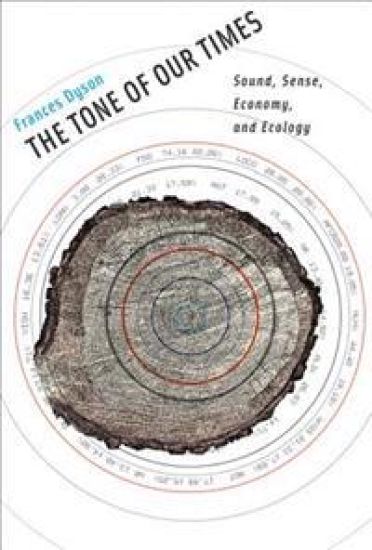
The Tone of Our Times

The Tone of Our Times

Frances Dyson

MIT Press
2014
sidottu
Sound, tone, music, voice, and noise as forms of sonority through which our current economic and ecological crises can be understood. In this wide-ranging book, Frances Dyson examines the role of sound in the development of economic and ecological systems that are today in crisis. Connecting early theories of harmony, cosmology, and theological doctrine to contemporary media and governance, Dyson uses sound, tone, music, voice, and noise as forms of sonority through which the crises of "eco" can be read. The sonic environment, Dyson argues, is fundamental to both sense and sensibility, and its delimitation has contributed to the "senselessness" of a world now caught between spiraling debt and environmental degradation. Dyson draws on scenes, historical moments, artworks, and artistic and theoretical practice to situate the reverberative atmosphere that surrounds and sustains us. From Pythagoras's hammer and the transmutation of music into mathematics, to John Cage's famous experience in the anechoic chamber, to the relocation of the stock market from the street to the computer screen, to Occupy Wall Street's "people's microphone": Dyson finds policies and practices of exclusion. The sound of Pythagoras's forge and the rabble of the market have been muted, rearticulated, and transformed, Dyson argues, through the monotones of media, the racket of financialization, and the gibberish of political speech. Informed by contemporary sound art, philosophy, media and sociopolitical theory, The Tone of Our Times offers insights into present crises that are relevant to a broader understanding of how space, the aural, and listening have shaped and continue to shape the world we live in.
The Tone From the Top

The Tone From the Top

Ian Muir

Routledge
2020
nidottu
Many companies have been criticised for weak business ethics, including in some cases breaking the law. Numerous scandals have rocked industries as diverse as banking, insurance, oil, supermarkets, consumer goods, pharmaceuticals and the media. But ethical lapses are not confined to business; few sectors of society can claim the moral high ground. This year, like every other year, new scandals and ethical breaches have hit the news. The Tone from the Top: How Behaviour Trumps Strategy will convince readers that leaders’ behaviour and the signals they send are more important than strategy. In an increasingly transparent world, employee engagement is founded on trust - of their boss, their department, of their whole enterprise. Ian sets the scene via ’something’s not right’ then provides first hand evidence from interviews with the chairmen of a quarter of a trillion pounds of market capitalisation (FTSE200 companies). In offering a model for a much more systematic approach, Ian shows that behaviour and signalling have a much greater influence on business performance and ethics than simply communicating a strategy. This book helps readers understand how boards provide ethical leadership; how boards monitor the tone they are setting; and how non-executive directors can check that their company has a good ethical compass.
Twelve-Tone Tonality, Second edition

Twelve-Tone Tonality, Second edition

George Perle

University of California Press
1996
sidottu
In this classic work, George Perle argues that the seemingly disparate styles of post-triadic music in fact share common structural elements. These elements collectively imply a new tonality as 'natural' and coherent as the major-minor tonality that was the basis of a common musical language in the past. His book describes the foundational assumptions of this post-diatonic tonality and illustrates its compositional functions with numerous musical examples. The second edition of "Twelve-Tone Tonality" is enlarged by eleven new chapters, some of which are 'postscripts' to earlier chapters - clarifying, elucidating, and expanding upon concepts discussed in the original edition. Others discuss new developments in the theory and practice of twelve-tone tonality, including voice-leading implications of the system and dissonance treatment.
Twelve-Tone Music in America

Twelve-Tone Music in America

Straus Joseph N.

Cambridge University Press
2009
sidottu
Most histories of American music have ignored the presence of twelve-tone music before and during the Second World War, and virtually all have ignored its presence after 1970, even though so many major composers continued (and continue) to compose serially. This book provides a comprehensive history of twelve-tone music in America, and compels a revised picture of American music since 1925 as a dynamic steady-state within which twelve-tone serialism has long been, and still remains, a persistent presence: a vigorous and unbroken tradition for more than eighty years. Straus outlines how, instead of a rigid orthodoxy, American twelve-tone music is actually a flexible, loosely-knit cultural practice. The book provides close readings of thirty-seven American twelve-tone works by composers including Copland, Babbitt, Stravinsky and Carter, among many others, who represent a typically American diversity of background and life circumstances, and strips away the many myths surrounding twelve-tone music in America.
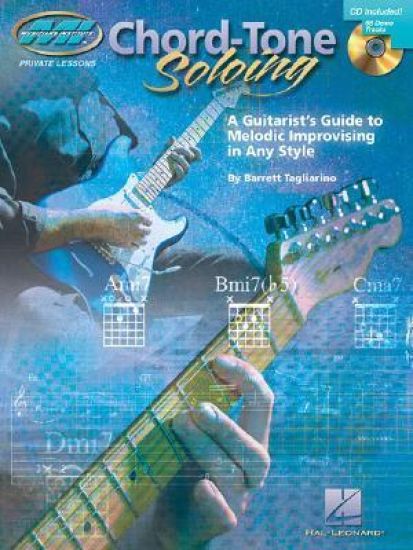
Chord-Tone Soloing

Chord-Tone Soloing

Barrett Tagliarino

Hal Leonard Corporation
2006
nidottu
(Musicians Institute Press). Learn how the professionals create monster solos with this easy-to-use book with online audio The accompanying audio includes 68 tracks of exercises, licks, solo examples, and play-alongs. Includes all necessary foundation materials; detailed instructions on how and what to practice; essential concepts for players at every level; developing your real-time melodic reflexes; soloing over any progression in any style of music; using chords as an endless source of ideas; and more. The audio is accessed online using the unique code inside each book and can be downloaded or streamed.
Meaningful Tone

Meaningful Tone

Martha Ratliff

Northern Illinois University Press
2010
pokkari
Following U.S. military involvement in Indo-China in 1975, many of the Hmong—an ethnic group originating in Southwestern China and Southeast Asia who were persecuted by the communist organization Pathet Lao—became refugees. A large portion of them originally resettled in the Upper-Midwestern United States, but the largest population of Hmong is now in Minnesota and California. Today, there are diasporic communities in countries around the world, with over 200,000 in the United States alone. The commitment of these communities to their language and culture, their accessibility, and outside interest has combined to create an explosion of scholarship and Hmong language literature. The interest in and utility of the Hmong language are perpetually renewed by growing Hmong enrollment in schools and the number and strength of Hmong community groups. The migration and growth of Hmong and other Southeast Asian groups worldwide make this landmark language study crucial for ongoing research. In this pioneering and innovative morpho-phonological study, Ratliff, building on the 1965 and 1967 works of E. J. A. Henderson, describes the morphological functions of tone in Southeast Asian languages. While focusing specifically on the White Hmong language, one of the languages of the larger Hmong-Mien language family, the book investigates underlying ideas about the function of tone as an organizational tool in what Ratliff calls "small word" languages. She focuses on tone and its role in compounds, form classes, and expressives.
Coronary Tone in Ischemic Heart Disease
W. KUPPER Coronary artery vasoconstriction is not only the mechanism responsible for Prinzmetal's variant angina, but may also be involved in stable angina pectoris and myocardial infarction. However, the underlying patho-physiological mecha- nisms and the importance of coronary vasoconstriction in these syndromes is still largely unknown. Several hypotheses have been proposed. Sympathetic nervous activity plays a key role in the regulation of coronary blood flow, but mechanical or humoral constrictive factors may be active as well. a-adrenergic tone Adrenergic nerve fibers accompany coronary vessels of any size. The stimulation of cardiac sympathetic nerves causes an increase in coronary blood flow. If, however, chronotropic and inotropic effects of adrenergic stimulation are sup- pressed pharmacologically by beta-adrenoceptor blockade, a reduction in flow is observed. Thus, the primary effect of sympathetic stimulation on the coronary arteries is the alpha-adrenergic mediated vasoconstriction. Functionally inner- vated alpha-adrenoceptors have been documented both in large coronary con- ductance arteries and in the small resistance vessels. Animal studies and a human study have documented that a permanent constrictor tone is present on the coronary circulation both at rest and during exercise; this condition could be prevented with alpha-adrenoceptor blockade or was absent after heart transplan- tation. Therefore, alpha-adrenoceptor mediated coronary constriction is an at- tractive hypothesis as a possible pathophysiological mechanism of inappropriate coronary vasoconstriction and cororiary vasospasm.