Kirjahaku
Etsi kirjoja tekijän nimen, kirjan nimen tai ISBN:n perusteella.
1000 tulosta hakusanalla Torrence Davis
Terrence's Little Black Book: The Perfect Dating Companion for a Handsome Man Named Terrence. A secret place for names, phone numbers, and addresses
Wingman Publishing
Independently Published
2019
nidottu
Keep a record of all the girls that catch your eye
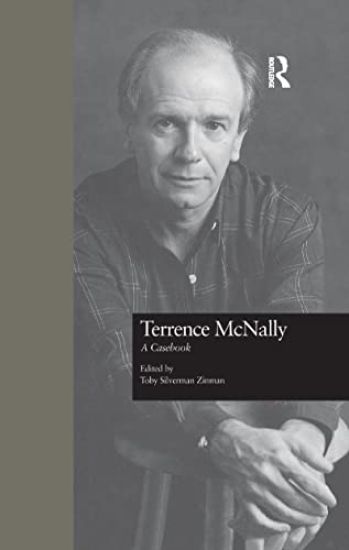
Terrence McNally
Routledge
2016
nidottu
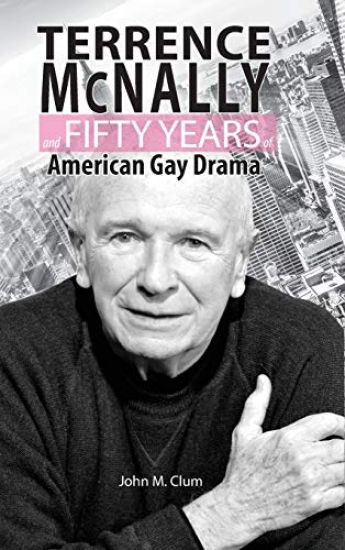
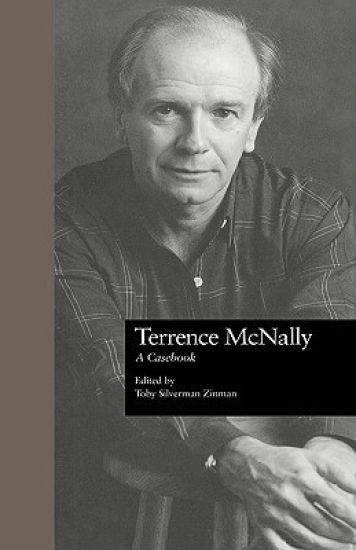
This collection of essays and interviews is the first book about the drama of American playwright Terrence McNally; it examines his career to date (30-plus years), focusing particularly on the two plays for which McNally won Tony Awards for Best Play of 1995, Love! Valour! Compassion!, and Best Play of 1996, Master Class. Toby Zinman, a distinguished scholar and critic, has invited none respected authorities to write about McNally's work, and has included records of the long conversations she had with the playwright about his work, his love of opera, his ideas about acting and education, and life in general. Also included are two interviews she conducted with two of his leading actors: one with the legendary Zoe Caldwell, who played the even more legendary Maria Callas in Master Class, a performance that earned her the Tony Award for Best Actress in 1996, a role McNally wrote for her, and another with the great American comic actor, Nathan Lane, whom McNally considers his foremost interpreter.The collection moves chronologically, beginning with Howard Stein's essay on the promise of the plays of the first decade, through to Cary Mazer's essay on the diva in Master Class , a play about Maria Callas' master classes at Juilliard; that essay is preceded by an essay on those famous master classes by John Ardoin, the world's foremost authority on Maria Callas.In between there are two essays debating McNally's position as a gay playwright, one by John Clum and one by Steven Drukman, both centering on the firestorm of controversy generated by Love! Valour! Compassion! In addition, there is an essay on The Lisbon Traviata by Sam Abel which discusses the play's much-revised conclusion (to murder or not to murder) and another on McNally's screenplays of Frankie and Johnny in the Clair de Lune, and The Ritz, by Helen Buttel, a film critic. This is followed by Stephen Watt's examination of McNally as a postmodernist, using Lips Together, Teeth Apart as his focus, and Benilde Montgomery's essay on Indian myth as it informs McNally's play (soon to be a film) A Perfect Ganesh The volume also includes in its introduction the latest information on McNally's newest projects, an extensive bibliography, and a chronology of the playwright's career.

Many critics have approached Terrence Malick’s work from a philosophical perspective, arguing that his films express philosophy through cinema. With their remarkable images of nature, poetic voiceovers, and meditative reflections, Malick’s cinema certainly invites philosophical engagement. In Terrence Malick: Filmmaker and Philosopher, Robert Sinnerbrink takes a different approach, exploring Malick’s work as a case of cinematic ethics: films that evoke varieties of ethical experience, encompassing existential, metaphysical, and religious perspectives. Malick’s films are not reducible to a particular moral position or philosophical doctrine; rather, they solicit ethically significant forms of experience, encompassing anxiety and doubt, wonder and awe, to questioning and acknowledgment, through aesthetic engagement and poetic reflection. Drawing on a range of thinkers and approaches from Heidegger and Cavell, Nietzsche and Kierkegaard, to phenomenology and moral psychology Sinnerbrink explores how Malick’s films respond to the problem of nihilism the loss of conviction or belief in prevailing forms of value and meaning and the possibility of ethical transformation through cinema: from self-transformation in our relations with others to cultural transformation via our attitudes towards towards nature and the world. Sinnerbrink shows how Malick’s later films, from The Tree of Life to Voyage of Time, provide unique opportunities to explore cinematic ethics in relation to the crisis of belief, the phenomenology of love, and film’s potential to invite moral transformation.
Terrence Malick
Continuum Publishing Corporation
2011
sidottu
Discusses Malick s films as individual objects, as a corpus, within contemporary film studies, and within a wider cultural discussion.
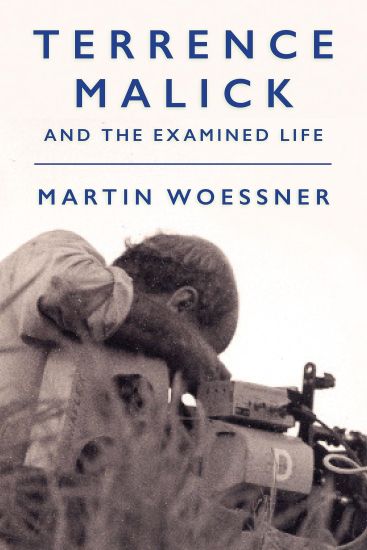
Terrence Malick is one of American cinema's most celebrated filmmakers. His films—from Badlands (1973) and Days of Heaven (1978) to The Thin Red Line (1998), The Tree of Life (2011), and, most recently, A Hidden Life (2019)—have been heralded for their artistry and lauded for their beauty, but what really sets them apart is their ideas. Terrence Malick and the Examined Life is the most comprehensive account to date of this unparalleled filmmaker's intellectual and artistic development. Utilizing newly available archival sources to offer original interpretations of his canonical films, Martin Woessner illuminates Malick's early education in philosophy at Harvard and Oxford as well as his cinematic apprenticeship at the American Film Institute to show how a young student searching for personal meaning became a famous director of Hollywood films. Woessner's book presents a rich, interdisciplinary exploration of the many texts, thinkers, and traditions that made this transformation possible—from the novels of Hamlin Garland, James Jones, and Walker Percy to the philosophies of Stanley Cavell, Martin Heidegger, and Søren Kierkegaard to road movies, Hollywood Westerns, and the comedies of Jean Renoir. Situating Malick's filmmaking within recent intellectual and cultural history, Woessner highlights its lasting contributions to both American cinema and the life of the mind. Terrence Malick and the Examined Life suggests it is time for philosophy to be viewed not merely as an academic subject, overseen by experts, but also as a way of life, open to each and every moviegoer.
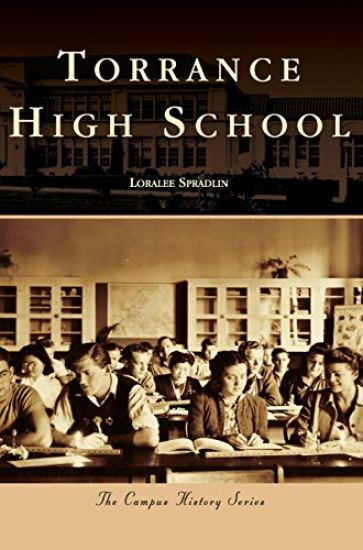
In 1917, when Torrance School first opened, the city of Torrance was developing a reputation as an industrial powerhouse. The new school initially served all school-age children in one building. By 1923, the elementary students had their own school, and Torrance High School stood as the only high school until the 1950s. As the population of the city grew, so did the campus of Torrance High. The rich history of Torrance High School is filled with academic and athletic successes, as well as storied alumni like Louis Zamperini and Ted Tanouye, who served the United States during World War II. In the 1990s, the highly recognizable Main Building served as a set for several television shows, including Beverly Hills, 90210 and Buffy the Vampire Slayer, and movies, such as She's All That and Not Another Teen Movie.
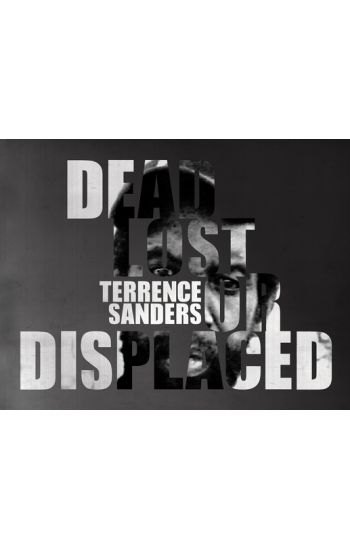
Terrence Sanders Dead Lost or Displaced
Terrence Sanders
University of New Orleans Publishing
2016
pokkari
"Take the compassionate eye of photographer Walker Evans, add the contemporary tragedy of Hurricane Katrina and a dash of poetry, and you have Terrence Sanders. Sanders's subjects confront the camera willingly and without coercion, with a variety of attitudes--some are vulnerable, others manage a shy or sheepish smile, a couple of them look high on something; all are united by their education in the School of Hard Knocks. "There but for the grace of God go I," might be the first thought to occur to viewers, followed by the question: What happened to these people that made them slip through the cracks? Was it moral weakness or just plain bad luck? Every day we pass people like this, on our way to work or in the supermarket parking lot, waiting by the bus stop, and often they barely register on our consciousness--and that is surely the express purpose behind Sanders' work: to make us look these people in the eye. These artworks preserve a momentary impression of a specific person on a certain day that for some reason the artist found worthy of documentation. Their presence is not immediate and palpable, but rather somewhat abstracted, shaped by the black and white film and the addition of diaristic prose that is yet subjective, from the artist's point of view. These artworks are politically motivated--they get under your skin, and once there, make themselves impossible to ignore. "You do your part and I'll do mine," the artist has written. Point well taken, Mr. Sanders. - JoAnne S. Northrup, Director of Contemporary Art Initiatives at the Nevada Museum of Art and the former Chief Curator at the Katie and Drew Gibson San Jose
Terrence Malick
Bloomsbury Academic USA
2014
nidottu
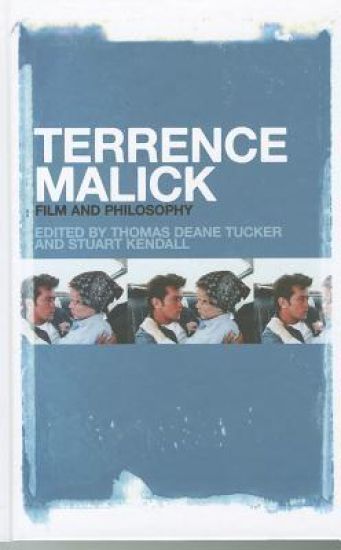
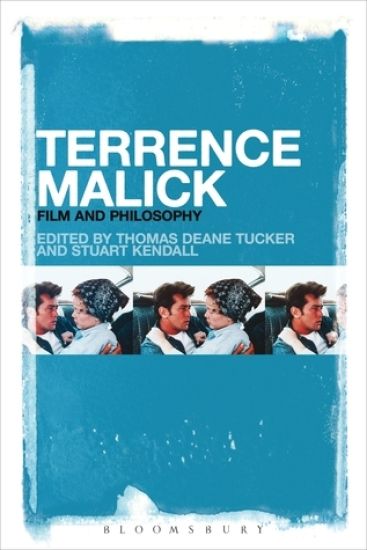
Terrence Malick's four feature films have been celebrated by critics and adored as instant classics among film aficionados, but the body of critical literature devoted to them has remained surprisingly small in comparison to Malick's stature in the world of contemporary film. Each of the essays in Terrence Malick: Film and Philosophy is grounded in film studies, philosophical inquiry, and the emerging field of scholarship that combines the two disciplines. Malick's films are also open to other angles, notably phenomenological, deconstructive, and Deleuzian approaches to film, all of which are evidenced in this collection. Terrence Malick: Film and Philosophy engages with Malick's body of work in distinct and independently significant ways: by looking at the tradition within which Malick works, the creative orientation of the filmmaker, and by discussing the ways in which criticism can illuminate these remarkable films.
Terrence is a very sad stallion. This makes the Rancher worried. How can he help his friend? Luckily, little Misty Ray knows just what to do