Kirjojen hintavertailu. Mukana 11 627 220 kirjaa ja 12 kauppaa.

Kirjahaku

Etsi kirjoja tekijän nimen, kirjan nimen tai ISBN:n perusteella.

1000 tulosta hakusanalla Vivek Sachdeva

Computational Modeling of Underground Coal Gasification

Computational Modeling of Underground Coal Gasification

Vivek V. Ranade; Sanjay M Mahajani; Ganesh Arunkumar Samdani

CRC Press
2019
sidottu
The book deals with development of comprehensive computational models for simulating underground coal gasification (UCG). It starts with an introduction to the UCG process and process modelling inputs in the form of reaction kinetics, flow patterns, spalling rate, and transport coefficient that are elaborated with methods to generate the same are described with illustrations. All the known process models are reviewed, and relative merits and limitations of the modeling approaches are highlighted and compared. The book describes all the necessary steps required to determine the techno-economic feasibility of UCG process for a given coal reserve, through modeling and simulation.
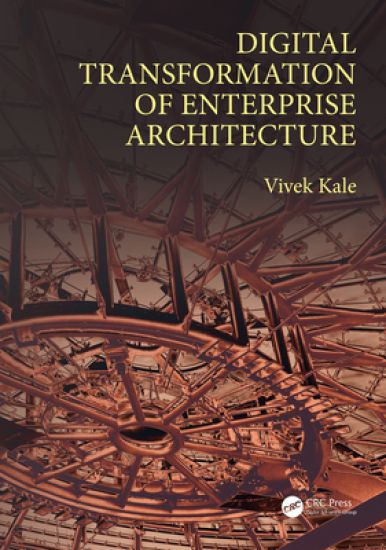
Digital Transformation of Enterprise Architecture
"In this book, Vivek Kale makes an important contribution to the theory and practice of enterprise architecture … this book captures the breadth and depth of information that a modern enterprise architecture must address to effectively support an agile enterprise. This book should have a place in every practicing architect's library."—John D. McDowall, Author of Complex Enterprise Architecture Digital Transformation of Enterprise Architecture is the first book to propose Enterprise Architecture (EA) as the most important element (after Business Models) for digital transformation of enterprises. This book makes digital transformation more tangible by showing the rationale and typical technologies associated with it, and these technologies in turn reveal the essence of digital transformation. This book would be useful for analysts, designers and developers of future-ready agile application systems.This book proposes that it is the perennial quest for interoperability & portability, scalability, availability, etc., that has directed and driven the evolution of the IT/IS industry in the past 50 years. It is this very quest that has led to the emergence of technologies like service-oriented, cloud, and big data computing. In addition to the conventional attributes of EA like interoperability, scalability and availability, this book identifies additional attributes of mobility, ubiquity, security, analyticity, and usability. This pragmatic book: Identifies three parts effort for any digital transformation: Business Models, Enterprise Architectures and Enterprise Processes. Describes eight attributes of EA: interoperability, scalability, availability, mobility, ubiquity, security, analyticity, and usability. Explains the corresponding technologies of service-oriented, cloud, big data, context-aware, Internet of Things (IoT), blockchain, soft, and interactive computing. Briefs on auxiliary technologies like integration, virtualization, replication, spatio-temporal databases, embedded systems, cryptography, data mining, and interactive interfaces that are essential for digital transformation of enterprise architecture. Introduces interactive interfaces like voice, gaze, gesture and 3D interfaces. Provides an overview of blockchain computing, soft computing, and customer interaction systems. Digital Transformation of Enterprise Architecture proposes that to withstand the disruptive digital storms of the future, enterprises must bring about digital transformation, i.e. a transformation that affects an exponential change (amplification or attenuation) in any aspect of the constituent attributes of EA. It proposes that each of these technologies (service-oriented, cloud, big data, context-aware, IoT, blockchain, soft, and interactive computing) bring about digital transformation of the corresponding EA attribute viz. interoperability, scalability, availability, mobility, ubiquity, security, analyticity, and usability.
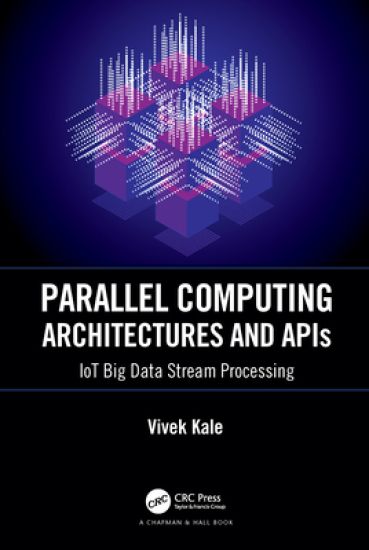
Parallel Computing Architectures and APIs
Parallel Computing Architectures and APIs: IoT Big Data Stream Processing commences from the point high-performance uniprocessors were becoming increasingly complex, expensive, and power-hungry. A basic trade-off exists between the use of one or a small number of such complex processors, at one extreme, and a moderate to very large number of simpler processors, at the other. When combined with a high-bandwidth, interprocessor communication facility leads to significant simplification of the design process. However, two major roadblocks prevent the widespread adoption of such moderately to massively parallel architectures: the interprocessor communication bottleneck, and the difficulty and high cost of algorithm/software development.One of the most important reasons for studying parallel computing architectures is to learn how to extract the best performance from parallel systems. Specifically, you must understand its architectures so that you will be able to exploit those architectures during programming via the standardized APIs.This book would be useful for analysts, designers and developers of high-throughput computing systems essential for big data stream processing emanating from IoT-driven cyber-physical systems (CPS).This pragmatic book: Devolves uniprocessors in terms of a ladder of abstractions to ascertain (say) performance characteristics at a particular level of abstraction Explains limitations of uniprocessor high performance because of Moore’s Law Introduces basics of processors, networks and distributed systems Explains characteristics of parallel systems, parallel computing models and parallel algorithms Explains the three primary categorical representatives of parallel computing architectures, namely, shared memory, message passing and stream processing Introduces the three primary categorical representatives of parallel programming APIs, namely, OpenMP, MPI and CUDA Provides an overview of Internet of Things (IoT), wireless sensor networks (WSN), sensor data processing, Big Data and stream processing Provides introduction to 5G communications, Edge and Fog computingParallel Computing Architectures and APIs: IoT Big Data Stream Processing discusses stream processing that enables the gathering, processing and analysis of high-volume, heterogeneous, continuous Internet of Things (IoT) big data streams, to extract insights and actionable results in real time. Application domains requiring data stream management include military, homeland security, sensor networks, financial applications, network management, web site performance tracking, real-time credit card fraud detection, etc.
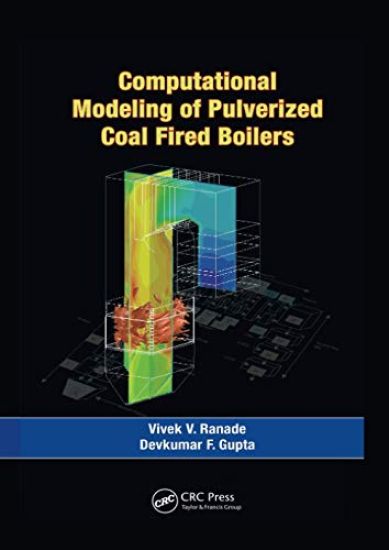
Computational Modeling of Pulverized Coal Fired Boilers

Computational Modeling of Pulverized Coal Fired Boilers

Vivek V. Ranade; Devkumar F. Gupta

CRC Press
2017
nidottu
Harness State-of-the-Art Computational Modeling Tools Computational Modeling of Pulverized Coal Fired Boilers successfully establishes the use of computational modeling as an effective means to simulate and enhance boiler performance. This text factors in how computational flow models can provide a framework for developing a greater understanding of the underlying processes in PC boilers. It also provides a detailed account of the methodology of computational modeling of pulverized coal boilers, as well as an apt approach to modeling complex processes occurring in PC boilers in a manageable way.Connects Modeling with Real-Life ApplicationsRestricted to the combustion side of the boiler (the authors assume some prior background of reaction engineering and numerical techniques), the book describes the individual aspects of combustion and heat recovery sections of PC boilers that can be used to further improve the design methodologies, optimize boiler performance, and solve practical boiler-related problems. The book provides guidelines on implementing the material in commercial CFD solvers, summarizes key points, and presents relevant case studies. It can also be used to model larger boilers based on conventional, super-critical, or ultra-super critical technologies as well as based on oxy-fuel technologies.Consisting of six chapters, this functional text:Provides a general introductionExplains the overall approach and methodologyExplores kinetics of coal pyrolysis (devolatilization) and combustion and methods of its evaluationPresents computational flow modeling approach to simulate pulverized coal fired boiler Covers modeling aspects from formulation of model equations to simulation methodologyDetermines typical results obtained with computational flow modelsDiscusses the phenomenological models or reactor network modelsIncludes practical applications of computational modelingComputational Modeling of Pulverized Coal Fired Boilers explores the potential of computational models for better engineering of pulverized coal boilers, providing an ideal resource for practicing engineers working in utility industries. It also benefits boiler design companies, industrial consultants, R & D laboratories, and engineering scientists/research students.
Truths: The Future of America First

Truths: The Future of America First

Vivek Ramaswamy

Thorndike Press Large Print
2025
sidottu
"New York Times bestselling author, accomplished entrepreneur, and former presidential candidate Vivek Ramaswamy has a plan to save America, and it begins with telling the truth. Today's conservatives know what they're against. They're anti-woke, anti-globalist, anti-big government. But what exactly do they stand for? The fact that this is a hard question to answer is a damning indictment of the modern Republican Party which has abjectly failed to articulate an affirmative alternative to the left's vision. Ramaswamy calls on the conservative movement to articulate exactly what it stands for, or else warns of another illusory "red wave" in 2024. Vivek Ramaswamy is not a politician. He is a first generation American, the founder of several successful companies, and a bestselling author. Ramaswamy decided he needed to step in the arena to stop the lies and tell the American people the truth. That's why he ran for president and became a leading voice in the America First movement. In Truths: The Future of America First, Ramaswamy shows exactly how honesty about the most important issues will get our country back on track. The America First movement emphasizes the issues that bring us together, not what divides us. It asks that we put our country over politics, merit over grievance, and truth over lies. Ramaswamy tells us the truth about our political system, and the people who control it, and exhorts us to exercise our right to self-governance again. America First is bigger than any man or woman. It's a movement. In Truths, Vivek Ramaswamy explains exactly why that movement needs to succeed now more than ever. Our country's future depends on it."
Practical .NET for Financial Markets

Practical .NET for Financial Markets

Vivek Shetty; Manish Jayaswal

APress
2014
nidottu
This unique book examines up-to-the-minute uses of technology in financial markets and then explains how you can profit from that knowledge. To participate in mainstream .NET development, you must address the changes in financial markets by using the most sophisticated tools available, Microsoft .NET technology. Software developers and architects, IT pros, and tech-savvy business users alike will find this book comprehensive and relevant. Each chapter presents problems and solutions that cover business aspects and relevant .NET features. Each aspect of .NET is analyzed in its proper context, so you'll understand why it is relevant and applicable in a real-life business case.
Collaborative Care of the Facial Injury Patient, An Issue of Oral and Maxillofacial Surgery Clinics
Articles include: The Problem of Orofacial Injury, Acute and Chronic Psychological Reactions to Orofacial Injury, Technological Advances to Foster Collaborative Care, Screening for Psychological Problems in the Trauma Setting, Barriers to Collaborative Care: Patient and Provider Perceptions, Substance Use Problems and Correlates of Facial Injury, Facial Injury as a Marker of Domestic Violence, Social Support and Resource Needs as Mediators of Recovery After Facial Injury, and Integrated Care in General Trauma.
Web-Based and Traditional Outsourcing

Web-Based and Traditional Outsourcing

Vivek Sharma; Varun Sharma; K.S. Rajasekaran

Taylor Francis Inc
2011
sidottu
In today’s increasingly competitive business environment, organizations must be able to adapt to the ever-changing business landscape where traditional business concepts no longer ensure success. The future will be driven by value and competing ideas—creating an environment where old alignments and equations will be replaced by a global network of projects and brand equity can evaporate quickly. Scale business relationships or perish is becoming the new mantra. Written by a team of authors from the world's largest software outsourcer, Web-Based and Traditional Outsourcing explains how to leverage the Web to effectively manage and deploy people, resources, and competencies—regardless of their location. It introduces ground-breaking business models and frameworks that add significant value to outsourcing. This cutting-edge reference: Integrates sourcing, acquisition, payment, and sales into a single end-to-end solutionAddresses outsourced project management, as well as the offer and acceptance of technology servicesDetails how to reduce costs and improve delivery times in software projects through reuse Explains risk sharing, co-ownership, win-win business approaches, and equity-based contracts Examining emerging trends and the future of outsourcing, the text provides authoritative insights into what are becoming the new ways of doing business. The authors supply the enterprise-wide vision of corporate capabilities needed to address contemporary outsourcing issues and include helpful tools for evaluating offshore vendors and determining the best location for your infrastructure needs.
Ergonomics in the Automotive Design Process
The auto industry is facing tough competition and severe economic constraints. Their products need to be designed "right the first time" with the right combinations of features that not only satisfy the customers but continually please and delight them by providing increased functionality, comfort, convenience, safety, and craftsmanship. Based on the author's forty plus years of experience as a human factors researcher, engineer, manager, and teacher who has conducted numerous studies and analyses, Ergonomics in the Automotive Design Process covers the entire range of ergonomics issues involved in designing a car or truck and provides evaluation techniques to avoid costly mistakes and assure high customer satisfaction. The book begins with the definitions and goals of ergonomics, historic background, and ergonomics approaches. It covers human characteristics, capabilities, and limitations considered in vehicle design in key areas such as anthropometry, biomechanics, and human information processing. It then examines how the driver and the occupants are positioned in the vehicle space and how package drawings and/or computer-aided design models are created from key vehicle dimensions used in the automobile industry. The author describes design tools used in the industry for occupant packaging, driver vision, and applications of other psychophysical methods. He covers important driver information processing concepts and models and driver error categories to understand key considerations and principles used in designing controls, displays, and their usages, including current issues related to driver workload and driver distractions.The author has included only the topics and materials that he found to be useful in designing car and truck products and concentrated on the ergonomic issues generally discussed in the automotive design studios and product development teams. He distills the information needed to be a member of an automotive product development team and create an ergonomically superior vehicle.
Hamiltonian Cycle Problem and Markov Chains

Hamiltonian Cycle Problem and Markov Chains

Vivek S. Borkar; Vladimir Ejov; Jerzy A. Filar; Giang T. Nguyen

Springer-Verlag New York Inc.
2012
sidottu
This research monograph summarizes a line of research that maps certain classical problems of discrete mathematics and operations research - such as the Hamiltonian Cycle and the Travelling Salesman Problems - into convex domains where continuum analysis can be carried out. Arguably, the inherent difficulty of these, now classical, problems stems precisely from the discrete nature of domains in which these problems are posed. The convexification of domains underpinning these results is achieved by assigning probabilistic interpretation to key elements of the original deterministic problems. In particular, the approaches summarized here build on a technique that embeds Hamiltonian Cycle and Travelling Salesman Problems in a structured singularly perturbed Markov decision process. The unifying idea is to interpret subgraphs traced out by deterministic policies (including Hamiltonian cycles, if any) as extreme points of a convex polyhedron in a space filled with randomized policies.The above innovative approach has now evolved to the point where there are many, both theoretical and algorithmic, results that exploit the nexus between graph theoretic structures and both probabilistic and algebraic entities of related Markov chains. The latter include moments of first return times, limiting frequencies of visits to nodes, or the spectra of certain matrices traditionally associated with the analysis of Markov chains. However, these results and algorithms are dispersed over many research papers appearing in journals catering to disparate audiences. As a result, the published manuscripts are often written in a very terse manner and use disparate notation, thereby making it difficult for new researchers to make use of the many reported advances.Hence the main purpose of this book is to present a concise and yet easily accessible synthesis of the majority of the theoretical and algorithmicresults obtained so far. In addition, the book discusses numerous open questions and problems that arise from this body of work and which are yet to be fully solved. The approach casts the Hamiltonian Cycle Problem in a mathematical framework that permits analytical concepts and techniques, not used hitherto in this context, to be brought to bear to further clarify both the underlying difficulty of NP-completeness of this problem and the relative exceptionality of truly difficult instances. Finally, the material is arranged in such a manner that the introductory chapters require very little mathematical background and discuss instances of graphs with interesting structures that motivated a lot of the research in this topic. More difficult results are introduced later and are illustrated with numerous examples.
Inverting the Paradox of Excellence

Inverting the Paradox of Excellence

Vivek Kale

CRC Press Inc
2014
sidottu
Over time, overemphasis and adherence to the same proven routines that helped your organization achieve success can also lead to its decline resulting from organizational inertia, complacency, and inflexibility. Drawing lessons from one of the best models of success, the evolutionary model, Inverting the Paradox of Excellence explains why your organization must proactively seek out changes or variations on a continuous basis for ensuring excellence by testing out a continuum of opportunities and advantages. In other words, to maintain excellence, the company must be in a constant state of flux!The book introduces the patterns and anti-patterns of excellence and includes detailed case studies based on different dimensions of variations, including shared values variations, structure variations, and staff variations. It presents these case studies through the prism of the "variations" idea to help you visualize the difference of the "case history" approach presented here. The case studies illustrate the different dimensions of business variations available to help your organization in its quest towards achieving and sustaining excellence. The book extends a set of variations inspired by the pioneering McKinsey 7S model, namely shared values, strategy, structure, stuff, style, staff, skills, systems, and sequence. It includes case history segments for Toyota, Acer, eBay, ABB, Cisco, Blackberry, Tata, Samsung, Volvo, Charles Schwab, McDonald's, Scania, Starbucks, Google, Disney, and NUMMI. It also includes detailed case histories of GE, IBM, and UPS.