Kirjojen hintavertailu. Mukana 12 406 388 kirjaa ja 12 kauppaa.

Kirjahaku

Etsi kirjoja tekijän nimen, kirjan nimen tai ISBN:n perusteella.

1000 tulosta hakusanalla WILLIAM MINTO

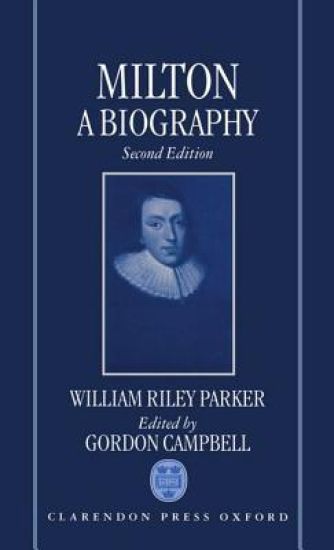
Milton: A Biography

Milton: A Biography

William Riley Parker

Clarendon Press
1996
sidottu
Parker's life of Milton has long been accepted as one of the great literary biographies of the twentieth century, a unique accomplishment of scholarship based on a vast range of documentary evidence. Originally published in 1968, the biography was immediately acclaimed as `indispensable', `authoritative', as well as `controversial', and Parker himself was described in The Review of English Studies as `a living library and a walking museum'. Gordon Campbell's new and revised edition of Volume 1 forms a complete, self-contained, and wholly accessible account of Milton's life which remains essential reading for the student of seventeenth-century literature, and for anyone who share Parker's enthusiasm for Milton's poetry.
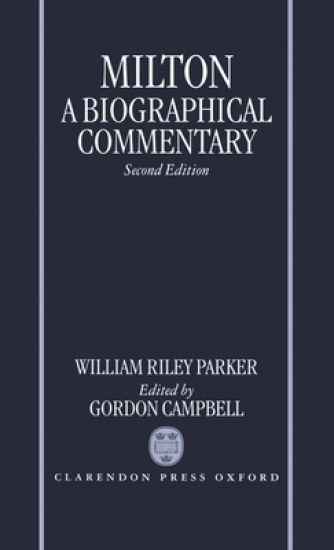
Milton: A Biographical Commentary

Milton: A Biographical Commentary

William Riley Parker

Clarendon Press
1996
sidottu
Parker's life of Milton has long been accepted as one of the great literary biographies of the twentieth century, a unique accomplishment of scholarship based on a vast range of documentary evidence. Originally published in 1968, the biography was immediately acclaimed as `indispensable', `authoritative', as well as `controversial', and Parker himself was described in The Review of English Studies as `a living library and a walking museum'. Since the first edition was published, our understanding of seventeenth-century history has been fundamentally reshaped by historians and literary scholars. Gordon Campbell's revised edition of the commentary includes supplementary notes which record recent findings with biographical implications, as well as the suggested resolutions to some of the questions raised by Parker's original text, such as the dating of Samson Agonistes and Milton's History of Britain.
Milton and Free Will

Milton and Free Will

William Myers

Routledge
2019
sidottu
First published in 1987. Milton and Free Will is an incisive, ambitious and comprehensive analysis and defence of the concept of free will, using Milton as an example and exemplar. Written with passion, and out of a lifelong engagement with the poetry of Milton and the philosophical and theological problems it encompasses, the book will illuminate both Milton studies and philosophical debate. The author engages with all the major currents of the free will debate, starting with Aristotle and Aquinas and considering arguments advanced by Hume and Kant as well as those of a number of modern philosophers including Polanyi, Kenny, Parfit, Plantinga, Swinburne, Dennett and Davidson. He pays particular attention to the Marxist formalism of Bakhtin, the Catholic phenomenology of Pope John Paul II and the evolutionism of Monod and Sober. He concludes with a rebuttal of the deconstructionism of Barthes, Derrida and Foucault. He claims that all the major difficulties faced by defenders of free will can be overcome if a notion of willing implicit in the work of Milton is properly understood. Freedom as Milton represented and understood it, he suggests, is a condition of mind arising out of inter-personal awareness and not a property or consequence of practical reasoning. He finds supporting evidence for this view in the writings of Newman and in Henry James’s The Portrait of a Lady, which he reads as a narrative structurally reversing Milton’s representation of the fall of Eve in Paradise Lost. The author systematically analyses and reanalyses key passages in his texts in the light of the many arguments for and against free will, seeking thereby to affirm the validity in principle, and the personal and political importance in practice, of the Christian humanist tradition of which he sees Milton, Newman and the Pope as important (if sometimes misleading) spokesmen.
Milton and Free Will

Milton and Free Will

William Myers

Routledge
2020
nidottu
First published in 1987. Milton and Free Will is an incisive, ambitious and comprehensive analysis and defence of the concept of free will, using Milton as an example and exemplar. Written with passion, and out of a lifelong engagement with the poetry of Milton and the philosophical and theological problems it encompasses, the book will illuminate both Milton studies and philosophical debate. The author engages with all the major currents of the free will debate, starting with Aristotle and Aquinas and considering arguments advanced by Hume and Kant as well as those of a number of modern philosophers including Polanyi, Kenny, Parfit, Plantinga, Swinburne, Dennett and Davidson. He pays particular attention to the Marxist formalism of Bakhtin, the Catholic phenomenology of Pope John Paul II and the evolutionism of Monod and Sober. He concludes with a rebuttal of the deconstructionism of Barthes, Derrida and Foucault. He claims that all the major difficulties faced by defenders of free will can be overcome if a notion of willing implicit in the work of Milton is properly understood. Freedom as Milton represented and understood it, he suggests, is a condition of mind arising out of inter-personal awareness and not a property or consequence of practical reasoning. He finds supporting evidence for this view in the writings of Newman and in Henry James’s The Portrait of a Lady, which he reads as a narrative structurally reversing Milton’s representation of the fall of Eve in Paradise Lost. The author systematically analyses and reanalyses key passages in his texts in the light of the many arguments for and against free will, seeking thereby to affirm the validity in principle, and the personal and political importance in practice, of the Christian humanist tradition of which he sees Milton, Newman and the Pope as important (if sometimes misleading) spokesmen.
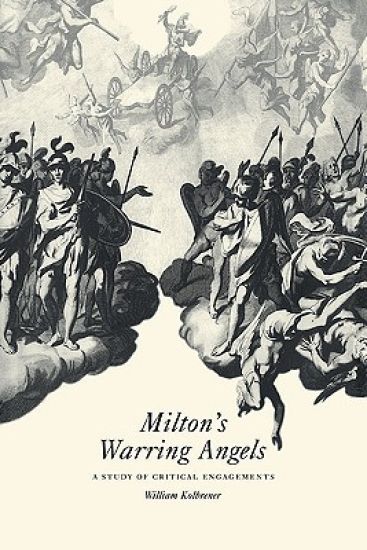
Milton's Warring Angels

Milton's Warring Angels

William Kolbrener

Cambridge University Press
2008
pokkari
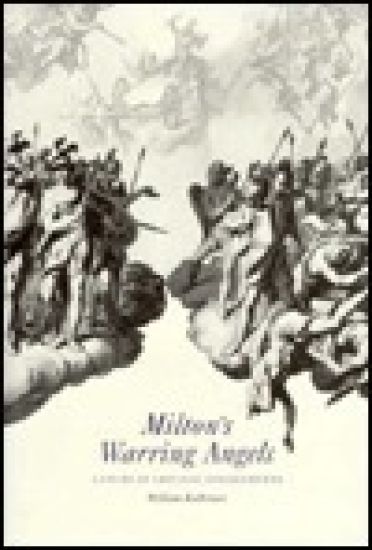
The centrality of Milton to the study of English literature often obscures the intense debates that rage about this ideological allegiances. The reception and interpretation of Milton's texts consistently present him as either a Christian republican or a committed individualist, a radical, heretical free thinker, or a traditional absolutist. In Milton's Warring Angels, William Kolbrener provides a critical account of the reception and interpretation of Milton's texts. He argues that the governing scheme of Milton criticism, the opposition of 'satanic' and 'angelic' readings, derives from historiographical tradition rooted in the Enlightenment. The Enlightenment antithesis between reason and authority, Kolbrener argues, has generated a set of interpretive approaches that inevitably end up violating the meaning of Milton's texts. Kolbrener shows how Milton articulates his thought in lexicons which are never fully assimilable to paradigms of modernity drawn from the Enlightenment. Instead, Milton's prose and poetry mediate between apparently contradictory positions; they join without ever reconciling the satanic and the angelic.
Milton and the Idea of the Fall

Milton and the Idea of the Fall

William Poole

Cambridge University Press
2009
pokkari
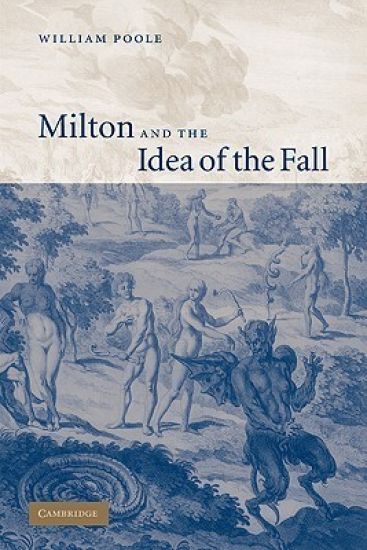
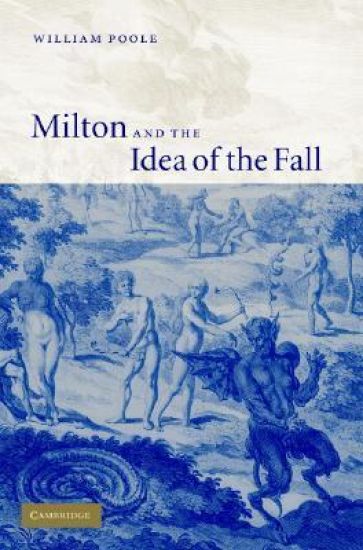
In Paradise Lost (1667), Milton produced the most magnificent poetic account ever written of the biblical Fall of man. In this wide-ranging study, William Poole presents a comprehensive analysis of the origin, evolution, and contemporary discussion of the Fall, and the way seventeenth-century authors, particularly Milton, represented it. Poole first examines the range and depth of early modern thought on the subject, then explains and evaluates the basis of the idea and the intellectual and theological controversies it inspired from early Christian times to Milton's own century. The second part of the book delves deeper into the development of Milton's own thought on the Fall, from the earliest of his poems, through his prose, to his mature epic. Poole distinguishes clearly for the first time the range and complexity of contemporary debates on the Fall of man, and offers many insights into the originality and sophistication of Milton's work.
Milton's Warring Angels

Milton's Warring Angels

William Kolbrener

Cambridge University Press
1997
sidottu
The centrality of Milton to the study of English literature often obscures the intense debates that rage about this ideological allegiances. The reception and interpretation of Milton's texts consistently present him as either a Christian republican or a committed individualist, a radical, heretical free thinker, or a traditional absolutist. In Milton's Warring Angels, William Kolbrener provides a critical account of the reception and interpretation of Milton's texts. He argues that the governing scheme of Milton criticism, the opposition of 'satanic' and 'angelic' readings, derives from historiographical tradition rooted in the Enlightenment. The Enlightenment antithesis between reason and authority, Kolbrener argues, has generated a set of interpretive approaches that inevitably end up violating the meaning of Milton's texts. Kolbrener shows how Milton articulates his thought in lexicons which are never fully assimilable to paradigms of modernity drawn from the Enlightenment. Instead, Milton's prose and poetry mediate between apparently contradictory positions; they join without ever reconciling the satanic and the angelic.
Milton and the Idea of the Fall

Milton and the Idea of the Fall

William Poole

Cambridge University Press
2005
sidottu
In Paradise Lost (1667), Milton produced the most magnificent poetic account ever written of the biblical Fall of man. In this wide-ranging study, William Poole presents a comprehensive analysis of the origin, evolution, and contemporary discussion of the Fall, and the way seventeenth-century authors, particularly Milton, represented it. Poole first examines the range and depth of early modern thought on the subject, then explains and evaluates the basis of the idea and the intellectual and theological controversies it inspired from early Christian times to Milton's own century. The second part of the book delves deeper into the development of Milton's own thought on the Fall, from the earliest of his poems, through his prose, to his mature epic. Poole distinguishes clearly for the first time the range and complexity of contemporary debates on the Fall of man, and offers many insights into the originality and sophistication of Milton's work.