
Kirjahaku
Etsi kirjoja tekijän nimen, kirjan nimen tai ISBN:n perusteella.
1000 tulosta hakusanalla Wallace Edwards

Wallace
Canongate Classics
2003
nidottu
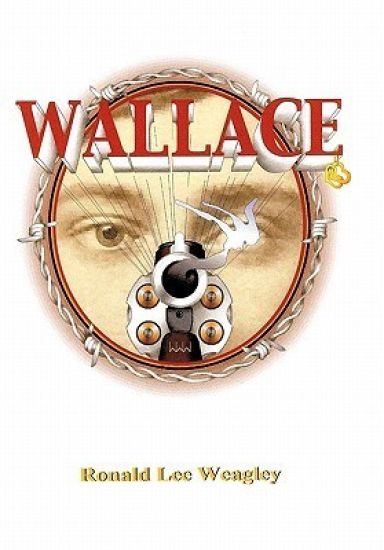
This extraordinary poem has been widely popular and influential ever since it was written in the fifteenth century, and its heroic account of the swordfighter Wallace was to symbolise the cause of liberty and independence to many other countries and cultures in the centuries to come.Looking back to the days of the Bruce and the war of independence, Blind Harry's poem is not an aristocratic tale of chivalry and nobility, but a vivid account of the vagaries of war and the brutal realities of battle, wounding and betrayal, all seen from the point of view of the troops in the field.The fruit of many years of scholarship, Anne McKim has produced what is unquestionably the definitive edition of this truly epic work.


Reprint of the original, first published in 1869.
Reprint of the original, first published in 1869.


Wallace, a mouse, could do almost anything. Anything that is, as long as he had a list. Wallace is a shy mouse. He writes lists. Lists of recipes, funny words, and frightening experiences. Wallace meets his lively neighbor named Albert. His world is swiftly opened to new delights, such as painting and music. Wallace and Albert experience the excitement of an adventure, and Wallace discovers a new joy. Friendship.
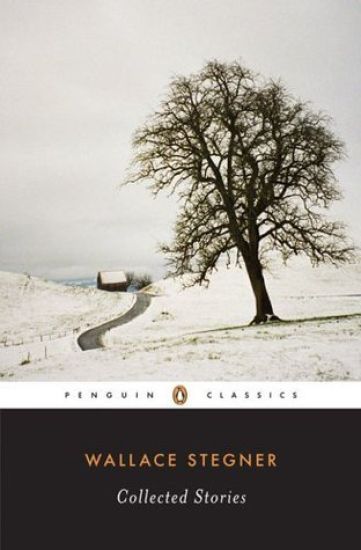
In a literary career spanning more than fifty years, Wallace Stegner created a remarkable record of the history and culture of twentieth-century America. Each of the thirty-one stories contained in this volume embody some of the best virtues and values to be found in contemporary fiction, demonstrating why the author is acclaimed as one of America's master storytellers. For more than seventy years, Penguin has been the leading publisher of classic literature in the English-speaking world. With more than 1,700 titles, Penguin Classics represents a global bookshelf of the best works throughout history and across genres and disciplines. Readers trust the series to provide authoritative texts enhanced by introductions and notes by distinguished scholars and contemporary authors, as well as up-to-date translations by award-winning translators.
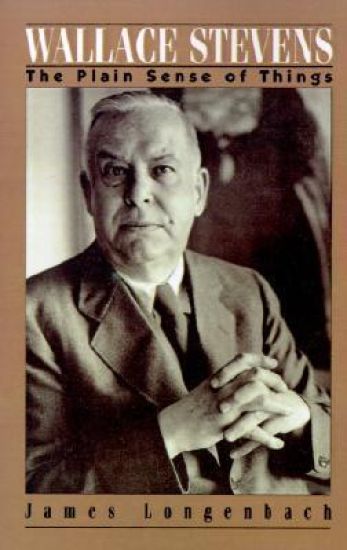
Wallace Stevens: The Plain Sense of Things
James Longenbach
Oxford University Press Inc
1992
nidottu
Most readers of Wallace Stevens wonder at his `double life'; the poet and the lawyer who worked in the insurance business. But Longenbach argues that Stevens lived no such double life. By examining a full range of Stevens' writing in the context of American political and intellectual history, Longenbach's book reveals for the first time a poet who was not only aware of events taking place around him but whose work was often inspired by those events. While the focus is on Stevens, and the historical events and ideological debates around him, poets like Eliot, Williams, Marianne Moore, and Burke are also examined.

The big bad wolf is finally going to trial and have his day in court. He has been accused of eating two helpless little pigs. Jurors from various fairy tales, nursery rhymes, and fables have been selected to hear this much-anticipated case. They will have to decide the fate of Wallace the Wolf. Will jurors have the ability to set aside their personal beliefs, experiences, and emotions to consider the facts presented in the court? Will Wallace be found guilty of this crime, or is this a case of mistaken identity? Will justice prevail through a fair and just process, or will the jury's biased past impact the final verdict?

The big bad wolf is finally going to trial and have his day in court. He has been accused of eating two helpless little pigs. Jurors from various fairy tales, nursery rhymes, and fables have been selected to hear this much-anticipated case. They will have to decide the fate of Wallace the Wolf. Will jurors have the ability to set aside their personal beliefs, experiences, and emotions to consider the facts presented in the court? Will Wallace be found guilty of this crime, or is this a case of mistaken identity? Will justice prevail through a fair and just process, or will the jury's biased past impact the final verdict?
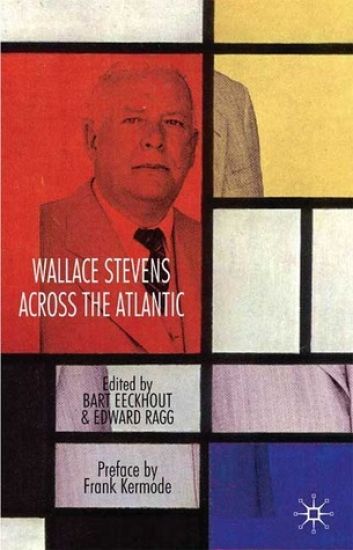
Wallace Stevens across the Atlantic
Palgrave Macmillan
2008
sidottu
In a unique collection of essays devoted to one of America's most significant twentieth-century poets, a group of international contributors considers the Transatlantic nature of Stevens' poetry, providing original accounts of how a poet wary of 'influence' created a poetics which continues to haunt contermporary verse.
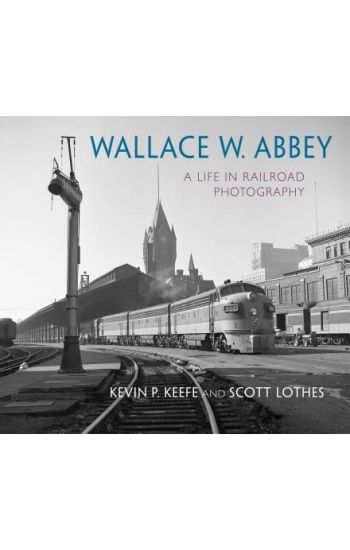
From the late 1940s onward, Wallace W. Abbey masterfully combined journalistic and artistic vision to transform everyday transportation moments into magical photographs. Abbey, a photographer, journalist, historian, and railroad industry executive, helped people from many different backgrounds understand and appreciate what was taken for granted: a world of locomotives, passenger trains, big-city terminals, small-town depots, and railroaders. During his lifetime he witnessed and photographed sweeping changes in the railroading industry from the steam era to the era of diesel locomotives and electronic communication. Wallace W. Abbey: A Life in Railroad Photography profiles the life and work of this legendary photographer and showcases the transformation of transportation and photography after World War II. Featuring more than 175 exquisite photographs in an oversized format, Wallace W. Abbey is an outstanding tribute to a gifted artist and the railroads he loved.

Tony Sharpe explores the symbiotic and antagonistic relations between Stevens's literary life and his working life as insurance executive, outlining the personal, historical and publishing contexts that shaped his writing career, and suggesting how awareness of these contexts throws new light on the poems. In this appreciative but not uncritical study, Sharpe tries to see the man behind the mandarin, whilst remaining alert to the challengingly sumptuous austerities of one of America's most significant poets.

Wallace Stevens
Routledge
1997
sidottu
This set comprises of 40 volumes covering nineteenth and twentieth century European and American authors. These volumes will be available as a complete set, mini boxed sets (by theme) or as individual volumes. This second set compliments the first 68 volume set of Critical Heritage published by Routledge in October 1995.
This book studies Wallace Stevens and pre-Socratic philosophy, showing how concepts that animate Stevens’ poetry parallel concepts and techniques found in the poetic works of Parmenides, Empedocles, and Xenophanes, and in the fragments of Heraclitus. Tompsett traces the transition of pre-Socratic ideas into poetry and philosophy of the post-Kantian period, assessing the impact that the mythologies associated with pre-Socratism have had on structures of metaphysical thought that are still found in poetry and philosophy today. This transition is treated as becoming increasingly important as poetic and philosophic forms have progressively taken on the existential burden of our post-theological age. Tompsett argues that Stevens’ poetry attempts to ‘play’ its audience into an ontological ground in an effort to show that his ‘reduction of metaphysics’ is not dry philosophical imposition, but is enacted by our encounter with the poems themselves. Through an analysis of the language and form of Stevens’ poems, Tompsett uncovers the mythology his poetry shares with certain pre-Socratics and with Greek tragedy. This shows how such mythic rhythms are apparent within the work of Friedrich Nietzsche, Martin Heidegger and Hans-Georg Gadamer, and how these rhythms release a poetic understanding of the violence of a ‘reduction of metaphysics.’
Wallace Stevens
Routledge
2013
nidottu
This set comprises of 40 volumes covering nineteenth and twentieth century European and American authors. These volumes will be available as a complete set, mini boxed sets (by theme) or as individual volumes. This second set compliments the first 68 volume set of Critical Heritage published by Routledge in October 1995.
This study examines Wallace Stevens' ideas and practice of poetic language with a focus on the 1930s, an era in which Stevens persistently thematized a keenly felt pressure for the possible social involvement and political utility of poetic language. The argument suggests how mutually implicated elements of his poetry such as diction, prosody and metaphor are relied on to signify or enact aesthetic closure; both in the negative terms of expressive impotence and unethical isolation and the positive ones of imaginative and linguistic change. In this respect, the study deals closely with the epistemologically and ethically fraught issue of the ambiguous and volatile role of non-semantic elements and linguistic difficulty in Stevens' language. Assuming that these facets are not exclusive to this period but receive a very clear, and therefore instructive, formulation in it, the discussion outlines some of Stevens' most central tropes for poetic creativity at this stage of his career, suggesting ways in which they came to form part of his later discourse on poetic functionality, when polemical concepts for the imagination, such as "evasion" and "escapism," became central. Stevens' prosody is discussed from within an eclectic analytical framework in which cumulative rhythmics is complemented by traditional metrics as a way of doing justice to his rich, varied and cognitively volatile use of verse language. The expressive potency of prosodic patterning is understood both as an effect of its resistance to semantic interpretation and by assuming a formal drive to interpret them in relation to the semantic and metaphoric staging of individual poems. A poem, in turn, is understood both as a strategic, stylistically deviant response to the challenges of a particular historical moment, and as an attempt to communicate through creating a sense of linguistic resistance and otherness.