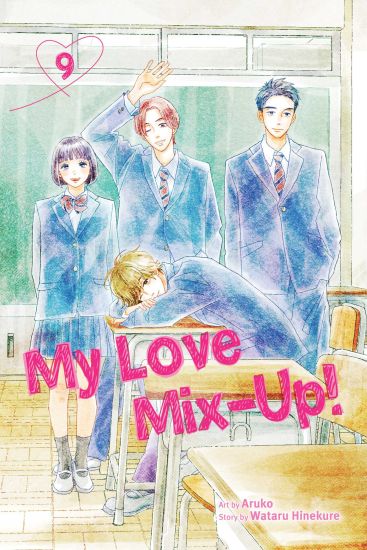
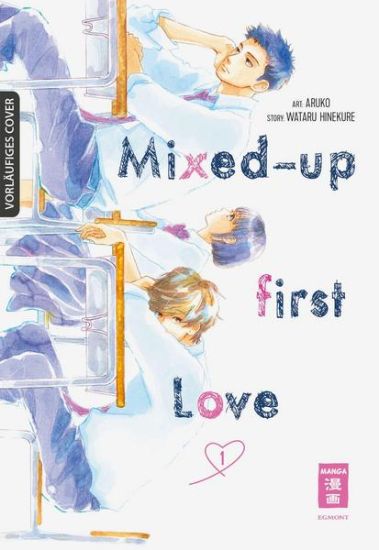
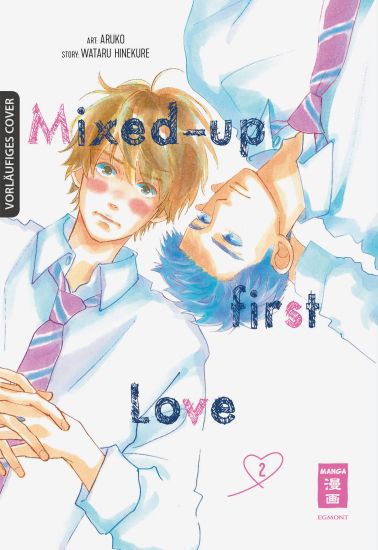
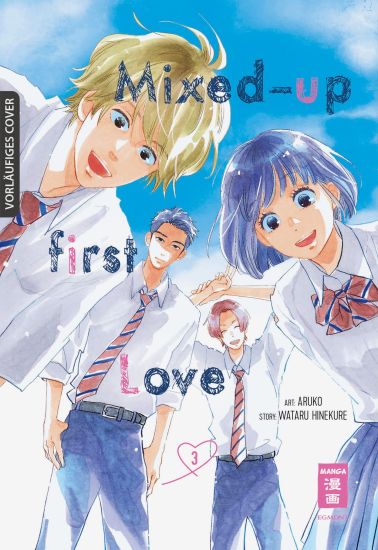
In this warmhearted romantic comedy, a mistaken identity leads to a blossoming romance between two boys.Aoki has a crush on Hashimoto, the girl in the seat next to him in class. But he despairs when he borrows her eraser and sees she’s written the name of another boy—Ida—on it. To make matters more confusing, Ida sees Aoki holding that very eraser and thinks Aoki has a crush on him!Aoki is dating Ida, a boy in his class. Aoki is shaken when he finds out Ida wants to attend college in Kyoto, so they decide to go to an overnight open-campus event together. Meanwhile, Akkun and Hashimoto make summer plans, but is Akkun ready to meet Hashimoto’s parents?
The full-color manga that inspired the anime series!High schooler Anzu Hoshino has a great life. Every day she plays video games, pigs out on snacks, and pets her beloved cat. But this blissful existence is turned into a confusing mess when a magical creature transports her to an altered reality bereft of her favorite things. Now she’s stuck with hot guys instead! How can she possibly survive in such an awful world?!Anzu must play along in this altered reality before she can return to her normal life, so she begrudgingly makes friends with Tsukasa Kazuki. He unfortunately happens to be one of the hottest and most popular guys at school, and what’s worse, she realizes that he might not even be that bad of a person!
The full-color manga that inspired the anime series!High schooler Anzu Hoshino has a great life. Every day she plays video games, pigs out on snacks, and pets her beloved cat. But this blissful existence is turned into a confusing mess when a magical creature transports her to an altered reality bereft of her favorite things. Now she’s stuck with hot guys instead! How can she possibly survive in such an awful world?!Thanks to magical fairy Riri’s magic, Anzu is now stuck spending her days fending off hot guys. First it was classmate Kazuki, then childhood friend Junta. Now the rich and naive Koganei has suddenly taken an interest in her!
The full-color manga that inspired the anime series!High schooler Anzu Hoshino has a great life. Every day she plays video games, pigs out on snacks, and pets her beloved cat. But this blissful existence is turned into a confusing mess when a magical creature transports her to an altered reality bereft of her favorite things. Now she’s stuck with hot guys instead! How can she possibly survive in such an awful world?!Riri, the fairy to blame for Anzu’s misfortune, transforms into a human boy! Will Anzu be able to cope on the magical mock date Riri has in store for her?!
The full-color manga that inspired the anime series!High schooler Anzu Hoshino has a great life. Every day she plays video games, pigs out on snacks, and pets her beloved cat. But this blissful existence is turned into a confusing mess when a magical creature transports her to an altered reality bereft of her favorite things. Now she’s stuck with hot guys instead! How can she possibly survive in such an awful world?!Thanks to Riri’s magic, Anzu is stuck spending her days fending off hot guys. But now an ugly specter from Kazuki’s past reappears, and even Anzu herself is put in physical danger!
In this warmhearted romantic comedy, a mistaken identity leads to a blossoming romance between two boys.Aoki has a crush on Hashimoto, the girl in the seat next to him in class. But he despairs when he borrows her eraser and sees she’s written the name of another boy—Ida—on it. To make matters more confusing, Ida sees Aoki holding that very eraser and thinks Aoki has a crush on him!At the end of summer break, Aoki and Ida go watch a fireworks show. Aoki’s heart is set fluttering as Ida abruptly shows more interest in romance! When their school cultural festival comes along, there’s even a chance for their parents to meet?!
In this warmhearted romantic comedy, a mistaken identity leads to a blossoming romance between two boys.Aoki has a crush on Hashimoto, the girl in the seat next to him in class. But he despairs when he borrows her eraser and sees she’s written the name of another boy—Ida—on it. To make matters more confusing, Ida sees Aoki holding that very eraser and thinks Aoki has a crush on him!Aoki and Ida are hard at work studying so they can go to the same college. They pray for their exams to go well at their first shrine visit of the year, but will their bond hold strong when it’s tested?! Meanwhile, Akkun and Hashimoto have taken different paths, but they still cheer each other on. Graduation is right around the corner!
Petite Histoire de la guerre entre la France et la Prusse (Juillet 1870-mars 1871), par R. Watari, japonais...Date de l'edition originale: 1871Ce livre est la reproduction fidele d'une oeuvre publiee avant 1920 et fait partie d'une collection de livres reimprimes a la demande editee par Hachette Livre, dans le cadre d'un partenariat avec la Bibliotheque nationale de France, offrant l'opportunite d'acceder a des ouvrages anciens et souvent rares issus des fonds patrimoniaux de la BnF.Les oeuvres faisant partie de cette collection ont ete numerisees par la BnF et sont presentes sur Gallica, sa bibliotheque numerique.En entreprenant de redonner vie a ces ouvrages au travers d'une collection de livres reimprimes a la demande, nous leur donnons la possibilite de rencontrer un public elargi et participons a la transmission de connaissances et de savoirs parfois difficilement accessibles.Nous avons cherche a concilier la reproduction fidele d'un livre ancien a partir de sa version numerisee avec le souci d'un confort de lecture optimal. Nous esperons que les ouvrages de cette nouvelle collection vous apporteront entiere satisfaction.Pour plus d'informations, rendez-vous sur www.hachettebnf.fr
This volume explores the compositional semantics of clausal complementation, and proposes a theory in which clause-embedding predicates are uniformly “question-oriented”, i.e., they take a set of propositions as their semantic argument. This theory opens up new horizons for the study of embedded questions and clausal complementation, and presents a successful case study on how lexical semantics interacts with syntax and compositional semantics. It offers new perspectives on issues in epistemology and the philosophy of language, such as the relationship between know-wh and know-that and the nature of attitudinal objects in general. Cross-linguistically, attitude predicates such as know, tell and surprise, can embed both declarative and interrogative clauses. Since these clauses are taken to represent different semantic objects, like propositions and questions, the embedding behavior of these predicates poses puzzles for the compositional semantics of clausal complementation. In addition, the fact that some verbs “select for” a certain complement type poses further challenges for compositional semantics. This volume addresses these issues based on a uniformly question-oriented analysis of attitude predicates, and proposes to derive their variable behaviors from their lexical semantics. The book is essential reading for linguists working on the syntax and semantics of clausal complementation, as well as those interested in the role of lexical semantics in compositional semantics. It will also be valuable for philosophers who are interested in applying linguistic tools to address philosophical problems.
This volume explores the compositional semantics of clausal complementation, and proposes a theory in which clause-embedding predicates are uniformly “question-oriented”, i.e., they take a set of propositions as their semantic argument. This theory opens up new horizons for the study of embedded questions and clausal complementation, and presents a successful case study on how lexical semantics interacts with syntax and compositional semantics. It offers new perspectives on issues in epistemology and the philosophy of language, such as the relationship between know-wh and know-that and the nature of attitudinal objects in general. Cross-linguistically, attitude predicates such as know, tell and surprise, can embed both declarative and interrogative clauses. Since these clauses are taken to represent different semantic objects, like propositions and questions, the embedding behavior of these predicates poses puzzles for the compositional semantics of clausal complementation. In addition, the fact that some verbs “select for” a certain complement type poses further challenges for compositional semantics. This volume addresses these issues based on a uniformly question-oriented analysis of attitude predicates, and proposes to derive their variable behaviors from their lexical semantics. The book is essential reading for linguists working on the syntax and semantics of clausal complementation, as well as those interested in the role of lexical semantics in compositional semantics. It will also be valuable for philosophers who are interested in applying linguistic tools to address philosophical problems.
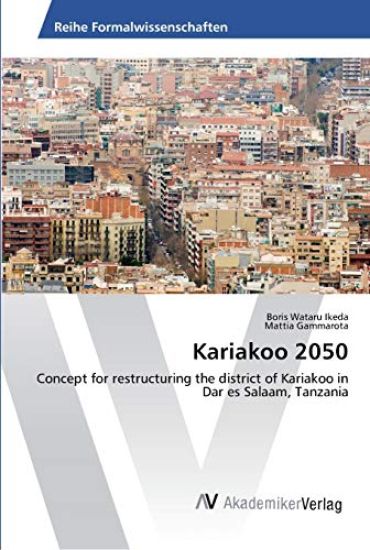
In terms of this work in architecture at the Hafencity university in Hamburg, Germany, an excursion with a subsequent field study and research in Dar es Salaam took place from September to November 2014. During this period we gained a deep insight into local cultural, climatic and urban patterns. This work is based on an urban and architectural analysis of private and public spaces, as well as their users and the core uses, in the proximity of the main market of the quarter. The findings of the site analysis were used to develop proposals to optimise the use of the spaces in an integrated approach with the development the quarter. A single plot and a market hall will be prototypically developed to demonstrate how future construction in the neighbourhood of Kariakoo could be implemented. The aim is to promote a way of considering architecture which takes into account climatic conditions and local materials as well as the architectural culture of the region, reflecting the identity of the place.