Kirjojen hintavertailu. Mukana 11 342 296 kirjaa ja 12 kauppaa.

Kirjahaku

Etsi kirjoja tekijän nimen, kirjan nimen tai ISBN:n perusteella.

1000 tulosta hakusanalla Wauter Mannaert

Water

Water

John Finney

Oxford University Press
2015
nidottu
Water dominates the surface of Earth and is vital to life on our planet. It is a remarkable liquid which shows anomalous behaviour. In this Very Short Introduction John Finney introduces the science of water, and explores how the structure of water molecules gives rise to its physical and chemical properties. Considering water in all three of its states as ice and steam as well as liquid, Finney explains the great importance of an understanding of its structure and behaviour to a range of fields including chemistry, astrophysics, and earth and environmental sciences. Finney describes the role of water in biology, and ends with a discussion of the outstanding controversies concerning water, and some of the 'magical' properties which have been claimed for it. ABOUT THE SERIES: The Very Short Introductions series from Oxford University Press contains hundreds of titles in almost every subject area. These pocket-sized books are the perfect way to get ahead in a new subject quickly. Our expert authors combine facts, analysis, perspective, new ideas, and enthusiasm to make interesting and challenging topics highly readable.
Walter Hilton, The Scale of Perfection, Book II
The Scale of Perfection is the major work of the late fourteenth-century contemplative writer, Walter Hilton, an Augustinian canon, presumed to have studied canon law at Cambridge before renouncing a promising legal career in order to become a recluse. He gave up the solitary religious life to enter the priory of Thurgarton, Nottinghamshire, where he died, some ten years later, in 1396. The Scale was composed in two books, the first written in the 1380s for a woman recluse, who is likewise addressed in Book II; Hilton was still working on the second book at his death. The two books have different textual histories, and have been edited separately. This long-awaited edition of the second book of the Scale has been brought to completion by Michael Sargent after the death of Stanley Hussey, who had worked on this edition for many years. The Scale is a major work of Middle English prose, a guide to the contemplative life moving from the elements of Christian faith to 'the pilgrimage to the Jerusalem of contemplation'. Thus, though there are indications that Hilton knew the work of the anonymous author of The Cloud of Unknowing, the second book of the Scale describes the work of contemplation, integrated into the lives of all Christians, whether living in the world or professed religious. Owing to Hilton's reputation and through modern translations and commentaries, the Scale has become a spiritual classic. This edition of Book II will be the only one to have taken account of all of the surviving medieval and early modern manuscripts. It presents the text of the two most important manuscripts in parallel, with an Introduction, containing full discussion of the Scale's textual history and presentation of the evidence, manuscript descriptions, textual and explanatory notes, and glossary.
Walter Scott and Fame

Walter Scott and Fame

Robert Mayer

Oxford University Press
2017
sidottu
Walter Scott and Fame is a study of correspondences between Scott and socially and culturally diverse readers of his work in the English-speaking world in the early nineteenth century. Examining authorship, reading, and fame, the book is based on extensive archival research, especially in the collection of letters to Scott in the National Library of Scotland. Robert Mayer demonstrates that in Scott's literary correspondence constructions of authorship, reading strategies, and versions of fame are posited, even theorized. Scott's reader-correspondents invest him with power but they also attempt to tap into or appropriate some of his authority. Scott's version of authorship sets him apart from important contemporaries like Wordsworth and Byron, who adhered, at least as Scott viewed the matter, to a rarefied conception of the writer as someone possessed of extraordinary power. The idea of the author put in place by Scott in dialogue with his readers establishes him as a powerful figure who is nevertheless subject to the will of his audience. Scott's literary correspondence also demonstrates that the reader can be a very powerful figure and that we should regard reading not just as the reception of texts but also as the apprehension of an author-function. Thus, Scott's correspondence makes it clear that the relationship between authors and readers is a dynamic, often fraught, connection, which needs to be understood in terms of the new culture of celebrity that emerged during Scott's working life. Along with Byron, the study shows, Scott was at the centre of this transformation.
Walter Pater and Persons

Walter Pater and Persons

Stephen Cheeke

Oxford University Press
2024
sidottu
Walter Pater and Persons investigates the vital concept of the Person in the work of Walter Pater, a major influence on late nineteenth- and early twentieth-century literature. Stephen Cheeke explores the intersections of the person, persona, and personality in Pater's work; re-examines arguments about his famously personal prose style; traces Pater's ambivalent fascination with impersonality and asceticism; considers the poetics of personification in his writings about Greek myth and religion, in the divine logos of early Christianity, and in the theory of Platonic Universals; and explores his fascination with metempsychosis (the many persons through whom the individual soul transmigrates). Cheeke also explores the networks in which Pater was interpreted and misinterpreted by different persons and personalities, such as Oscar Wilde, Arthur Symons, and W.B Yeats. Their (mis)readings of Pater, and rebellions against his work from Decadent, antinomian, and 'mystical' perspectives, reveal the ways in which Pater's writing had always been in a critical dialogue with its own thinking, as well as a prescient one in relation to his reception. The philosophical question of 'what is a person?'--a crucial one for the nineteenth century, and with an increasing urgency in our own times--is illuminated throughout this work.
Water Engineering in the Ancient World

Water Engineering in the Ancient World

Charles R. Ortloff

Oxford University Press
2009
sidottu
Charles Ortloff provides a new perspective on archaeological studies of the urban and agricultural water supply and distribution systems of the major ancient civilizations of South America, the Middle East, and South-East Asia, by using modern computer analysis methods to extract the true hydraulic/hydrological knowledge base available to these peoples. His many new revelations about the capabilities and innovations of ancient water engineers force us to re-evaluate what was known and practised in the hydraulic sciences in ancient times. Given our current concerns about global warming and its effect on economic stability, it is fascinating to observe how some ancient civilizations successfully coped with major climate change events by devising defensive agricultural survival strategies, while others, which did not innovate, failed to survive.
Walter Sickert

Walter Sickert

Walter Sickert

Oxford University Press
2003
nidottu
Walter Richard Sickert (1860-1942) was a major European artist and critic of the late nineteenth and early twentieth century, whose statements on art from the 1880s to the 1930s have been used by artists and writers on art for more than half a century. His criticism is provocative and penetrating, his writing style brilliant and entertaining. The need for a comprehensive edition of Sickert's art-critical writings is overwhelming, and the texts gathered together here for the first time in one volume by Anna Gruetzner Robins, a leading expert on the subject, prove that his contribution as an art-writer was a major one in its own right. The texts are presented chronologically and supported by notes which give the information necessary to situate the figures and events to which Sickert refers. Containing over 400 entries this collection offers much new insight into Sickert as an artist and provides valuable information about other British artists of the late nineteenth and early twentieth centuries. Sickert was as much at home in Paris and Venice as in London: his record of conversations with Degas and meetings with other French artists, and the new provenances and exhibition histories he gives of many well-known works of art, make this book indispensable.
Walter of Châtillon

Walter of Châtillon

Oxford University Press
2013
sidottu
Walter of Châtillon was one of the leading Medieval Latin poets, who flourished at the high point of Medieval Latin literature - the later twelfth century. This volume presents the Latin text and facing English translation of Walter's shorter poems, including love poems, satires, and (largely Christmas) hymns. His satirical poems, often written in Goliardic hexameters, of which he was an accomplished master, are fine examples of the form. The allusiveness of his hymns makes them often notoriously difficult, but they provide a fascinating insight into the mindset of the clergy of the time and the prevalence of allegorical interpretation of the Bible. This volume provides an outline of the author's life, and adds a further fifteen poems to the previously accepted canon of fifty-two poems which appear in earlier editions of Walter of Châtillon's poetry. The introduction discusses the attribution of the additional poems, Walter's use of rhythmical and metrical verse in these poems, the relevant manuscripts, the recurring themes of the Feast of Fools, and avarice and largesse, and the arrangement of the poems. This volume makes available in English for the first time the shorter poems of an important medieval poet together with an improved Latin text. Scholars of the twelfth century will find a great deal of primary evidence on a wide variety of social and religious issues now accessible to them.
Water Security in Peri-urban South Asia
Are our urban spaces growing thirsty by the day? What implications do unplanned urban expansion and climate change have on judicious accessibility to water resources among the multitudes who have made urban fringes their home in South Asia? A significant gap exists in current studies of adaptation and vulnerability to the vagaries of climate change that tend to focus on purely agrarian or urban contexts. Addressing this lack, this volume documents and analyses the experiences of this urban periphery in three developing nations, India, Nepal, and Bangladesh, in terms of water security and access, adaptation to climate change, and urban expansion. Cutting across disciplinary boundaries, and using a mix of qualitative and quantitative methods from natural and social sciences, the essays explore the drivers of vulnerability in four peri-urban sites Hyderabad and Gurgaon in India, Khulna in Bangladesh, and Kathmandu in Nepal and examine the cost-effectiveness of technological and institutional alternatives to build adaptive capacity. The essays explore how different groups of people, men and women, face differential vulnerabilities to water insecurity induced by urbanization and climate change and how they adapt through technological or institutional innovation.
Water Law in India

Water Law in India

Philippe Cullet

OUP India
2017
sidottu
First published in 2011, Water Law in India is the only book to offer a comprehensive survey of the legal instruments concerning water in India. It presents a variety of national and state-level instruments that make up the complex and diverse field of water law and policy. This book fills a critical gap in the study of water law, providing a rich reference point for the entire gamut of legal mechanisms available in India.This edition has been extensively revised to include new instruments on water regulation, such as the draft National Water Framework Bill, 2016, and the Model Groundwater (Sustainable Management) Act, 2016; new water-related instruments in such varied fields as criminal law, land acquisition law, and rural employment legislation; and a chapter on international legal instruments.
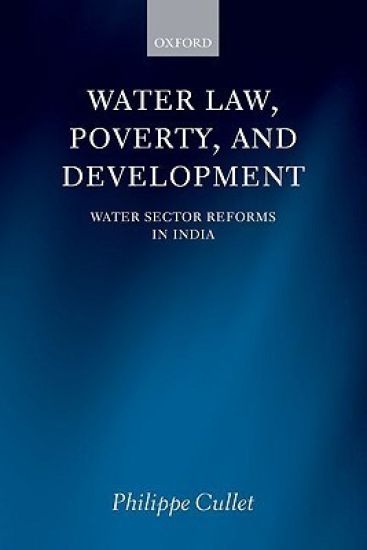
Water Law, Poverty, and Development

Water Law, Poverty, and Development

Philippe Cullet

Oxford University Press
2009
sidottu
This monograph comprehensively examines water law regulations and reform in the present decade, going beyond a simple analysis of existing water law and regulations to encompass environmental, social, economic, and human rights aspects of water as a natural resource. Using the specific case of India and on the related international law and policy framework that directly influences water regulatory developments in India, this book offers what will be the first and only analysis of water law reforms taking place at the national level in many developing countries in their domestic and international context. On the one hand, international freshwater law remains under-developed and existing legal instruments such as the 1997 UN Convention only address a limited set of relevant issues. Yet, the international law and policy framework concerning freshwater is increasingly important in shaping up law reforms taking place at the national level, in particular in developing countries. Indeed, non-binding resolutions such as the Dublin Statement on Water and Sustainable Development (1992) have had an immense influence on water law reforms in most developing countries. This book seeks to conceive of and analyse freshwater regulation in a broader context, and go beyond a literature that either lauds or criticises ongoing water sector reforms to provide an analytical basis for the reforms which all countries will have to adopt in the near or medium-term future.
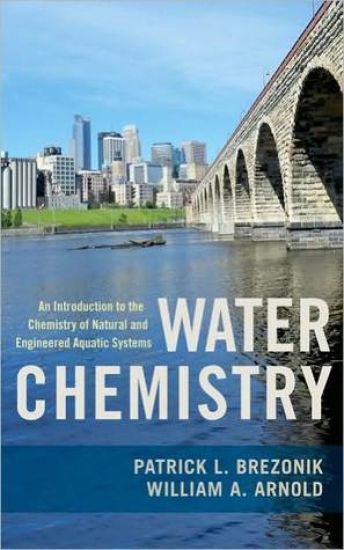
Water Chemistry

Water Chemistry

Patrick Brezonik; William Arnold

Oxford University Press Inc
2011
sidottu
This book provides students with the tools necessary to understand the processes that control the chemical species present in waters of both natural and engineered systems. After providing basic information about water itself and the chemical composition of water in environmental systems, the text covers the necessary theory (thermodynamics, activity, and kinetics) and background material to solve problems. It emphasizes that both equilibrium and kinetic processes are important in aquatic systems. The book does not merely focus on inorganic constituents, but also on the fate and reactions of organic chemicals. The solving of quantitative equilibrium and kinetic problems using mathematical, graphical, and computational tools is emphasized throughout presentations on acid-base chemistry, complexation of metal ions, solubility of minerals, and oxidation-reduction reactions. The use of these problem-solving tools is then extended in the presentation of topics relevant to natural systems, including dissolved oxygen, nutrient chemistry, geochemical controls on chemical composition, photochemistry, and natural organic matter. The kinetics and equilibria relevant to engineered systems (e.g., chlorination and disinfection chemistry, sorption and surface chemistry) and organic contaminant chemistry are also discussed. Numerous in-chapter examples that show the application of theory and demonstrate how problems are solved using algebraic, graphical, and computer-based techniques are included. Examples are relevant to both natural waters and engineered systems.
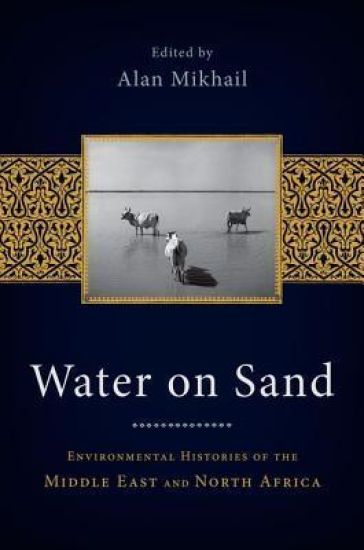
Water on Sand

Water on Sand

Oxford University Press Inc
2013
nidottu
From Morocco to Iran and the Black Sea to the Red, Water on Sand rewrites the history of the Middle East and North Africa from the Little Ice Age to the Cold War. As the first holistic environmental history of the region over the last half millennium, it shows the intimate connections between peoples and environments and how these relationships shaped political, economic, and social history in startling and unforeseen ways. Nearly all political powers in the region based their rule on the management and control of natural resources, and nearly all individuals were in constant communion with the natural world. To grasp how these multiple histories were central to the pasts of the Middle East and North Africa, the chapters in this book evidence the power of environmental history to open up new avenues of historical research and understanding. Water on Sand furthermore traces how the Middle East and North Africa deeply affected the global histories of climate, disease, trade, energy, environmental politics, ecological manipulation, and much more. Lying at the intersection of three continents and as many seas, the Middle East has obviously been central to world history for millennia. Studying the ecological implications of these global connections, both for the region itself and for the rest of the world, helps to bring the Middle East and North Africa into global history and to show how the region must be an essential part of any understanding of the environments of Eurasia over the last five hundred years. Deeply researched, globally comparative, and highly provocative, Water on Sand represents both a new kind of Middle Eastern history and a new kind of environmental history.
Water on Sand

Water on Sand

Oxford University Press Inc
2013
sidottu
From Morocco to Iran and the Black Sea to the Red, Water on Sand rewrites the history of the Middle East and North Africa from the Little Ice Age to the Cold War. As the first holistic environmental history of the region over the last half millennium, it shows the intimate connections between peoples and environments and how these relationships shaped political, economic, and social history in startling and unforeseen ways. Nearly all political powers in the region based their rule on the management and control of natural resources, and nearly all individuals were in constant communion with the natural world. To grasp how these multiple histories were central to the pasts of the Middle East and North Africa, the chapters in this book evidence the power of environmental history to open up new avenues of historical research and understanding. Water on Sand furthermore traces how the Middle East and North Africa deeply affected the global histories of climate, disease, trade, energy, environmental politics, ecological manipulation, and much more. Lying at the intersection of three continents and as many seas, the Middle East has obviously been central to world history for millennia. Studying the ecological implications of these global connections, both for the region itself and for the rest of the world, helps to bring the Middle East and North Africa into global history and to show how the region must be an essential part of any understanding of the environments of Eurasia over the last five hundred years. Deeply researched, globally comparative, and highly provocative, Water on Sand represents both a new kind of Middle Eastern history and a new kind of environmental history.
Walter Camp

Walter Camp

Julie Des Jardins

Oxford University Press Inc
2015
sidottu
To a handful of colleagues, Walter Camp was a clock-company executive. To nearly everyone else, he was the quintessential gentleman athlete and the Father of American Football. Born in Connecticut in 1859, he attended Yale University just as collegiate sport was growing organized and competitive in the United States. In college, he was a varsity letterman who led the earliest efforts to codify the rules of football and to make it distinct from English rugby. As the creator of the All-America football team and the writer of some of the first football fiction, guides, and sports page coverage, Camp popularized the game like no other. For four decades, he was the most influential regulator in college football, making him the target of charges that the game was too brutal. Under his watch, dozens of college and high school players were killed or maimed on the gridiron. President Theodore Roosevelt urged him to reform football to prevent administrators from banning it, but Camp was ambivalent about removing the very physicality from the game that made it man-making in his eyes. Although he made his greatest contributions to football, he also had a hand in developing college baseball, crew, and track and field, as well as amateur boxing, tennis, and Olympic teams, making him one the nation's foremost propagators of amateur sport. The greatest proof of his contention that athletics, football especially, cultivated effective, courageous men came in World War I, when massive numbers of college football players enlisted for military service and the Allies defeated the Germans; Camp insisted that American athleticism was the reason. Along with cultivating his own body, he popularized strength training and the ideal of the muscular physique for American boys, helping to redefine the ideal man of modern times.
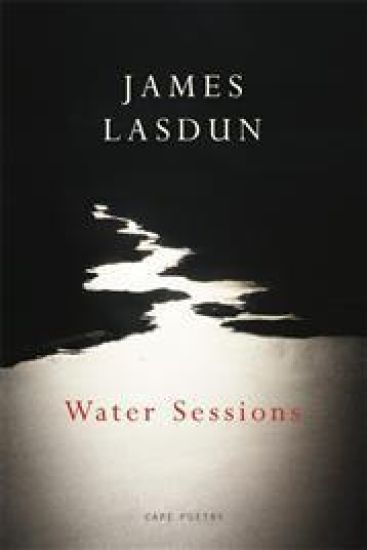
Water Sessions

Water Sessions

James Lasdun

Vintage
2012
pokkari
James Lasdun's new book of poems, his first since his acclaimed collection Landscape with Chainsaw, applies his characteristic blend of the celebratory and the elegiac to a rich variety of new themes and old obsessions.
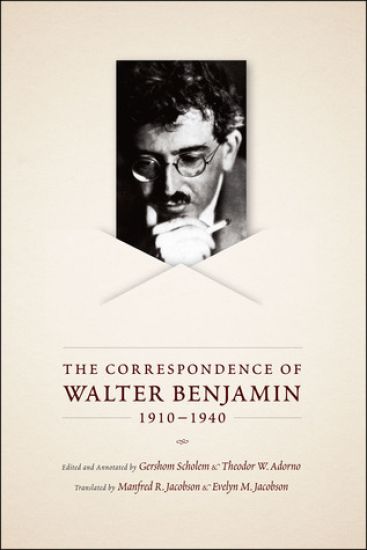
The Correspondence of Walter Benjamin, 1910-1940

The Correspondence of Walter Benjamin, 1910-1940

Walter Benjamin

University of Chicago Press
2012
nidottu
Called "the most important critic of his time" by Hannah Arendt, Walter Benjamin has only become more influential over the years, as his work has assumed a crucial place in current debates over the interactions of art, culture, and meaning. A "natural and extraordinary talent for letter writing was one of the most captivating facets of his nature," writes Gershom Scholem in his foreword to this volume; and Benjamin's correspondence reveals the evolution of some of his most powerful ideas, while also offering an intimate picture of Benjamin himself and the times in which he lived. Writing at length to Scholem and Theodor Adorno, and exchanging letters with Rainer Maria Rilke, Hannah Arendt, Max Brod, and Bertolt Brecht, Benjamin elaborates on his ideas about metaphor and language. He reflects on literary figures from Kafka to Karl Kraus, and expounds his personal attitudes toward such subjects as Marxism and French national character. Providing an indispensable tool for any scholar wrestling with Benjamin's work, "The Correspondence of Walter Benjamin" is a revelatory look at the man behind much of the twentieth century's most significant criticism.
Walter Ralegh's "History of the World" and the Historical Culture of the Late Renaissance
Imprisoned in the Tower of London after the death of Queen Elizabeth in 1603, Sir Walter Ralegh spent seven years producing his massive History of the World. Created with the aid of a library of more than five hundred books that he was allowed to keep in his quarters, this incredible work of English vernacular would become a best seller, with nearly twenty editions, abridgments, and continuations issued in the years that followed. Nicholas Popper uses Ralegh's History as a touchstone in this lively exploration of the culture of history writing and historical thinking in the late Renaissance. From Popper we learn why early modern Europeans ascribed heightened value to the study of the past and how scholars and statesmen began to see historical expertise as not just a foundation for political practice and theory, but as a means of advancing their power in the courts and councils of contemporary Europe. The rise of historical scholarship during this period encouraged the circulation of its methods to other disciplines, transforming Europe's intellectual-and political-regimes. More than a mere study of Ralegh's History of the World, Popper's book reveals how the methods that historians devised to illuminate the past structured the dynamics of early modernity in Europe and England.
Walter Ralegh's "History of the World" and the Historical Culture of the Late Renaissance
Imprisoned in the Tower of London after the death of Queen Elizabeth in 1603, Sir Walter Ralegh spent the next seven years producing his massive "History of the World". Created with the aid of a library of more than five hundred books he was allowed to keep in his quarters, this incredible work of English vernacular would become a best-seller, with nearly twenty editions, abridgments, and continuations issued in the years that followed. Nicholas Popper uses Ralegh's History as a touchstone in this lively exploration of the culture of history writing and historical thinking in the late Renaissance. From Popper we learn why early modern Europeans ascribed heightened value to the study of the past and how scholars and statesmen began to see historical expertise as not just a foundation for political practice and theory, but a means of advancing their power in the courts and councils of contemporary Europe. The rise of historical scholarship during this period encouraged the circulation of its methods to other disciplines, transforming Europe's intellectual - and political - regimes. More than a mere study of Ralegh's book, Popper's book reveals how the methods historians devised to illuminate the past structured the dynamics of early modernity in Europe and England.
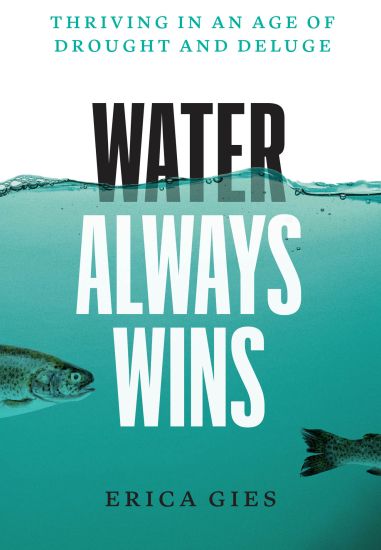
Water Always Wins: Thriving in an Age of Drought and Deluge
Winner of the Rachel Carson Award for Excellence in Environmental Journalism, Water Always Wins is a hopeful journey around the world and across time, illuminating better ways to live with water. Nearly every human endeavor on the planet was conceived and constructed with a relatively stable climate in mind. But as new climate disasters remind us every day, our world is not stable--and it is changing in ways that expose the deep dysfunction of our relationship with water. Increasingly severe and frequent floods and droughts inevitably spur calls for higher levees, bigger drains, and longer aqueducts. But as we grapple with extreme weather, a hard truth is emerging: our development, including concrete infrastructure designed to control water, is actually exacerbating our problems. Because sooner or later, water always wins. In this quietly radical book, science journalist Erica Gies introduces us to innovators in what she calls the Slow Water movement who start by asking a revolutionary question: What does water want? Using close observation, historical research, and cutting-edge science, these experts in hydrology, restoration ecology, engineering, and urban planning are already transforming our relationship with water. Modern civilizations tend to speed water away, erasing its slow phases on the land. Gies reminds us that water's true nature is to flex with the rhythms of the earth: the slow phases absorb floods, store water for droughts, and feed natural systems. Figuring out what water wants--and accommodating its desires within our human landscapes--is now a crucial survival strategy. By putting these new approaches to the test, innovators in the Slow Water movement are reshaping the future.
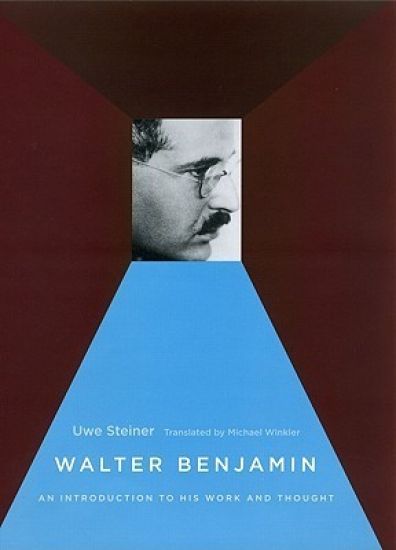
Walter Benjamin

Walter Benjamin

Uwe Steiner

University of Chicago Press
2010
sidottu
Seven decades after his death, German Jewish writer, philosopher, and literary critic Walter Benjamin (1892-1940) continues to fascinate and influence. Here Uwe Steiner offers a comprehensive and sophisticated introduction to the oeuvre of this intriguing theorist. Acknowledged only by a small circle of intellectuals during his lifetime, Benjamin is now a major figure whose work is essential to an understanding of modernity. Steiner traces the development of Benjamin's thought chronologically through his writings on philosophy, literature, history, politics, the media, art, photography, cinema, technology, and theology. "Walter Benjamin" reveals the essential coherence of its subject's thinking while also analyzing the controversial or puzzling facets of Benjamin's work. That coherence, Steiner contends, can best be appreciated by placing Benjamin in his proper context as a member of the German philosophical tradition and a participant in contemporary intellectual debates. As Benjamin's writing attracts more and more readers in the English-speaking world, "Walter Benjamin" will be a valuable guide to this fascinating body of work.