Kirjahaku
Etsi kirjoja tekijän nimen, kirjan nimen tai ISBN:n perusteella.
1000 tulosta hakusanalla Yan Mo
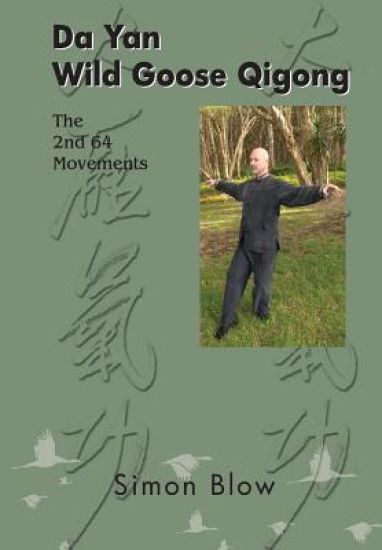
Da Yan - Wild Goose QigongThe 2nd 64 movementsFrom ancient times, Qigong was developed as a way of helping improve people's quality of life. It's an important component of the Chinese medical health systems. The art of Qigong consists primarily of meditation, relaxation, physical movement, mind-body integration and breathing exercises. When the mind and body come into a state of balance, stress is reduced and there is an increase in health and longevity.The 2nd 64 Da Yan Wild Goose Qigong movement set deals primarily with the 'pre-natal body' and refers to the energy we gather from the universe and from our ancestors before birth. Having dredged the channels in the 1st 64 movement set, the 2nd 64 movement set is designed to clear the channels to absorb fresh Qi, expel stale Qi and to restore organ balance. The twisting, stretching, bending and pressing movements produce stronger Qi fields and intensify the circulation through the energy channels. In the 2nd 64 movement set the goose is embarking on a great journey and flies out from this world to the edge of the Milky Way, to pick the herbs or gather the pre-natal Qi from the core of the universe. It then flies back to this world to share this healing energy with humanity Simon Blow is a 29th Generation of the Da Yan Wild Goose Qigong, an initiated student of the 28th lineage holder Grand Master Chen Chuan Gang, the eldest son of Grand Master Yang Mei Jung. He is a master teacher (Laoshi) and is the author of numerous books, DVDs and meditation CDs about the ancient Chinese healing arts. Simon has been initiated into Dragon Gate Daoism and given the name 'Xin Si' meaning 'Genuine Wisdom' and is also a Standing Council member of the World Academic Society of Medical Qigong, Beijing, China.'This is the teaching textbook on Wild Goose Qigong in accordance with the original principles of the ancient masters, accurate instructions for all the movements, genuine meaning and interpretation of the understanding of all the key principles.' Grand Master Chen Chuan Gang 'Qigong makes me feel centered and balanced. I find I am calmer and more able to be the mindful person I wish to be.' Annie'Qigong makes me feel calm, focused, happy and healthy. I have experienced improved health, both physically and mentally.' Jann
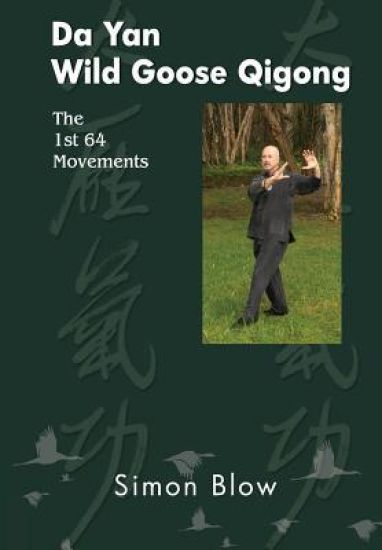
Da Yan Wild Goose Qigong - The 1st 64 movements 'Da Yan' translates to 'great bird' and is an ancient cultivation practice originating from the Jin Dynasty about 1700 years ago. Daoist Masters from the sacred Kunlun Mountains, in the Northern Himalayan area in south-west China, would observe the migrating geese which descended in this area each year. They would mimic the movements of these great birds and started to developed the Da Yan Wild Goose Qigong system.Its healing and spiritual legacy was passed down through many generations; however Dayan Qigong was withheld from the general public until 1978. Then 27th lineage holder Grand Master Yang Mei Jung (1895-2002) decided to teach this ancient Qigong practice and share its healing benefits to improve the quality of life of all people.The 1st 64 movement set deals primary with the 'post-natal body' relating to the energy that one gathers after birth. The movements representing the flight of wild geese are slow, graceful movements and strong, quick movements designed to release stale Qi and to gather fresh Qi, helping to restore balance and stimulate the entire energy system of the body.
Mongol Conquests in the Novels of Vasily Yan
Dmitry Shlapentokh
Ibidem-verlag, Jessica Haunsch
2017
pokkari
The Mongol Conquests in the Novels of Vasily Yan: An Intellectual Biography
Dmitry Shlapentokh
Ibidem Press
2017
nidottu
Vasily Yan (Vassily Grigoryevich Yanchevetsky, 1874-1954) was a writer of historical novels whose popularity survives the test of time. He was widely read throughout the Soviet era and continues to be popular in the post-Soviet era. This book is not just a biographical sketch of an important Russian/Soviet writer basically unknown to the Western public. The focus on Yan and his work also demonstrates the role of ideology in a totalitarian society. Shlapentokh shows that ideology and cultural and intellectual life in totalitarian regimes are more complex than is often assumed. Intellectuals often engaged in stressful, but--in its literary outcome--captivating "cat and mouse" games with censors, the powerful, and the government.
Psikolojik Testlerde Modern Test Teorisi ve Madde Yan¿t Kuram¿
Arkun Tatar
Lap Lambert Academic Publishing
2018
nidottu
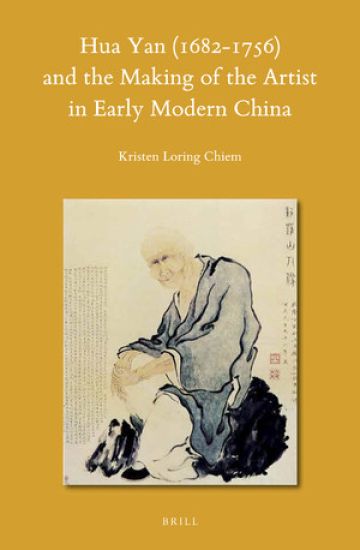
Hua Yan (1682-1756) and the Making of the Artist in Early Modern China
Kristen Chiem
BRILL
2020
sidottu
Hua Yan (1682-1756) and the Making of the Artist in Early Modern China explores the relationships between the artist, local society, and artistic practice during the Qing dynasty (1644–1911). Arranged as an investigation of the artist Hua Yan’s work at a pivotal moment in eighteenth-century society, this book considers his paintings and poetry in early eighteenth-century Hangzhou, mid-eighteenth-century Yangzhou, and finally their nineteenth-century afterlife in Shanghai. By investigating Hua Yan’s struggle as a marginalized artist—both at his time and in the canon of Chinese art—this study draws attention to the implications of seeing and being seen as an artist in early modern China.
O2O shang ye mo shi ying yong yu chuan tong yan jing ye zhi yan jiu
Jian Hong Li
¿¿¿¿¿¿¿
2016
nidottu


jia gou dao xiang you xian dian shi wang lu guan li xi tong mo xing zhi yan jiu
Ji Mou Zhou
¿¿¿¿¿¿¿
2015
nidottu