Kirjojen hintavertailu. Mukana 11 717 486 kirjaa ja 12 kauppaa.

Kirjahaku

Etsi kirjoja tekijän nimen, kirjan nimen tai ISBN:n perusteella.

1000 tulosta hakusanalla "Civilization"

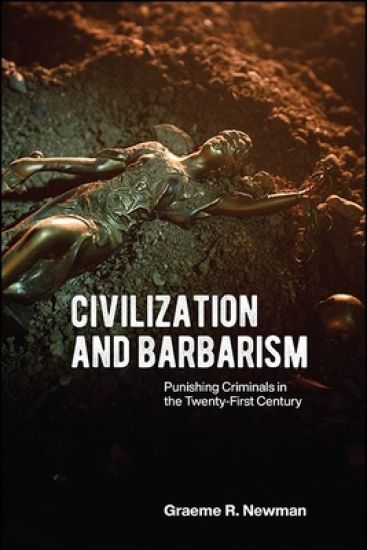
Civilization and Barbarism

Civilization and Barbarism

Graeme R. Newman

State University of New York Press
2020
sidottu
Challenges the established corrections paradigm and argues for replacing mass incarceration with a viable and more humane alternative.The practice of mass incarceration has come under increasing criticism by criminologists and corrections experts who, nevertheless, find themselves at a loss when it comes to offering credible, practical, and humane alternatives. In Civilization and Barbarism, Graeme R. Newman argues this impasse has arisen from a refusal to confront the original essence of punishment, namely, that in some sense it must be painful. He begins with an exposition of the traditional philosophical justifications for punishment and then provides a history of criminal punishment. He shows how, over time, the West abandoned short-term corporal punishment in favor of longer-term incarceration, justifying a massive bureaucratic prison complex as scientific and civilized. Newman compels the reader to confront the biases embedded in this model and the impossibility of defending prisons as a civilized form of punishment. A groundbreaking work that challenges the received wisdom of "corrections," Civilization and Barbarism asks readers to reconsider moderate corporal punishment as an alternative to prison and, for the most serious offenders, forms of incapacitation without prison.The book also features two helpful appendixes: a list of debating points, with common criticisms and their rebuttals, and a chronology of civilized punishments.
Civilization and Barbarism

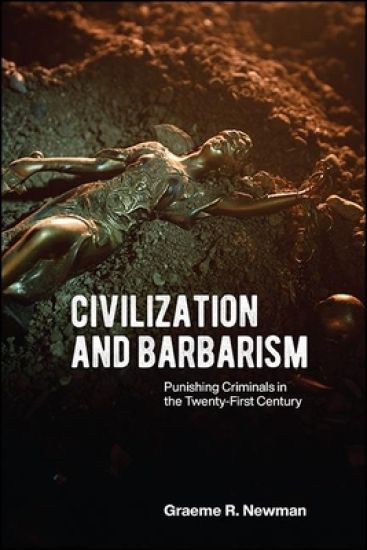
Civilization and Barbarism

Graeme R. Newman

State University of New York Press
2021
pokkari
Challenges the established corrections paradigm and argues for replacing mass incarceration with a viable and more humane alternative.The practice of mass incarceration has come under increasing criticism by criminologists and corrections experts who, nevertheless, find themselves at a loss when it comes to offering credible, practical, and humane alternatives. In Civilization and Barbarism, Graeme R. Newman argues this impasse has arisen from a refusal to confront the original essence of punishment, namely, that in some sense it must be painful. He begins with an exposition of the traditional philosophical justifications for punishment and then provides a history of criminal punishment. He shows how, over time, the West abandoned short-term corporal punishment in favor of longer-term incarceration, justifying a massive bureaucratic prison complex as scientific and civilized. Newman compels the reader to confront the biases embedded in this model and the impossibility of defending prisons as a civilized form of punishment. A groundbreaking work that challenges the received wisdom of "corrections," Civilization and Barbarism asks readers to reconsider moderate corporal punishment as an alternative to prison and, for the most serious offenders, forms of incapacitation without prison.The book also features two helpful appendixes: a list of debating points, with common criticisms and their rebuttals, and a chronology of civilized punishments.
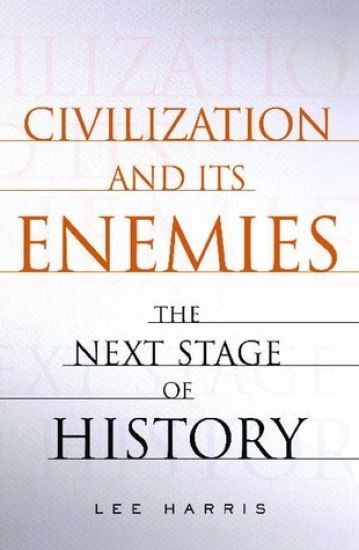
Civilization and Its Enemies

Civilization and Its Enemies

Lee Harris

The Free Press
2012
pokkari
Forgetfulness occurs when those who have been long inured to civilized order can no longer remember a time in which they had to wonder whether their crops would grow to maturity without being stolen or their children sold into slavery by a victorious foe....They forget that in time of danger, in the face of the enemy, they must trust and confide in each other, or perish....They forget, in short, that there has ever been a category of human experience called the enemy. "That, before 9/11, was what had happened to us. The very concept of the enemy had been banished from our moral and political vocabulary. An enemy was just a friend we hadn't done enough for yet. Or perhaps there had been a misunderstanding, or an oversight on our part -- something that we could correct.... "Our first task is therefore to try to grasp what the concept of the enemy really means. The enemy is someone who is willing to die in order to kill you. And while it is true that the enemy always hates us for a reason, it is his reason, and not ours." So begins Civilization and Its Enemies, an extraordinary tour de force by America's "reigning philosopher of 9/11," Lee Harris. What Francis Fukuyama did for the end of the Cold War, Lee Harris has now done for the next great conflict: the war between the civilized world and the international terrorists who wish to destroy it. Each major turning point in our history has produced one great thinker who has been able to step back from petty disagreements and see the bigger picture -- and Lee Harris has emerged as that man for our time. He is the one who has helped make sense of the terrorists' fantasies and who forces us most strongly to confront the fact that our enemy -- for the first time in centuries -- refuses to play by any of our rules, or to think in any of our categories. We are all naturally reluctant to face a true enemy. Most of us cannot give up the myth that tolerance is the greatest of virtues and that we can somehow convert the enemy to our beliefs. Yet, as Harris's brilliant tour through the stages of civilization demonstrates, from Sparta to the French Revolution to the present, civilization depends upon brute force, properly wielded by a sovereign. Today, only America can play the role of sovereign on the world stage, by the use of force when necessary. Lee Harris's articles have been hailed by thinkers from across the spectrum. His message is an enduring one that will change the way readers think -- about the war with Iraq, about terrorism, and about our future.