
Kirjahaku
Etsi kirjoja tekijän nimen, kirjan nimen tai ISBN:n perusteella.
662 tulosta hakusanalla "Inversion"
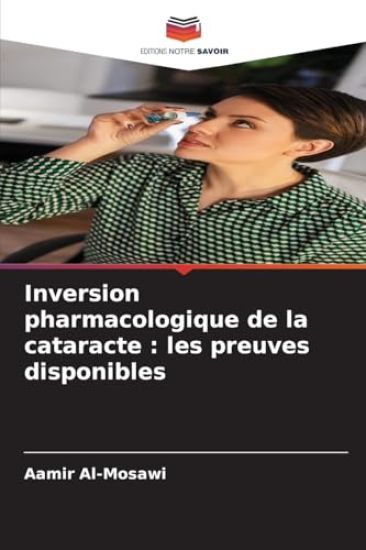
Inversion pharmacologique de la cataracte: les preuves disponibles
Aamir Al-Mosawi
Editions Notre Savoir
2025
nidottu
La cataracte, une cause majeure de d ficience visuelle grave, est trait e depuis l'Antiquit , en commen ant par des m thodes rudimentaires comme le couchage. Les techniques chirurgicales ont consid rablement volu au cours des si cles. Les approches non chirurgicales visant retarder ou pr venir la formation de la cataracte font de plus en plus l'objet de recherches. L' tude pr sent e dans cet ouvrage vise r sumer et valuer de mani re critique les donn es existantes sur l'efficacit et les m canismes de la pir noxine dans le traitement de la cataracte et des affections oculaires connexes. La pir noxine pr sente de multiples actions pharmacologiques susceptibles de retarder la cataractogen se. Bien que prometteuse, son utilisation clinique globale est limit e en raison de l'absence d'essais contr l s randomis s grande chelle. Alors que les gouttes oculaires de pir noxine (Catalin) offrent une approche pharmacologique pour retarder la progression de la cataracte via des m canismes oculaires locaux, des preuves croissantes sugg rent qu'une suppl mentation syst mique en antioxydants peut offrir des avantages synergiques.

Inversión inmobiliaria en Bangladés: un estudio más detallado
Naheem Mahtab; Md. Nazmul Islam
Ediciones Nuestro Conocimiento
2025
nidottu
Inversión colectiva y efectividad
Ediciones Nuestro Conocimiento
2025
pokkari
Inversión vectorial del campo acústico basada en el aprendizaje profundo
Ediciones Nuestro Conocimiento
2025
pokkari
Inversion du champ acoustique vectoriel basée sur l'apprentissage profond
Xiaoman Li
Editions Notre Savoir
2025
pokkari

Inversion de la résistance aux médicaments dans le cancer du sein chez l'humain
Lu Hong; Jianfeng Li
Editions Notre Savoir
2025
pokkari
Le taux d'incidence du cancer du sein occupe depuis longtemps la premi re place parmi les tumeurs malignes f minines. La r sistance primaire (secondaire) aux m dicaments au cours d'un traitement long terme est une question br lante depuis quelques ann es. L'acide usnique (UA) est un compos dibenzofurane d riv des plantes de la m decine traditionnelle chinoise Pina longa et Pina dillensis. Des tudes ant rieures ont montr que l'acide usnique peut inverser la r sistance aux m dicaments des lign es cellulaires tumorales multir sistantes. Cependant, le m canisme d'inversion de la r sistance aux m dicaments n'est pas clair. Dans cette tude, nous avons constat que l'acide usnique peut galement inverser la r sistance aux m dicaments de MCF7/ADR, et nous avons tudi plus en d tail le m canisme d'inversion de la r sistance aux m dicaments.

Paleostress Inversion Techniques: Methods and Applications for Tectonics is an ideal reference for both academic and industry researchers in the Earth Sciences. The book introduces the methodologies developed to reconstruct (paleo) stress tensors from geological data. The interest and potential outcomes of the methods are illustrated by practical examples and supplementary electronic material and an overview on future research directions. As paleostress inversion methods are particularly useful in tectonic analyses at regional and local scales and their outcomes are relevant when trying to predict the orientations of fracture sets and potential fluid flow paths and associated mineralizations, this book provides an ideal resource.

Subject Inversion in Romance and the Theory of Universal Grammar
Oxford University Press Inc
2002
sidottu
The Romance Languages document remarkable variations in subject word order in different constructions, and have various restrictions in their occurrence. No consensus has emerged on what the paramaters are for such variations. This volume does not attempt to create a consensus, but tries to represent and bring into dialogue the different sides of the debate.

Subject Inversion in Romance and the Theory of Universal Grammar
Oxford University Press Inc
2002
nidottu
The Romance Languages document remarkable variations in subject word order in different constructions, and have various restrictions in their occurrence. No consensus has emerged on what the paramaters are for such variations. This volume does not attempt to create a consensus, but tries to represent and bring into dialogue the different sides of the debate.
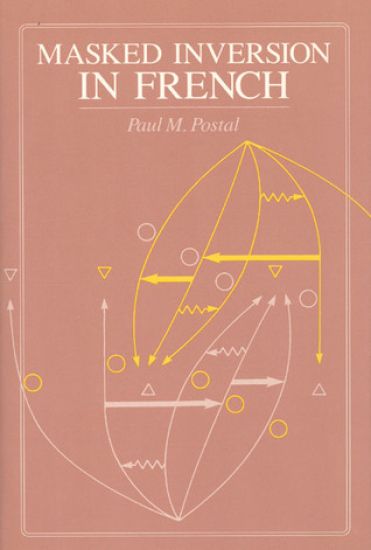
In this important work of linguistic analysis, Paul M. Postal addresses a paradigm anomaly in French that has hitherto resisted explanation. A general restriction limiting the form of direct objects in complex infinitival constructions with main verbs like faire fails to hold with certain subordinate verbs, especially connaître. Marshaling extensive evidence, Postal argues that this apparent irregularity is a symptom of a deeper regularity. Rather than being an ordinary transitive complement, the subordinate clause in these cases is actually an Inversion structure, one in which the logical subject demotes to indirect object. However, since this demotion induces no word order change or other direct morphological consequences, the inversion is "masked," and revealed only by several types of apparent anomalies. This analysis has significant consequences for contemporary syntactic theories. First, the arguments support the view that a sentence's superficial structure cannot be identified with its syntactic structure, even though such an identification is a fundamental assumption of several currently influential grammatical frameworks. Second, even certain theories that do posit abstract aspects of grammatical form fail to allow for the needed Inversion structures. Postal's study supports theories based on the notion of arc and stratification into levels which provide a natural treatment consistent with the factual requirements. Masked Inversion in French is the first systematic account of this puzzling French syntactic anomaly, and its findings will stimulate research in many areas of natural language grammatical structure.

Sexual Inversion was the first English medical textbook about homosexuality. It had a chequered publishing history, going through five editions between 1896 and 1915. This edition, with a long critical introduction, places the book in its intellectual and social contexts, and considers the historiography surrounding this important work.

Why companies need to move away from a "product first" orientation to pursuing innovation based on customer need.In the past, companies found success with a product-first orientation; they made a thing that did a thing. TheInversion Factor explains why the companies of today and tomorrow will have to abandon the product-first orientation. Rather than asking "How do the products we make meet customer needs?" companies should ask "How can technology help us reimagine and fill a need?" Zipcar, for example, instead of developing another vehicle for moving people from point A to point B, reimagined how people interacted with vehicles. Zipcar inverted the traditional car company mission. The authors explain how the introduction of "smart" objects connected by the Internet of Things signals fundamental changes for business. The IoT, where real and digital coexist, is powering new ways to meet human needs. Companies that know this include giants like Amazon, Airbnb, Uber, Google, Tesla, and Apple, as well as less famous companies like Tile, Visenti, and Augury. The Inversion Factor offers a roadmap for businesses that want to follow in their footsteps.The authors chart the evolution of three IoTs-the Internet of Things (devices connected to the Internet), the Intelligence of Things (devices that host software applications), and the Innovation of Things (devices that become experiences). Finally, they offer a blueprint for businesses making the transition to inversion and interviews with leaders of major companies and game-changing startups.

Harish-Chandra's general Plancherel inversion theorem admits a much shorter presentation for spherical functions. The authors have taken into account contributions by Helgason, Gangolli, Rosenberg, and Anker from the mid-1960s to 1990. Anker's simplification of spherical inversion on the Harish-Chandra Schwartz space had not yet made it into a book exposition. Previous expositions have dealt with a general, wide class of Lie groups. This has made access to the subject difficult for outsiders, who may wish to connect some aspects with several if not all other parts of mathematics, and do so in specific cases of intrinsic interest. The essential features of Harish-Chandra theory are exhibited on SLn(R), but hundreds of pages of background can be replaced by short direct verifications. The material becomes accessible to graduate students with especially no background in Lie groups and representation theory. Spherical inversion is sufficient to deal with the heat kernel, which is at the center of the authors' current research. The book will serve as a self-contained background for parts of this research.
Divine Inversion, Or A View Of The Character Of God As In All Respects Opposed To The Character Of Man
David Thom
Kessinger Pub
2007
pokkari

The Inversion Revolution, Beyond Back Pain to Wellness, presents an introduction to Self-Care and gives a deep understanding how inversion can be used as a central tool that can take a person beyond back pain - to Wellness.Millions of people have seen TV commercials selling high angle inversion tables to alleviate back pain. These are so common that many - even the Mayo Clinic - mistakenly equate inversion therapy with going upside down at high angles which is scary and inappropriate for many people. Presenting the history of inversion the author points out that high angle inversion is NOT necessary. Conservative low angle inversion (aka slanting) can be very effective and can be constructed so the person feels safe and secure to do it alone without a spotter being needed.What is health? What is Wellness? The book explores these two pivotal questions and presents a large number of practical Self-Care strategies the author has used for regaining balance and overcoming obstacles which has allowed him to live a life in greater freedom from pain and enjoying expanded possibilities.This book is for those who are in pain or love someone who is in pain; it is for those who want to learn how to become the General Contractor of their own health and how to work more effectively with their chosen healthcare providers.The book includes bonus material on how to create a Self-Care toolkit and an important exercise program called The 4 Minute Miracle which is suitable for most people whether their health condition is marginal, modestly healthy or athletically fit.Michael McKay L.M.T. is the author and inventor of Gravity Pal(R) low angle inversion tables which includes the only portable table on the market today. The author chronicles how he overcame crippling back pain and avoided surgery by developing a new, breakthrough method using low angle inversion, for only 1 to 3 minutes at a time, that not only achieves gentle compression relief but also provides many cumulative side-benefits, including improved clarity of thinking, more energy, reduced stress, improved circulation, healthier skin, improved digestion and more.

It was like putting a rattlesnake in your cage but in na ve victim denial you couldn't see it, ok? If too weak to keep boundaries the evil world flows in and like a Tsunami it'll ruin you surely. It's the Fallen Hero Syndrome when previous fans become foes as you're goin' down. As long as they're around you're adapting to THEM. Empaths easily become doormats for other's ends. You're such a strong beach they see the light and cling on. It's sad so stay detached son. Cover by Blaze Goldburst

Seismic inversion aims to reconstruct a quantitative model of the Earth subsurface, by solving an inverse problem based on seismic measurements. There are at least three fundamental issues to be solved simultaneously: non-linearity, non-uniqueness, and instability. This book covers the basic theory and techniques used in seismic inversion, corresponding to these three issues, emphasising the physical interpretation of theoretical concepts and practical solutions. This book is written for master and doctoral students who need to understand the mathematical tools and the engineering aspects of the inverse problem needed to obtain geophysically meaningful solutions. Building on the basic theory of linear inverse problems, the methodologies of seismic inversion are explained in detail, including ray-impedance inversion and waveform tomography etc. The application methodologies are categorised into convolutional and wave-equation based groups. This systematic presentation simplifies the subject and enables an in-depth understanding of seismic inversion. This book also provides a practical guide to reservoir geophysicists who are attempting quantitative reservoir characterisation based on seismic data. Philosophically, the seismic inverse problem allows for a range of possible solutions, but the techniques described herein enable geophysicists to exclude models that cannot satisfy the available data. This book summarises the author’s extensive experience in both industry and academia and includes innovative techniques not previously published.