Emily Sarah Holt (1836-1893) was an English novelist. She was born at Stubbylee, Bacup, in Lancashire, 25 April 1836. It is said she was educated at Oxford. In late 1893 when at Harrogate, she became ill and went to her brother in Balham (London), where she died on Christmas Day. She was buried in the Church of St Saviour's, Bacup, where there is a memorial. Holt had written over fifty books, mainly for children. Most of Holt's work can be classified as historical novels (52 are listed in the BML catalogue). Holt's work has a Protestant religious theme.
With fearless and playful language, Katherine Factor’s debut collection reveals agony, humor, and the necessary voices of the female oracle through time. The oracle’s message is apparent—she is not dead. Her words are cryptic but contemporary, offering caution along with guidance to a society interested only in using prophecy for profit.In a time when only a select few are prosperous, A Sybil Society paints a portrait of the present moment and unveils a restless truth. The collection is fearless in the face of convention and gives readers a sense of devastating sorrow in a world gone mad.
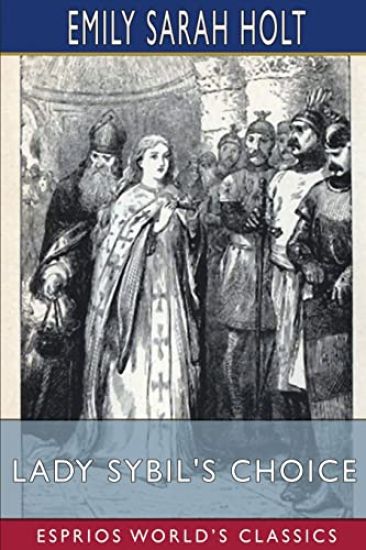
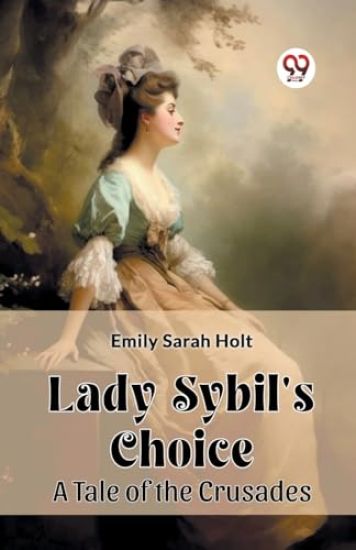
This Book "Lady Sybil's Choice: A Tale of the Crusades" has been considered important throughout the human history, and so that this work is never forgotten we have made efforts in its preservation by republishing this book in a modern format for present and future generations. This whole book has been reformatted, retyped and designed. These books are not made of scanned copies of their original work and hence the text is clear and readable.
"Emily Sarah Holt's 'Lady Sybil's Choice: A Tale of the Crusades' is a captivating blend of historical fiction and romance set against the backdrop of the medieval Crusades. In this adventurous tale, Lady Sybil faces the complexities of love, honor, and chivalry amidst the religious conflicts of the time. Holt intricately weaves a narrative of courage and character-driven decisions as Lady Sybil navigates the challenges posed by knights, battles, and the crusading spirit. Through vivid descriptions of the medieval world, the reader is transported to an era of knights and honor, where love and loyalty are tested against the backdrop of religious fervor and political intrigue. As Lady Sybil grapples with her choices, the reader is drawn into a compelling story of romance and adventure that captures the essence of the Crusades and the timeless themes of love and honor."
From their early days in the Bronx, to their success as a leading luxury jewelry company today, Sybil and David have lived and personified the American dream. Their artisan perspective and years spent in the Beat generation, along with their background as key figures in the American Craft movement of the '70s, and fearless approach, propelled them to champion a new category of designer jewelry. Through their artisan's point of view and craftsmanship, they sparked a relaxed and uniquely American category of versatile luxury jewelry that transcends from day to night. In 1970, David sculpted a bronze necklace for his partner and fellow artist as a romantic gesture. They didn't yet know that this gift of wearable-art for Sybil would lead to a business and lifelong collaboration. The Yurmans share here the stories behind their namesake company, elaborating on the transition from craftsmen to entrepreneurs, the birth of their signature cable bracelet, and the expansion into fine jewelry. Through in-depth interviews with Pamela Golbin, Sybil and David trace the brand's evolution, share lessons learned, and highlight experiences spanning five decades. This book features a visual mosaic of striking imagery, showcasing iconic Yurman pieces, cutting-edge materials, and groundbreaking advertising campaigns that have influenced the world of fine jewelry. Jewelry, design, art, and fashion enthusiasts will appreciate this inspirational anniversary book.
This work has been selected by scholars as being culturally important and is part of the knowledge base of civilization as we know it.This work is in the public domain in the United States of America, and possibly other nations. Within the United States, you may freely copy and distribute this work, as no entity (individual or corporate) has a copyright on the body of the work.Scholars believe, and we concur, that this work is important enough to be preserved, reproduced, and made generally available to the public. To ensure a quality reading experience, this work has been proofread and republished using a format that seamlessly blends the original graphical elements with text in an easy-to-read typeface.We appreciate your support of the preservation process, and thank you for being an important part of keeping this knowledge alive and relevant.