Publisher's Note: Products purchased from Third Party sellers are not guaranteed by the publisher for quality, authenticity, or access to any online entitlements included with the product.The essential desktop reference for PL/SQL revised and expanded for Oracle Database 10gCreate dynamic client/server applications using PL/SQL and the comprehensive information contained in this authoritative volume. Expert Oracle insiders cover the features of PL/SQL, explain scripting semantics and syntax, and fully detail the PL/SQL functionality of Oracle Database 10g. You’ll learn how to write powerful PL/SQL programs, interact with Oracle databases, perform complex calculations, and handle error conditions.
As the practice of vascular anesthesia becomes increasingly recognized as a major subspecialty of anesthesia, there is a growing need among current practitioners to evolve their neuraxial, regional, and general anesthesia techniques and expand their understanding of the latest evidence. Vascular Anesthesia Procedures will review the essential topics of the field from vascular anatomy to common vascular procedures, anesthetic techniques in general and regional anesthesia, complications, perioperative patient monitoring, and post-operative management. Chapters are concise, up-to-date, evidence-based, and richly illustrated throughout.
A high-yield, abridged version of the bestselling guide to general anesthesia and perioperative medicine Drawing from the trusted classic, Morgan and Mikhail's Clinical Anesthesiology Handbook has been pared down to the most essential information needed by anesthesia practitioners. The Handbook provides condensed, practical content relevant to clinical anesthesiology practice, covering topics within preoperative, intraoperative, and postoperative care. Many tables and figures have been retained from the larger textbook. This new abridged resource serves as a high-yield review of the core content of the larger text, with bolded key concepts for ease of reference, Q&A, and more.• Convenient, abridged version—less than half the length of origin text• Ideal resource for residents and trainees preparing for daily activity• High-yield review with variety of review techniques, including Q&A
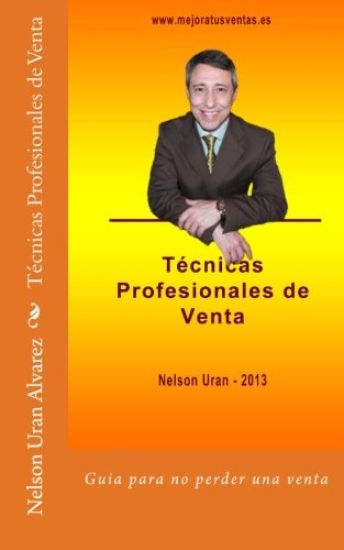
Guia pr ctica sobre los pasos de una gesti n de ventas. Preparaci n, como conseguir una entrevista, desarrollo de la vsita, manejo de objeciones, cierre y balance final
Offers a feminist theory of translation that considers both the practice and representation of translation in works penned by early modern women. This book argues for the importance of such a theory in changing how we value women's work.
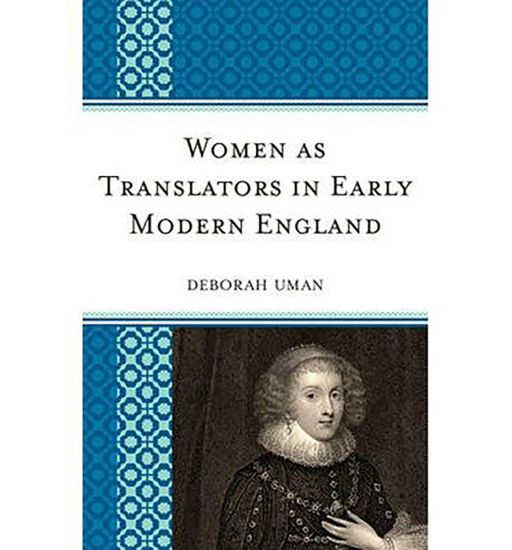
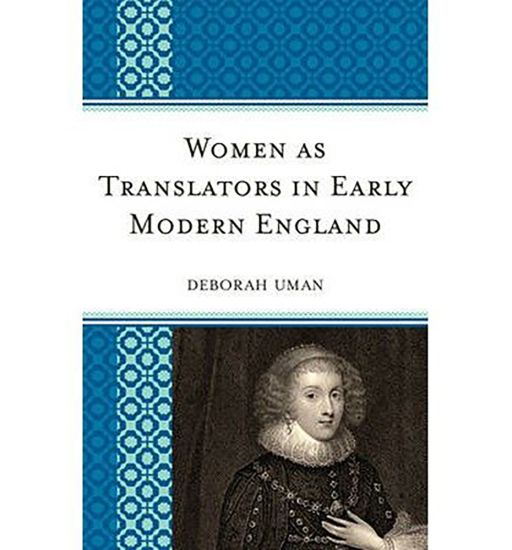
Women as Translators in Early Modern England offers a feminist theory of translation that considers both the practice and representation of translation in works penned by early modern women. It argues for the importance of such a theory in changing how we value women's work. Because of England's formal split from the Catholic Church and the concomitant elevation of the written vernacular, the early modern period presents a rich case study for such a theory. This era witnessed not only a keen interest in reviving the literary glories of the past, but also a growing commitment to humanist education, increasing literacy rates among women and laypeople, and emerging articulations of national sentiment. Moreover, the period saw a shift in views of authorship, in what it might mean for individuals to seek fame or profit through writing. Until relatively recently in early modern scholarship, women were understood as excluded from achieving authorial status for a number of reasons--their limited education, the belief that public writing was particularly scandalous for women, and the implicit rule that they should adhere to the holy trinity of "chastity, silence, and obedience." While this view has changed significantly, women writers are still understood, however grudgingly, as marginal to the literary culture of the time. Fewer women than men wrote, they wrote less, and their "choice" of genres seems somewhat impoverished; add to this the debate over translation as a potential vehicle of literary expression and we can see why early modern women's writings are still undervalued. This book looks at how female translators represent themselves and their work, revealing a general pattern in which translation reflects the limitations women faced as writers while simultaneously giving them the opportunity to transcend these limitations. Indeed, translation gave women the chance to assume an authorial role, a role that by legal and cultural standards should have been denied to them, a role that gave them ownership of their words and the chance to achieve profit, fame, status and influence.
Cosmic Conversations is a poet's compilation of thoughts about the universe, self and the things we experience in between. This poetry book tackles some of life's greatest philosophical and existential questions - Who are we? Why are we here? How do outside influences, thoughts, and actions affect our lives and the people we choose to become? All presented in the form of poetry to highlight the thought process of these questions. Cosmic Conversations is a literary experience where the reader is granted the ability to ask these questions and while the answers are not definitive for everyone, or even completely formed to an end result, they have been gathered and presented in poem form to compel these thoughts to initiate a deeper understanding of life. If you've ever contemplated the universe, delved into questions and thoughts unanswered or even had an inner dialogue that sparked your need to grasp more about you and the world around you, Cosmic Conversations is your glimpse into the vastness of your self and how you can potentially see the world in the form of free-flowing thought.
Over 100 effective recipes to help you design, implement, and troubleshoot manage the software-defined and massively scalable Ceph storage system. About This Book • Implement a Ceph cluster successfully and learn to manage it. • Recipe based approach in learning the most efficient software defined storage system • Implement best practices on improving efficiency and security of your storage cluster • Learn to troubleshoot common issues experienced in a Ceph cluster Who This Book Is For This book is targeted at storage and cloud engineers, system administrators, or anyone who is interested in building software defined storage, to power your cloud or virtual infrastructure. If you have basic knowledge of GNU/Linux and storage systems, with no experience of software defined storage solutions and Ceph, but eager to learn then this book is for you What You Will Learn • Understand, install, configure, and manage the Ceph storage system • Get to grips with performance tuning and benchmarking, and learn practical tips to help run Ceph in production • Integrate Ceph with OpenStack Cinder, Glance, and Nova components • Deep dive into Ceph object storage, including S3, Swift, and Keystone integration • Configure a disaster recovery solution with a Ceph Multi-Site V2 gateway setup and RADOS Block Device mirroring • Gain hands-on experience with Ceph Metrics and VSM for cluster monitoring • Familiarize yourself with Ceph operations such as maintenance, monitoring, and troubleshooting • Understand advanced topics including erasure-coding, CRUSH map, cache pool, and general Ceph cluster maintenance In Detail Ceph is a unified distributed storage system designed for reliability and scalability. This technology has been transforming the software-defined storage industry and is evolving rapidly as a leader with its wide range of support for popular cloud platforms such as OpenStack, and CloudStack, and also for virtualized platforms. Ceph is backed by Red Hat and has been developed by community of developers which has gained immense traction in recent years. This book will guide you right from the basics of Ceph , such as creating blocks, object storage, and filesystem access, to advanced concepts such as cloud integration solutions. The book will also cover practical and easy to implement recipes on CephFS, RGW, and RBD with respect to the major stable release of Ceph Jewel. Towards the end of the book, recipes based on troubleshooting and best practices will help you get to grips with managing Ceph storage in a production environment. By the end of this book, you will have practical, hands-on experience of using Ceph efficiently for your storage requirements. Style and approach This step-by-step guide is filled with practical tutorials, making complex scenarios easy to understand.
A compelling "coming out of the closet" narrative, entwined in a possessive love story, unfolding in Istanbul.Alaz, an undergraduate student, falls in love with another man, named Batu, and gets pulled into an enticing and exciting gay scene in Istanbul. As he is breaking away from the taboos of his conservative upbringing forced upon him and shaped by the traditional middle eastern mentality , he enters into Istanbul's underground queer world which is filled with promises of enlightenment, sexual exploration, and self-discovery.Yet, there is a problem: Batu is too much for a young and inexperienced gay man to handle; he is emotionally manipulative, temperamental, and unpredictable. Alaz becomes obsessed with Batu, and as the complications arise from pursuing happiness while trying to untangle Batu's web of passion and dealing with his deceitful behavior, Alaz and his friends will all learn the same lesson: Love is a highway where people get lost, and they are all try finding their way home in the dark.
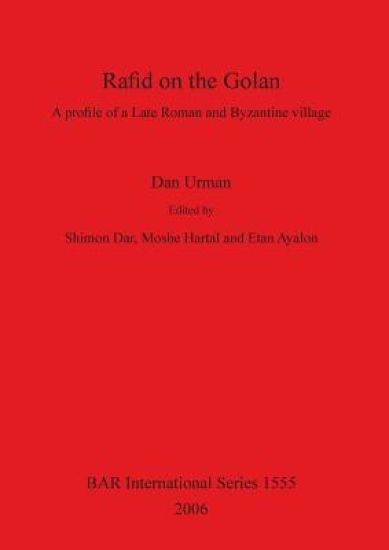
On the death of Dan Urman in 2004, his colleagues set about completing his unfinished manuscripts, including this volume: Rafid on the Golan (its ruins remain in a demilitarized zone controlled by United Nations forces), one of Dan Urman's last archaeological projects. He succeeded in completing the chapters detailing the survey of the houses in the village, carried out during the years 1968-1970. The houses were measured, photographed, and an overall map was drawn, which included all houses, alleys, footpaths, public areas and water reservoirs. The survey team realized that Rafid was an unusual archaeological resource that preserved scores of ancient buildings still standing from foundation to the rafters, constructed of basalt. Dan Urman saw in the survey of Rafid and in the scientific material collected within its framework the highest achievement of the Golan survey: the intact buildings built of decorated basalt could, in his opinion, serve as a model of the building style prevalent in the Roman and Byzantine periods - not only on the Golan, but also on the Korazim and Issachar plateaus. Because of the long time that elapsed between the survey and the preparation of the material for publication, it was necessary to find a Golan expert, who would complete lacunae in the manuscript and present with the rich archaeological material from Rafid also the general background and new research on the Golan and the region bordering on it. Dr. Moshe Hartal from Israel Antiquities Authority, who worked in the original survey team with Dan Urman agreed to work on the manuscript and added the following chapters: The geographical setting, the architectural decorations, the Hauran-style architecture and a synthesis of the history of Rafid in the various historical periods.Written by Dan Urman and edited by Shimon Dar, Moshe Martal and Etan Ayalon
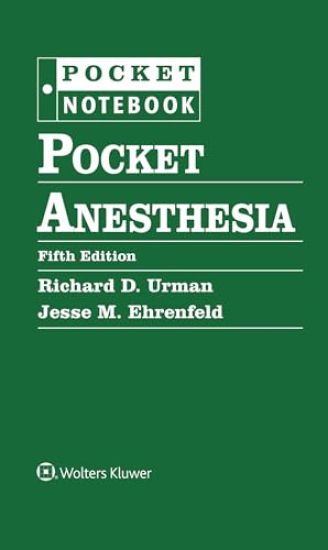
Designed for portability and quick reference, Pocket Anesthesia, Fifth Edition, provides the essential information needed by practitioners and trainees on a daily basis. Expertly edited by Drs. Richard D. Urman and Jesse M. Ehrenfeld, this fully updated volume provides a concise and focused review of all areas of anesthesiology in one easy-to-navigate, pocket-sized notebook, making it an ideal reference for residents, anesthesiologists, CRNAs, CAA’s and students, in all clinical settings where anesthesia care is delivered. Follows the bestselling Pocket Notebook format, featuring bulleted lists, tables, diagrams, and algorithms that make essential facts easy to find and retain Contains fully updated core clinical topics on patient evaluation; pharmacology; airway management; regional anesthesia, POCUS, perioperative monitoring, ventilation techniques, acute and chronic pain management, ERAS, trauma and critical care management, pediatric and geriatric anesthesia, and much more Provides helpful appendices on formulae for quick reference, setting up the OR, management of malignant hyperthermia, and more Features new and expanded chapters on Burn Management, Infection Control and Respiratory Illness Considerations (including COVID-19), Optimizing the Anesthesia Care Team Contains current, evidence-based clinical recommendations
Studienarbeit aus dem Jahr 2011 im Fachbereich Geschichte Europa - and. L nder - Mittelalter, Fr he Neuzeit, Note: 1,3, FernUniversit t Hagen, Sprache: Deutsch, Abstract: Einleitung Es war die Gr ndung der Prager Universit t im Jahre 1348, die den Beginn der Universit tsgeschichte in Deutschland und in Mitteleuropa einleitete(1). Deren sp tmittelalterlichen Anf nge und die Gr ndungsurkunden standen recht fr h im Mittelpunkt des Interesses der tschechischen und deutschen Geschichtsforschung, was angesichts des ehrw rdigen Alters der ersten deutschen Universit t und ihrer besonderen Rolle als Vorbild f r die nachfolgenden Lehranstalten im deutschen und europ ischen Bereich kaum zu verwundern vermag. Peter Moraw u ert sich in diesem Zusammenhang: " Dieses Prager Erbe, wie man auch formulieren konnte, war trotz des kurzen Lebens des Studiums, und ungeachtet von anderswo unwiederholten und wiederholbaren Ph nomenen, war bedeutender als jedes andere- j ngere- Erbe in Mitteleuropa vor dem 18 und 19 Jh., ehe G ttingen und Berlin neue Vorbilder f r ein neues Zeitalter wurden. Nur Paris und Bologna, die ltesten, waren noch wichtiger."(2) Bekanntlich geh ren zur Gr ndung der Prager Universit t 3 Gr ndungsdokumente- die Papstbulle vom 26 Januar 1347, und die zwei nachfolgenden k niglichen Schriften(3). Im Rahmen der vorliegenden Arbeit m chte ich die von Karl IV verfassten Stiftungsurkunden im Hinblick auf die Intentionen ihres Verfassers untersuchen- den Stiftsbrief vom 07 April 1348 und das, ein Jahr darauf erlassene, Eisenacher Diplom. Denn es f llt auf, dass der Stiftungsakt offensichtlich zweier Dokumente bedurfte, wodurch sich die Frage nach der Bedeutung und der Zielsetzung insbesondere der zweiten Urkunde f rmlich aufdr ngt. Warum hat der K nig es f r n tig befunden, ein weiteres Dokument auszustellen- zur Besiegelung und Erg nzung seines Stiftsaktes oder zur Bekr ftigung seiner Autorit t? Und wenn man die zweite Annahme als plausibel akzeptiert,
A calm and creative course in watercolor painting! Learn to paint with ease with these 21 beginner-friendly, step-by-step watercolor projects that are crafted for pure enjoyment and relaxation. Each watercolor pattern in this book not only fosters artistic growth but also relaxes your mind through a deliberate, unhurried learning approach. This project book for beginners is designed to allow your creativity to flow in a progressive manner. The projects are organized into themes including geometric shapes, cultural inspirations, botanical elements, seasonal motifs, and more. Each theme includes a project at a beginner, intermediate, and advanced skill level so you can begin simply and progress as you build your skills. Every project includes color swatches, a materials list, a step-by-step exercise to learn the techniques and shapes for the project, and step-by-step instructions for painting a unique and gorgeous finished piece. Also included in the book is a complete introduction to the tools and materials of watercolors, essential watercolor techniques, and color theory and mixing. Whether you’re completely new to watercolors or have already dabbled in them, you’ll find everything you need in this book. • Painting Made Easy: Every pattern project in the book includes tools, materials, a practice exercise, a pause for relaxing reflection, and straightforward step-by-step instructions for creating vibrant works of art. • Approachable Instructions for Beginners: Even if you’ve never touched a paintbrush before, this book provides all the essential info you’ll need to get started with basic tools and beginner-level projects. • A Focus on Repeat Pattern Designs: You’ll learn how to paint simple shapes and then repeat them to create fully developed compositions ready for framing and gifting. • A Relaxing Way to Learn: Immerse yourself in serenity with this guide as the author teaches you not only how to master painting techniques but also how to encourage creative flow. • Progressive Learning Format: Work your way through beginner, intermediate, and advanced projects with confidence as you follow the author’s carefully considered teachings. Get ready to fall in love with watercolor as you dive into creating pieces that will quiet your brain, nourish your soul, and fill you with joy and satisfaction.
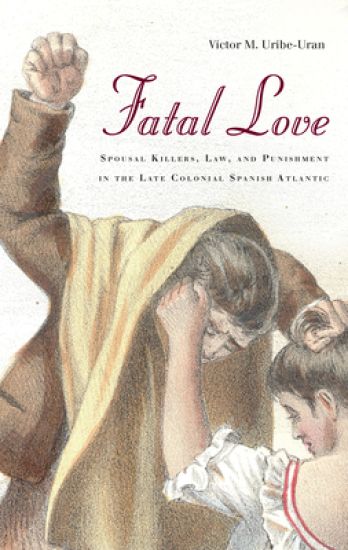
One night in December 1800, in the distant mission outpost of San Antonio in northern Mexico, Eulalia Californio and her lover Primo plotted the murder of her abusive husband. While the victim was sleeping, Prio and his brother tied a rope around Juan Californio's neck. One of them sat on his body while the other pulled on the rope and the woman, grabbing her husband by the legs, pulled in the opposite direction. After Juan Californio suffocated, Eulalia ran to the mission and reported that her husband had choked while chewing tobacco. Suspicious, the mission priests reported the crime to the authorities in charge of the nearest presidio. For historians, spousal murders are significant for what they reveal about social and family history, in particular the hidden history of day-to-day gender relations, conflicts, crimes, and punishments. Fatal Love examines this phenomenon in the late colonial Spanish Atlantic, focusing on incidents occurring in New Spain (colonial Mexico), New Granada (colonial Colombia), and Spain from the 1740s to the 1820s. In the more than 200 cases consulted, it considers not only the social features of the murders, but also the legal discourses and judicial practices guiding the historical treatment of spousal murders, helping us understand the historical intersection of domestic violence, private and state/church patriarchy, and the law.