Kirjojen hintavertailu. Mukana 11 244 527 kirjaa ja 12 kauppaa.

Kirjahaku

Etsi kirjoja tekijän nimen, kirjan nimen tai ISBN:n perusteella.

1000 tulosta hakusanalla Adam Dailey

Adam Smith's Science of Morals

Adam Smith's Science of Morals

Tom Campbell

Routledge
2012
nidottu
This critical exposition of Adam Smith’s Theory of Moral Sentiments, first published in 1971, gives an appreciation of Smith’s conception of scientific method as applied to the study of social phenomena. The work is placed in the context of Smith’s other writings including of course The Wealth of Nations, but making special use of the theory of scientific development contained in his posthumous work, Essays on Philosophical Subjects.By concentrating on Smith’s methodological approach to the study of society, this book provides an illuminating interpretation of his moral theory and defends it against any mistaken criticisms. It also includes a much needed analysis of the important differences between Smith’s ‘impartial spectator’ and the ‘ideal observer’ of modern ethical society. The result is a pointed study, bringing out the close connection between his moral, legal and ethical theories, which will be welcomed by all students of 18th century thought, specialists in moral theory, and the interested lay-reader.
Adam Smith's Science of Morals

Adam Smith's Science of Morals

Tom Campbell

Routledge
2009
sidottu
This critical exposition of Adam Smith’s Theory of Moral Sentiments, first published in 1971, gives an appreciation of Smith’s conception of scientific method as applied to the study of social phenomena. The work is placed in the context of Smith’s other writings including of course The Wealth of Nations, but making special use of the theory of scientific development contained in his posthumous work, Essays on Philosophical Subjects.By concentrating on Smith’s methodological approach to the study of society, this book provides an illuminating interpretation of his moral theory and defends it against any mistaken criticisms. It also includes a much needed analysis of the important differences between Smith’s ‘impartial spectator’ and the ‘ideal observer’ of modern ethical society. The result is a pointed study, bringing out the close connection between his moral, legal and ethical theories, which will be welcomed by all students of 18th century thought, specialists in moral theory, and the interested lay-reader.
Adam Smith's Economics

Adam Smith's Economics

Maurice Brown

Routledge
2009
sidottu
The conventional received opinion of Adam Smith as an isolated figure, the founder of ‘modern’ economics, is thoroughly mistaken and misleading. This is the central premise of this book, first published in 1988, in which the author argues that by placing Smith’s work in its historical context, we discover profound continuities between Smith’s work and that of his predecessors, and his contemporaries. The effect is to re-orientate our perception of Smith and his achievement. No longer the single-handed champion of free markets and competition whose work revolutionised and completely redirected economics. He appears instead as a brilliant contributor to a deep-rooted contemporary debate, someone who can be placed in a line of thinkers that stretches between Machiavelli and Kant.
Adam Smith's Sociological Economics

Adam Smith's Sociological Economics

David Alexander Reisman

Routledge
2009
sidottu
First published in 1976, this book provides an interdiciplinary study fo the thoughts of Adam Smith, showing it particular how the link between economic basis and social superstructure was central to his work. The work is split into six sections, dividing Smith's views along the following lines: 'methology', 'conduct and character', 'consumer behaviour', 'the upper classes', 'the lower classes', and finally 'the State'.
Adam Smith

Adam Smith

R. H. Campbell; A. S. Skinner

Routledge
2009
sidottu
This reissued biography of Adam Smith, first published in 1982, presents both an intellectual and personal portrait of the man. It is not intended as a full-scale scholarly biography burdened with heavy footnotes. Although written by two of the world's foremost authorities on Adam Smith, the book is intended as an accessible study of a great thinker and philosopher which will help to introduce the reader to both his ideas and his period.
Adam Smith and the Economy of the Passions
The fertility of Adam Smith’s work stems from a paradoxical structure where the pursuit of economic self-interest and wealth accumulation serve wider social objectives. The incentive for this wealth accumulation comes from a desire for social recognition or "sympathy" – the need to recognise ourselves in our peers – which is the primary incentive for moderating and transforming our violent and egotistical passions. Adam Smith thus examines in detail the subliminal emotional structure underlying market behaviour. This new book by Professor Jan Horst Keppler presents an Adam Smith for the 21st century, more sceptical, searching and daring than he has ever been portrayed before. Without disputing the benefits of Adam Smith’s liberal economic system, Professor Keppler’s original contribution explores the anarchic passions constantly threatening to destroy all social bounds, and how the overarching "desire for love" and social recognition provides the Smithian individual with the incentive to transform his unsocial passions into a desire for social advancement and economic wealth with the view to gaining the vital approbation of his peers. One of the most striking results of this new reading of Adam Smith is the latter’s insistence on the primacy of exchange value over use value. In other words, the quest for wealth is exclusively driven by the value it represents in the eyes of others rather than by any value in individual use. At a moment of crisis, where the link between "true" economic values and "virtual" financial values is more fragile than ever, Adam Smith’s work is a profoundly contemporary reminder that in the absence of personal, ethical groundings our economic actions are only grounded in the game of mirrors we play with our peers. This book will be of interest to postgraduate students and researchers in the History of Economics, or indeed any reader with an interest in the psychological foundations of a market economy and its theoretical representations as developed by Adam Smith.
Adam Smith and the Economy of the Passions
The fertility of Adam Smith’s work stems from a paradoxical structure where the pursuit of economic self-interest and wealth accumulation serve wider social objectives. The incentive for this wealth accumulation comes from a desire for social recognition or "sympathy" – the need to recognise ourselves in our peers – which is the primary incentive for moderating and transforming our violent and egotistical passions. Adam Smith thus examines in detail the subliminal emotional structure underlying market behaviour. This new book by Professor Jan Horst Keppler presents an Adam Smith for the 21st century, more sceptical, searching and daring than he has ever been portrayed before. Without disputing the benefits of Adam Smith’s liberal economic system, Professor Keppler’s original contribution explores the anarchic passions constantly threatening to destroy all social bounds, and how the overarching "desire for love" and social recognition provides the Smithian individual with the incentive to transform his unsocial passions into a desire for social advancement and economic wealth with the view to gaining the vital approbation of his peers. One of the most striking results of this new reading of Adam Smith is the latter’s insistence on the primacy of exchange value over use value. In other words, the quest for wealth is exclusively driven by the value it represents in the eyes of others rather than by any value in individual use. At a moment of crisis, where the link between "true" economic values and "virtual" financial values is more fragile than ever, Adam Smith’s work is a profoundly contemporary reminder that in the absence of personal, ethical groundings our economic actions are only grounded in the game of mirrors we play with our peers. This book will be of interest to postgraduate students and researchers in the History of Economics, or indeed any reader with an interest in the psychological foundations of a market economy and its theoretical representations as developed by Adam Smith.
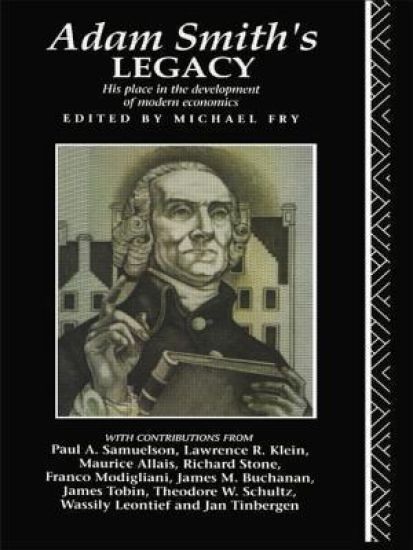
Adam Smith's Legacy
Although Adam Smith, the father of modern economics, died over two hundred years ago his presence is still felt in many areas of contemporary economics. In this volume some of the world's leading economists pay tribute to Smith's continuing importance. The contributors, including ten Nobel Laureates, consider themes as diverse as Smith's use of data, his attitude to human capital and his views on economic policy. Heirs to Smith as leaders of the discipline, they also reflect upon the current state of economics, assessing the extent to which it measures up to the benchmark established by its founder.
Adam Smith

Adam Smith

Samuel Fleischacker

Routledge
2021
nidottu
Adam Smith (1723–1790) is widely regarded as one of the great thinkers of the Enlightenment period. Best-known for his founding work of economics, The Wealth of Nations, Smith engaged equally with the nature of morality in his Theory of Moral Sentiments. He also gave lectures on literature and jurisprudence, and wrote papers on art and science. In this outstanding philosophical introduction Samuel Fleischacker argues that Smith is a superb example of the broadly curious thinkers who flourished in the Enlightenment—for whom morality, politics, law, and economics were just a few of the many fascinating subjects that could be illuminated by naturalistic modes of investigation.After a helpful overview of his life and work, Fleischacker examines the full range of Smith’s thought, on such subjects as: epistemology, philosophy of science, and aestheticsthe nature of sympathymoral approval and moral judgementvirtuereligionjustice and jurisprudencegovernmental policyeconomic principlesliberalism.Including chapter summaries, suggestions for further reading, and a glossary, Adam Smith is essential reading for those studying ethics, political philosophy, the history of philosophy, and the Enlightenment, as well as those reading Smith in related disciplines such as economics, law, and religion.
Adam Smith

Adam Smith

Samuel Fleischacker

Routledge
2021
sidottu
Adam Smith (1723–1790) is widely regarded as one of the great thinkers of the Enlightenment period. Best-known for his founding work of economics, The Wealth of Nations, Smith engaged equally with the nature of morality in his Theory of Moral Sentiments. He also gave lectures on literature and jurisprudence, and wrote papers on art and science. In this outstanding philosophical introduction Samuel Fleischacker argues that Smith is a superb example of the broadly curious thinkers who flourished in the Enlightenment—for whom morality, politics, law, and economics were just a few of the many fascinating subjects that could be illuminated by naturalistic modes of investigation.After a helpful overview of his life and work, Fleischacker examines the full range of Smith’s thought, on such subjects as: epistemology, philosophy of science, and aestheticsthe nature of sympathymoral approval and moral judgementvirtuereligionjustice and jurisprudencegovernmental policyeconomic principlesliberalism.Including chapter summaries, suggestions for further reading, and a glossary, Adam Smith is essential reading for those studying ethics, political philosophy, the history of philosophy, and the Enlightenment, as well as those reading Smith in related disciplines such as economics, law, and religion.
Adam Smith's Political Philosophy
When Adam Smith published his celebrated writings on economics and moral philosophy he famously referred to the operation of an 'invisible hand'. Adam Smith’s Political Philosophy makes visible this hand by examining its significance in Smith’s political philosophy and relating it to similar concepts used by other philosophers, thus revealing a distinctive approach to social theory that stresses the importance of the unintended consequences of human action.The first book to examine the history of Smith’s political philosophy from this perspective, this work introduces greater conceptual clarity to the discussion of the invisible hand and the related notion of unintended order in the work of Smith, as well as in political theory more generally. By examining the application of spontaneous order ideas in the work of Smith, Hume, Hayek and Popper, this important volume traces similarities in approach, and from these constructs a conceptual, composite model of an invisible hand argument. While setting out a clear framework of the idea of spontaneous order, the book also builds the case for using this as an explanatory social theory, with chapters on its application in the fields of science, moral philosophy, law and government.
Adam Smith as Theologian
Adam Smith wrote in a Scotland where Calvinism, Continental natural law theory, Stoic philosophy, and the Newtonian tradition of scientific natural theology were key to the intellectual lives of his contemporaries. But what impact did these ideas have on Smith’s system? What was Smith’s understanding of nature, divine providence, and theodicy? How was the new discourse of political economy positioned in relation to moral philosophy and theology? In this volume a team of distinguished contributors consider Smith’s work in relation to its Scottish Enlightenment religious background, and offer stimulating theological interpretations of his account of fallible human nature, his providential account of markets, and his invisible hand metaphor. Adam Smith as Theologian it is a pioneering study which will alter our view of Smith and open up new lines of thinking about contemporary economics.
Adam Mickiewicz In World Literature

Adam Mickiewicz In World Literature

University of California Press
2022
pokkari
Adam Mickiewicz in World Literature is a sweeping tribute to one of Poland’s most revered poets, illustrating his profound impact on global literature and culture. Celebrating the centennial of Mickiewicz’s death, this work delves into the poet’s lasting influence across diverse literary traditions—from Europe to the far reaches of China—emphasizing his unique role as both a Polish national figure and a universal symbol of resilience, poetic genius, and the quest for freedom. With contributions from experts worldwide, the book examines Mickiewicz’s interactions with literary greats like Pushkin and Goethe, highlighting how these relationships deepened his impact across nations and literatures, while enriching his own work. Divided into sections that chronicle Mickiewicz’s life journey and literary influence, Adam Mickiewicz in World Literature explores the poet’s reception in countries where he lived or visited—Russia, Germany, France, Italy, and Switzerland—as well as in regions connected by cultural or linguistic ties. Essays extend to Slavic, Scandinavian, Anglo-Saxon, and even Chinese literatures, revealing a common admiration for Mickiewicz's poetic vision. This volume celebrates Mickiewicz not only as a poet of Poland but as an embodiment of hope for unity and brotherhood among nations, making this book essential for readers interested in cross-cultural studies, comparative literature, and the enduring power of poetry to transcend borders. This title is part of UC Press's Voices Revived program, which commemorates University of California Press's mission to seek out and cultivate the brightest minds and give them voice, reach, and impact. Drawing on a backlist dating to 1893, Voices Revived makes high-quality, peer-reviewed scholarship accessible once again using print-on-demand technology. This title was originally published in 1956.
Adam Mickiewicz In World Literature

Adam Mickiewicz In World Literature

University of California Press
2022
sidottu
Adam Mickiewicz in World Literature is a sweeping tribute to one of Poland’s most revered poets, illustrating his profound impact on global literature and culture. Celebrating the centennial of Mickiewicz’s death, this work delves into the poet’s lasting influence across diverse literary traditions—from Europe to the far reaches of China—emphasizing his unique role as both a Polish national figure and a universal symbol of resilience, poetic genius, and the quest for freedom. With contributions from experts worldwide, the book examines Mickiewicz’s interactions with literary greats like Pushkin and Goethe, highlighting how these relationships deepened his impact across nations and literatures, while enriching his own work. Divided into sections that chronicle Mickiewicz’s life journey and literary influence, Adam Mickiewicz in World Literature explores the poet’s reception in countries where he lived or visited—Russia, Germany, France, Italy, and Switzerland—as well as in regions connected by cultural or linguistic ties. Essays extend to Slavic, Scandinavian, Anglo-Saxon, and even Chinese literatures, revealing a common admiration for Mickiewicz's poetic vision. This volume celebrates Mickiewicz not only as a poet of Poland but as an embodiment of hope for unity and brotherhood among nations, making this book essential for readers interested in cross-cultural studies, comparative literature, and the enduring power of poetry to transcend borders. This title is part of UC Press's Voices Revived program, which commemorates University of California Press's mission to seek out and cultivate the brightest minds and give them voice, reach, and impact. Drawing on a backlist dating to 1893, Voices Revived makes high-quality, peer-reviewed scholarship accessible once again using print-on-demand technology. This title was originally published in 1956.
Adam Smith's Marketplace of Life

Adam Smith's Marketplace of Life

James R. Otteson

Cambridge University Press
2002
pokkari
Adam Smith wrote two books, one about economics and the other about morality. His Wealth of Nations argues for a largely free-market economy, while his Theory of Moral Sentiments argues that human morality develops out of a mutual sympathy that people seek with one another. How do these books go together? How do markets and morality mix? James Otteson provides a comprehensive examination and interpretation of Smith’s moral theory and shows how his conception of the nature of morality applies to his understanding of markets, language and other social institutions. Considering Smith’s notions of natural sympathy, the impartial spectator, human nature, and human conscience the author also addresses the issue of whether Smith thinks that moral judgments enjoy a transcendent sanction. James Otteson sees Smith’s theory of morality as an institution that develops unintentionally but nevertheless in an orderly way according to a market model.
Adam Smith's Library

Adam Smith's Library

Hiroshi Mizuta

Cambridge University Press
2008
pokkari
Bonar's Catalogue of Adam Smith's Library was originally published at the end of the nineteenth century; and a new and enlarged edition in 1932. Dr Mizuta's researches have now added substantially to the total number of books known to have been in Adam Smith's library, as well as adding information about many of those originally catalogued by Bonar. The present supplement records all this additional material, and provides as well a general check list and index to the catalogue as a whole.
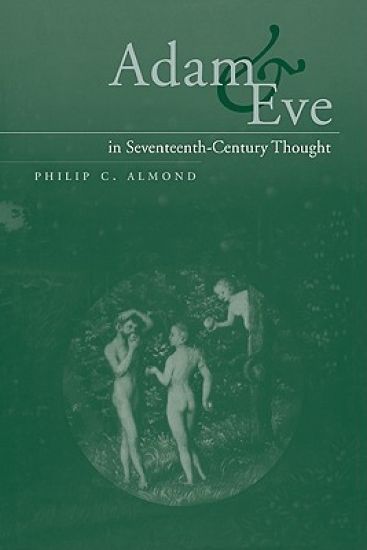
Adam and Eve in Seventeenth-Century Thought

Adam and Eve in Seventeenth-Century Thought

Philip C. Almond

Cambridge University Press
2008
pokkari
This book offers a fascinating account of the central myth of Western culture - the story of Adam and Eve in the Garden of Eden. Philip Almond examines the way in which the gaps, hints and illusions within this biblical story were filled out in seventeenth-century English thought. At this time, the Bible formed a fundamental basis for studies in all subjects, and influenced greatly the way that people understood the world. Drawing extensively on primary sources he covers subjects as diverse as theology, history, philosophy, botany, language, anthropology, geology, vegetarianism, and women. He demonstrates the way in which the story of Adam and Eve was the fulcrum around which moved lively discussions on topics such as the place and nature of Paradise, the date of creation, the nature of Adamic language, the origins of the American Indians, agrarian communism, and the necessity and meaning of love, labour and marriage.
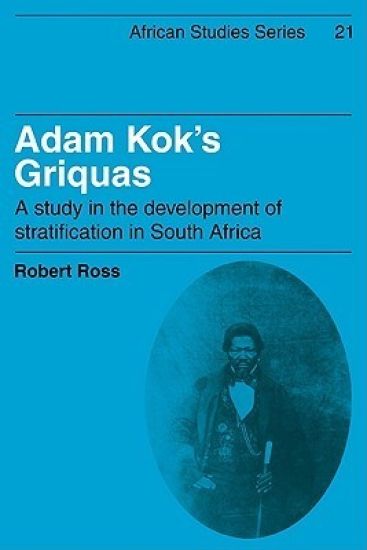
Adam Kok's Griquas

Adam Kok's Griquas

Ross Robert

Cambridge University Press
2009
pokkari
This book examines the ways in which racial and economic stratification were brought to coincide in pre-industrial South Africa by describing in detail the history of one group, the Griquas of Philippolis and Kokstad. These people, of very mixed origins, were central, both physically and symbolically, to the processes of South African history in the nineteenth century. They were able to gain control over a very large area of the southern Orange Free State, where they established what was, for a time, a prosperous little state. Very many Griquas became Christian, although this did not mean that they were dominated by the missionaries – rather the reverse. A substantial number were literate. Moreover, they made use of all possible means of developing their own wealth, first as ivory hunters and then as successful horse and sheep ranchers. In short, they fulfilled all the criteria for acceptance into the ruling class of white South Africa. except that they were not white.
Adam Smith and the Character of Virtue

Adam Smith and the Character of Virtue

Ryan Patrick Hanley

Cambridge University Press
2011
pokkari
Recent years have witnessed a renewed debate over the costs at which the benefits of free markets have been bought. This book revisits the moral and political philosophy of Adam Smith, capitalism's founding father, to recover his understanding of the morals of the market age. In so doing it illuminates a crucial albeit overlooked side of Smith's project: his diagnosis of the ethical ills of commercial societies and the remedy he advanced to cure them. Focusing on Smith's analysis of the psychological and social ills endemic to commercial society - anxiety and restlessness, inauthenticity and mediocrity, alienation and individualism - it argues that Smith sought to combat corruption by cultivating the virtues of prudence, magnanimity and beneficence. The result constitutes a new morality for modernity, at once a synthesis of commercial, classical and Christian virtues and a normative response to one of the most pressing political problems of Smith's day and ours.
Adam and Eve in the Protestant Reformation

Adam and Eve in the Protestant Reformation

Kathleen M. Crowther

Cambridge University Press
2010
sidottu
The story of Adam and Eve, ubiquitous in the art and literature of the period, played a central role in the religious controversies of sixteenth-century Europe. This is the first book to explore stories about Adam and Eve in German Lutheran areas and to analyze their place in Lutheran culture and identity. Kathleen Crowther examines Lutheran versions of the story of Adam and Eve in bibles, commentaries, devotional tracts, sermons, plays, poems, medical and natural history texts, and woodcut images. Her research identifies how Lutheran storytellers differentiated their unique versions of the story from those of their medieval predecessors and their Catholic and Calvinist contemporaries. She also explores the appeal of the story of Adam and Eve to Lutherans as a means to define, defend and disseminate their distinctive views on human nature, original sin, salvation, marriage, family, gender relations and social order.