Kirjojen hintavertailu. Mukana 11 365 379 kirjaa ja 12 kauppaa.

Kirjahaku

Etsi kirjoja tekijän nimen, kirjan nimen tai ISBN:n perusteella.

1000 tulosta hakusanalla Adolf Baginsky

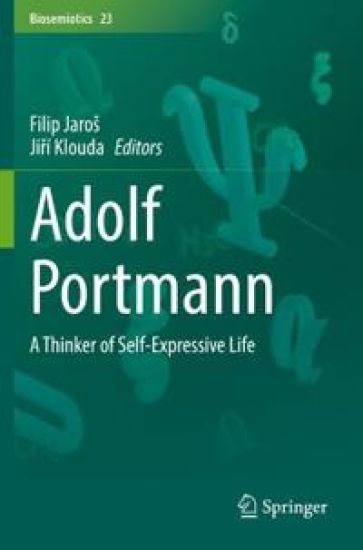
Adolf Portmann

Adolf Portmann

Springer Nature Switzerland AG
2021
sidottu
This edited volume is the first specialized book in English about the Swiss zoologist and anthropologist Adolf Portmann (1897-1982). It provides a clarification and update of Portmann’s theoretical approach to the phenomenon of life, characterized by terms such as “inwardness” and “self-presentation.” Portmann’s concepts of secondary altriciality and the social uterus have become foundational in philosophical anthropology, providing a benchmark of the difference between humans and animals. In its content, this book brings together two approaches: historical and philosophical analysis of Portmann’s studies in the life sciences and application of Portmann’s thought in the fields of biology, anthropology, and biosemiotics. Significant attention is also paid to the methodological implications of his intended reform of biology. Besides contributions from contemporary biologists, philosophers, and historians of science, this volume also includes a translation of an original essayby Portmann and a previously unpublished manuscript from his most remarkable English-speaking interpreter, philosopher Marjorie Grene. Portmann’s conception of life is unique in its focus on the phenomenal appearance of organisms. Confronted with the enormous amount of scientific knowledge being produced today, it is even clearer than it was during Portmann’s lifetime that although biologists employ physical and chemical methods, biology itself is not (only) physics and chemistry. These exact methods must be applied according to what has meaning for living beings. If biology seeks to understand organisms as autonomous agents, it needs to take display and the interpretation of appearances as basic characteristics of life. The topic of this book is significantly relevant to the disciplines of theoretical biology, philosophy, philosophical anthropology, and biosemiotics. The recent epigenetic turn in biology, acknowledging the interconnections between organismal development, morphology and communication, presents an opportunity to revisit Portmann’s work and to reconsider and update his primary ideas in the contemporary context.
Adolf Portmann

Adolf Portmann

Springer Nature Switzerland AG
2022
nidottu
This edited volume is the first specialized book in English about the Swiss zoologist and anthropologist Adolf Portmann (1897-1982). It provides a clarification and update of Portmann’s theoretical approach to the phenomenon of life, characterized by terms such as “inwardness” and “self-presentation.” Portmann’s concepts of secondary altriciality and the social uterus have become foundational in philosophical anthropology, providing a benchmark of the difference between humans and animals. In its content, this book brings together two approaches: historical and philosophical analysis of Portmann’s studies in the life sciences and application of Portmann’s thought in the fields of biology, anthropology, and biosemiotics. Significant attention is also paid to the methodological implications of his intended reform of biology. Besides contributions from contemporary biologists, philosophers, and historians of science, this volume also includes a translation of an original essayby Portmann and a previously unpublished manuscript from his most remarkable English-speaking interpreter, philosopher Marjorie Grene. Portmann’s conception of life is unique in its focus on the phenomenal appearance of organisms. Confronted with the enormous amount of scientific knowledge being produced today, it is even clearer than it was during Portmann’s lifetime that although biologists employ physical and chemical methods, biology itself is not (only) physics and chemistry. These exact methods must be applied according to what has meaning for living beings. If biology seeks to understand organisms as autonomous agents, it needs to take display and the interpretation of appearances as basic characteristics of life. The topic of this book is significantly relevant to the disciplines of theoretical biology, philosophy, philosophical anthropology, and biosemiotics. The recent epigenetic turn in biology, acknowledging the interconnections between organismal development, morphology and communication, presents an opportunity to revisit Portmann’s work and to reconsider and update his primary ideas in the contemporary context.

Adolf Harnack: Marcion
Die Dorpater Preisschrift des 19jährigen Adolf Harnack (1851-1930) zu dem Thema "Marcionis doctrina e Tertulliani adversus Marcionem libello eruatur et explicetur" (deutschsprachig abgefaßt und unter dem Titel "Marcion. Der moderne Gläubige des 2. Jahrhunderts, der erste Reformator" eingereicht) ist 1870 von der Theologischen Fakultät in Dorpat mit der Goldenen Medaille ausgezeichnet und zur Veröffentlichung empfohlen worden. Das voluminöse Werk (476 Seiten) blieb damals gleichwohl unveröffentlicht. Durch Harnacks Leipziger Jahre zieht sich noch wie ein roter Faden die Idee einer Monographie zu Marcion aus Sinope, doch erst 50 Jahre später läßt er die große Monographie "Marcion. Das Evangelium vom fremden Gott" erscheinen. In dem Spätwerk hat Harnack die Dorpater Jugendschrift noch einmal vollständig neu bearbeitet, von der nach seinen Worten "auch nicht ein Satz stehen geblieben ist" (Vorwort). Das verschollen geglaubte Manuskript der Dorpater Preisschrift wurde überraschend in der Berliner Staatsbibliothek entdeckt und wird mit dieser kritischen Edition in transkribierter Form zugänglich gemacht. Zusätzlich zu dem Neufund werden in einem Anhang das Gutachten Moritz Baron von Engelhardts, das Dorpater Studienbelegbuch Harnacks sowie das Redemanuskript des späten Vortrags "Marcion. Der radikale Modernist des 2. Jahrh." (1923) ediert. Die Dorpater Preisschrift ist nicht nur aufschlußreich für die Marcion-Interpretation und das historisch-theologische Denken des frühen Harnack, dessen Doppelbegabung als Geschichtsschreiber und Textphilologe sich bereits deutlich abzeichnet. Aufgrund der intensiv zu Rate gezogenen zeitgenössischen Literatur bietet sie auch Einblick in die ältere Marcion-Forschung des 19. Jh. und ermöglicht es, vor diesem Hintergrund die innovativen Impulse Harnacks für die weitere Marcion-Interpretation zu würdigen.
Adolf Hitler - Politischer Zauberlehrling Mussolinis

Adolf Hitler - Politischer Zauberlehrling Mussolinis

Wolfgang Schieder

Walter de Gruyter
2017
pokkari
Hitlers Weg an die Macht ist oft beschrieben worden. Kaum beachtet wurde jedoch bisher, dass er sich dabei in starkem Ma e an Mussolini orientierte. Der faschistische Diktator war sein gro es Vorbild. Auf ihn lie er auch nichts kommen, als er selbst die Macht erlangt hatte und der "Duce" von ihm abh ngig geworden war. Die beiden Diktatoren verband eine politische Freundschaft, die bis zu ihrem Tode anhielt. Ursachen, Verlauf und Ausdrucksformen dieser 'M nnerfreundschaft' sind Gegenstand dieses Buches, das die deutsche Zeitgeschichte ebenso befruchten wird wie die italienische.