Kirjojen hintavertailu. Mukana 11 999 151 kirjaa ja 12 kauppaa.

Kirjahaku

Etsi kirjoja tekijän nimen, kirjan nimen tai ISBN:n perusteella.

1000 tulosta hakusanalla Ainger Alfred

Anger Management Skills Workbook for Kids
Help Your Child Learn Anger Management Skills for a Lifetime. While some children instinctively know how to regulate their emotions, plenty of others lack the skills they need to express their anger in healthy and effective ways. This warm, engaging workbook helps children ages 5-10 develop strong skills for managing their anger through 40 fun activities. From identifying their feelings and challenging negative thinking patterns to practicing healthy coping skills when angry feelings arise, kids will learn to feel calmer and more in control--and to form better relationships with family and friends and ease problems at school. A bonus section at the end of each chapter encourages kids and their families to practice the skills they've learned for even greater success. Here's what you'll find in the Anger Management Skills Workbook for Kids - SIX ESSENTIAL SKILLS everybody needs to find calm and control. - 40 AWESOME ACTIVITIES that help kids develop these important skills. - BONUS GAMES AND EXERCISES at the end of each chapter to practice the skills learned with family and friends. This positive, interactive book will help your child calm down, cope, and cool a hot temper with skills that will last them a lifetime.

Anger in the Bosom of our Children

Anger in the Bosom of our Children

Cornelius Evans

iUniverse
2003
pokkari
This book reveals one theory why dramatic increases in crime, violence, teen pregnancies, and many other inhibitors plague our inner cities. It addresses the problems of absentee fathers in urban communities, and the effects it has on a large population of our middle school children. Within the pages of this book strategies are outlined that will help encourage our children to be positive, hopeful, and persevere in order to face future challenges.
Anger

Anger

Andrew D. Lester

Westminster/John Knox Press,U.S.
2007
nidottu
Is it okay to get angry? Andrew Lester thinks it is, and in this accessibly written book he shows the reader how to understand anger so that it will be helpful, not hurtful, to Christian life. Lester, a popular professor and author, challenges misconceptions about anger that have followed Christians for centuries. By comparing the research of psychologists and sociologists with the teachings of Christianity, Lester uncovers a basic truth: anger occurs when you, or those people or things close to you, are threatened. Lester explores the biblical teachings about anger, focusing on the destructiveness of the dark side of anger as well as the creativity that can result from appropriate anger. Anger must be faced, he says, or it will become destructive. He shows how to face your anger and also how to know when it is time to get help.
Anger Management Essentials in Armenian

Anger Management Essentials in Armenian

Anita Avedian

Anger Management Essentials
2015
nidottu
Anger Management Essentials (Armenian Anger Management edition) is a workbook designed to help people manage aggressive behavior. Though the term "anger" management is used in our culture, anger is a normal, healthy feeling. It is aggressive behavior that causes physical and emotional harm. There is a wide misconception that anger management is for people who break things and punch holes in walls in fits of rage. What may come as a surprise is that anger management is invaluable to all of us. We all have moments of frustration and irritability: anger management allows us to communicate our feelings assertively, giving us the best chance at getting our needs met. Additionally, anger management teaches active listening skills, essential to healthy personal and professional relationships. The author, Anita Avedian, is an authorized trainer and supervisor with the National Anger Management Association, as well as a Licensed Marriage and Family Therapist. She wrote Anger Management Essentials with an eye on designing a program that could be customized for every reader, focusing on the individual's primary areas of concern. Though the material in this book is most effective when facilitated by a certified anger management counselor, most of the lessons are self-explanatory and can be used as self-help exercises. Most anger management programs are designed to last 26 weeks, but Essentials provides a generous number of lessons appropriate for use in a 52-week course - the most severe anger management court order. Key areas of focus include: Stress Management, as the higher the stress level, the more likely one is to become angry; Emotional Intelligence, due to the high correlation between low emotional intelligence and a high number of anger episodes; as well as Communication and Listening Skills, Developing Healthy Relationships and Boundaries, Letting Go and Forgiveness. Anger Management Essentials is for anyone interested in managing aggressive behavior and living a more peaceful, fulfilling life.
Anger

Anger

Thich Nhat Hanh

Ebury Press
2001
pokkari
'Thich Nhat Hanh's work has proven to be the antidote to our modern pain and sorrows' Ocean VuongMindfulness recognizes anger, is aware of its presence, accepts and allows it to be there.
Anger Management in Sport

Anger Management in Sport

Mitch Abrams

Human Kinetics
2010
sidottu
Anger management is becoming an increasingly significant area of study in sport. This issue affects all people involved in the sporting environment, yet few sport professionals, coaches, or administrators fully understand anger in sport and how to work with athletes to overcome the problem. Anger Management in Sport: Understanding and Controlling Violence in Athletes addresses this important topic and provides strategies and interventions for overcoming excessive anger and aggression in athletes. The provocative book challenges long-held assumptions and points the way to further research and discussion. With its accessible format and proactive approach, Anger Management in Sport is an ideal resource for practitioners at all levels of sport who work with athletes and anger, both on and off the field. The author draws on his unique background and clinical experiences creating and implementing anger management skills for a variety of populations—from high school athletes to prison inmates. His unique insight will stimulate discussion on a range of issues associated with anger in sport, including mental illness, drugs, and differences and similarities in amateur and professional athletes. Readers will understand not only how to approach an anger problem but also how to help an athlete work to manage emotions. Rather than eliminate old explanations, the book paves the way to a new understanding of issues vital to the health of sport. Chapters 1 and 2 help readers better understand anger and violence and how to assess anger in sport. Anger, aggression, violence, and hostility are defined so that readers will understand the conceptual differences between each. Chapter 3 discusses the athletic culture and how anger is uniquely considered in sports. Readers will recognize some instances of anger in sport through the discussion of such high-profile events as the Baylor University basketball scandal, the O.J. Simpson trial, and the infamous 2004 Pacers-Pistons NBA melee in Detroit involving crowd aggression. Chapters 5 and 6 examine mental illness and drugs in sport. Chapters 7 through 9 tackle anger management programs, systematic interventions for athletes, and prevention of sexual violence. Real-world situations presented in the text will engage readers and help them picture how to use anger management skills in their own lives and careers. By considering the various stakeholders involved and the preventive measures that can be taken, researchers and professionals will step closer to discovering best practices and strategies for anger management in today’s sport society. Although helping athletes deal with anger is an important part of sport, there is little research to address the key issues regarding this difficult subject. Anger Management in Sport will help readers understand the causes for anger in sport and how to help athletes who demonstrate aggressive behavior. It will shed light on an uncharted issue and provide direction for future research in the area.
Anger in the Air

Anger in the Air

Joyce A. Hunter

Ashgate Publishing Limited
2009
sidottu
The new realities of airline travel came into full focus after the September 11 terrorist attacks. These horrific events escalated air rage incidents by 400%, but more importantly they put the entire airline industry under the spotlight. In subsequent years, the general public began to voice frustrations with the industry in very dramatic ways, a marked shift in consumer behavior from that of before 9/11. The International Transport Workers Federation responded with a call to action to bring about major changes to raise the airline industry to a level of service quality sufficient to meet the needs of 21st Century passengers. The quality of services that airline customers expect and the propensity toward air rage needs to be understood. Undoubtedly, some passengers are prone to air rage by factors in no way related to customer service. However, a better understanding of the customer's perception of service and airlines' offerings is one way of addressing the air rage crisis, combating the contributing factors long before they conspire to provoke a damaging incidence. Anger in the Air: Combating the Air Rage Phenomenon provides airlines with valuable input to help them better meet the service expectations of their customers and avoid instances of air rage on their flights. What do today's customers need and expect? What do airline customers perceive as the quality of services and how can the gap be closed between expectations and perceptions? The book addresses these key issues in five stages: 1.
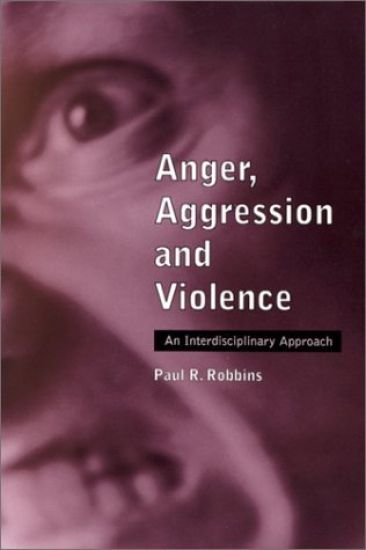
Anger, Aggression and Violence

Anger, Aggression and Violence

Paul R. Robbins

McFarland Co Inc
2000
pokkari
Violence has been a part of the human condition for a long time. Evidence from the distant past of hominids shows traces of violence inflicted by other hominids. The history of our own species has more than its share of violent encounters--sometimes rising to the level of sheer brutality. Indeed, the examples of human inhumanity are so numerous and so diverse, one might entertain the thesis that violence is hardwired, as it were, into the genetic makeup of our species. The thesis underlying this book is that in order to better understand violence, it is important to examine anger and aggression and the interrelationship among the three concepts. Feelings of anger often precede aggressive and violent acts. If we learn how to control anger better, we can expect a reduction in violent acts. And aggression itself may be channeled into behaviors which can be useful rather than destructive. This book addresses the problem of anger by using an interdisciplinary approach, drawing on research from psychology, anthropology, sociology and history as well as statistical data provided by criminologists.
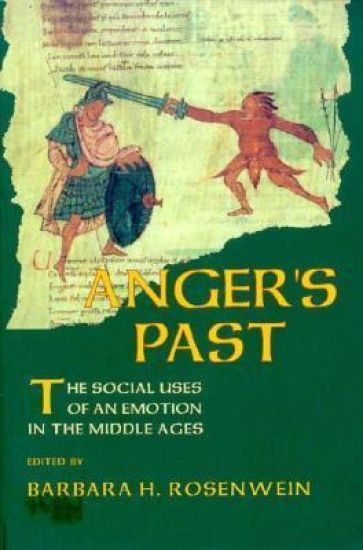
Anger's Past

Anger's Past

Cornell University Press
1998
sidottu
Books have rarely been written about the history of any emotion except love and shame, and this volume is the very first on the meaning of anger in the Middle Ages. Well aware of modern theories about the nature of anger, the authors consider the role of anger in the social lives and conceptual universes of a varied and significant cross-section of medieval people: monks, saints, kings, lords, and peasants. They are careful to distinguish between texts (the sources on which historians must rely) and the reality behind the texts. They are sensitive, as well, to the differences between ideals and normative behavior. The first eight essays in the volume focus on anger in the Latin West, while the last two turn to the fringes of Europe (the Celtic and Islamic worlds) for purposes of comparison. Barbara H. Rosenwein concludes the volume with an essay on modern conceptions of anger and their implications for understanding its role in the Middle Ages. The essays reveal much that is new about medieval rituals of honor and status and illuminate the rationales behind such seemingly irrational practices as cursing, feuding, and the punishment of blinding. Contributors: Gerd Althoff, University of Münster; Richard E. Barton, Yale University; Geneviéve Bührer-Thierry, University of Marne-la-Vallée; Wendy Davies, University College London; Paul Freedman, Yale University; Zouhair Ghazzal, Loyola University, Chicago; Paul Hyams, Cornell University; Lester K. Little, Smith College; Catherine Peyroux, Duke University; Barbara H. Rosenwein, Loyola University, Chicago; Stephen D. White, Emory University
Anger's Past

Anger's Past

Cornell University Press
1998
pokkari
Books have rarely been written about the history of any emotion except love and shame, and this volume is the very first on the meaning of anger in the Middle Ages. Well aware of modern theories about the nature of anger, the authors consider the role of anger in the social lives and conceptual universes of a varied and significant cross-section of medieval people: monks, saints, kings, lords, and peasants. They are careful to distinguish between texts (the sources on which historians must rely) and the reality behind the texts. They are sensitive, as well, to the differences between ideals and normative behavior. The first eight essays in the volume focus on anger in the Latin West, while the last two turn to the fringes of Europe (the Celtic and Islamic worlds) for purposes of comparison. Barbara H. Rosenwein concludes the volume with an essay on modern conceptions of anger and their implications for understanding its role in the Middle Ages. The essays reveal much that is new about medieval rituals of honor and status and illuminate the rationales behind such seemingly irrational practices as cursing, feuding, and the punishment of blinding. Contributors: Gerd Althoff, University of Münster; Richard E. Barton, Yale University; Geneviéve Bührer-Thierry, University of Marne-la-Vallée; Wendy Davies, University College London; Paul Freedman, Yale University; Zouhair Ghazzal, Loyola University, Chicago; Paul Hyams, Cornell University; Lester K. Little, Smith College; Catherine Peyroux, Duke University; Barbara H. Rosenwein, Loyola University, Chicago; Stephen D. White, Emory University
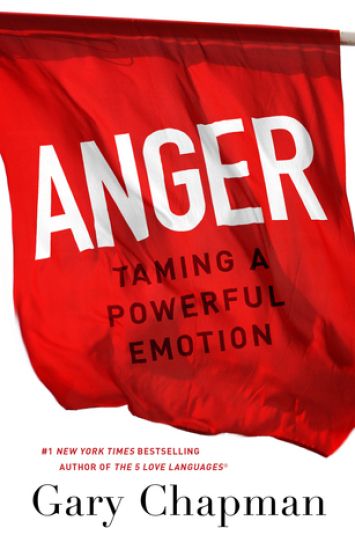
Anger

Anger

Gary D. Chapman

Moody Publishers
2015
nidottu
Help for anger management -- from NYT bestselling author Gary ChapmanAnger is a cruel master. If you struggle even a little with anger, you know how it feels to get mad too easily. To lash out at someone you love. To hold onto frustration. You might even notice others seem uneasy around you. You know anger is hurting your life, but you don't know how to fix it.There is hope. When you understand why you get angry and what to do about it, you can change the course of your life for the better. In Anger: Taming a Powerful Emotion, counselor Gary Chapman shares surprising insights about anger, its effect on relationships, and how to overcome it. His advice and real-life examples will help you: Understand yourself betterOvercome shame, denial, and bitterness Discern good anger from bad angerManage anger and conflict constructively Make positive life changesLet go of your grudges and resentmentHelp others (like your children) deal with anger and moreWhether your anger is quiet or explosive, if it's clouding your judgment and hurting your relationships, it needs to go. Learn to handle anger in healthy ways, starting today. Gary Chapman is wise and empathetic, and he'll help you turn over a new leaf.
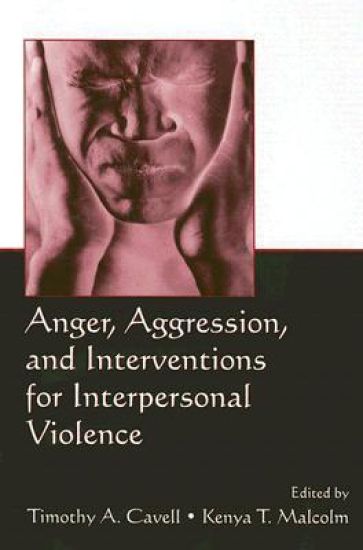
Anger, Aggression, and Interventions for Interpersonal Violence

Anger, Aggression, and Interventions for Interpersonal Violence

Routledge Member of the Taylor and Francis Group
2006
sidottu
Interpersonal violence has many faces and many names—domestic violence, child abuse, school bullying. Anger, Aggression, and Interventions for Interpersonal Violence reveals what clinical scientists know and what mental health practitioners can do about interpersonal violence. To advance the way professionals conceptualize interventions for violent clients, contributors consider the complex relation between anger and aggression and discuss how that relation affects treating various forms of interpersonal violence. Should treatment focus on anger, on aggression, or on both? Does that decision depend on the form of interpersonal violence, or does the anger-aggression relation suggest a core set of intervention principles and strategies?Readers are provided up-to-date, detailed discussions as well as focused commentaries, all written by internationally known researchers. This volume will serve as a comprehensive guide for researchers and practitioners alike.