Kirjojen hintavertailu. Mukana 11 342 296 kirjaa ja 12 kauppaa.

Kirjahaku

Etsi kirjoja tekijän nimen, kirjan nimen tai ISBN:n perusteella.

1000 tulosta hakusanalla Alastair Cook

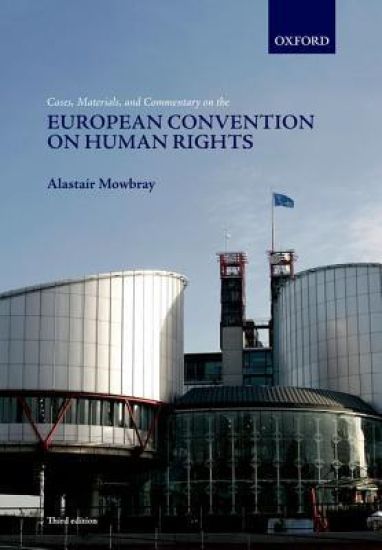
Cases, Materials, and Commentary on the European Convention on Human Rights
The European Convention on Human Rights can now be invoked by 800 million people across 47 member States. It is the most developed and successful system of international legal protection for fundamental human rights in existence. The first two editions of this widely used and highly praised work were designed to address the challenge faced by undergraduate and postgraduate students in comprehending the extensive, complex and lengthy jurisprudence emanating from Strasbourg. This updated edition continues that mission. It provides a selection of the leading jurisprudence, together with commentary, enabling readers to gain a critical and contemporary understanding of the major rights and freedoms guaranteed by the ECHR. Separate chapters are devoted to each of the fundamental rights, providing an in-depth analysis of the rights and freedoms and their limitations. An examination of the background to the creation of the Convention, and the constantly developing system of adjudication and remedies at the European level are also included. Cases, Materials, and Commentary on the European Convention on Human Rights is essential reading for all those wishing to gain a full understanding of this vital and ever-developing area of law.
An Arabian Utopia: The Western Discovery of Oman

An Arabian Utopia: The Western Discovery of Oman

Alastair Hamilton

Oxford University Press
2010
sidottu
Even though Oman had always been familiar to travellers sailing between Europe and India or Persia, it was its coast alone that was known. Greeks and Romans had charted it, medieval merchants traded on it, and in the early sixteenth century the Portuguese conquered its main towns, yet the interior of Oman was all but entirely unknown and would remain so until the early nineteenth century. Only after the ejection of the Portuguese in 1650 and an independent Oman had built an empire of its own, stretching round the Indian Ocean from India to Zanzibar, did Muscat, the capital, start to be visited by western powers eager to obtain commercial concessions and political influence. In the nineteenth century, for the first time, a very few, mainly English, explorers ventured inland and embarked on the true discovery of Oman. But even that was sporadic. As long as there was a powerful ruler, the travellers were protected, but by the late nineteenth century the rulers in Muscat had lost control over the interior and it was not until well into the twentieth century that explorers such as Wilfred Thesiger could investigate the south and that the oil companies could begin to chart the centre and the west. Oman was the last Arab country to be fully explored by western travellers and this book examines and discusses the ways in which the emergent knowledge of Oman was propagated in the West, from the earliest times to 1970, by explorers, missionaries, diplomats, artists, geologists and naturalists, and by those scholars who gradually uncovered the manuscripts and antiquities that allowed them to piece together the history of the area.
Literary Names

Literary Names

Alastair Fowler

Oxford University Press
2012
sidottu
Why do authors use pseudonyms and pen-names, or ingeniously hide names in their work with acrostics and anagrams? How has the range of permissible given names changed and how is this reflected in literature? Why do some characters remain mysteriously nameless? In this rich and learned book, Alastair Fowler explores the use of names in literature of all periods - primarily English but also Latin, Greek, French, and Italian - casting an unusual and rewarding light on the work of literature itself. He traces the history of names through Homer, Spenser, Shakespeare, Milton, Thackeray, Dickens, Joyce, and Nabokov, showing how names often turn out to be the thematic focus. Fowler shows that the associations of names, at first limited, become increasingly salient and sophisticated as literature itself develops.
The Arcadian Library

The Arcadian Library

Alastair Hamilton

Oxford University Press
2011
sidottu
The Arcadian Library is unique in Europe. The 10,000 or so volumes which it owns provide a complete picture of the encounter between two cultures and show how the civilization of the Arab and Islamic worlds was appreciated in the Christian West from the earliest times to the present day. The purpose of this heavily-illustrated survey is to provide an idea of the variety of works, documents, and images which the library holds in different domains. Travel writings prevail, a reflection of the impressions made on Europeans by the vast region centred on Arabia and the Levant and stretching from the Maghreb to South and Central Asia, and of the discoveries they made and the effect of their findings on Western knowledge and sensibility. The section on travellers also includes some of the rarer items in the library - unique manuscripts and maps, colour-plate books, and unpublished letters from figures such as Richard Burton, T.E. Lawrence, and Gertrude Bell. In addition to travel there is a large collection of Turcica, with its rare pamphlets and illustrations; a section on Arab science and medicine which contains priceless incunables of translations of Arabic texts; an important selection of Quran translations and material on Eastern Christianity; documents both published and unpublished on the Arabs in Spain and the influence of the tradition they established on early modern Spain and the rest of Europe; numerous products of oriental scholarship and, finally, works of oriental literature which include, besides translations from Turkish and Persian, unpublished manuscripts, and splendidly illustrated copies of The Arabian Nights. Over 200 illustrations of some of the finest items in the library, including four 8-page fold-outs, complement the text. The bibliography, running to almost 2000 entries, gives an overview of some of the most important items in the library.
The Kaiserchronik

The Kaiserchronik

Alastair Matthews

Oxford University Press
2012
sidottu
This book presents a narratological analysis of the Kaiserchronik, or chronicle of the emperors, the first verse chronicle to have been written in any European vernacular language, which provides an account of the Roman and Holy Roman emperors from the foundation of Rome to the eve of the Second Crusade. Previous research has concentrated on the structure and sources of the work and emphasized its role as a Christian narrative of history, but this study shows that the Kaiserchronik does not simply illustrate a didactic religious message: it also provides an example of how story-telling techniques in the vernacular were developed and explored in twelfth-century Germany. Four aspects of narrative are described (time and space, motivation, perspective, and narrative strands), each of which is examined with reference to the story of a particular emperor (Constantine the Great, Charlemagne, Otto the Great, and Henry IV). Rather than imposing a single analytical framework on the Kaiserchronik, the book takes account of the fact that modern theory cannot always be applied directly to works from premodern periods: it draws critically on a variety of approaches, including those of Gérard Genette, Boris Uspensky, and Eberhard Lämmert. Throughout the book, the narrative techniques described are contextualized by means of comparisons with other texts in both Middle High German and Latin, making clear the place of the Kaiserchronik as a literary narrative in the twelfth century.
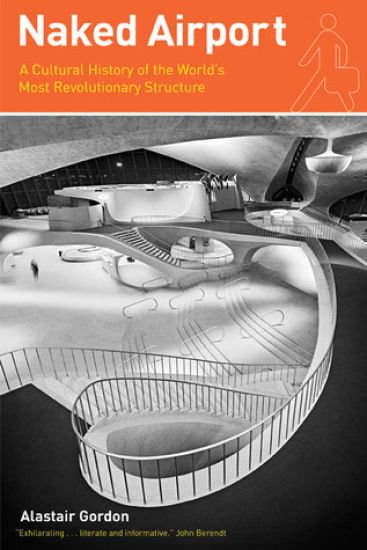
Naked Airport

Naked Airport

Alastair Gordon

University of Chicago Press
2008
nidottu
Although airports are now best known for interminable waits at check-in counters, liquid restrictions for carry-on luggage, and humiliating shoe-removal rituals at security, they were once the backdrops for jet-setters who strutted, martinis in hand, through curvilinear terminals designed by Eero Saarinen. In the critically acclaimed Naked Airport, Alastair Gordon traces the cultural history of this defining institution from its origins in muddy fields to its frontline position in the struggle against international terrorism.From global politics to action movies to the daily commute, Gordon shows how the airport has changed our sense of time, distance, and style, and ultimately the way cities are built and business is done. He introduces the people who shaped and were shaped by this place of sudden transition: pilots like Charles Lindbergh, architects like Le Corbusier, and political figures like Fiorello LaGuardia and Adolf Hitler. "Naked Airport" is a profoundly original history of a long-neglected yet central component of modern life.
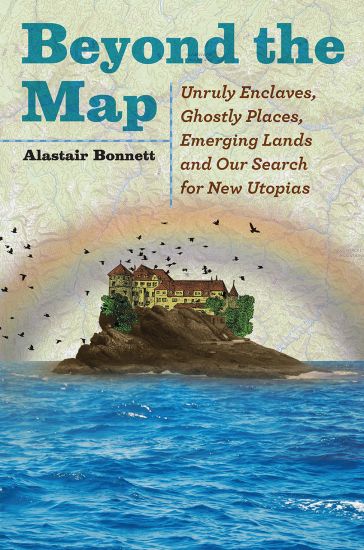
Beyond the Map: Unruly Enclaves, Ghostly Places, Emerging Lands and Our Search for New Utopias
New islands are under construction or emerging because of climate change. Eccentric enclaves and fantastic utopian experiments are multiplying. Once-secret fantasy gardens are cracking open their doors to outsiders. Our world is becoming stranger by the day--and Alastair Bonnett observes and captures every fascinating change. In Beyond the Map, Bonnett presents stories of the world's most extraordinary spaces--many unmarked on any official map--all of which challenge our assumptions about what we know--or think we know--about our world. As cultural, religious and political boundaries ebb and flow with each passing day, traditional maps unravel and fragment. With the same adventurous spirit he effused in the acclaimed Unruly Places, Bonnett takes us to thirty-nine incredible spots around the globe to explore these changing boundaries and stimulate our geographical imagination. Some are tied to disruptive contemporary political turbulence, such as the rise of ISIL, Russia's incursions into Ukraine and the Brexit vote in the United Kingdom. Others explore the secret places not shown on Google Earth or reflect fast-changing landscapes. Beyond the Map journeys out into a world of mysterious, daunting and magical spaces. It is a world of hidden cultures and ghostly memories, of uncountable new islands and curious stabs at paradise. From the phantom tunnels of the Tokyo subway to a stunning movie-set re-creation of 1950s-era Moscow; from the caliphate of the Islamic State to virtual cybertopias--this book serves as an imaginative guide to the farthest fringes of geography.
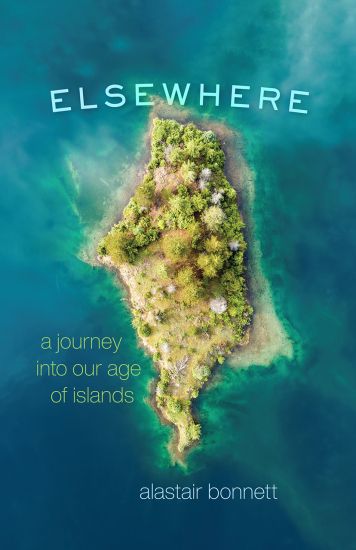
Elsewhere: A Journey Into Our Age of Islands

Elsewhere: A Journey Into Our Age of Islands

Alastair Bonnett

University of Chicago Press
2022
nidottu
Explorer and geographer Alastair Bonnett takes us on a thought-provoking tour of the world's most fascinating islands, featuring hand-drawn maps, color photos, and stories from his travels. There are millions of islands on our planet. New islands are being built at an unprecedented rate, for tourism and territorial ambition. Many are also disappearing, besieged by rising sea levels. The story of our world's islands is one of the great dramas of our time, and it is playing out around the planet--islands are sprouting or being submerged everywhere from the South China Sea to the Atlantic. Elsewhere is the story of this strange and mesmerizing planetary spectacle. In this book, explorer and geographer Alastair Bonnett takes us on a thought-provoking tour of the world's most fascinating islands. He traveled the globe to provide a firsthand look at numerous islands, sketching a vivid likeness of each one he visited. From a "crannog," an ancient artificial island in a Scottish loch, to the militarized artificial islands China is building; from the disappearing islands that remain the home of native Central Americans to the ritzy new islands of Dubai; from Hong Kong to the Isles of Scilly--all have compelling stories to tell. As we journey around the world with Bonnett, he addresses urgent contemporary issues such as climate change, economic inequality, and the changing balance of world power as reflected in the fates of islands. Along the way, we also learn about the many ways islands rise and fall, the long and little-known history of human island-building and the prospect that the inland hills and valleys will one day be archipelagos. Featuring Bonnett's charming hand-drawn maps and 33 full-color photos, Elsewhere is a captivating travel book for any armchair adventurer.
The  Family of Love 1540-1660

The Family of Love 1540-1660

Alastair Hamilton

JAMES CLARKE CO LTD
2025
nidottu
Over forty years after its original publication, Alastair Hamilton has revised and updated his comprehensive study of the heterodox movement known as the Family of Love. Part of the Radical Reformation, it has been a source of fascination to scholars, earning a reputation for antinomianism alongside its association with some of the greatest humanists of the late sixteenth century. They include the philosopher and philologist Justus Lipsius and the greatest typographer of his day, Christophe Plantin. Hamilton studies the careers and the thought of the two main ideologists of the movement and provides a lucid analysis of the ramifications of the Family of Love not only in the Low Countries, but also in France, Germany and England. Extensively researched, Hamilton's detailed study was the first to connect the Family of Love in England with the movement on the continent. His book remains a definitive but readable history of a neglected yet significant moment in the history of the Radical Reformation in Europe.
The  Family of Love 1540-1660

The Family of Love 1540-1660

Alastair Hamilton

JAMES CLARKE CO LTD
2024
sidottu
Over forty years after its original publication, Alastair Hamilton has revised and updated his comprehensive study of the heterodox movement known as the Family of Love. Part of the Radical Reformation, it has been a source of fascination to scholars, earning a reputation for antinomianism alongside its association with some of the greatest humanists of the late sixteenth century. They include the philosopher and philologist Justus Lipsius and the greatest typographer of his day, Christophe Plantin. Hamilton studies the careers and the thought of the two main ideologists of the movement and provides a lucid analysis of the ramifications of the Family of Love not only in the Low Countries, but also in France, Germany and England. Extensively researched, Hamilton's detailed study was the first to connect the Family of Love in England with the movement on the continent. His book remains a definitive but readable history of a neglected yet significant moment in the history of the Radical Reformation in Europe.
Russian and Soviet Diplomacy, 1900-39

Russian and Soviet Diplomacy, 1900-39

Alastair Kocho-Williams

Palgrave Macmillan
2011
sidottu
Addressing the impact of the Russian Revolution and change and continuity in diplomacy during the transition from Empire to Soviet Union, this book examines how Russia's diplomacy was conducted, the diplomats behind it, the establishment of the Soviet diplomatic corps and the steps taken to integrate the Soviets into the diplomatic world.
Torts

Torts

Alastair Mullis; Ken Oliphant

Red Globe Press
2011
nidottu
The previous editions of Torts were highly regarded for their clarity of explanation and engaging writing style, and this new fourth edition fully retains each of these qualities. The text has been extensively revised and updated, and there is a new chapter on privacy. The enhanced layout includes end of chapter summaries and self-test exercises and an extensive bibliography. This is therefore an ideal companion to the subject for both law undergraduates and GDL/CPE students.
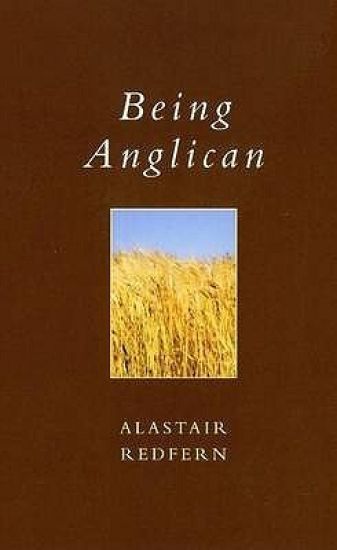
Being Anglican

Being Anglican

Alastair Redfern

Darton,Longman Todd Ltd
2007
pokkari
This book explores the idea of Anglican idenity through a study of major figures from Richard Hooker to Michael Ramsey, foucusing on their contribution to contemporary thinking about Christian spirituality, worship, mission. Theology and ministry.
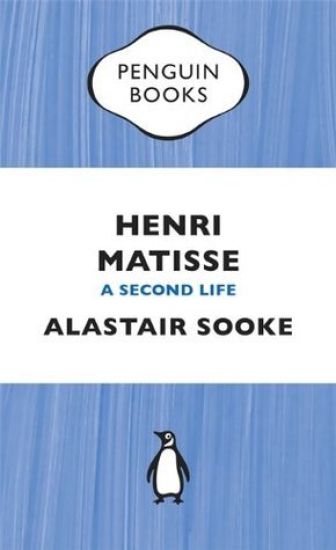
Henri Matisse

Henri Matisse

Alastair Sooke

Penguin Books Ltd
2014
nidottu
Henri Matisse by Alastair Sooke - an essential guide to one of the 20th century's greatest artists'One January morning in 1941, only a fortnight or so after his seventy-first birthday, the bearded and bespectacled French artist Henri Matisse was lying in a hospital bed preparing to die.'Diagnosed with cancer, the acclaimed painter, and rival of Picasso, seemed to be facing his demise. Then something unexpected happened. After a life-saving operation that left him too weak to paint, and often too frail to even get out of bed, Matisse invented a ground-breaking and effortless new way of making art. The results rank among his greatest work.In an astonishing blaze of creativity, he began conjuring mesmerising designs of dazzling dancers and thrilling tightrope walkers, sensuous swimmers and mythical figures falling from the heavens. His joyful and unprecedented new works were as spontaneous as jazz music and as wondrous as crystal-clear lagoons. Their medium? Coloured paper and scissors.This book, by art critic and broadcaster Alastair Sooke, focuses on Matisse's extraordinary final decade, which he called 'a second life', after he had returned from the grave. Both a biography and a guide to Matisse's 'cut-outs', it tells the story of the valedictory flourish of one of the most important and beloved artists of the twentieth century.Published in time for a major Tate Modern retrospective.'Sooke is an immensely engaging character. He has none of the weighty self-regard that often afflicts art experts and critics; rather he approaches his subjects with a questioning, open, exploratory attitude' Sarah Vine, The Times 'His shows are excellent - clever, lively, scholarly, but not too lecturey; he's very good at linking his painters with the world outside the studio, and at how these artists have affected the world today' Sam Wollaston reviewing 'Modern Masters', GuardianAlastair Sooke is art critic of the Daily Telegraph. He has written and presented documentaries on television and radio for the BBC, including Modern Masters, The World's Most ExpensivePaintings, Treasures of Ancient Rome and, most recently, Treasures of Ancient Egypt. He is a regular reporter for The Culture Show on BBC Two. He is the author of Roy Lichtenstein: How Modern Art was Saved by Donald Duck.