Kirjojen hintavertailu. Mukana 11 244 527 kirjaa ja 12 kauppaa.

Kirjahaku

Etsi kirjoja tekijän nimen, kirjan nimen tai ISBN:n perusteella.

703 tulosta hakusanalla Aldo Ricci

Living Within Our Means

Living Within Our Means

Aldo Ferrer

Routledge
2020
nidottu
This book examines the fiscal chaos and the external debt question in Argentine economy. It identifies the main sources of the public and monetary imbalances and outlines some basic measures for resolving the problems. The book proposes a financial reform to reduce the fiscal deficit.
The Para-State

The Para-State

Aldo Civico

University of California Press
2015
sidottu
Since its independence in the nineteenth century, the South American state of Colombia has been shaped by decades of bloody political violence. In The Para-State, Aldo Civico draws on interviews with paramilitary death squads and drug lords to provide a cultural interpretation of the country's history of violence and state control. Between 2003 and 2008, Civico gained unprecedented access to some of Colombia's most notorious leaders of the death squads. He also conducted interviews with the victims of paramilitary, with drug kingpins, and with vocal public supporters of the paramilitary groups. Drawing on the work of Deleuze and Guattari, this riveting work demonstrates how the paramilitaries have in essence become a war machine deployed by the Colombian state to control and maintain its territory and political legitimacy.
The Para-State

The Para-State

Aldo Civico

University of California Press
2015
pokkari
Since its independence in the nineteenth century, the South American state of Colombia has been shaped by decades of bloody political violence. In The Para-State, Aldo Civico draws on interviews with paramilitary death squads and drug lords to provide a cultural interpretation of the country's history of violence and state control. Between 2003 and 2008, Civico gained unprecedented access to some of Colombia's most notorious leaders of the death squads. He also conducted interviews with the victims of paramilitary, with drug kingpins, and with vocal public supporters of the paramilitary groups. Drawing on the work of Deleuze and Guattari, this riveting work demonstrates how the paramilitaries have in essence become a war machine deployed by the Colombian state to control and maintain its territory and political legitimacy.
The Argentine Economy

The Argentine Economy

Aldo Ferrer

University of California Press
2020
pokkari
Argentina poses a challenge to economists, economic historians, political scientists, and other concerned with the interrelationship of political and economic forces in developing nations. Although possessed of most of the attributes generally thought necessary for rapid and self-sustaining development, her economy has barely kept up with the population increase, and living standards of large segments of the population have not advanced. The causes of this paradox have never been adequately explained. Ferrer interprets the economic stagnation of Argentina in historical terms, tracing the evolution of the country's economy through four separate stages, beginning with the colonial era in the sixteenth century. Most attention is given to the period of "nonintegrated industrial economy," from 1930 to the present. According to Ferrer, modern Argentina was formed in the second half of the nineteenth century, when the country was integrated into the world economy as a large producer and exporter of agricultural products. The great influx of immigrants and foreign capital led to a rapid disintegration of the traditional society, which had been composed of isolated regional economies with a low level of economic and social development. The Pampa area, an "open space" that had been largely uninhabited, became the nucleus of the subsequent expansion because of its rich land resources and humid and temperate climate. The dislocation of the international economy after the world economic crisis of the 1930's and the rigidity of the Argentine agricultural economy, confronted the country with need to industrialize and diversify its economic structure. Some progress has been made along this road, but Ferrer attributes Argentina's postwar difficulties to the lack of proper answers to the problems of an agricultural economy in transition to a modern industrial society. The author relates economic data to the broader social and political issues. He forsees a definitive confrontation between two social and economic forces: one favoring maintenance of the status quo, the other advocating an enlightened policy of basic industrial growth. The outcome of this confrontation will have a profound impact on the future of Argentina and, indeed, all Latin America. This title is part of UC Press's Voices Revived program, which commemorates University of California Press's mission to seek out and cultivate the brightest minds and give them voice, reach, and impact. Drawing on a backlist dating to 1893, Voices Revived makes high-quality, peer-reviewed scholarship accessible once again using print-on-demand technology. This title was originally published in 1967.
Knights at Court

Knights at Court

Aldo Scaglione

University of California Press
2022
pokkari
Knights at Court is a grand tour and survey of manners, manhood, and court life in the Middle Ages, like no other in print. Composed on an epic canvas, this authoritative work traces the development of court culture and its various manifestations from the latter years of the Holy Roman Empire (ca. A.D. 1000) to the Italian Renaissance of the fifteenth and sixteenth centuries. Leading medievalist and Renaissance scholar Aldo Scaglione offers a sweeping sociological view of three geographic areas that reveals a surprising continuity of courtly forms and motifs: German romances; the lyrical and narrative literature of northern and southern France; Italy's chivalric poetry. Scaglione discusses a broad number of texts, from early Norman and Flemish baronial chronicles to the romances of Chrétien de Troyes, the troubadours and Minnesingers. He delves into the Niebelungenlied, Dante, Petrarch, Boccaccio, and an array of treatises on conduct down to Castiglione and his successors. All these works and Scaglione's superior scholarship attest to the enduring power over minds and hearts of a mentality that issued from a small minority of people—the courtiers and knights—in central positions of leadership and power. Knights at Court is for all scholars and students interested in "the civilizing process." This title is part of UC Press's Voices Revived program, which commemorates University of California Press’s mission to seek out and cultivate the brightest minds and give them voice, reach, and impact. Drawing on a backlist dating to 1893, Voices Revived makes high-quality, peer-reviewed scholarship accessible once again using print-on-demand technology. This title was originally published in 1991.
The Argentine Economy

The Argentine Economy

Aldo Ferrer

University of California Press
2021
sidottu
Argentina poses a challenge to economists, economic historians, political scientists, and other concerned with the interrelationship of political and economic forces in developing nations. Although possessed of most of the attributes generally thought necessary for rapid and self-sustaining development, her economy has barely kept up with the population increase, and living standards of large segments of the population have not advanced. The causes of this paradox have never been adequately explained. Ferrer interprets the economic stagnation of Argentina in historical terms, tracing the evolution of the country's economy through four separate stages, beginning with the colonial era in the sixteenth century. Most attention is given to the period of "nonintegrated industrial economy," from 1930 to the present. According to Ferrer, modern Argentina was formed in the second half of the nineteenth century, when the country was integrated into the world economy as a large producer and exporter of agricultural products. The great influx of immigrants and foreign capital led to a rapid disintegration of the traditional society, which had been composed of isolated regional economies with a low level of economic and social development. The Pampa area, an "open space" that had been largely uninhabited, became the nucleus of the subsequent expansion because of its rich land resources and humid and temperate climate. The dislocation of the international economy after the world economic crisis of the 1930's and the rigidity of the Argentine agricultural economy, confronted the country with need to industrialize and diversify its economic structure. Some progress has been made along this road, but Ferrer attributes Argentina's postwar difficulties to the lack of proper answers to the problems of an agricultural economy in transition to a modern industrial society. The author relates economic data to the broader social and political issues. He forsees a definitive confrontation between two social and economic forces: one favoring maintenance of the status quo, the other advocating an enlightened policy of basic industrial growth. The outcome of this confrontation will have a profound impact on the future of Argentina and, indeed, all Latin America. This title is part of UC Press's Voices Revived program, which commemorates University of California Press's mission to seek out and cultivate the brightest minds and give them voice, reach, and impact. Drawing on a backlist dating to 1893, Voices Revived makes high-quality, peer-reviewed scholarship accessible once again using print-on-demand technology. This title was originally published in 1967.
Knights at Court

Knights at Court

Aldo Scaglione

University of California Press
2022
sidottu
Knights at Court is a grand tour and survey of manners, manhood, and court life in the Middle Ages, like no other in print. Composed on an epic canvas, this authoritative work traces the development of court culture and its various manifestations from the latter years of the Holy Roman Empire (ca. A.D. 1000) to the Italian Renaissance of the fifteenth and sixteenth centuries. Leading medievalist and Renaissance scholar Aldo Scaglione offers a sweeping sociological view of three geographic areas that reveals a surprising continuity of courtly forms and motifs: German romances; the lyrical and narrative literature of northern and southern France; Italy's chivalric poetry. Scaglione discusses a broad number of texts, from early Norman and Flemish baronial chronicles to the romances of Chrétien de Troyes, the troubadours and Minnesingers. He delves into the Niebelungenlied, Dante, Petrarch, Boccaccio, and an array of treatises on conduct down to Castiglione and his successors. All these works and Scaglione's superior scholarship attest to the enduring power over minds and hearts of a mentality that issued from a small minority of people—the courtiers and knights—in central positions of leadership and power. Knights at Court is for all scholars and students interested in "the civilizing process." This title is part of UC Press's Voices Revived program, which commemorates University of California Press’s mission to seek out and cultivate the brightest minds and give them voice, reach, and impact. Drawing on a backlist dating to 1893, Voices Revived makes high-quality, peer-reviewed scholarship accessible once again using print-on-demand technology. This title was originally published in 1991.
Grounded Consequence for Defeasible Logic

Grounded Consequence for Defeasible Logic

Aldo Antonelli

Cambridge University Press
2009
pokkari
This is a title on the foundations of defeasible logic, which explores the formal properties of everyday reasoning patterns whereby people jump to conclusions, reserving the right to retract them in the light of further information. Although technical in nature the book contains sections that outline basic issues by means of intuitive and simple examples. This book is primarily targeted at philosophers interested in the foundations of defeasible logic, logicians, and specialists in artificial intelligence and theoretical computer science.
Animal Homosexuality

Animal Homosexuality

Aldo Poiani

Cambridge University Press
2010
pokkari
Homosexuality is an evolutionary paradox in search for a resolution, not a medical condition in search for a cure. Homosexual behavior is common among social animals, and mainly expressed within the context of a bisexual sexual orientation. Exclusive homosexuality is less common, but not unique to humans. Poiani and Dixson invite the reader to embark on a journey through the evolutionary, biological, psychological and sociological aspects of homosexuality, seeking an understanding of both the proximate and evolutionary causes of homosexual behavior and orientation in humans, other mammals and birds. The authors also provide a synthesis of what we know about homosexuality into a biosocial model that links recent advances in reproductive skew theory and various selection mechanisms to produce a comprehensive framework that will be useful for anyone teaching or planning future research in this field.
Animal Homosexuality

Animal Homosexuality

Aldo Poiani

Cambridge University Press
2010
sidottu
Homosexuality is an evolutionary paradox in search for a resolution, not a medical condition in search for a cure. Homosexual behavior is common among social animals, and mainly expressed within the context of a bisexual sexual orientation. Exclusive homosexuality is less common, but not unique to humans. Poiani and Dixson invite the reader to embark on a journey through the evolutionary, biological, psychological and sociological aspects of homosexuality, seeking an understanding of both the proximate and evolutionary causes of homosexual behavior and orientation in humans, other mammals and birds. The authors also provide a synthesis of what we know about homosexuality into a biosocial model that links recent advances in reproductive skew theory and various selection mechanisms to produce a comprehensive framework that will be useful for anyone teaching or planning future research in this field.
Experiments in Financial Democracy

Experiments in Financial Democracy

Aldo Musacchio

Cambridge University Press
2009
sidottu
This book provides a detailed historical description of the evolution of corporate governance and stock markets in Brazil in the late nineteenth and twentieth centuries. The analysis details the practices of corporate governance, in particular the rights that shareholders have to restrict the actions of managers, and how that shaped different approaches to corporate finance over time. In the case of Brazil, even if the protections for investors included in national laws were relatively weak before 1940, corporate charters contained a series of provisions that protected minority shareholders against the abuses of large shareholders, managers, or other corporate insiders. The investigation uses the Brazilian case to challenge some of the key findings of a recent literature that argues that legal systems (e.g., common vs. civil law) shape the extent of development of stock and bond markets in different nations.
Grounded Consequence for Defeasible Logic

Grounded Consequence for Defeasible Logic

Aldo Antonelli

Cambridge University Press
2005
sidottu
This is a title on the foundations of defeasible logic, which explores the formal properties of everyday reasoning patterns whereby people jump to conclusions, reserving the right to retract them in the light of further information. Although technical in nature the book contains sections that outline basic issues by means of intuitive and simple examples. This book is primarily targeted at philosophers interested in the foundations of defeasible logic, logicians, and specialists in artificial intelligence and theoretical computer science.
The End of the Past

The End of the Past

Aldo Schiavone

Harvard University Press
2002
nidottu
This searching interpretation of past and present addresses fundamental questions about the fall of the Roman Empire. Why did ancient culture, once so strong and rich, come to an end? Was it destroyed by weaknesses inherent in its nature? Or were mistakes made that could have been avoided—was there a point at which Greco-Roman society took a wrong turn? And in what ways is modern society different? Western history is split into two discontinuous eras, Aldo Schiavone tells us: the ancient world was fundamentally different from the modern one. He locates the essential difference in a series of economic factors: a slave-based economy, relative lack of mechanization and technology, the dominance of agriculture over urban industry. Also crucial are aspects of the ancient mentality: disdain for manual work, a preference for transcending (rather than transforming) nature, a basic belief in the permanence of limits. Schiavone’s lively and provocative examination of the ancient world, “the eternal theater of history and power,” offers a stimulating opportunity to view modern society in light of the experience of antiquity.
The Invention of Law in the West

The Invention of Law in the West

Aldo Schiavone

The Belknap Press
2012
sidottu
Law is a specific form of social regulation distinct from religion, ethics, and even politics, and endowed with a strong and autonomous rationality. Its invention, a crucial aspect of Western history, took place in ancient Rome. Aldo Schiavone, a world-renowned classicist, reconstructs this development with clear-eyed passion, following its course over the centuries, setting out from the earliest origins and moving up to the threshold of Late Antiquity.The invention of Western law occurred against the backdrop of the Roman Empire's gradual consolidation—an age of unprecedented accumulation of power which transformed an archaic predisposition to ritual into an unrivaled technology for the control of human dealings. Schiavone offers us a closely reasoned interpretation that returns us to the primal origins of Western legal machinery and the discourse that was constructed around it—formalism, the pretense of neutrality, the relationship with political power. This is a landmark work of scholarship whose influence will be felt by classicists, historians, and legal scholars for decades.
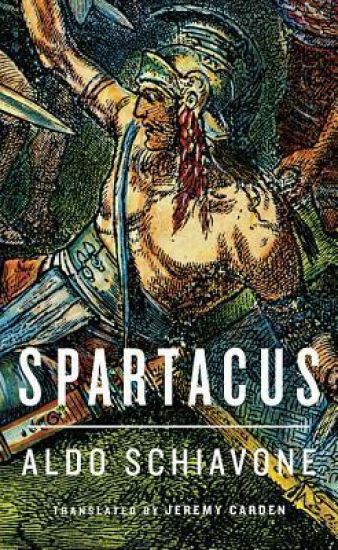
Spartacus

Spartacus

Aldo Schiavone

Harvard University Press
2013
sidottu
Spartacus (109?–71 BCE), the slave who rebelled against Rome, has been a source of endless fascination: the subject of myth-making in his own time, and of movie-making in ours. Hard facts about the man have always yielded to romanticized tales and mystifications. In this riveting, compact account, Aldo Schiavone rescues Spartacus from the murky regions of legend and brings him squarely into the arena of serious history.Schiavone transports us to Italy in the first century BCE, where the pervasive institution of slavery dominates all aspects of Roman life. In this historic landscape, carefully reconstructed by the author, we encounter Spartacus, who is enslaved after deserting from the Roman army to avoid fighting against his native Thrace. Imprisoned in Capua and trained as a gladiator, he leads an uprising that will shake the empire to its foundations.While the grandeur of the Spartacus story has always been apparent, its political significance has been less clear. What were his ambitions? Often depicted as the leader of a class rebellion that was fierce in intent but ragtag in makeup and organization, Spartacus emerges here in a very different light: the commander of an army whose aim was to incite Italy to revolt against Rome and to strike at the very heart of the imperial system. Surprising, persuasive, and highly original, Spartacus challenges the lore and illuminates the reality of a figure whose achievements, and whose ultimate defeat, are more extraordinary and moving than the fictions we make from them.
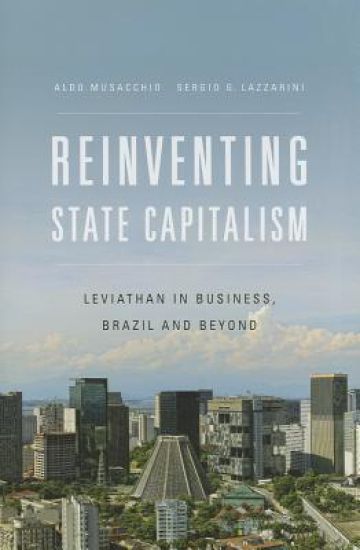
Reinventing State Capitalism

Reinventing State Capitalism

Aldo Musacchio; Sergio G. Lazzarini

Harvard University Press
2014
sidottu
The wave of liberalization that swept world markets in the 1980s and 90s altered the ways that governments manage their economies. Reinventing State Capitalism analyzes the rise of new species of state capitalism in which governments interact with private investors either as majority or minority shareholders in publicly-traded corporations or as financial backers of purely private firms (the so-called “national champions”). Focusing on a detailed quantitative assessment of Brazil’s economic performance from 1976 to 2009, Aldo Musacchio and Sergio Lazzarini examine how these models of state capitalism influence corporate investment and performance.According to one model, the state acts as a majority investor, granting the state-owned enterprise (SOE) financial autonomy and allowing professional management. This form, the authors argue, has reduced many agency problems commonly faced by state ownership. According to another hybrid model, the state uses sovereign wealth funds, holding companies, and development banks to acquire a small share of equity ownership in a corporation, thereby potentially alleviating capital constraints and leveraging latent capabilities.Both models have benefits and costs. Yet neither model has entirely eliminated the temptation of governments to intervene in the operation of natural resource industries and other large strategic enterprises. Nevertheless, the longstanding debate over whether private ownership is superior or inferior to state capitalism has become irrelevant, Musacchio and Lazzarini conclude. Private ownership is now mingled with state capital on a global scale.