Kirjojen hintavertailu. Mukana 11 342 296 kirjaa ja 12 kauppaa.

Kirjahaku

Etsi kirjoja tekijän nimen, kirjan nimen tai ISBN:n perusteella.

1000 tulosta hakusanalla Alexander Hamilton

Alexander Hamilton #2

Alexander Hamilton #2

Ann Hood

Penguin Putnam Inc
2024
pokkari
Now that the twins have begun to settle into their new lives at Elm Medona, they delve deeper into The Treasure Chest and uncover more about the Pickworth family, including the disappearance of their great-uncle Thorne and the theft of priceless family artifacts.In this adventure, The Treasure Chest transports Felix and Maisie to tropical St. Croix in 1772. There they meet a young man named Alexander Hamilton who is about to embark on a journey to New York. Felix and Maisie aren't sure why The Treasure Chest has brought them to meet Alexander, but they are determined to not let him out of their sights . . .even if that means stowing away on the very ship he is sailing off on!
Alexander Hamilton #2: Little Lion

Alexander Hamilton #2: Little Lion

Ann Hood

Penguin Workshop
2024
sidottu
Now that the twins have begun to settle into their new lives at Elm Medona, they delve deeper into The Treasure Chest and uncover more about the Pickworth family, including the disappearance of their great-uncle Thorne and the theft of priceless family artifacts. In this adventure, The Treasure Chest transports Felix and Maisie to tropical St. Croix in 1772. There they meet a young man named Alexander Hamilton who is about to embark on a journey to New York. Felix and Maisie aren't sure why The Treasure Chest has brought them to meet Alexander, but they are determined to not let him out of their sights . . .even if that means stowing away on the very ship he is sailing off on
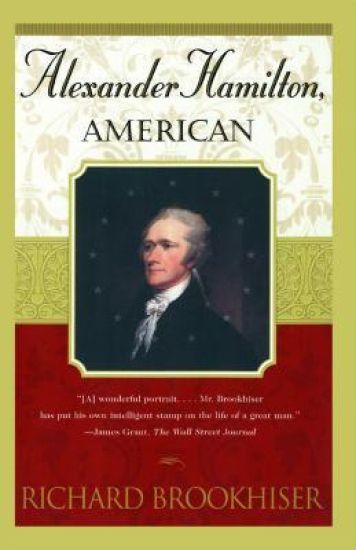
Alexander Hamilton, American

Alexander Hamilton, American

Richard Brookhiser

Simon Schuster
2000
pokkari
Alexander Hamilton is one of the least understood, most important, and most impassioned and inspiring of the founding fathers. At last Hamilton has found a modern biographer who can bring him to full-blooded life; Richard Brookhiser. In these pages, Alexander Hamilton sheds his skewed image as the "bastard brat of a Scotch peddler," sex scandal survivor, and notoriously doomed dueling partner of Aaron Burr. Examined up close, throughout his meteoric and ever-fascinating (if tragically brief) life, Hamilton can at last be seen as one of the most crucial of the founders. Here, thanks to Brookhiser's accustomed wit and grace, this quintessential American lives again.
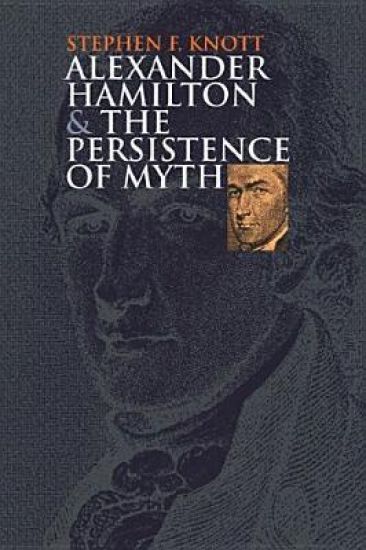
Alexander Hamilton and the Persistence of Myth

Alexander Hamilton and the Persistence of Myth

Stephen F. Knott

University Press of Kansas
2002
nidottu
Alexander Hamilton and the Persistence of Myth explores the shifting reputation of our most controversial founding father. Since the day Aaron Burr fired his fatal shot, Americans have tried to come to grips with Alexander Hamilton's legacy. Stephen Knott surveys the Hamilton image in the minds of American statesmen, scholars, literary figures, and the media, explaining why Americans are content to live in a Hamiltonian nation but reluctant to embrace the man himself.Knott observes that Thomas Jefferson and his followers, and, later, Andrew Jackson and his adherents, tended to view Hamilton and his principles as "un-American." While his policies generated mistrust in the South and the West, where he is still seen as the founding "plutocrat," Hamilton was revered in New England and parts of the Mid-Atlantic states. Hamilton's image as a champion of American nationalism caused his reputation to soar during the Civil War, at least in the North. However, in the wake of Gilded Age excesses, progressive and populist political leaders branded Hamilton as the patron saint of Wall Street, and his reputation began to disintegrate.Hamilton's status reached its nadir during the New Deal, Knott argues, when Franklin Roosevelt portrayed him as the personification of Dickensian cold-heartedness. When FDR erected the beautiful Tidal Basin monument to Thomas Jefferson and thereby elevated the Sage of Monticello into the American Pantheon, Hamilton, as Jefferson's nemesis, fell into disrepute. He came to epitomize the forces of reaction contemptuous of the "great beast"-the American people. In showing how the prevailing negative assessment misrepresents the man and his deeds, Knott argues for reconsideration of Hamiltonianism, which rightly understood has much to offer the American polity of the twenty-first century.Remarkably, at the dawn of the new millennium, the nation began to see Hamilton in a different light. Hamilton's story was now the embodiment of the American dream—an impoverished immigrant who came to the United States and laid the economic and political foundation that paved the way for America's superpower status. Here in Stephen Knott's insightful study, Hamilton finally gets his due as a highly contested but powerful and positive presence in American national life.
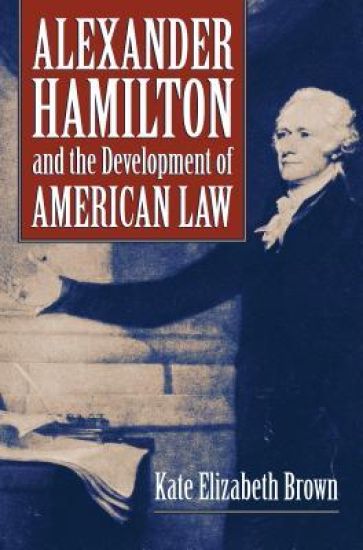
Alexander Hamilton and the Development of American Law

Alexander Hamilton and the Development of American Law

Kate Elizabeth Brown

University Press of Kansas
2017
sidottu
Alexander Hamilton is commonly seen as the standard-bearer of an ideology-turned-political party, the Federalists, engaged in a struggle for the soul of the young United States against the Anti-Federalists, and later, the Jeffersonian Republicans. Alexander Hamilton and the Development of American Law counters such conventional wisdom with a new, more nuanced view of Hamilton as a true federalist, rather than a one-dimensional nationalist, whose most important influence on the American founding is his legal legacy.In this analytical biography, Kate Elizabeth Brown recasts our understanding of Hamilton’s political career, his policy achievements, and his significant role in the American founding by considering him first and foremost as a preeminent lawyer who applied law and legal arguments to accomplish his statecraft. In particular, Brown shows how Hamilton used inherited English legal principles to accomplish his policy goals, and how state and federal jurists adapted these Hamiltonian principles into a distinct, republican jurisprudence throughout the nineteenth century. When writing his authoritative commentary on the nature of federal constitutional power in The Federalist, Hamilton juxtaposed the British constitution with the new American one he helped to create; when proposing commercial, monetary, banking, administrative, or foreign policy in Washington’s cabinet, he used legal arguments to justify his desired course of action. In short, lawyering, legal innovation, and common law permeated Alexander Hamilton’s professional career. Re-examining Hamilton’s post-war accomplishments through the lens of law, Brown demonstrates that Hamilton’s much-studied political career, as well as his contributions to republican political science, cannot be fully understood without recognizing and investigating how Hamilton used Anglo-American legal principles to achieve these ends. A critical re-evaluation of Hamilton’s legacy, as well as his place in the founding era, Brown’s work also enhances and refines our understanding of the nature and history of American jurisprudence.
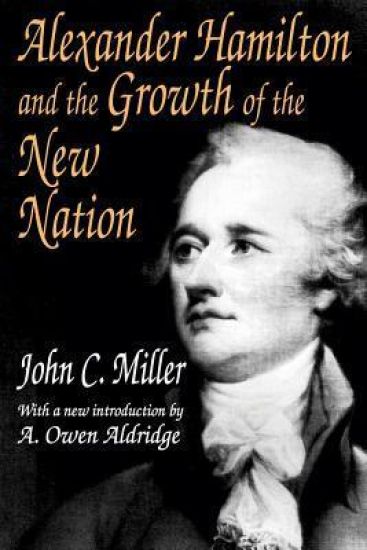
Alexander Hamilton and the Growth of the New Nation

Alexander Hamilton and the Growth of the New Nation

John C. Miller

Transaction Publishers
2017
nidottu
Probably no American statesman displayed more constructive imagination than did Alexander Hamilton. Prodigal of ideas, bursting with plans for diversifying the economy, and obsessed by a determination to make the United States a powerful nation under a centralized government, he left an imprint upon this country that time has not effaced. Alexander Hamilton and the Growth of the New Nation is the premier biography of Alexander Hamilton written by one of the foremost scholars of early American history.Hamilton's career was at times contradictory: born, in John Adams's words, the "bastard brat of a Scotch peddler," he rose to high social, political, and military position in the newly born country. He dreaded divisiveness, yet his strategies and actions aggravated political sectionalism. Miller weaves together the complex facets of Hamilton's life to make a vivid, absorbing biography.
Alexander Hamilton's Public Administration

Alexander Hamilton's Public Administration

Richard T. Green

The University of Alabama Press
2019
sidottu
Examines how Hamilton's thoughts and experiences about public administration theory and practice have shaped the nation. American public administration inherited from Alexander Hamilton a distinct republican framework through which we derive many of our modern governing standards and practices. His administrative theory flowed from his republican vision, prescribing not only the how of administration but also what should be done and why. Administration and policy merged seamlessly in his mind, each conditioning the other. His Anti-Federalist detractors clearly saw this and fought his vision tooth and nail. That conflict endures to this day because Americans still have not settled on just one vision of the American republic. That is why, Richard Green argues, Hamilton is a pivotal figure in our current reckoning. If we want to more fully understand ourselves and our ways of governing today, we must start by understanding Hamilton, and we cannot do that without exploring his administrative theory and practice in depth.Alexander Hamilton's Public Administration considers Hamilton both as a founder of the American republic, steeped in the currents of political philosophy and science of his day, and as its chief administrative theorist and craftsman, deeply involved in establishing the early institutions and policies that would bring his interpretation of the written Constitution to life. Accordingly, this book addresses the complex mix of classical and modern ideas that informed his vision of a modern commercial and administrative republic; the administrative ideas, institutions, and practices that flowed from that vision; and the substantive policies he deemed essential to its realization. Green's analysis grows out of an immersion in Hamilton's extant papers, including reports, letters, pamphlets, and essays. Readers will find a comprehensive explanation of his theoretical contributions and a richly detailed account of his ideas and practices in historical context.
Alexander Hamilton's Public Administration

Alexander Hamilton's Public Administration

Richard T. Green

THE UNIVERSITY OF ALABAMA PRESS
2021
nidottu
Examines how Hamilton’s thoughts and experiences about public administration theory and practice have shaped the nation American public administration inherited from Alexander Hamilton a distinct republican framework through which we derive many of our modern governing standards and practices. His administrative theory flowed from his republican vision, prescribing not only the how of administration but also what should be done and why. Administration and policy merged seamlessly in his mind, each conditioning the other. His Anti-Federalist detractors clearly saw this and fought his vision tooth and nail. That conflict endures to this day because Americans still have not settled on just one vision of the American republic. That is why, Richard Green argues, Hamilton is a pivotal figure in our current reckoning. If we want to more fully understand ourselves and our ways of governing today, we must start by understanding Hamilton, and we cannot do that without exploring his administrative theory and practice in depth.Alexander Hamilton’s Public Administration considers Hamilton both as a founder of the American republic, steeped in the currents of political philosophy and science of his day, and as its chief administrative theorist and craftsman, deeply involved in establishing the early institutions and policies that would bring his interpretation of the written Constitution to life. Accordingly, this book addresses the complex mix of classical and modern ideas that informed his vision of a modern commercial and administrative republic; the administrative ideas, institutions, and practices that flowed from that vision; and the substantive policies he deemed essential to its realization. Green’s analysis grows out of an immersion in Hamilton’s extant papers, including reports, letters, pamphlets, and essays. Readers will find a comprehensive explanation of his theoretical contributions and a richly detailed account of his ideas and practices in historical context.
Alexander Hamilton and the Political Order

Alexander Hamilton and the Political Order

Morton J. Frisch

University Press of America
1991
sidottu
This study examines Hamilton's political thought with a view to his effort of making the American regime function more effectively than it had under the Articles of Confederation. Contents: Revolutionary Leadership and the Problem of Power; Hamilton's Plan of Government and the Resuscitation of Republicanism; Hamilton's Understanding of the American Constitution; Jefferson's Understanding of the American Constitution; Hamilton's Report on Manufactures and Political Philosophy; Hamiltonian Statesmanship and the Washington Presidency; The Political Thought of Hamilton's Statesmanship; The Peculiar Distinctiveness of the American Constitution; Appendix: The Kentucky and Virginia Resolutions and the Crisis of the Constitution.
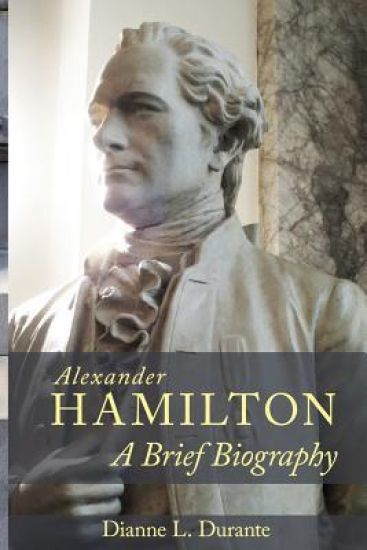
Alexander Hamilton: A Brief Biography

Alexander Hamilton: A Brief Biography

Dianne L. Durante

Dianne L. Durante
2018
nidottu
What were the important events of Hamilton's life? What were the ideas that drove him? This brief biography includes substantial quotes from Hamilton's writings, dozens of full-color images of Hamilton and his times, and a timeline setting Hamilton's life in the context of events in Europe and the United States. If you're a fan of *Hamilton: An American Musical, * this bio will give you more reasons to love the man and the musical. If you're a history geek or a fan of Hamilton, it will serve as a gateway to *Alexander Hamilton: A Friend to America, * a two-volume set with extensive excerpts from writings by Hamilton and his contemporaries.
Alexander Hamilton: A Friend to America: Volume 1

Alexander Hamilton: A Friend to America: Volume 1

Dianne L. Durante

Dianne L. Durante
2018
nidottu
The two volumes of *Alexander Hamilton: A Friend to America* are unique in their emphasis on primary sources. Using writings by Hamilton, Washington, Burr, Eliza, Angelica, and others, they stitch together an image of Hamilton's life, his times, and the ideas that drove him. If you love *Hamilton: An American Musical* and want to know more about Hamilton the man, this is a perfect place to start If you already love Hamilton the man and want to spend more time with him and the other Founding Fathers, you'll find new material here, too. These essays originally appeared as a series of weekly blog posts on intriguing topics such as: * Alexander's "death wish" what's the evidence for it? * Alexander and Angelica: yes, no, maybe? * What made Hamilton's first political essay so attention-grabbing? * Do we know the recipe for Alexander and Eliza's wedding cake? * Was Hamilton a laissez-faire capitalist, a proponent of Big Government, or ...? Where did he draw the line between economics and politics? * Maria Reynolds: What the hell was he thinking? * What's the difference between history and art, and why do we need both? The order of the essays was inspired by the Hamilton musical. If you prefer to read them in chronological order, *Alexander Hamilton: A Brief Biography* (a stand-alone work) serves as a cross-reference. With full-color images.
Alexander Hamilton: A Friend to America: Volume 2

Alexander Hamilton: A Friend to America: Volume 2

Dianne L. Durante

Dianne L. Durante
2018
nidottu
The two volumes of *Alexander Hamilton: A Friend to America* are unique in their emphasis on primary sources. Using writings by Hamilton, Washington, Burr, Eliza, Angelica, and others, they stitch together an image of Hamilton's life, his times, and the ideas that drove him. If you love *Hamilton: An American Musical* and want to know more about Hamilton the man, this is a perfect place to start If you already love Hamilton the man and want to spend more time with him and the other Founding Fathers, you'll find new material here, too. These essays originally appeared as a series of weekly blog posts on intriguing topics such as: * Alexander's "death wish" what's the evidence for it? * Alexander and Angelica: yes, no, maybe? * What made Hamilton's first political essay so attention-grabbing? * Do we know the recipe for Alexander and Eliza's wedding cake? * Was Hamilton a laissez-faire capitalist, a proponent of Big Government, or ...? Where did he draw the line between economics and politics? * Maria Reynolds: What the hell was he thinking? * What's the difference between history and art, and why do we need both? The order of the essays was inspired by the Hamilton musical. If you prefer to read them in chronological order, *Alexander Hamilton: A Brief Biography* (a stand-alone work) serves as a cross-reference. With full-color images.