Kirjojen hintavertailu. Mukana 11 342 296 kirjaa ja 12 kauppaa.

Kirjahaku

Etsi kirjoja tekijän nimen, kirjan nimen tai ISBN:n perusteella.

1000 tulosta hakusanalla Alexandra Linett

Alexandra Kolácková

Alexandra Kolácková

Alexandra Kolackova

Kant
2023
sidottu
Amorphous and brightly colored public sculptures that invite outside interactionCzech artist Alexandra Kol ckov (born 1964) is known for her large-format public sculptures made of ceramics and concrete. Her work is characterized by the use of bold colors, simple and rounded shapes and a sense of playfulness.
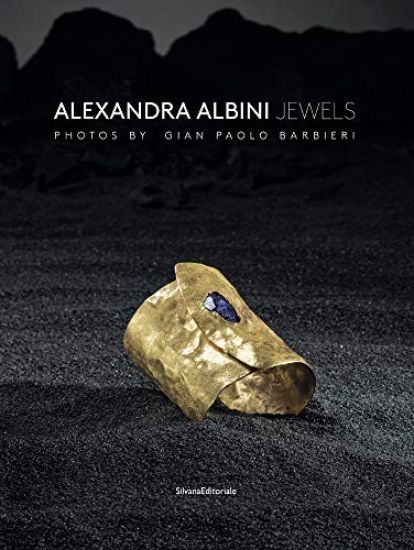
Alexandra Albini

Alexandra Albini

Alba Cappellieri

Silvana
2019
sidottu
Showcases Alexandra Albini's unique, hand-made jewellery pieces. Feminine shapes often embrace large baroque pearls or precious gems that are not cut according to conventional standards but are roughly shaped or left in their natural crystal habit. The gems are chosen for the beauty of their colours and for their inclusions, valued because they add a natural authenticity to the stone. After all, aren't inclusions nature's fingerprint, worthy of being celebrated rather than condemned as flaws? These are the principal ingredients of Alexandra Albini's jewellery collection, as it is revealed in the pages of this book through the empathic eye of celebrated photographer Gian Paolo Barbieri. Text in English and Italian.
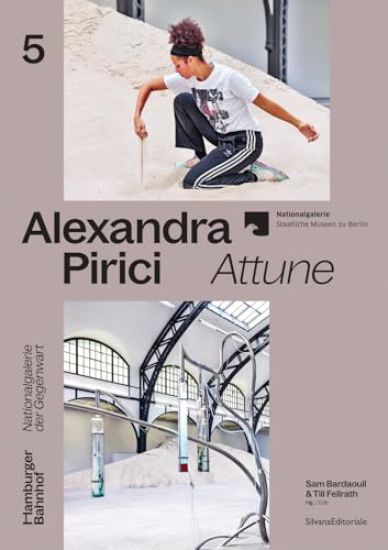
Alexandra Pirici
Alexandra Pirici’s new, expansive work Attune explores the ways in which we – and our more-than-human counterparts – resemble, influence, and attune to one another to bring forth complex structures. Transforming the vast historic hall of Hamburger Bahnhof into a vibrant imaginary landscape, Pirici interweaves active sculptural elements with live performance and musical pieces of her own choreography and composition. In this immersive, at once archaic and futuristic environment, in which chemical reactions, mineral formations, and physical phenomena perform alongside living bodies, the wonder of self-structuring matter comes to the fore. This is the fifth in a series of publications accompanying solo exhibitions of contemporary artists at Hamburger Bahnhof – Nationalgalerie der Gegenwart. It comprises a curatorial essay by Catherine Nichols, an interview with the artist by Raluca Voinea, and a contribution by Cecilia Alemani that situates Alexandra Pirici’s work within a larger context. Text in English and German.
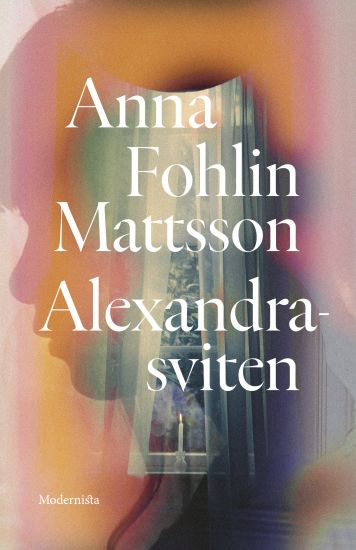
Alexandra-sviten

Alexandra-sviten

Anna Fohlin Mattsson; Anna Jörgensdotter

Modernista
2023
sidottu
En av de senaste decenniernas stora svenska romantrilogier i en volym»Sviten om Alexandra är en stor prestation, både litterärt och rent psykologiskt. En början till vad som kan bli något i stil med Cora Sandels Alberte-svit.« Tommy Olofsson, Svenska DagbladetAlexandra bor med sin mamma, sin mormor och morfar och gamlamormor. Hon leker, hon drömmer, lär sig skriva och läsa. In i hennes värld kommer Ivan - mammas nya man. Alexandras nya pappa. Och för att få behålla en pappa måste man vara snäll. Man får inte säga emot. Absolut inte kissa på sig. Men en pappa som inte får det han vill ha - han tar och tar och tar...När Alexandra är sjutton år finns Ivan kvar i familjen, en kvävande närvaro. Steget till att berätta om vad han gör när ingen annan är hemma är stort och svårt. Och allt blir inte bättre när hon försöker. Skulden och skammen finns kvar. I tre uppmärksammade romaner - Alexandras rum [1994], De ensammas hus [2004] och Vägar utan nåd [2006] - går Alexandra från barndom till sena tonår. Det är en smärtsam och gripande skildring av barnets utsatthet och kampen för att ta tillbaka ett eget liv; personlig, allmängiltig och, trots allt, fylld av hopp och obändig livskraft. Romansviten presenteras här i en volym, med förord av Anna Jörgensdotter.ANNA FOHLIN MATTSSON, född 1966, har givit ut både poesi och romaner och verkat som översättare från bland annat färöiska och khmer. 2024 utkommer Anna Fohlin Mattssons nya roman, en fristående fortsättning på Alexandra-sviten.»Hennes roman är en storrengöring i det svenska folkhemmet och den träffar som ett knytnävsslag.« Eva Ström, Kulturnytt om Alexandras rum»De ensammas hus är en storartad berättelse, som på ett skickligt sätt låter oss ta del av både hopp och hopplöshet. Språket är njutbart, tidvis skimrande.« Kristian Lundberg, Skånska Dagbladet
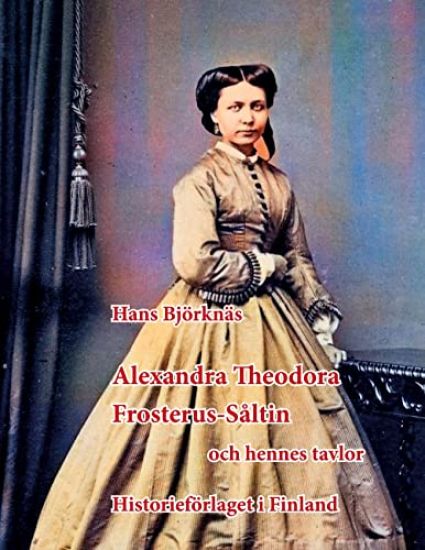
Alexandra Theodora Frosterus-Såltin

Alexandra Theodora Frosterus-Såltin

Hans Björknäs

BoD - Books on Demand
2023
pokkari
Vem r Finlands mest k nda och mest bortgl mda kvinnliga konstn r? Vilken konstn rs verk har beundrats av miljoner finl ndare i timtal i ver etthundra r? Vilken ber md Vasa-konstn r har varit mer eller mindre bortgl md i tiotals r utan att det i Vasa skulle finnas ett enda monument eller minnesm rke, f r att inte tala om att det inte finns en enda gata i v r stad uppkallad efter henne? Vem r den konstn r vars h lsofostrande teckningar noggrant studerats av v ra skolungdomar i 120 r? Vilken kvinnlig konstn r har inspirerat Eppu normaali till en r rande s ng Murheelllisten laulujen maa? Ven r de Vasa-k nstn r vars teckningar blev en delorsak till att Finland i b rjan av sin historia hade en f rbudslag? Vilken Vasa-konstn r har en tavla i presidentens kansli? Vem r den konstn r, vars 164 r gamla teckningar inspirerade Sampo Terho, tidigare riksdagsman och Toni Viljanmaa, tidigare chefredakt r f r tidningen Pohjalainen, att g ra en dokument rserie i v ras? Vem r denna konstn r?
Alexandra Feodorowna

Alexandra Feodorowna

A Th Von Grimm

Antigonos Verlag
2025
sidottu
Unver nderter Nachdruck der Originalausgabe von 1866. Der Verlag Antigonos spezialisiert sich auf die Herausgabe von Nachdrucken historischer B cher. Wir achten darauf, dass diese Werke der ffentlichkeit in einem guten Zustand zug nglich gemacht werden, um ihr kulturelles Erbe zu bewahren.
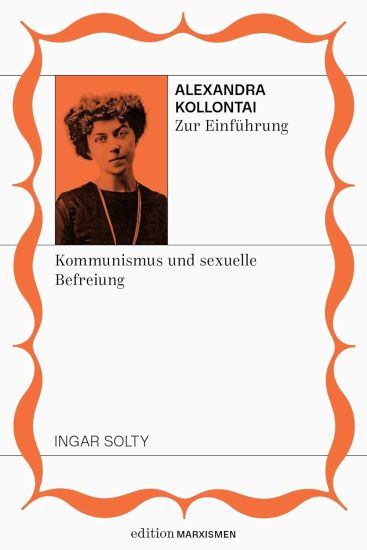
Alexandra Kollontai Lyingigakami Vimochithayaya oru Communist Vanithayude Athmakadha oppam Thirenjedutha Rachanakalum
Alexandra Kollontai Lyingigakami Vimochithayaya Oru Communist Vanithayude Athmakadha Oppam Thirenjedutha Rachanakalum by Dr. Praseetha K, Arya Jinadevan, published by Chintha Publishers, stands as a beacon of knowledge and inspiration. With its insightful content and engaging narrative style, this book transcends genres, offering something valuable for every reader.
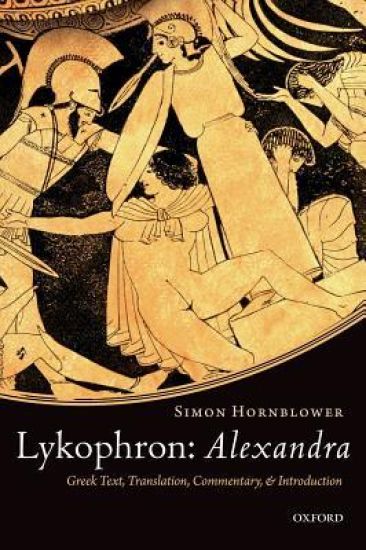
Lykophron: Alexandra

Lykophron: Alexandra

Simon Hornblower

Oxford University Press
2017
nidottu
The Alexandra attributed to Lykophron is a minor poetic masterpiece. At 1474 lines, it is one of the most important and notoriously difficult Greek poems dating from the Hellenistic period (most likely the early second century BC). Most of the poem purports to be a prophecy by the mythical Trojan princess, Kassandra, the most beautiful of the daughters of King Priam, and her prophecy ranges from the Trojan War to the Roman defeat of Macedon in 197 BC, which took place in the poet's own time. The poem's importance arises from the light which it sheds on Greek religion (in particular the role of women), on foundation myths and myths of colonial identity, and on local - especially Italian - cults and cult places. The difficulty of the poem stems from its unusual vocabulary - many words of ancient Greek are found only in this poem - and the riddling and indirect way in which most of the many mythological characters are introduced. As well as providing the Greek text in full and its English translation, this volume provides the first ever full-length commentary in English on the poem.
Lykophron: Alexandra

Lykophron: Alexandra

Oxford University Press
2022
nidottu
Traditionally ascribed to the early third-century BCE tragedian Lykophron, the Alexandra is a powerful Greek poem by an unknown author, probably written c. 190, when Rome had defeated Hannibal and the Carthaginians and was poised to humble the Seleukid king Antiochos III. The poem is an ingeniously constructed masterpiece, a generic mix with elements of tragedy, epic, and history. Priam's beautiful daughter, the prophetic Kassandra, foresees her rape in Athena's temple by the hateful Greek warrior Ajax after Troy's fall, and warns of disastrous returns (nostoi) for all the Greek 'heroes'. But Troy will rise again as Rome, founded by Trojan refugees. Alexandra (another name for Kassandra), narrates these Mediterranean foundation myths, adopting a bitterly disillusioned female perspective, but culminating in prophecies of Roman rule over land and sea.
Lykophron: Alexandra

Lykophron: Alexandra

Simon Hornblower

Oxford University Press
2015
sidottu
The Alexandra attributed to Lykophron is a minor poetic masterpiece. At 1474 lines, it is one of the most important and notoriously difficult Greek poems dating from the Hellenistic period (most likely the early second century BC). Most of the poem purports to be a prophecy by the mythical Trojan princess, Kassandra, the most beautiful of the daughters of King Priam, and her prophecy ranges from the Trojan War to the historical Roman conquest of Greece, which took place in the poet's own time. The poem's importance arises from the light which it sheds on Greek religion (in particular the role of women), on foundation myths and myths of colonial identity, and on local - especially Italian - cults and cult places. The difficulty of the poem stems from its unusual vocabulary - many words of ancient Greek are found only in this poem - and the riddling and meandering way in which most of the many mythological characters are referenced. As well as providing the Greek text in full and its English translation, this volume provides the first ever full-length commentary in English on the poem.
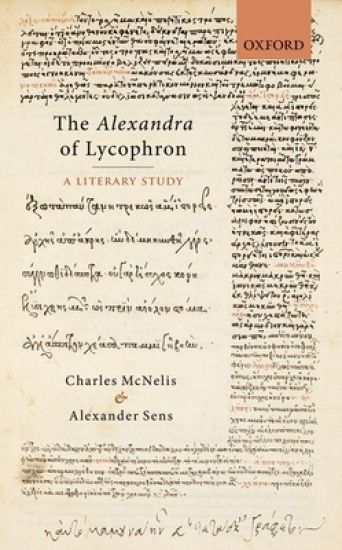
The Alexandra of Lycophron

The Alexandra of Lycophron

Charles McNelis; Alexander Sens

Oxford University Press
2016
sidottu
This monograph is a literary study of Lycophron's Alexandra, whose obscurity, a quality notorious already in antiquity, has long hampered holistic approaches. Through a series of distinct but closely integrated literary studies of major aspects of the poem, including its style, its engagement with the traditions of epic and tragedy, and it's treatment of heroism and of the gods, the book explores the way the Alexandra reconfigures Greek mythology. In particular, as it is presented in Homeric epic and Athenian tragedy, in order to cast the Romans and their restoration of Trojan glory as the ultimate telos of history. In this sense, the poem emerges as an important intermediary between Homeric epic and Latin poetry, particularly Vergil's Aeneid. By rewriting specific features of the epic and tragic traditions, the Alexandra denies to Greek heroes the glory that was the traditional compensation for their suffering, while at the same time attributing to Cassandra's Trojan family honours framed in the traditional language of Greek heroism. In this sense, the figure of Cassandra, a prophetess traditionally gifted with the power of foresight but denied credibility, self-reflexively serves as a vehicle for exploring the potentials and limitations of poetry.
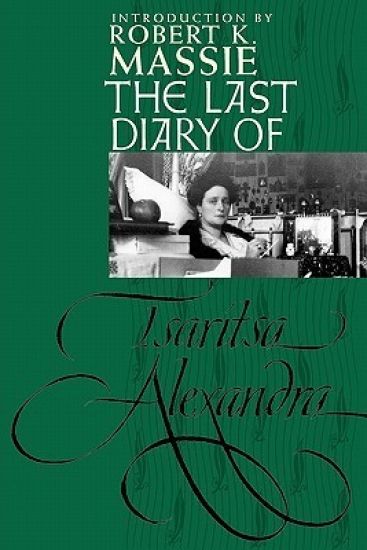
The Last Diary of Tsaritsa Alexandra

The Last Diary of Tsaritsa Alexandra

Tsaritsa Alexandra

Yale University Press
2010
pokkari
The last Tsaritsa of Russia, Alexandra Feodorovna, was murdered with her family on the night of 16-17 July 1918 by agents acting on behalf of the revolutionary Bolshevik government. The dramatic story of the demise of the Romanov dynasty has been recounted many times and has captivated the imagination of generations of readers throughout the world.The recently declassified 1918 diary of Alexandra--published here for the first time in its entirety--provides something no other account could do: a glimpse of the Tsaritsa's thoughts and activities from 1 January 1918 until the night of her death. As the granddaughter of Queen Victoria, Alexandra wrote in English, though her native language was German and she became fluent in Russian after her marriage to Nicholas. The 1918 Diary takes us into her private world, revealing the care she lavished on her children during this period of revolutionary turmoil, how she felt toward her husband, Tsar Nicholas, and what she imagined about the profound struggle-between past and present, old and new worlds, the sacred and the profane-then occurring over the destiny of Russia. The diary reveals that even in her most intimate reflections, she remained the representative of a great system of belief that had prevailed for hundreds of years in Russia and that she and Nicholas hoped to perpetuate. We see in painful detail the tragic daily confrontation between this system of belief and the reality of the modern world that had, in every sense, broken free of her and Nicholas's control.The Tsaritsa's diary is accompanied by an introduction by Robert Massie. A rich biographical portrait of Alexandra, the introduction places her in the historical context of the Revolution, her marriage to Nicholas, and the tragic events that encompassed her, her family, and her nation.Annals of Communism seriesFirst Serial, Yale University Press