Kirjojen hintavertailu. Mukana 12 560 090 kirjaa ja 12 kauppaa.

Kirjahaku

Etsi kirjoja tekijän nimen, kirjan nimen tai ISBN:n perusteella.

1000 tulosta hakusanalla Alexandra Potter

Ioannes Porterius Nivernas, ›Athamantis Furor‹, eine neulateinische Tragödie
Die in Le Mans veröffentlichten neulateinischen Tragödien des französischen Rhetoriklehrers und katholischen Pfarrers Jean Portier (Ioannes Porterius) fanden bisher in der Forschung zum neulateinischen Drama nahezu keine Beachtung. In dieser Untersuchung wird das 1621 erschienene Stück ?Athamantis Furor' exemplarisch erschlossen. Das Werk führt das tragische Unglück des mythischen Königs Athamas vor, der im Wahn seinen eigenen Sohn Learchus ermordet. Portier orientiert sich in der sprachlichen und dramatischen Gestaltung wesentlich an antiken, vor allem lateinischen Texten und folgt weitestgehend den Gattungskonventionen der antiken Tragödie. Insbesondere Senecas Dramen üben starken Einfluss auf ihn aus. Gleichzeitig gelingt es Portier bisweilen, sich in innovativer Weise von den antiken Vorbildern abzusetzen und der Dramatisierung des Athamas-Mythos eigene Akzente zu verleihen. Den Kern der vorliegenden Studie bilden Textedition, erstmalige Übersetzung sowie Interpretation und Kommentierung der Tragödie mit Fokus auf der klassisch-philologischen Analyse. Die so geleistete grundlegende Erschließung soll daneben auch anderen Disziplinen die Möglichkeit eröffnen, sich mit Portiers Œuvre zu beschäftigen.
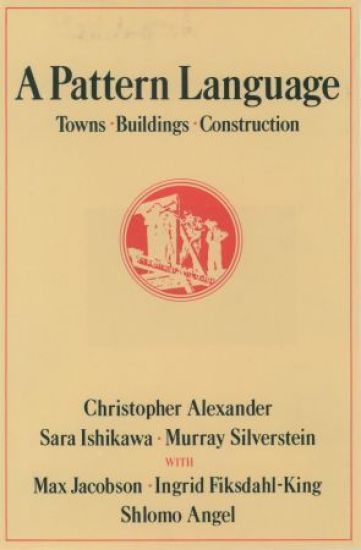
A Pattern Language

A Pattern Language

Christopher Alexander

Oxford University Press Inc
1978
sidottu
You can use this book to design a house for yourself with your family; you can use it to work with your neighbors to improve your town and neighborhood; you can use it to design an office, or a workshop, or a public building. And you can use it to guide you in the actual process of construction. After a ten-year silence, Christopher Alexander and his colleagues at the Center for Environmental Structure are now publishing a major statement in the form of three books which will, in their words, "lay the basis for an entirely new approach to architecture, building and planning, which will we hope replace existing ideas and practices entirely." The three books are The Timeless Way of Building, The Oregon Experiment, and this book, A Pattern Language. At the core of these books is the idea that people should design for themselves their own houses, streets, and communities. This idea may be radical (it implies a radical transformation of the architectural profession) but it comes simply from the observation that most of the wonderful places of the world were not made by architects but by the people. At the core of the books, too, is the point that in designing their environments people always rely on certain "languages," which, like the languages we speak, allow them to articulate and communicate an infinite variety of designs within a forma system which gives them coherence. This book provides a language of this kind. It will enable a person to make a design for almost any kind of building, or any part of the built environment. "Patterns," the units of this language, are answers to design problems (How high should a window sill be? How many stories should a building have? How much space in a neighborhood should be devoted to grass and trees?). More than 250 of the patterns in this pattern language are given: each consists of a problem statement, a discussion of the problem with an illustration, and a solution. As the authors say in their introduction, many of the patterns are archetypal, so deeply rooted in the nature of things that it seemly likely that they will be a part of human nature, and human action, as much in five hundred years as they are today.
Multimodal Interactive Pattern Recognition and Applications

Multimodal Interactive Pattern Recognition and Applications

Alejandro Héctor Toselli; Enrique Vidal; Francisco Casacuberta

Springer London Ltd
2011
sidottu
This book presents a different approach to pattern recognition (PR) systems, in which users of a system are involved during the recognition process. This can help to avoid later errors and reduce the costs associated with post-processing. The book also examines a range of advanced multimodal interactions between the machine and the users, including handwriting, speech and gestures. Features: presents an introduction to the fundamental concepts and general PR approaches for multimodal interaction modeling and search (or inference); provides numerous examples and a helpful Glossary; discusses approaches for computer-assisted transcription of handwritten and spoken documents; examines systems for computer-assisted language translation, interactive text generation and parsing, relevance-based image retrieval, and interactive document layout analysis; reviews several full working prototypes of multimodal interactive PR applications, including live demonstrations that can be publicly accessed on the Internet.
Multimodal Interactive Pattern Recognition and Applications

Multimodal Interactive Pattern Recognition and Applications

Alejandro Héctor Toselli; Enrique Vidal; Francisco Casacuberta

Springer London Ltd
2014
nidottu
This book presents a different approach to pattern recognition (PR) systems, in which users of a system are involved during the recognition process. This can help to avoid later errors and reduce the costs associated with post-processing. The book also examines a range of advanced multimodal interactions between the machine and the users, including handwriting, speech and gestures. Features: presents an introduction to the fundamental concepts and general PR approaches for multimodal interaction modeling and search (or inference); provides numerous examples and a helpful Glossary; discusses approaches for computer-assisted transcription of handwritten and spoken documents; examines systems for computer-assisted language translation, interactive text generation and parsing, relevance-based image retrieval, and interactive document layout analysis; reviews several full working prototypes of multimodal interactive PR applications, including live demonstrations that can be publicly accessed on the Internet.
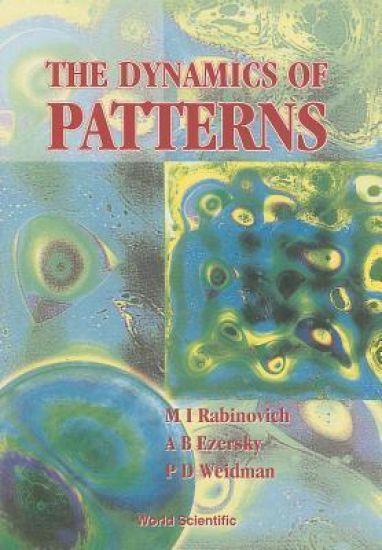
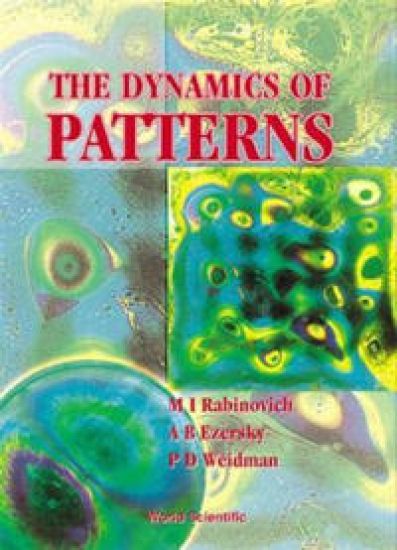
Dynamics Of Pattern, The

Dynamics Of Pattern, The

Alexander B Ezersky; Mikhail I Rabinovich; Patrick D Weidman

World Scientific Publishing Co Pte Ltd
2000
sidottu
Spirals, vortices, crystalline lattices, and other attractive patterns are prevalent in Nature. How do such beautiful patterns appear from the initial chaos? What universal dynamical rules are responsible for their formation? What is the dynamical origin of spatial disorder in nonequilibrium media? Based on the many visual experiments in physics, hydrodynamics, chemistry, and biology, this invaluable book answers those and related intriguing questions. The mathematical models presented for the dynamical theory of pattern formation are nonlinear partial differential equations. The corresponding theory is not so accessible to a wide audience. Consequently, the authors have made every attempt to synthesize long and complex mathematical calculations to exhibit the underlying physics. The book will be useful for final year undergraduates, but is primarily aimed at graduate students, postdoctoral fellows, and others interested in the puzzling phenomena of pattern formation.
Dynamics Of Pattern, The

Dynamics Of Pattern, The

Alexander B Ezersky; Mikhail I Rabinovich; Patrick D Weidman

World Scientific Publishing Co Pte Ltd
2000
nidottu
Spirals, vortices, crystalline lattices, and other attractive patterns are prevalent in Nature. How do such beautiful patterns appear from the initial chaos? What universal dynamical rules are responsible for their formation? What is the dynamical origin of spatial disorder in nonequilibrium media? Based on the many visual experiments in physics, hydrodynamics, chemistry, and biology, this invaluable book answers those and related intriguing questions. The mathematical models presented for the dynamical theory of pattern formation are nonlinear partial differential equations. The corresponding theory is not so accessible to a wide audience. Consequently, the authors have made every attempt to synthesize long and complex mathematical calculations to exhibit the underlying physics. The book will be useful for final year undergraduates, but is primarily aimed at graduate students, postdoctoral fellows, and others interested in the puzzling phenomena of pattern formation.