In this series, a contemporary poet selects and introduces a poet of the past. By their choice of poems and by the personal and critical reactions they express in their prefaces, the editors offer insights into their own work as well as providing an accessible and passionate introduction to some of the greatest poets in our literature.Alfred, Lord Tennyson (1809-92) was born in Somersby, Lincolnshire, the sixth of eleven children of a clergyman. After a childhood marked by trauma, he went up to Cambridge in 1828, where he met Arthur Hallam, whose premature death had a lasting influence on Tennyson's life and writing. His two volumes of Poems (1842) established him as the leading poet of his generation, and of the Victorian period. He was created Poet Laureate in 1850 and in 1883 accepted a peerage.
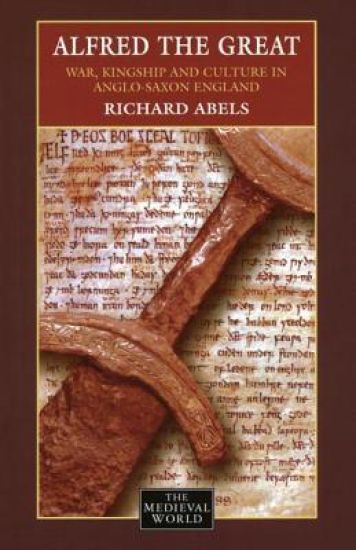
This biography of Alfred the Great, king of the West Saxons (871-899), combines a sensitive reading of the primary sources with a careful evaluation of the most recent scholarly research on the history and archaeology of ninth-century England. Alfred emerges from the pages of this biography as a great warlord, an effective and inventive ruler, and a passionate scholar whose piety and intellectual curiosity led him to sponsor a cultural and spiritual renaissance. Alfred's victories on the battlefield and his sweeping administrative innovations not only preserved his native Wessex from viking conquest, but began the process of political consolidation that would culminate in the creation of the kingdom of England. Alfred the Great: War, Kingship and Culture in Anglo-Saxon England strips away the varnish of later interpretations to recover the historical Alfredpragmatic, generous, brutal, pious, scholarly within the context of his own age.
This series introduces students to more sophisticated analysis and wider critical perspectives to enbable students to appreciate contrasting interpretations of the text and to develop critical thinking. This volume explores the selected poems of Tennyson.
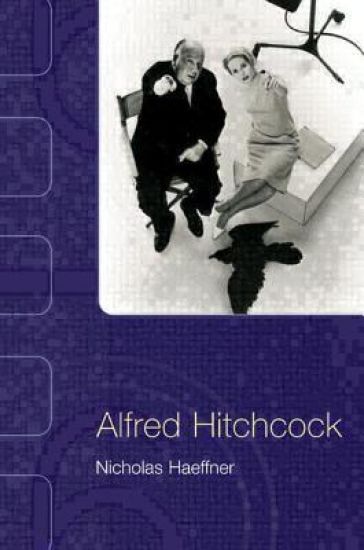
Nicholas Haeffner provides a comprehensive introduction to Alfred Hitchcock's major British and Hollywood films and usefully navigates the reader through a wealth of critical commentaries. One of the acknowledged giants of film, Hitchcock's prolific half-century career spanned the silent and sound eras and resulted in 53 films of which Rear Window (1954), Vertigo (1958) and Psycho (1960) are now seen as classics within the suspense, melodrama and horror genres. In contrast to previous works, which have attempted to get inside Hitchcock's mind and psychoanalyse his films, this book takes a more materialist stance. As Haeffner makes clear, Hitchcock was simultaneously a professional film maker working as part of a team in the film factories of Hollywood, a media celebrity, and an aspiring artist gifted with considerable entrepreneurial flair for marketing himself and his films. The book makes a case for locating the director's remarkable body of work within traditions of highbrow, middlebrow and lowbrow culture, appealing to different audience constituencies in a calculated strategy. The book upholds the case for taking Hitchcock's work seriously and challenges his popular reputation as a misogynist through detailed analyses of his most controversial films.
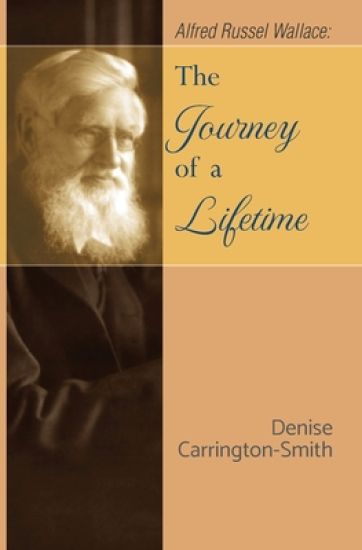
Wallace was a wonderful man...a man full of wonderEverything which took his interest, he studied as deeply as he could, yet, despite the growing recognition he received, he always remained quiet and humble. He was kind and generous, loyal, with a gentle sense of humour which enabled his expressions of grievance to be made without rancour.Wallace was acclaimed in his time as one of the great minds, and like many others has fallen into the shadows of his friend and counterpart, Darwin. In this book the author takes you on a tour of the life and works of this great man. His work covered many subjects from evolution to political theory, and in his every endeavour, the result created a ripple in advancement of human knowledge.Wallace could be among the greatest Englishmen ever to be born. For the sheer breadth and depth of his knowledge, his never ceasing work dedicated, not to the acquisition of personal wealth, but to the welfare of his fellow beings - he has no equal.