History has shown several times and established the fact that the underlying factor for outsourcing is to lower cost and provide better value of the services and goods to the buyers to what they can achieve themselves. There can be reasons of outsourcing done by organizations at a higher cost than what they themselves can achieve, however this will always remain a temporary form of outsourcing because the buyer will eventually either develop the skill in-house or find a better source which can give him cost advantage and higher value. Any service which was cost effective earlier but loses its cost advantage due to whatever reason gives way to another form of service which can do this task at a lower overall cost and higher value to the end consumer, thereby re-establishing the low cost and high value basis of outsourcing. More than two decades back, when outsourcing in manufacturing was highly established, it was difficult to understand how we could outsource anything that cannot be seen, checked and counted. Manufacturing was all about the physical piece being counted and checked and was very straightforward. Once I visited a vendor myself in Chennai who was making pins and brushes for the trucks my company was producing. These items were small and insignificant in nature as compared to the overall cost of the vehicle. The same component when imported was costing almost double to the cost of local manufacture by this vendor. In my discussion with the vendor, I figured out that the vendor was saving almost fifty percent of the cost he was billing us. I came back to my manager and asked him the reason for this outsourcing when we could save yet another fifty percent of the cost. He replied back that it was value sourcing and not outsourcing. My company would end up spending more on the manufacture of the component as much more higher value added work needs focus than these small ones. He also pointed out that the vendor I met did not have such a large complex, so many high paid managers nor such great office space too. These overheads which were not with the vendor helped him save this money for himself and even helped us to save money on the imported component. Since then, I always looked at outsourcing as value sourcing and questioned the validity of the outsourcing if it failed to generate the desired value. I moved from manufacturing to services and saw the outsourcing model between USA and Indian IT companies mature. Two decades back, it was only cost arbitrage that made this model work. Skills were very basic and engineers learned on the job. Over period of next two decades, the demand matured to higher skills and experience than just bodies. We clearly see that the paradigm of value have been shifting in IT outsourcing and the definition of value is no more just cost but an outcome which will help the customer provide better value to their end customer. We discovered that although claimed by several outsourcing companies, most of them still are struggling to change themselves into a true value source. Keith and I are working to get true value sourcing with the partners and helping this to generate an outcome, which will provide higher value of our goods and services to our end customer.
The Art of Worldly Wisdom is a book by Baltasar Graci n y Morales (a.k.a. Baltasar Graci n). It is a collection of maxims. Or culo manual y arte de prudencia was written in 1647, and became popular throughout Europe. Each with a commentary, on various topics giving advice and guidance on how to live fully, advance socially, and be a better person.
This book contains series of objective type questions including various topics of veterinary medicine like general and systemic medicine, metabolic and deficiency disorders, zoo and wild animal medicine, various bacterial, viral, fungal and parasitic diseases of domestic animals, and Jurisprudence and animal welfare. Authors have tried to cover all the topics of veterinary medicine. This book will be useful for undergraduate, postgraduate and the students appearing in various competitive examination of veterinary medicine.
Konventionell st tzt sich die Diagnose der tropischen Fasciolose bei Wiederk uern auf den Kopro-Nachweis von Fasciola-gigantica-Eiern. Die koprologische Untersuchung kann in der Pr -Patent-Phase der Krankheit, die den wichtigsten pathogenen Auswirkungen entspricht, nicht verwendet werden. Die Serumbiochemie infizierter Tiere kann als Indikator f r das Ausma der Gewebesch den und den Schweregrad der Infektion dienen. Kein derzeit verf gbarer Test kann jedoch als 100 % empfindlich und spezifisch angesehen werden. In diesem Buch wird die Standardisierung eines einfachen und schnellen Dipstick-ELISA f r die Diagnose der nat rlichen Fasziolose der Ziegen und Bubalinen beschrieben, bei dem die 28 kDa-Cysteinproteinase adulter Egel verwendet wird. Der Dipstick-ELISA wurde anhand des tats chlichen Infektionsstatus der autopsierten Tiere als Goldstandard bewertet. Aspartat-Aminotransferase (AST) und alkalische Phosphatase (ALP) wurden ebenfalls als Markerenzyme in den verschiedenen Stadien der Fasciolose verwendet. Daher ist dieses Buch f r Forscher, Labortechniker und Tier rzte, die sich mit der Diagnose und Pr vention von Fasciolose befassen, sehr hilfreich.
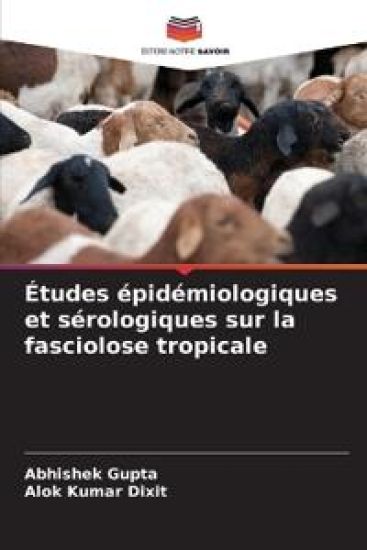
Traditionnellement, le diagnostic de la fasciolose tropicale chez les ruminants repose sur la copro-d monstration des oeufs de Fasciola gigantica. L'examen coprologique ne peut pas tre utilis pendant la p riode pr -patente de la maladie qui correspond aux effets pathog nes majeurs. La biochimie s rique des animaux infect s peut tre utilis e comme indicateur de l' tendue des dommages tissulaires et de la gravit de l'infection. Mais aucun test actuellement disponible ne peut tre consid r comme sensible et sp cifique 100 %. Cet ouvrage d crit la standardisation d'un test dipstick-ELISA simple et rapide pour le diagnostic de la fasciolose caprine et bubaline naturelle en utilisant la cyst ine prot inase de 28 kDa des douves adultes. Le dipstick-ELISA a t valu en utilisant le statut infectieux r el des animaux autopsi s comme talon-or. L'aspartate aminotransf rase (AST) et la phosphatase alcaline (ALP) ont galement t exploit es comme enzymes marqueurs en fonction des stades de la fasciolose. Ce livre est donc tr s utile pour les chercheurs, les techniciens de laboratoire et les v t rinaires travaillant sur le diagnostic et la pr vention de la fasciolose.
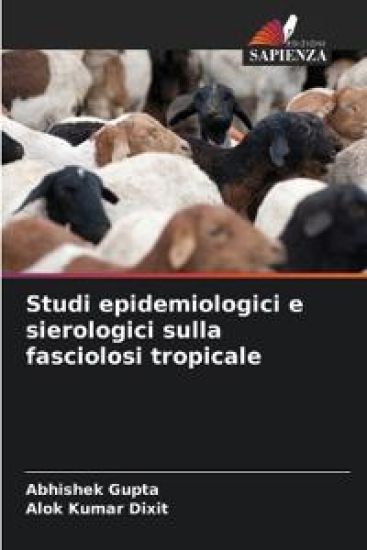
Convenzionalmente, la diagnosi di fasciolosi tropicale nei ruminanti si basa sulla dimostrazione coprologica delle uova di Fasciola gigantica. L'esame coprologico non pu essere utilizzato durante il periodo pre-patente della malattia, che corrisponde ai principali effetti patogeni. La biochimica del siero degli animali infetti pu essere utilizzata come indicatore dell'entit del danno tissutale e della gravit dell'infezione. Tuttavia, nessun test attualmente disponibile pu essere considerato sensibile e specifico al 100%. Questo libro descrive la standardizzazione di un test dipstick-ELISA semplice e rapido per la diagnosi della fasciolosi naturale caprina e bubalina utilizzando la cisteina proteinasi 28 kDa dei parassiti adulti. Il dipstick-ELISA stato valutato utilizzando come gold standard il reale stato di infezione degli animali sottoposti ad autopsia. Anche l'aspartato aminotransferasi (AST) e la fosfatasi alcalina (ALP) sono state utilizzate come enzimi marcatori in base agli stadi della fasciolosi. Questo libro quindi molto utile per ricercatori, tecnici di laboratorio e veterinari che si occupano di diagnosi e prevenzione della fasciolosi.