Kirjojen hintavertailu. Mukana 11 342 296 kirjaa ja 12 kauppaa.

Kirjahaku

Etsi kirjoja tekijän nimen, kirjan nimen tai ISBN:n perusteella.

1000 tulosta hakusanalla Alphonse Castaing

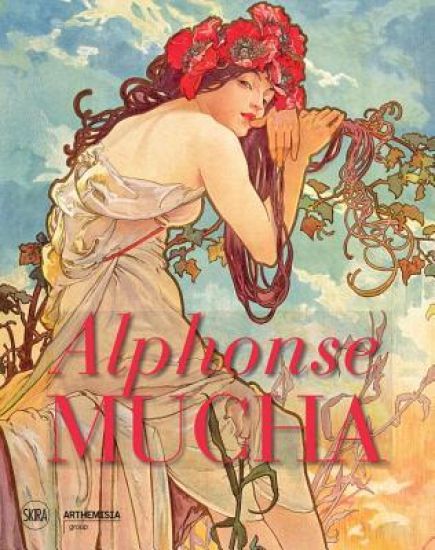
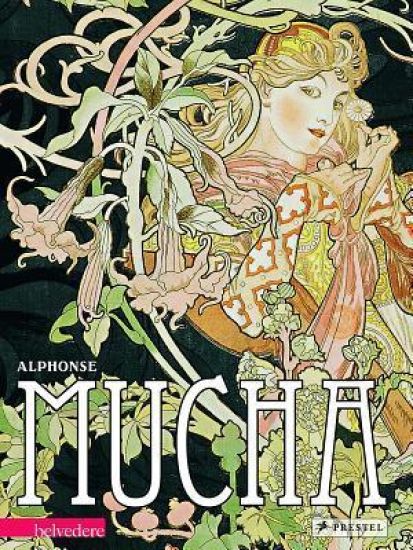
Alphonse Mucha
Alphonse Mucha is known largely for having originated Art Nouveau, when his poster of the actress Sarah Bernhardt became a legendary icon of the movement. Mucha went on to design hundreds of pieces in the decorative arts field, but later distanced himself from the style he pioneered, devoting his time and energy to painting. This book presents the full array of Mucha's artistic contributions - not only his posters and jewellery designs but also his design for the pavilion of Bosnia and Herzegovina at the 1900 world's fair. The book also contains his works on canvas, which include pastels and frescoes and his magnum opus, The Slavic Epic, a series of 20 paintings depicting the history of his native people. A stunning selection of 700 colour illustrations is accompanied with essays that explore Mucha's style and inspirations, his transition away from the decorative arts and his forays into photography. Fans of Art Nouveau will treasure this dazzling and unique study of the artist and his contributions to design and illustration.
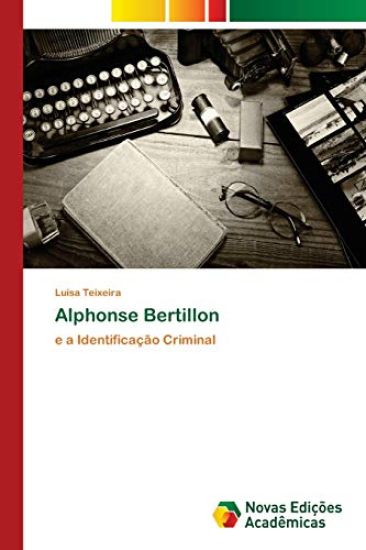
Alphonse Bertillon

Alphonse Bertillon

Lu?sa Teixeira

Novas Edicoes Academicas
2018
pokkari
Alphonse Bertillon foi um dos fundadores da t cnica da per cia e identifica o criminal. Lan ou o primeiro sistema cient fico de identifica o, a antropometria. As suas origens remontam h antiguidade, a observa o e a an lise sobre a rela o das diversas partes do corpo, j era objeto de estudo desde tempos antigos, mas, foi utilizada e adaptada pela primeira vez no campo da pesquisa criminal, por Bertillon. Aliado quela inova o, surgiram novos m todos, que ainda hoje s o fundamentais no universo da investiga o, entre eles, o uso de fotografia para documentar as cenas de crime e as provas. Deste modo, o seu contributo permitiu descobrir, condenar e classificar indiv duos reincidentes no mundo do crime nos finais do S culo XIX em Fran a.
Alphonse Bertillon

Alphonse Bertillon

Luísa Teixeira

Verlag Unser Wissen
2024
pokkari
Alphonse Bertillon war einer der Begr nder der Forensik und der kriminalistischen Identifizierung. Er f hrte das erste wissenschaftliche System zur Identifizierung ein, die Anthropometrie. Ihre Urspr nge reichen bis in die Antike zur ck: Die Beobachtung und Analyse des Verh ltnisses zwischen den verschiedenen K rperteilen war bereits in der Antike erforscht worden, wurde aber von Bertillon zum ersten Mal auf dem Gebiet der Kriminalistik angewandt und angepasst. Parallel zu dieser Innovation entstanden neue Methoden, die noch heute in der Welt der Ermittlungen von grundlegender Bedeutung sind, darunter die Verwendung der Fotografie zur Dokumentation von Tatorten und Beweismitteln. Auf diese Weise trug er dazu bei, dass Ende des 19. Jahrhunderts in Frankreich Wiederholungst ter in der Welt der Kriminalit t entdeckt, verurteilt und klassifiziert werden konnten.
Alphonse Bertillon

Alphonse Bertillon

Luísa Teixeira

Our Knowledge Publishing
2024
pokkari
Alphonse Bertillon was one of the founders of forensics and criminal identification. He launched the first scientific system of identification, anthropometry. Its origins date back to antiquity. The observation and analysis of the relationship between the various parts of the body had already been studied since ancient times, but Bertillon used and adapted it for the first time in the field of criminal investigation. Alongside this innovation, new methods emerged that are still fundamental in the world of investigation today, including the use of photography to document crime scenes and evidence. In this way, his contribution made it possible to discover, convict and classify repeat offenders in the world of crime at the end of the 19th century in France.
Alphonse Bertillon

Alphonse Bertillon

Luísa Teixeira

Editions Notre Savoir
2024
pokkari
Alphonse Bertillon est l'un des fondateurs de la criminalistique et de l'identification criminelle. Il a lanc le premier syst me scientifique d'identification, l'anthropom trie. L'observation et l'analyse des relations entre les diff rentes parties du corps taient d j tudi es depuis l'Antiquit , mais c'est Bertillon qui les a utilis es et adapt es pour la premi re fois dans le domaine de l'enqu te criminelle. Parall lement cette innovation, de nouvelles m thodes sont apparues, qui sont encore fondamentales dans le monde de l'investigation aujourd'hui, notamment l'utilisation de la photographie pour documenter les sc nes de crime et les preuves. Sa contribution a ainsi permis de d couvrir, de condamner et de classer les r cidivistes du monde du crime la fin du XIXe si cle en France.
Alphonse Bertillon

Alphonse Bertillon

Luísa Teixeira

Edizioni Sapienza
2024
pokkari
Alphonse Bertillon stato uno dei fondatori della medicina legale e dell'identificazione dei criminali. Ha lanciato il primo sistema scientifico di identificazione, l'antropometria. Le sue origini risalgono all'antichit l'osservazione e l'analisi delle relazioni tra le varie parti del corpo erano gi state studiate fin dall'antichit , ma furono utilizzate e adattate per la prima volta nel campo dell'investigazione criminale da Bertillon. Accanto a questa innovazione, nacquero nuovi metodi che ancora oggi sono fondamentali nel mondo delle indagini, tra cui l'uso della fotografia per documentare le scene del crimine e le prove. In questo modo, il suo contributo ha permesso di scoprire, condannare e classificare i recidivi nel mondo del crimine alla fine del XIX secolo in Francia.
Christmas Supper in the Marais & Other Christmas Stories by Alphonse Daudet
e-artnow presents the Christmas Specials Series. We have selected the greatest Christmas novels, short stories and fairy tales for this joyful and charming holiday season, for all those who want to keep the spirit of Christmas alive with a heartwarming tale. Table of Contents: - A Christmas Supper in the Marais - The Three Low Masses - Salvette and Bernadou - The Three Christmas Masses
Alphonse Mucha
Mucha as mystic, bohemian and philosopherSpanning the entirety of Alphonse Mucha's prolific career, this handsome, affordable and concise overview examines the beloved artist's oeuvre--from posters, jewelry, interior decoration, theater and product design to painting, book illustration, sculpture and photography--across six themed sections that highlight the artist's personality: "A Bohemian in Paris"; "A Picture-Maker for People"; "A Cosmopolitan"; "The Mystic"; "The Patriot"; and "The Artist-Philosopher."Mucha rose to fame in fin-de-si cle Paris with his elegant theater posters for Sarah Bernhardt, the most famous French actress of the time, and his decorative panels featuring gracefully posed women. For these posters, Mucha created a distinctive style characterized by harmonious compositions, sinuous forms and a muted palette, which became synonymous with the newly emerging decorative style of the time--Art Nouveau. By the time of the Paris Exposition Universelle of 1900, Mucha had become a leading figure in this decorative-art movement, and he defined the look of the era. The catalog explores the development of Mucha's career and overall achievements as a multifaceted and visionary artist.Czech painter Alphonse Mucha (1860-1939) leapt to fame in 1895, in Paris, when his poster "Gismonda," created for the superstar Sarah Bernhardt, heralded the birth of "Le Style Mucha." Between 1903 and 1922 Mucha made four trips to the United States, where he attracted the patronage of Charles Richard Crane, a Chicago industrialist and Slavophile, who subsidized Mucha's epic series of 20 large historical paintings illustrating the "Epic of the Slavic People" (1912-30). After 1922 Mucha lived in Czechoslovakia, where he died in 1939.
Alphonse Merrheim

Alphonse Merrheim

N. Papayanis

Kluwer Academic Publishers
1985
sidottu
This is apoliticalbiography ofAlphonseMerrheim, asignificant leader of the Conf6d6ration G6n6raledu Travail(CGT)intheyears between 1904 and 1923 and the most important member of the Federation of Metalworkers during the sameperiod. Hewas born inthe Nord in 1871 and becameaworkeratanearlyage,firstinmetallurgythanintextiles and finally once more in metalworking. In his ideologicalevolution hepassed through asocialistpoliticalpartyandthenconvertedtorevolutionarys- dicalism. In his peculiar fusion of theory and practice, Merrheim represented a form of revolutionary syndicalism that helps define the characteristics of that movement. He believed,alongwithother revo- tionary syndicalists, that one day a workers' general strike would ov- throw capitalism. But the syndicalist movement wouldpreparethat ev- tualitybystrengtheningtheworkersthrough socialreformsandbycreating their class consciousness through education. Merrheim, however, p- ticipatedsothoroughly intradeunionactivityandstudiedtheorganization of capitalistindustry so carefullythat he cametoemphasizetheprepa- tions for such a generalstrike much more than thestrikeitself. The test of his attitude cameon theeve of, during, and immediately afterWorld War I; for contrary tothe demands of certain militant and revolutionary workerswhobelievedthatthethreatofwar andthenthedislocationcaused by the war demanded a revolutionary response, Merrheim persistently stressedthe dangers ofsuch anaction before the adequatepreparation of the workers. Hissteadfast refusaleventorespondtothestrikeactions of some ofhisown metalworkers in 1919 indicates the central contradiction between hisrevolutionary theory and reformistpractice. This book examinesindetailMerrheim'sevolution fromarevolutionary to areformer. Insodoingit alsoshedslightonanequallysubstantialtopic, namely,howacertaintypeofworkerrespondedtoindustrializationinthe late nineteenth and earlytwentiethcenturies. Merrheim is an interesting figure,too, becauseofhispositioninthelabormovement, foritrepresents a unique focalpoint forthestudy oflaborhistory. Merrheim enteredthe Frenchlabormovement in the 1890s and remainedactiveinituntil 1923. During that periodhewas, successively, alocalunion leader,co-secretary xii of a nationallaborfederation, and animportant figurewithinthe CGT. Never thesecretary-generaloftheCGT, hewasneverthelesstheconfident of thesecretary-generalfrom 1909, L6on Jouhaux.
Alphonse Mucha Coloring Book
Discover the beauty of Art Nouveau with the Alphonse Mucha Coloring Book. The wonderful works by the world- renowned artist Alphonse Mucha make this coloring book perfect for both kids and adults. Mucha, famous for his elegant posters, intricate designs, and distinctive, dreamlike portraits of women displaying both sensitivity and courage, was a defining figure of the Art Nouveau movement. Mucha believed in the power of art to make the world a better and more beautiful place, and his work is characterized by its flowing lines, natural shapes, floral motifs, and harmonious color palettes. The Alphonse Mucha Coloring Book includes a selection of his most iconic pieces such as the celebrated 1896 series The Seasons, 1899 series The Times of Day, his unique posters for actress Sarah Bernhardt, and his well known commercial art for Mo t-Chandon and Trappestine. The more than 60 included pieces allow you to get into the details and carefully explore the art that made Mucha beloved. The Alphonse Mucha Coloring Book features a thick paper, excellent for pencils and offers a relaxing way to connect with one of history's greatest artists while enjoying the fun of coloring his masterpieces.
Alphonse Merrheim

Alphonse Merrheim

N. Papayanis

Springer
2011
nidottu
This is apoliticalbiography ofAlphonseMerrheim, asignificant leader of the Conf6d6ration G6n6raledu Travail(CGT)intheyears between 1904 and 1923 and the most important member of the Federation of Metalworkers during the sameperiod. Hewas born inthe Nord in 1871 and becameaworkeratanearlyage,firstinmetallurgythanintextiles and finally once more in metalworking. In his ideologicalevolution hepassed through asocialistpoliticalpartyandthenconvertedtorevolutionarys- dicalism. In his peculiar fusion of theory and practice, Merrheim represented a form of revolutionary syndicalism that helps define the characteristics of that movement. He believed,alongwithother revo- tionary syndicalists, that one day a workers' general strike would ov- throw capitalism. But the syndicalist movement wouldpreparethat ev- tualitybystrengtheningtheworkersthrough socialreformsandbycreating their class consciousness through education. Merrheim, however, p- ticipatedsothoroughly intradeunionactivityandstudiedtheorganization of capitalistindustry so carefullythat he cametoemphasizetheprepa- tions for such a generalstrike much more than thestrikeitself. The test of his attitude cameon theeve of, during, and immediately afterWorld War I; for contrary tothe demands of certain militant and revolutionary workerswhobelievedthatthethreatofwar andthenthedislocationcaused by the war demanded a revolutionary response, Merrheim persistently stressedthe dangers ofsuch anaction before the adequatepreparation of the workers. Hissteadfast refusaleventorespondtothestrikeactions of some ofhisown metalworkers in 1919 indicates the central contradiction between hisrevolutionary theory and reformistpractice. This book examinesindetailMerrheim'sevolution fromarevolutionary to areformer. Insodoingit alsoshedslightonanequallysubstantialtopic, namely,howacertaintypeofworkerrespondedtoindustrializationinthe late nineteenth and earlytwentiethcenturies. Merrheim is an interesting figure,too, becauseofhispositioninthelabormovement, foritrepresents a unique focalpoint forthestudy oflaborhistory. Merrheim enteredthe Frenchlabormovement in the 1890s and remainedactiveinituntil 1923. During that periodhewas, successively, alocalunion leader,co-secretary xii of a nationallaborfederation, and animportant figurewithinthe CGT. Never thesecretary-generaloftheCGT, hewasneverthelesstheconfident of thesecretary-generalfrom 1909, L6on Jouhaux.
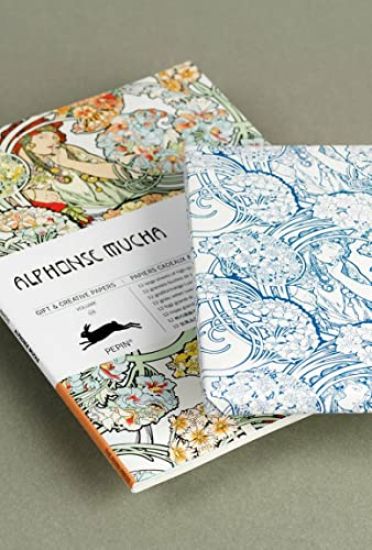
Alphonse Mucha Gift & Creative Paper Vol 114
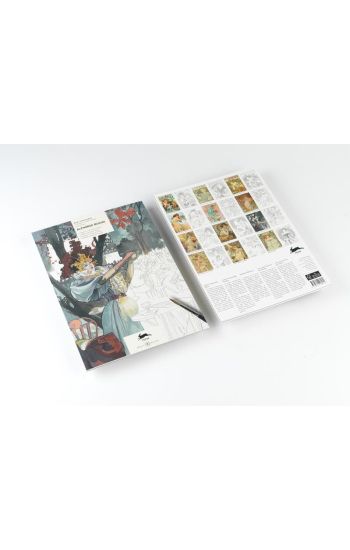
PEPIN Gift & Creative Paper Books all contain 4 introductory pages and 12 large sheets of very high-quality paper. These sheets can be easily removed from the books by tearing them along the perforated line. The sheets are folded to fit into the book; when removed and opened they measure about 50 cm x 70 cm (19½ inch x 27½ inch; a standard size for gift wrapping papers). PEPIN papers will make your gift package look special. In addition, our papers are suitable many forms of paper craft.