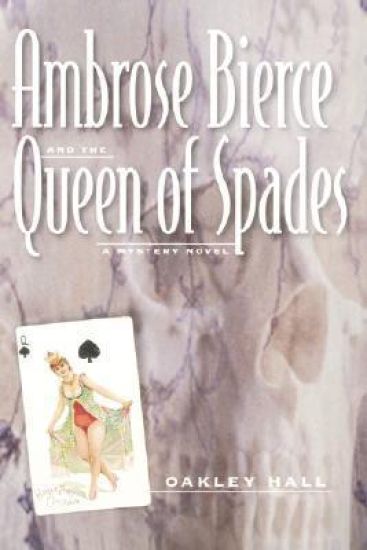
The Morton Street Slasher has been leaving the corpses of his victims around San Francisco's Union Square. On the women's naked bodies are spade playing cards. The city's infamous newspaperman, Ambrose Bierce, blames the rash of murders on his old enemy, the Southern Pacific Railroad. A naive reporter at Bierce's Hornet pursues the case, uncovering conspiracy at every turn. In a fast-paced novel that is a combination of murder mystery, historical fiction, and quirky biography, Oakley Hall draws the reader into 1880s San Francisco and the changing world that was California in the latter part of the nineteenth century. Local and state politics, the exploitation of the Chinese, the power of the mining and railroad barons, and San Francisco's colorful history provide a backdrop for this irresistible thriller. The novel's chapters are introduced by appropriate excerpts from Bierce's The Devil's Dictionary and narrated by the young reporter Tom Redmond. Redmond is interested in the murders because of his attraction to a woman threatened by the Slasher, and Bierce encourages him because of his personal vendetta against the Big Four of the Railroad. Bierce's misogyny is an influence as well, which Hall uses to advantage in portraying the enigmatic journalist. Hall knows his territory and his characters well. The sights and smells of late-nineteenth-century California are cleverly evoked, and the story's key players are refreshingly authentic. Bierce brandishes his famed cynicism with all the aplomb of the sharp-eyed, sharp-witted newspaperman he was. Cameo appearances by such California worthies as Ina Coolbrith and Joaquin Miller add to the novel's historical richness. Intelligent, gripping, and often quite funny, Ambrose Bierce and the Queen of Spades will satisfy any reader who craves adventure, mystery, romance, and fine writing.
Before he trailed off into the wilds of Mexico, never to be heard from again, Ambrose Bierce achieved a public persona as "bitter Bierce" and "the devil's lexicographer." He left behind a nasty reputation and more than ninety short stories that are perfect expressions of his sardonic genius. Brought together in this volume, these stories represent an unprecedented accomplishment in American literature. In their iconoclasm and needle-sharp irony, their formal and thematic ingenuity and element of surprise, they differ markedly from the fiction admired in Bierce's time. Readers familiar with the classic An Occurrence at Owl Creek Bridge will want to turn to Bierce's other Civil War stories. Also included here are his horror stories, among them The Death of Halpin Frayser and The Damned Thing, and such tall tales as Oil of Dog and A Cargo of Cat.
Ambrose Bierce - American Writers 37 was first published in 1964. Minnesota Archive Editions uses digital technology to make long-unavailable books once again accessible, and are published unaltered from the original University of Minnesota Press editions.
Donald T. Blume rejects the view that ""In the Midst of Life"", the second volume of Bierce's collected works, is his most important literary work. Instead, he posits that Bierce's original 1892 collection is his most definitive and authoritative opus.
Ambrose Bierce's In the Midst of Life, the second volume of The Collected Works of Ambrose Bierce, is hailed by critics and scholars alike as his most important literary work. In Ambrose Bierce's Civilians and Soldiers in Context: A Critical Study, Donald T. Blume refutes this and instead identifies Bierce's original 1892 collection as his most definitive and authoritative work. The two subsequent collections, appearing in 1898 and 1909, although containing subtle clues pointing back to the importance of the 1892 collection, are in their primary effect literary red herrings. This new study reveals that the nineteen stories that comprised the original Tales of Soldiers and Civilians consist of carefully developed and interrelated meanings and themes that can only be fully understood by examining the complex circumstances of their original productions. By considering each of the nineteen tales in the order in which they were first published and by drawing heavily on contemporary related materials, Blume re-creates much of original milieu into which Bierce carefully placed his short stories. Blume systematically examines many of Bierce's editing flaws, exposing that Bierce's decisions often weakened the original literary merits of his stories. Ultimately this story reveals, tale by tale and layer by layer, that the nineteen stories included in Bierce's 1892 collection were masterpieces of fiction, destined to become classics. Historians and Civil War enthusiasts, as well as literary scholars, will welcome this new study.
"Graphic Classics: Ambrose Bierce" is revised, with 70 new pages, including new comics adaptations of "Moxon's Master", "The Damned Thing" and "The Monk and the Hangman's Daughter". Returning from the first edition are "The Stranger" and four other tales, plus a collection of 20 short fables illustrated by Dan O'Neill, Shary Flenniken, Florence Cestac, Johnny Ryan and more great artists. It comes with a stunning cover illustration by Steven Cerio.
Ambrose Bierce: A Biography is a comprehensive account of the life of the American writer and journalist, Ambrose Bierce. Written by Carey McWilliams, the book covers Bierce's early years in Ohio, his experiences as a soldier in the Civil War, his career as a journalist and editor, and his eventual disappearance in Mexico in 1913. The biography delves into Bierce's personal life, including his marriages, family relationships, and friendships with other writers such as Mark Twain and H.L. Mencken. McWilliams also explores Bierce's literary output, including his short stories, essays, and poetry, and examines his unique writing style and themes, such as satire, horror, and social commentary.Throughout the book, McWilliams provides insights into the political and cultural climate of the late 19th and early 20th centuries, and how Bierce's experiences and beliefs were shaped by these events. The biography also includes photographs, letters, and other primary sources that offer a glimpse into Bierce's life and work.Overall, Ambrose Bierce: A Biography is a thorough and engaging account of one of America's most intriguing literary figures, offering readers a deeper understanding of Bierce's life, work, and legacy.This scarce antiquarian book is a facsimile reprint of the old original and may contain some imperfections such as library marks and notations. Because we believe this work is culturally important, we have made it available as part of our commitment for protecting, preserving, and promoting the world's literature in affordable, high quality, modern editions, that are true to their original work.
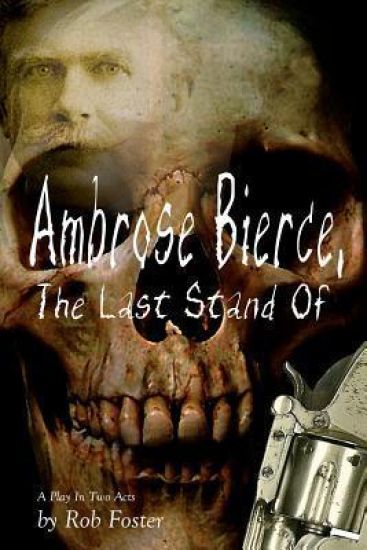
Legendary writer, warrior, poet and cynic, Ambrose Bierce, in the last days of 1913, rode off to Mexico to join forces with the last remaining maverick rebel he respected, Pancho Villa. He never returned. This original play imagines "Bitter Bierce's" final night on Earth, holed up in a Mexican brothel, awaiting his own demise at the hands of a federal lynching party he assumes is due. His minister cousin arrives instead, with one of Bierce's old journalistic rivals in tow, to convince him to return with them across the border. Bierce refuses to be "rescued," prefering a defiant fate in a foreign land to an lingering old age at home. The result is a feiry confrontation between a determined man of the Cloth and the author of The Devil's Dictionary - alive with actual Bierce quotes and passages from his writings. Which of the Bierces will relent before death comes knocking? Not long after its premiere in 2001, AMBROSE BIERCE, THE LAST STAND OF (originally titled simply "Ambrose Bierce") was accepted into the Official Bierce Bibliography by the Ambrose Bierce Appreciation Society.
Ambrose Bierce and the Dance of Death uses psychoanalytic theory in combination with historical, cultural, and literary contexts to examine the complex motif of death in a full range of Bierce's writings. Scholarly interest in Bierce, whose work has long been undervalued, has grown significantly in recent years. This new book contributes to the ongoing reassessment by providing new contexts for joining the texts in his canon in meaningful ways.Previous attempts to consider Bierce from a psychological perspective have been superficial, often reductive Freudian readings of individual stories such as An Occurrence at Owl Creek Bridge and The Death of Halpin Frayser. This new volume not only updates these interpretations with insights from post-Freudian theorists but uses contemporary death theory as a framework to analyze the sources and expressions of Bierce's attitudes about death and dying. This approach makes it possible to discern links among texts that resolve some of the still puzzling ambiguities that have- until now- precluded a fuller understanding of both the man and his writings.Lively and engaging, Ambrose Bierce and the Dance of Death adds valuable new insights not only to the study of Bierce but to that of nineteenth-century American literature in general.
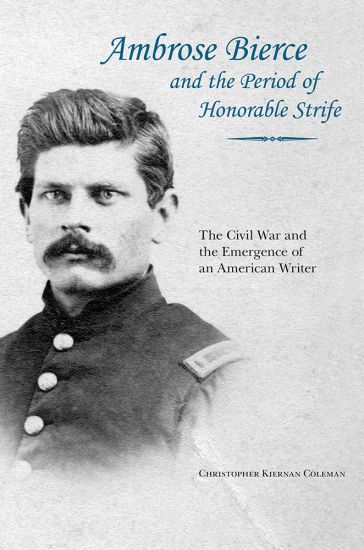
In the spring of 1861, Ambrose Bierce, just shy of nineteen, became Private Bierce of the Ninth Indiana Volunteer Infantry. For the next four years, Bierce marched and fought throughout the western theater of the Civil War. Because of his searing wartime experience, Bierce became a key writer in the history of American literary realism. Scholars have long asserted that there are concrete connections between Bierce’s fiction and his service, but surprisingly no biographer has focused solely on Bierce’s formative Civil War career and made these connections clear.Christopher K. Coleman uses Ambrose Bierce’s few autobiographical writings about the war and a deep analysis of his fiction to help readers see and feel the muddy, bloody world threatening Bierce and his fellow Civil War soldiers. Across the Tennessee River from the battle of Shiloh, Bierce, who could only hear the battle in the darkness writes, “The death-line was an arc of which the river was the chord.” Ambrose Bierce and the Period of Honorable Strife is a fascinating account of the movements of the Ninth Indiana Regiment—a unit that saw as much action as any through the war—and readers will come to know the men and leaders, the deaths and glories, of this group from its most insightful observer.Using Bierce’s writings and a detective’s skill to provide a comprehensive view of Bierce’s wartime experience, Coleman creates a vivid portrait of a man and a war. Not simply a tale of one writer’s experience, this meticulously researched book traces the human costs of the Civil War. From small early skirmishes in western Virginia through the horrors of Shiloh to narrowly escaping death from a Confederate sniper’s bullet during the battle of Kennesaw Mountain, Bierce emerges as a writer forged in war, and Coleman’s gripping narrative is a genuine contribution to our understanding of the Western Theater and the development of a protean writer.
*Includes pictures *Includes Bierce's quotes about his own life and career *Includes footnotes, online resources and a bibliography for further reading "History is an account, mostly false, of events, mostly unimportant, which are brought about by rulers, mostly knaves, and soldiers, mostly fools." - Ambrose Bierce Satirical commentary, memoirs from the agony of war, and horror stories of the supernatural have existed in literature since the beginning of the written word, and in virtually all global societies. The most lauded and familiar examples known to 21st century readers are emblematic of vast literary industries in comparison to previous eras. With an astonishing number of authors at liberty to self-publish and the rapid expansion of the relatively recent film industry, the world has never before seen such a vast expression of such genres. However, as epic film music can often trace its roots back to the Romantic movement of the 1800s, so can the written word. Mark Twain, a preeminent, globally-admired satirist, shared the stage with such wits as Britain's Oscar Wilde, delivering barb after barb laced with the two-edged charm of the old American South. Nearer the end of the 19th century, Stephen Crane penned Red Badge of Courage, considered the definitive novel on the American Civil War. These, and the ironically inventive horror stories penned by Edgar Allen Poe and the next century's H.P. Lovecraft, remain popular in the West's canon. Examples of these early authors are taught in the American school curriculum, having acquired distinction by the passing of time, often serving as plot and stylistic foundations for new works. One author who is less frequently mentioned among these iconic literary figures of war, horror, acidic poetry, and social satire, is Ambrose Gwinnet Bierce, a journalist, poet, short-story writer, novelist, fabulist, and writing master who embodied the literary affections of all three. As a satirist, Bierce was famously dubbed the "Mark Twain of the North." Inclusion of the "North," however, embodies several points of dissimilarity from the wit of Twain; sharp and lightning-clever like his counterpart from Missouri, Bierce the Ohioan made no pretense to Southern charm or allowed any room for a nuanced interpretation of his remarks. Once atop his profession, Bierce's venom was spewed at virtually everyone, in almost every walk of life. Any figure of public note in San Francisco came to know him as "Bitter Bierce," or by his initials, which in public life were often translated as "Almighty God Bierce." As a war author, Bierce is the only one of the great literary figures who actually served as a front-line soldier in the American Civil War. Walt Whitman and Twain were somewhat removed from the conflict by comparison. Twain, in fact, "dabbled" at being a soldier before deserting his Confederate unit. Bierce's often metaphysical and supernatural-tinged memoirs of his war service served as the ideal backdrop for the Poe-like "attraction to death in its most bizarre forms" and an affection for the ghost story as a "campfire tale." A master of the "ironic style of the grotesque," he outstripped even Poe in the minds of many readers as "the blackest of black humorists." H.P. Lovecraft, the most prominent author of the macabre in the early part of the following century, described Bierce's work as "grim and savage," but other critics disagree, citing the "detached, oddly companionable" personality of the storytelling that made the horror all the more penetrating. Indeed, many 20th and 21st century novels, short stories, films, and television serials have drawn their success, squarely from Bierce's models. In the end, Ambrose Bierce wrote the most interesting story of all by disappearing from the world in a final late-life Mexican adventure, amidst that country's revolution. A new theory of his demise emerges with each passing year.
Ambrose Gwinnett Bierce (June 24, 1842 - circa 1914) was an American short story writer, journalist, poet, and Civil War veteran. Bierce's book The Devil's Dictionary was named as one of "The 100 Greatest Masterpieces of American Literature" by the American Revolution Bicentennial Administration. His story "An Occurrence at Owl Creek Bridge" has been described as "one of the most famous and frequently anthologized stories in American literature"; and his book Tales of Soldiers and Civilians (also published as In the Midst of Life) was named by the Grolier Club as one of the 100 most influential American books printed before 1900.
Ambrose Gwinnett Bierce (June 24, 1842 - circa 1914) was an American short story writer, journalist, poet, and Civil War veteran. Bierce's book The Devil's Dictionary was named as one of "The 100 Greatest Masterpieces of American Literature" by the American Revolution Bicentennial Administration. His story "An Occurrence at Owl Creek Bridge" has been described as "one of the most famous and frequently anthologized stories in American literature"; and his book Tales of Soldiers and Civilians (also published as In the Midst of Life) was named by the Grolier Club as one of the 100 most influential American books printed before 1900.
Ambrose Gwinnett Bierce (June 24, 1842 - circa 1914) was an American short story writer, journalist, poet, and Civil War veteran. Bierce's book The Devil's Dictionary was named as one of "The 100 Greatest Masterpieces of American Literature" by the American Revolution Bicentennial Administration. His story "An Occurrence at Owl Creek Bridge" has been described as "one of the most famous and frequently anthologized stories in American literature"; and his book Tales of Soldiers and Civilians (also published as In the Midst of Life) was named by the Grolier Club as one of the 100 most influential American books printed before 1900.